
Mountain routes for winter trekking: features and preparation
Winter trekking is an exciting and challenging adventure that offers tourists unique views of snow-capped mountains and deserted trails. Walking in the snow, cold fresh air and unforgettable landscapes make winter trekking special. However, winter hikes require careful preparation, from choosing a route to choosing equipment. In this article, we will look at the most interesting winter trekking routes, the features of hikes in the cold season, as well as preparation for them.
Popular routes for winter trekking
Each winter trekking route is unique and requires careful selection based on the level of training of the participants and weather conditions. Let’s take a look at some of the most popular and exciting routes that are suitable for both beginners and experienced trekkers.

❇️ The King’s Trail (Kungsleden), Sweden
One of the most famous winter routes is the King’s Trail (Kungsleden) in Lapland, northern Sweden. This 440 km route passes through wild areas, untouched by winter, and provides a unique opportunity to immerse yourself in the snowy landscapes of Northern Europe. In winter, you can see the northern lights and cross frozen lakes.
Along the way there are mountain huts along the trail, which make this route relatively safe. For winter trekking along the King’s Trail, skiing skills are required, as deep snow and frost require preparation.

❇️ Trekking to Everest Base Camp, Himalayas
Everest Base Camp (5364m) is one of the most popular trekking destinations all year round and winter is no exception. Despite the frost, in winter the trails are less crowded with tourists, which makes the hike even more unique. The trek starts in Lukla and passes through Namche Bazaar and other Sherpa villages.
Winter trekking to Everest Base Camp requires careful acclimatization and preparation for low temperatures, which can drop to -20 degrees. However, the views of the snow-capped Himalayan peaks and the opportunity to fully immerse yourself in nature make this trek one of the best winter routes in the world.


❇️ Tour of Mont Blanc, French Alps
The Tour of Mont Blanc is a route that follows the borders of France, Italy and Switzerland, surrounding the highest mountain in Europe. In winter, the route becomes challenging due to heavy snowfall, avalanches and low temperatures, so it is only suitable for experienced trekkers. Special equipment, including ice axes and avalanche equipment, is required to safely complete the route.
The Tour of Mont Blanc in winter offers stunning views of the snow-capped Alps, as well as peace and solitude, as there are almost no tourists on the trails at this time of year.


❇️ Winter trekking in the Carpathians
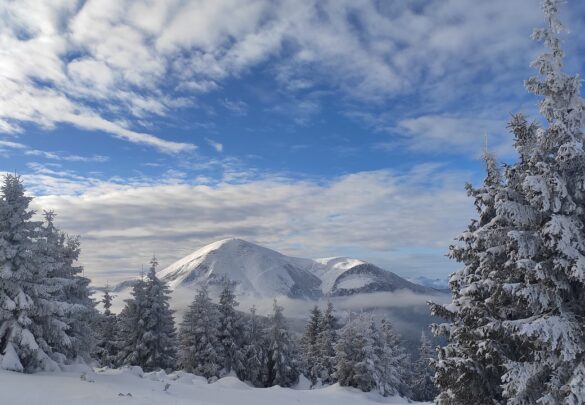
The Carpathians, and especially the climb to Hoverla (2061 m), are one of the most accessible winter trekking options in Eastern Europe. This route is popular with tourists, and in winter Hoverla acquires a special appeal due to its snow-covered forests and exposed mountain peaks.
The Carpathians, and especially the climb to Hoverla (2061 m), are one of the most accessible winter trekking options in Eastern Europe. This route is popular with tourists, and in winter Hoverla acquires a special appeal due to its snow-covered forests and exposed mountain peaks.

Features of winter trekking
Winter trekking requires more careful preparation and more attention to detail than summer hikes. Here, both the correct choice of route and the preparation of equipment and gear are important.
Weather and its influence
In winter in the mountains the weather can change suddenly. While in summer you can count on stable conditions, in winter even a predictable day can suddenly be overshadowed by a snowstorm or frost. Avalanches are one of the main dangers for winter hikers, so it is important to be able to recognize avalanche danger and avoid dangerous areas.

Choosing the right equipment
Winter trekking equipment should be as functional as possible and adapted to cold conditions. Multi-layer clothing (thermal underwear, fleece, membrane) will protect against cold and overheating, and special insulated footwear will help you get through snowy and icy areas. Don’t forget about avalanche transceivers, snowshoes or crampons, trekking poles and a quality backpack that will hold extra clothing and equipment.


Physical training
Winter trekking requires good physical fitness. Walking through snow and fighting the cold takes more energy than summer trekking, so it is important to train and improve your stamina in advance. Workouts should include cardio and strength training, as well as training on the snow.

Winter trekking is an exciting adventure that requires serious preparation. Mountain routes in winter offer unique opportunities for those who are ready to cope with cold, snow and difficult conditions. Choosing the right route, good physical condition and quality equipment are the main components of success in winter trekking. Regardless of whether you go to the Carpathians, the Alps or the Himalayas, a winter hike will give you unforgettable impressions and a special feeling of unity with nature.
Winter treks and ascents with Extreme Guide
 Ukraine
Dates:
March 7 – March 10
March 21 – March 24
April 4 – April 7
April 18 – April 21
Complexity:
Duration:
Height:

Left: 4 places
 Ukraine
 Dates:
March 7
March 21
Complexity:
Duration:
Height:
Left: 8 places
 Slovakia (Tatras)
Dates:
March 21 – March 22
Complexity:
Duration:
Height:

5.0 (2)
Left: 3 places
 Slovakia (Tatras)
Dates:
March 7 – March 11
March 21 – March 25
April 4 – April 8
April 18 – April 22
April 25 – April 29
Complexity:
Duration:
Height:
5.0 (2)
600 EUR
Left: 0 places
 Georgia
 Dates:
March 25 – April 2
Complexity:
Duration:
Height:

Left: 6 places
 Georgia
Dates:
Complexity:
Duration:
Height:
Negotiated