
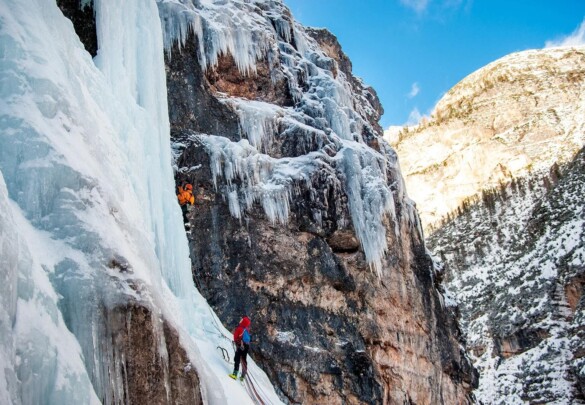


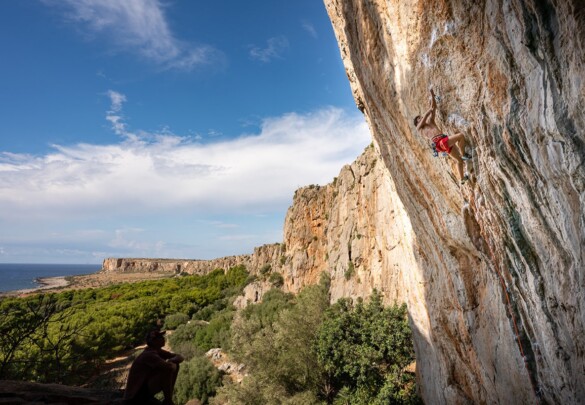

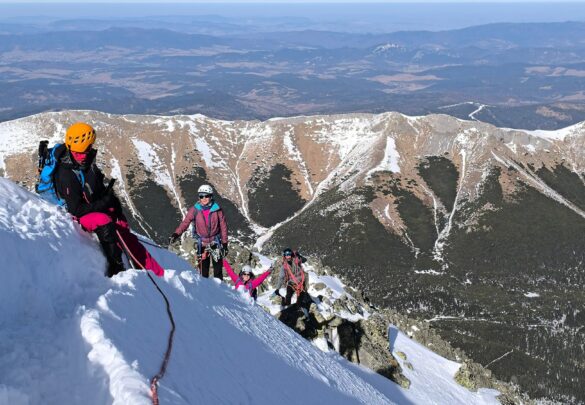

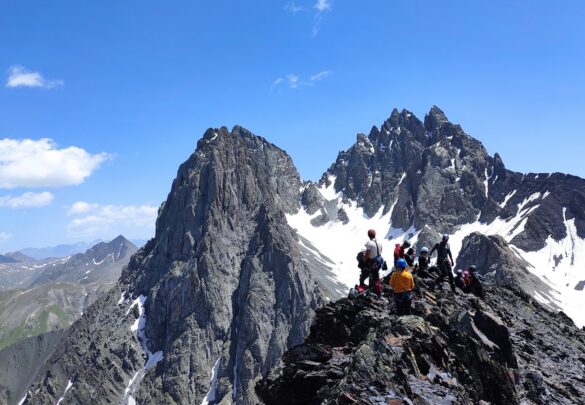

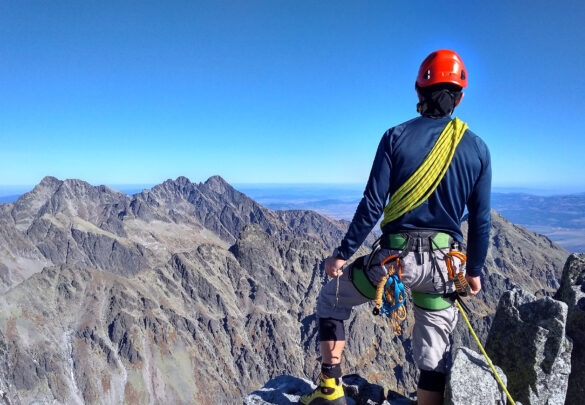


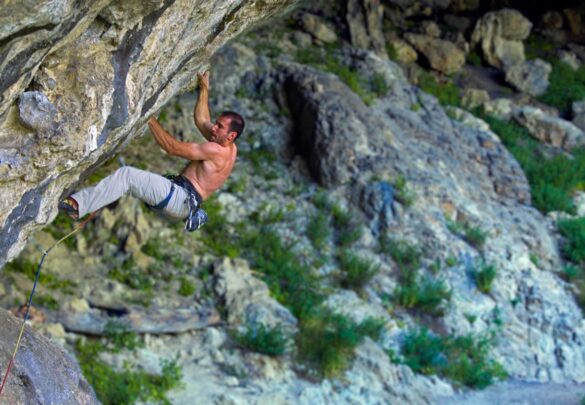

Mountaineering is not only exciting, but also an extreme form of sports recreation. Climbing to the top involves many risks, from which it is better to protect yourself. That is why, before storming Kazbek or Mont Blanc, it is worth studying at a mountain school – to learn how to make strong knots, walk smoothly in a bundle and many other important things.
Sincere advice, dictated by experience: treat such lessons as a necessity. Fortunately, the classes will be quite interesting and intense – you definitely won’t be bored.
The specificity of training at a mountaineering school is that in many cases it is simply mandatory. They simply won’t let you on some difficult route until they make sure that you have enough practical skills to climb. Where can you get them if you haven’t climbed such steep peaks yet? Just learn under the guidance of experienced instructors.
Of course, it is better to train at a mountaineering school rather than on your own. Because then your preparation will be sensitively monitored by climbers who have visited the most famous peaks in the world. These are professionals who know the specifics of the climate of specific massifs, understand the peculiarities of climbing a particular peak, and are able to teach, check, and give practical advice.
Regions and program areas
It is very important to choose the right training course; the convenience and effectiveness of training directly depends on this. Therefore, contact ExtremeGuide – our specialists will recommend the optimal solution based on your physical fitness, group composition, level of training, geography and duration of the tour.
There are so many options that they can be divided into several categories:
- by region – in Ukraine (for example, there are excellent mountain schools in the Carpathians) and in neighboring countries (Georgia, Turkey, other European countries);
- according to the degree of difficulty – there are easy programs designed for beginners (who, after such preparation, will climb not the most dangerous slopes), medium and difficult ones, especially for storming steep peaks;
- in the direction – exclusively mountaineering, + rock climbing lessons, + training in some related sports;
- by duration – there are training courses of 2-3, 6-7, 10-16 days, depending on the intensity of training and the volume of skills acquired.
Yes, with ExtremeGuide you can also register in a ski, freeride, or backcountry school and also conquer the mountains, albeit in a different way, without storming their peaks. We professionally organize not only your extreme vacation, but also preparation for it.
Difficulty and duration of training
Usually these two factors are interrelated: the more difficult the program, the more days you will need to spend on mastering it, and vice versa. This is explained by the amount of practical skills that need to be acquired. If it is quite possible to polish climbing equipment to a shine in 2-3 days, then preparing for the assault on snow-covered Kazbek (by the way, 5000+ m above sea level) will take a couple of weeks.
Today, mountaineering schools divide their programs (based on the complexity and duration of training) into 3 main categories:
- easy – the course is usually designed for 2-3 days, sometimes 4-7, helps to learn key and/or basic skills, suitable for tourists without any knowledge at all;
- medium – the duration of the training is already 4-7 days, and it is designed for people with good physical fitness and at least some climbing experience;
- difficult – the program takes 10-16 days, is characterized by maximum intensity, provides a number of specific skills, and is aimed at confident climbers with a certain level of skill.
ExtremeGuide organizes any of these training options in a mountaineering school, if necessary, then with freeriding or ski lessons. Contact us, we will take into account your experience, physical fitness, wishes, budget, and select a course of suitable complexity and duration.
Choosing a mountain school depending on experience
Regardless of your level of preparation, we recommend focusing on the following points:
- Variety of programs — the more there are, the higher the likelihood of finding one that will help you master a higher level of complexity.
- Accommodation — mountain schools are located at the foot of the massifs and offer “training” climbing; choose one in which you have not yet studied, and climb a new peak for yourself.
- The quality of teachers — it is important that their skill level is higher than yours (relevant for experienced ones).
- Additional options are convenient when you can devote yourself entirely to mountaineering, and enroll the children who came with you to the alpine ski school located right there; Then you will be able to spend your vacation with the whole family, actively and sportily.
Although there is an even simpler option – call ExtremeGuide. We will suggest a mountaineering school that is suitable for you and organize classes there.
Why school of mountaineering with Extreme Guide?
Mountains aren’t just a chance to tick off a travel bucket list; they’re a conscious journey that requires preparation, experience, and responsibility. If you’re ready to move from being a regular tourist to a mountaineer, you should carefully read this article. It covers not only the curriculum but also the philosophy of safe mountaineering and the next step in your development.
Interest in training programs has grown significantly over the past few years. Extreme Guide is a leader in this field. We organize full-fledged mountaineering schools in the Ukrainian Carpathians, the Tatra Mountains, Georgia, the Alps, and other mountainous regions of Europe.
Why are we doing this?
Our goal is to change the way we “consume mountains” in Ukraine and foster a culture of safe climbing. Mountains should be a place for responsible and mindful exploration. We do not teach the unreasonable use of jumars on vertical routes, with the exception of specialized training, such as big wall ascents on peaks like Trango Towers. Most commercial programs simply don’t require this technique, and if it is needed, we offer a separate workshop during the course.
Participants in our programs gain consistent practical experience and essential skills that help them become less dependent on a guide, confidently navigate routes of varying difficulty, and make their own decisions. The key knowledge that school participants acquire includes navigating various types of terrain (ice, snow, rocks), organizing belay and self-belay, performing rescue operations in a small group, and raising a victim from a glacial crevasse.
Our programs in the Alps with Mont Blanc and Georgia with Kazbek provide participants with sufficient preparation to plan their own ascents of the appropriate level of difficulty in the future.