
Professional concepts in alpinism
Mountaineering is an extreme sport that requires not only physical training, but also a deep knowledge of special terms and techniques. Understanding professional concepts is important for both beginners and experienced athletes, since this knowledge is directly related to safety and efficiency during climbing. Let’s consider the main terms and their meaning in mountaineering.

❇️ Traverse in mountaineering
One key concept is traverse. Traverse is a horizontal or diagonal movement along a mountain slope, when the climber moves not up or down, but to the side. This technique is used to bypass difficult areas or reach another route without a significant change in altitude. Its execution requires good coordination and the use of appropriate belay techniques.
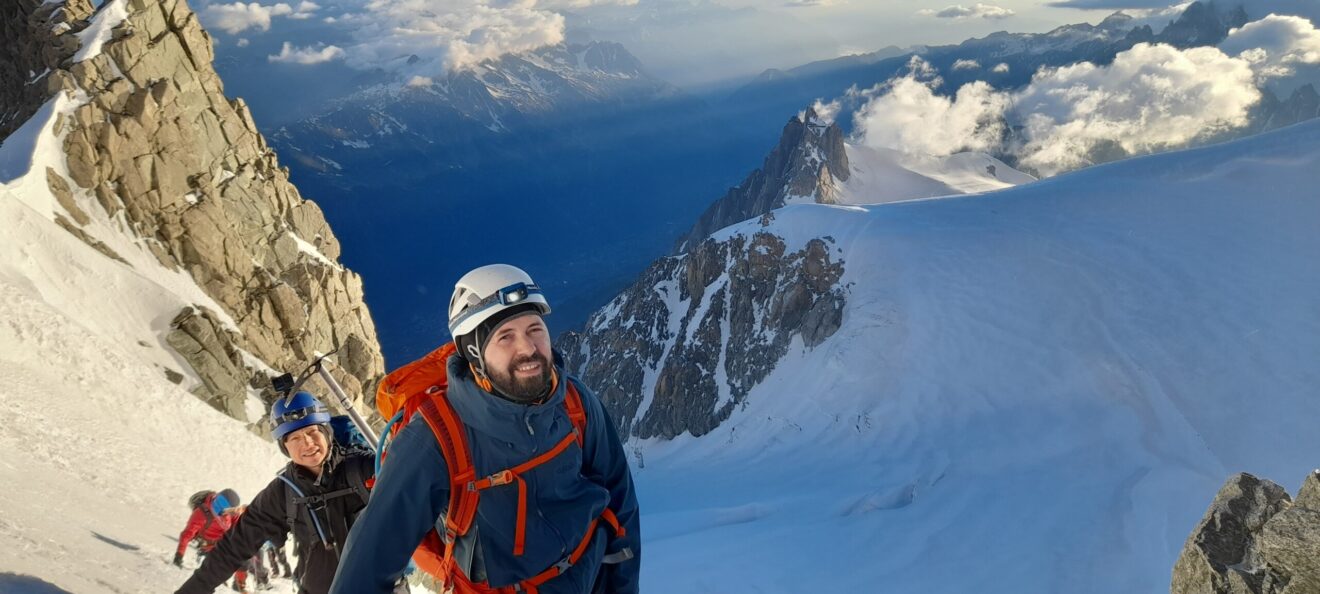
Traverse is especially important in difficult terrain conditions where direct ascent is impossible. Correct execution of which can save lives in critical situations when the only way out is to move away from the dangerous area. This makes it one of the basic techniques that any climber must master. This skill can be learned in a mountaineering school.
❇️ What are railings in mountaineering?
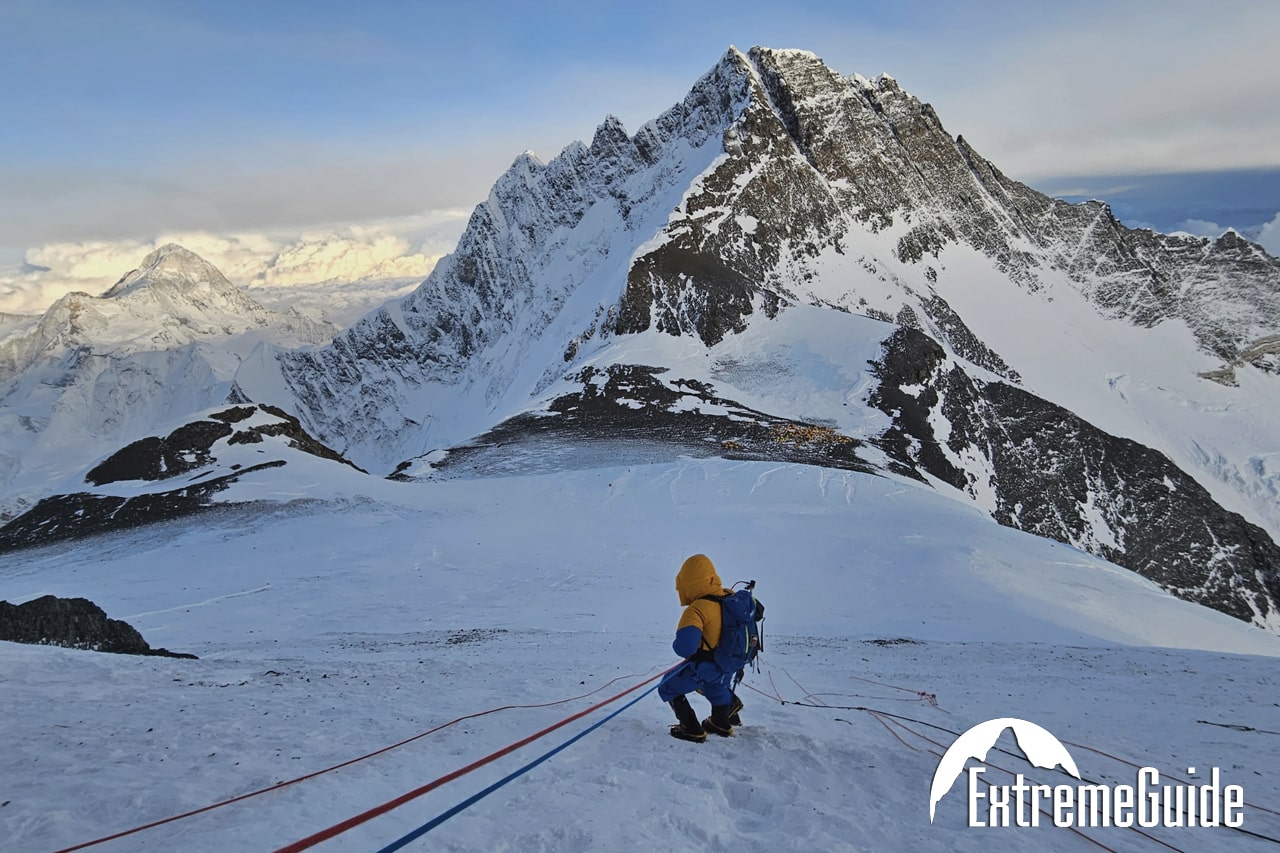
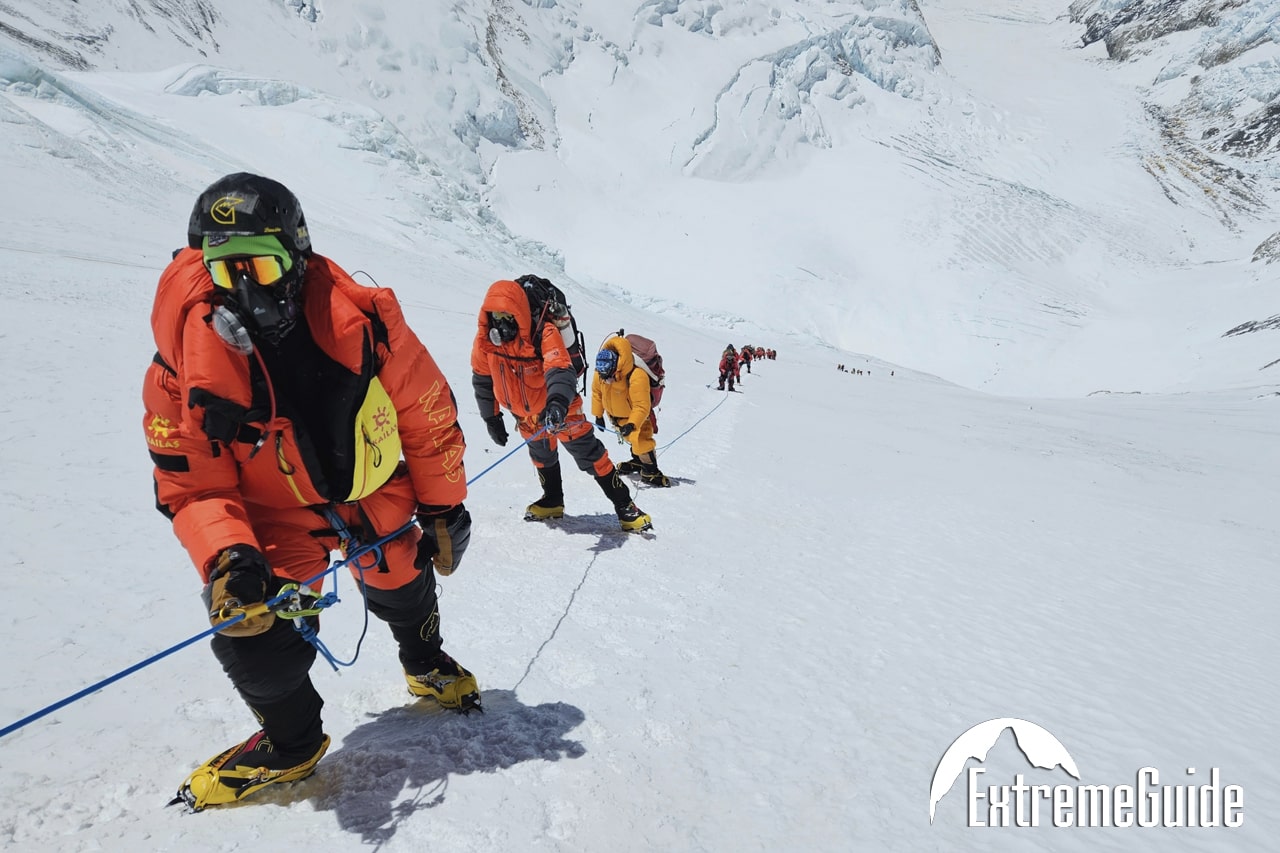
Another important term is railing. In mountaineering, railing is a rope that is fixed to a slope to facilitate ascent or descent. It is used to create additional insurance on difficult sections where there is a high risk of falling, which allows you to safely move along the route, relying on a taut rope.
The use of railings is especially common on difficult routes and glaciers, where additional safety measures are required. Fastening is carried out using safety devices and knots, which guarantees the reliability of the entire system. In practice, the use of railings significantly reduces the risk of falls, making the climbing process safer. Also, railings are often used during rock climbing.
❇️ Crampons in mountaineering: essential equipment for ice routes
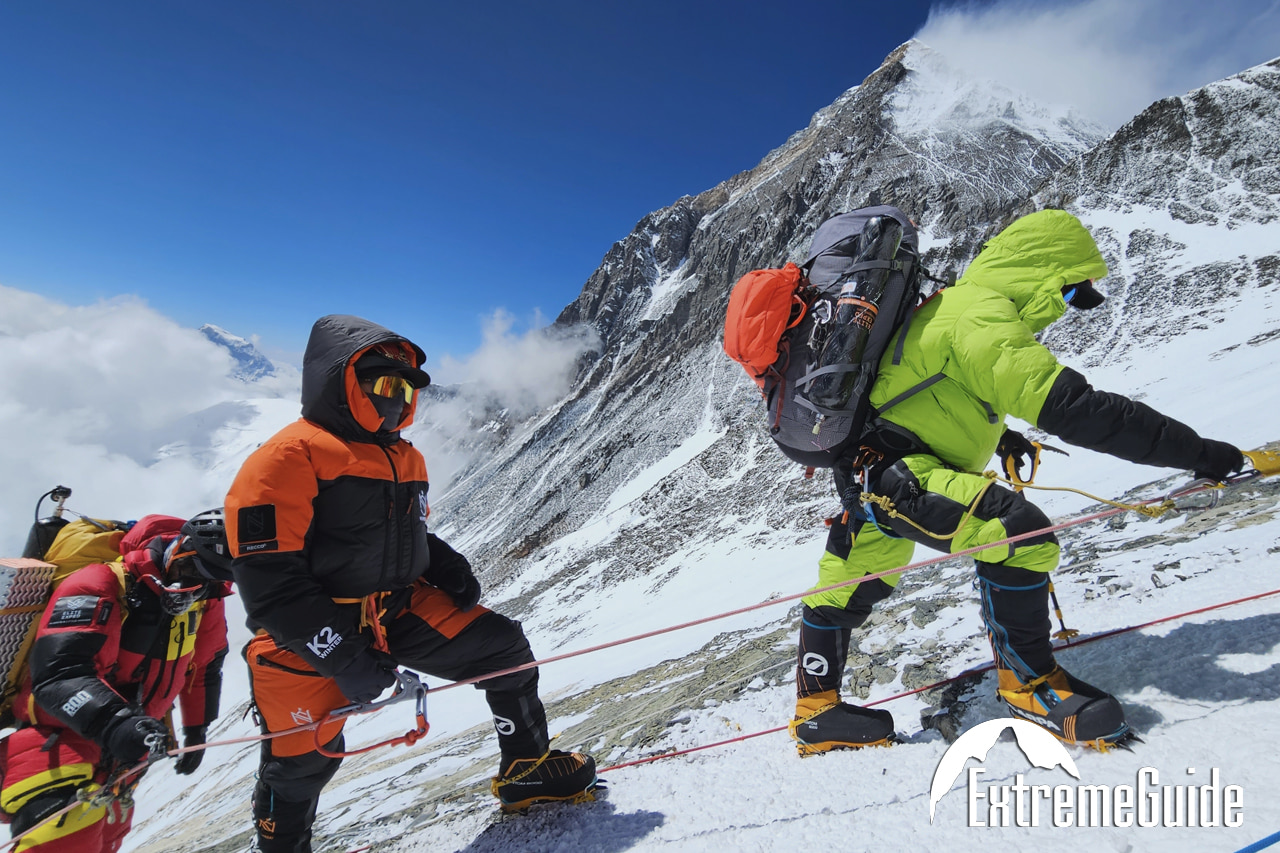
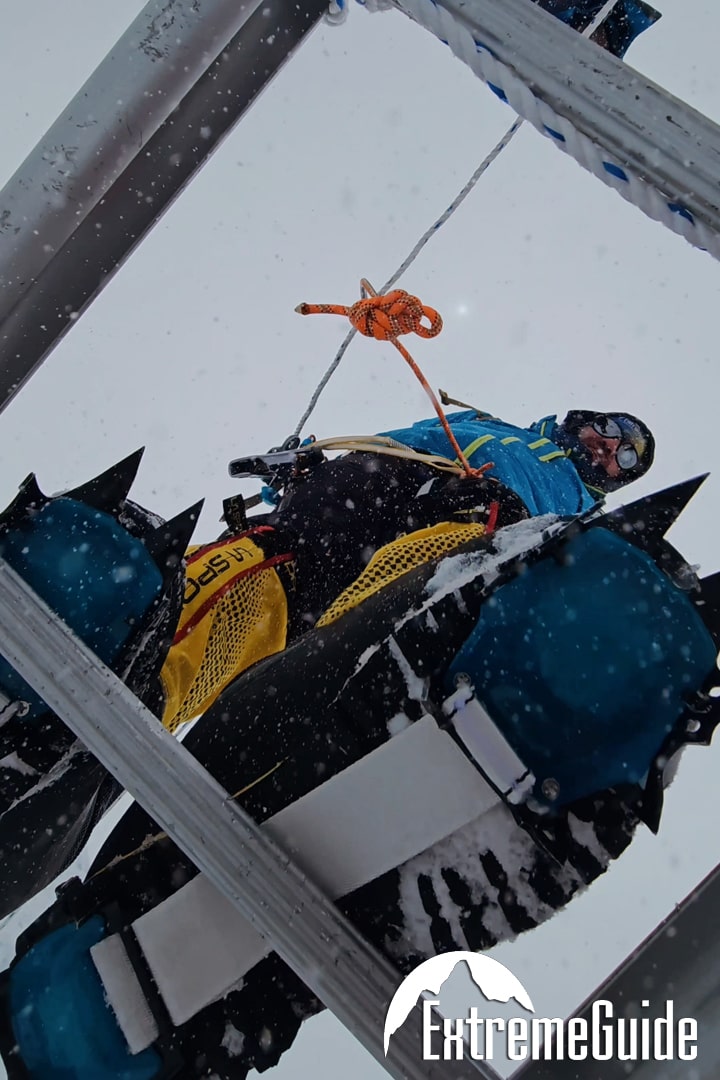
This is a specialized device that is attached to shoes and is used to provide better traction on icy or snowy surfaces. These devices are metal spikes that allow you to move safely on slippery or frozen terrain.
There are several types of crampons in mountaineering: for classic mountaineering, ice climbing and rock climbing on snowy routes. They significantly increase safety, especially on glaciers and when climbing snowy peaks or ice climbing. Every climber should be able to use them correctly, as their stability and safety on difficult sections of the route depend on it.
❇️ Safety knot – the basis of safety in mountaineering
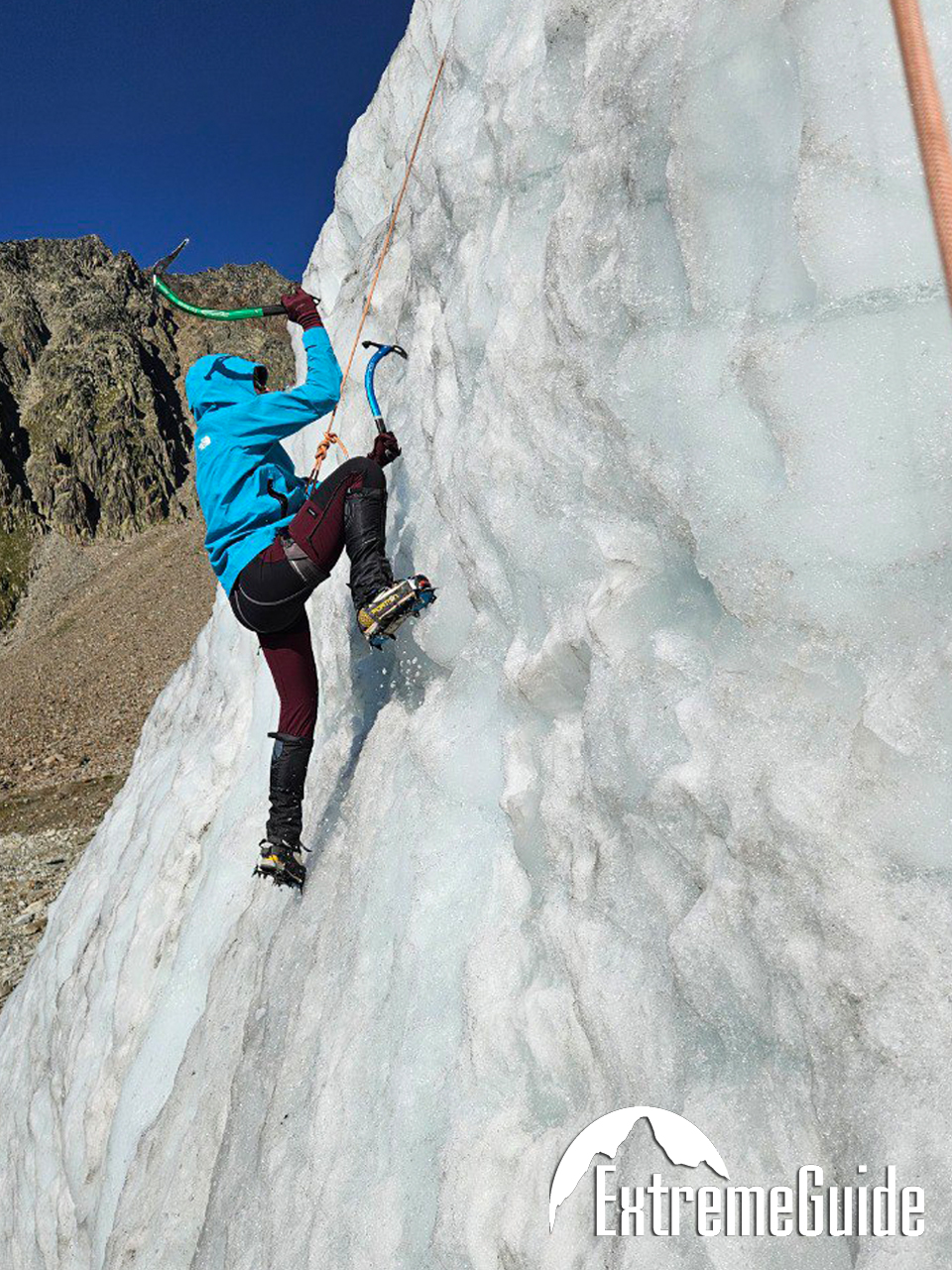
One of the most important aspects of safety is the correct use of belay knots. Safety knots are used to attach a rope to a climber or belay devices, as well as to create support points on the route. Mistakes when tying knots can lead to serious consequences, so every climber should know how to properly tie the main types of knots. Knots can also be used in difficult sections of mountain hikes or trekking.
Some of the most commonly used knots include the figure eight, conductor, and bowline knots. Each of them has its own role and is used depending on the climbing conditions. Knowing these knots allows you to feel confident on the route and reduces the risk of a slip or fall.


❇️ The Basics of Safety in Mountaineering
Professional concepts in mountaineering are not just a set of terms, but a system of knowledge that helps ensure your safety. The ability to use crampons correctly, to lay ropes correctly and to perform traverses are all key skills, without which mountain climbing becomes too risky.
For anyone planning to go mountaineering, it is important not only to prepare physically, but also to master theoretical knowledge. The better a climber understands the terminology and techniques, the higher his chances of a successful and safe ascent.
Mountaineering school with Extreme Guide
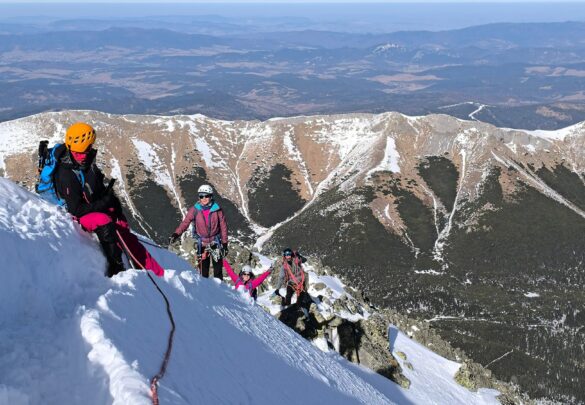
 Slovakia (Tatras)
Dates:
June 13 – June 17
July 25 – July 29
August 1 – August 5
August 22 – August 26
September 12 – September 16
October 3 – October 7
Complexity:
Duration:
Height:

5.0 (2)
Left: 6 places
 Slovakia (Tatras)
 Dates:
March 7 – March 11
March 21 – March 25
April 4 – April 8
April 18 – April 22
April 25 – April 29
Complexity:
Duration:
Height:
5.0 (2)
600 EUR
Left: 0 places
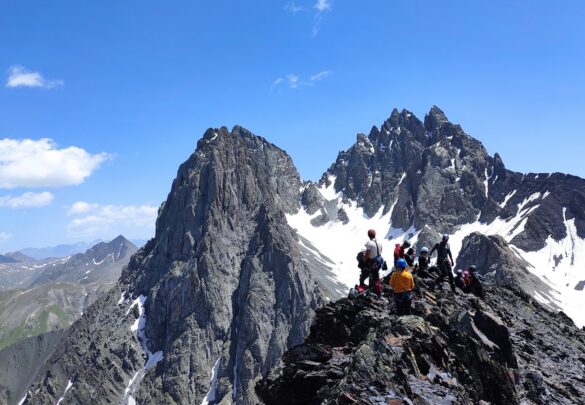
 France
Dates:
May 23 – May 29
June 13 – June 19
July 11 – July 17
August 15 – August 21
September 5 – September 11
Complexity:
Duration:
Height:

5.0 (82)
Left: 2 places
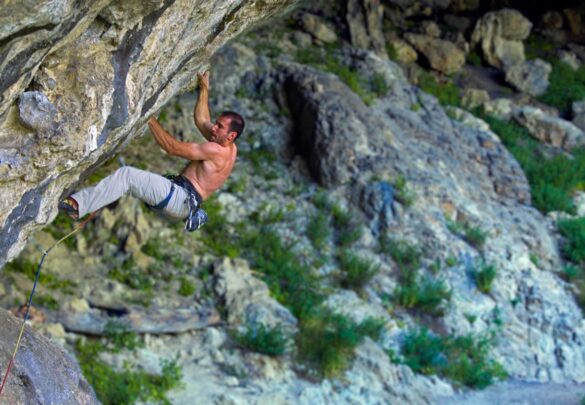
 Georgia
 Dates:
June 20 – June 29
June 20 – July 5
July 18 – July 27
July 18 – August 2
Complexity:
Duration:
Height:

5.0 (10)
Left: 5 places
 France
 Dates:
June 20 – July 1
July 11 – July 22
August 8 – August 19
September 5 – September 16
Complexity:
Duration:
Height:

5.0 (15)
Left: 6 places
 Bulgaria
 Dates:
Complexity:
Duration:
Height:

Negotiated
 France
Dates:
Complexity:
Duration:
Height: