
Samarkand Geography, Development and Cultural Heritage
Samarkand, one of the oldest cities in the world, is rightfully considered the pearl of not only Uzbekistan, but also of all Central Asia. Founded around the 8th century BC, it has survived thousands of years of history, saw the armies of Alexander the Great, Genghis Khan, and thanks to Tamerlane became the powerful capital of a great empire. Today it is a modern metropolis, where more than half a million people live, but at the same time it preserves the unique spirit of past eras, attracting travelers from all over the world with its legendary architecture and unique atmosphere.
Samarkand — origin of the name
The origin of the city’s name is shrouded in legend and has several versions, each of which reflects its rich history. The most common theory connects it with the ancient Persian language, where “Samar” meant “stone” or “fortification”, and “kand” meant “city” or “settlement”. Thus, Samarkand can be translated as “Stone City”, which is quite consistent with its historical role as a powerful fortress and an important trading center on the Great Silk Road.
In ancient literature, the city is known as Maracanda. According to written sources, the name “Samarkand” comes from the Turkic expression “Semiz kent”, which translates as “rich settlement”. This version is confirmed by medieval Chinese chronicles, where the city is mentioned as Si-mi-se-kan with the explanation “rich city”. A similar opinion was expressed by the encyclopedist Abu Rayhan al-Biruni, and the 13th-century Armenian chronicler Sumbat noted that “Samarkand” means “fat” or “prosperous” city. The Spanish ambassador Ruy Gonzalez de Clavijo, who visited the court of Tamerlane, also mentioned Samarkand and wrote that its real name was Simeskint, that is, “rich settlement”.
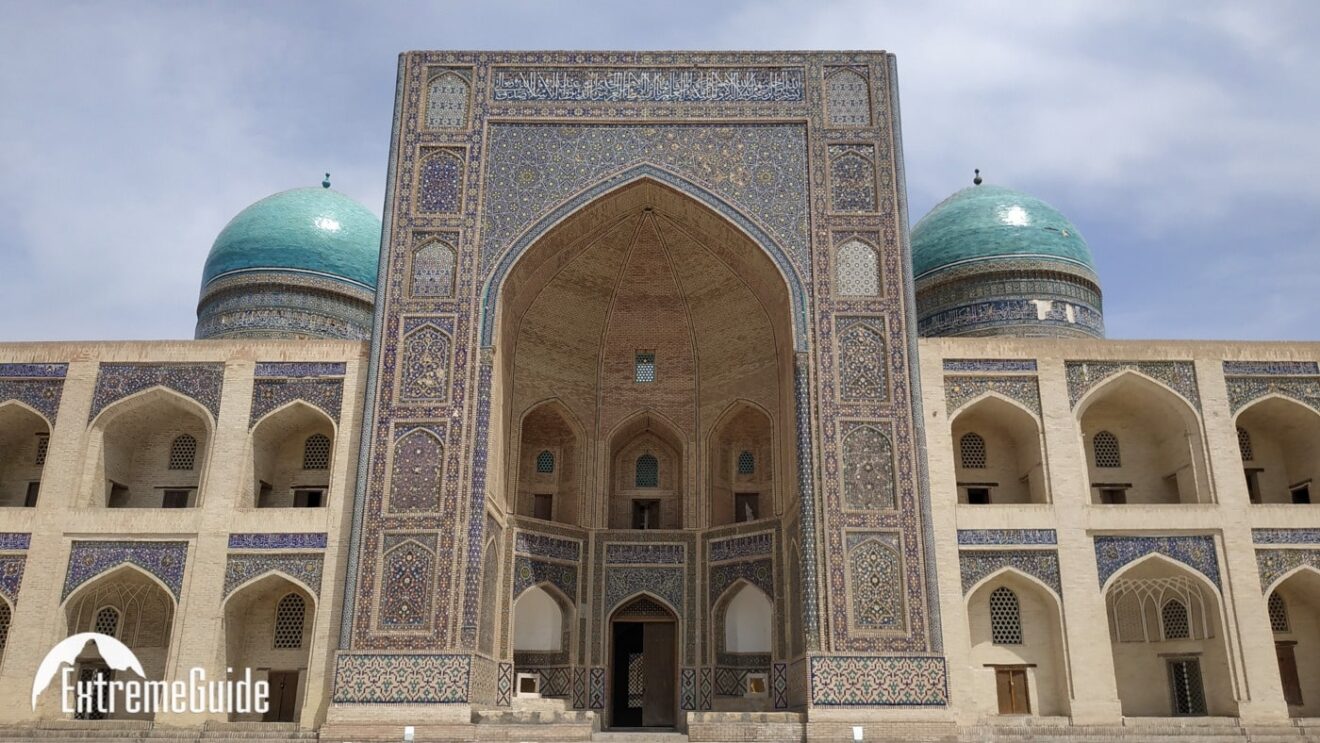
Where is Samarkand located?
The city is located in the south-eastern part of Uzbekistan, in the heart of Maverannahr – a historical region between the Amu Darya and Syr Darya rivers. It lies in the picturesque valley of the Zeravshan River, which for centuries supplied this land with vital water, created favorable conditions for the development of agriculture and trade. The relief here is mostly flat, but with a view of distant hills, which makes the landscape very picturesque.
From the point of view of modern administrative division, Samarkand is the center of the region of the same name. Its geographical location has always been key: important trade routes passed through it, connecting China with the Mediterranean, India with the Northern countries. Today it is a major transport hub, well connected with other cities of the country and the world. The nearest large settlements:
- Tashkent: the capital of Uzbekistan, located 300 kilometers to the northeast.
- Bukhara: another ancient city, located about 280 kilometers to the southwest.
- Dushanbe: the capital of Tajikistan, located 350 kilometers to the south.
This location has contributed to its rapid development throughout history and continues to be its strategic advantage today.

Majestic madrassas and mosques: symbols of the city of Samarkand
The architectural heritage of Samarkand is a real encyclopedia, where each era left its unique mark. The heyday of the city as a cultural and architectural center came during the reign of Tamerlane and his descendants in the 14th-15th centuries. It was then that the foundations of a unique style were laid, the characteristic features of which were majestic scale, complex geometric ornaments, powerful arches and, of course, impressive polychrome decoration of the facades.

The buildings of this period are covered with masterfully executed glazed bricks and mosaics, where bright shades of blue, light blue, turquoise and gold predominate. This technique creates a glowing effect even in the brightest sunlight. In addition to medieval masterpieces, the city features examples of Soviet modernism and modern buildings, which, however, usually play a secondary role against the backdrop of centuries-old monuments. Architecture here is not just art, but an important historical source that tells about the power and tastes of past rulers.
The architectural masterpieces of Samarkand, which form its unique appearance, are inextricably linked with the majestic madrassas and mosques. These buildings not only served religious and educational purposes, but also demonstrated the power of the empire of Tamerlane and his descendants. They became true symbols of the city, striking in their scale, richness of decoration, and impressive skill of the architects.
Each of these monuments has its own unique history and architectural features. They were created over the centuries, reflecting the evolution of construction technologies and artistic tastes of different eras. Today, these structures form the core of the cultural heritage of not only Uzbekistan, but also the entire Islamic world, attracting researchers and pilgrims from all over the world.
The most significant religious and educational buildings of the city are:
- Ulugbek Madrasah: The oldest of the three madrasahs on Registan Square, built in the 15th century, it was renowned as one of the most influential scientific centres of its time, teaching astronomy, mathematics and philosophy.
- Sherdor Madrasah: Famous for its impressive mosaics depicting tigers hunting deer, a rare example of depicting living creatures in Islamic architecture.
- Tillya-Kari Madrasah: Named for its sumptuous gold-plated interior, it received its name.
- Bibi-Khanym Mosque: A grand cathedral mosque built in honour of Tamerlane’s favourite wife. Its scale and rich decoration were meant to demonstrate the empire’s power.
- Khazrat-Khizr Mosque: One of the city’s oldest religious buildings, located on a hill overlooking the Afrosiab settlement.
These structures form the architectural framework of the city, creating that unique appearance that makes Samarkand one of the most impressive cities in the world. They are not only architectural monuments, but also living witnesses to the power of the medieval Central Asian civilization.
What to see in Samarkand?
The heart of Samarkand and its main tourist magnet is Registan Square, which includes three majestic madrassas: Ulugbek, Sherdor and Tillya-Kari. This square is rightfully considered one of the most outstanding examples of Islamic architecture in the world. No less impressive is the Gur-Emir mausoleum, where Tamerlane himself and his descendants are buried. This structure became the prototype for the famous monuments of the Indian Mughals, including the Taj Mahal.
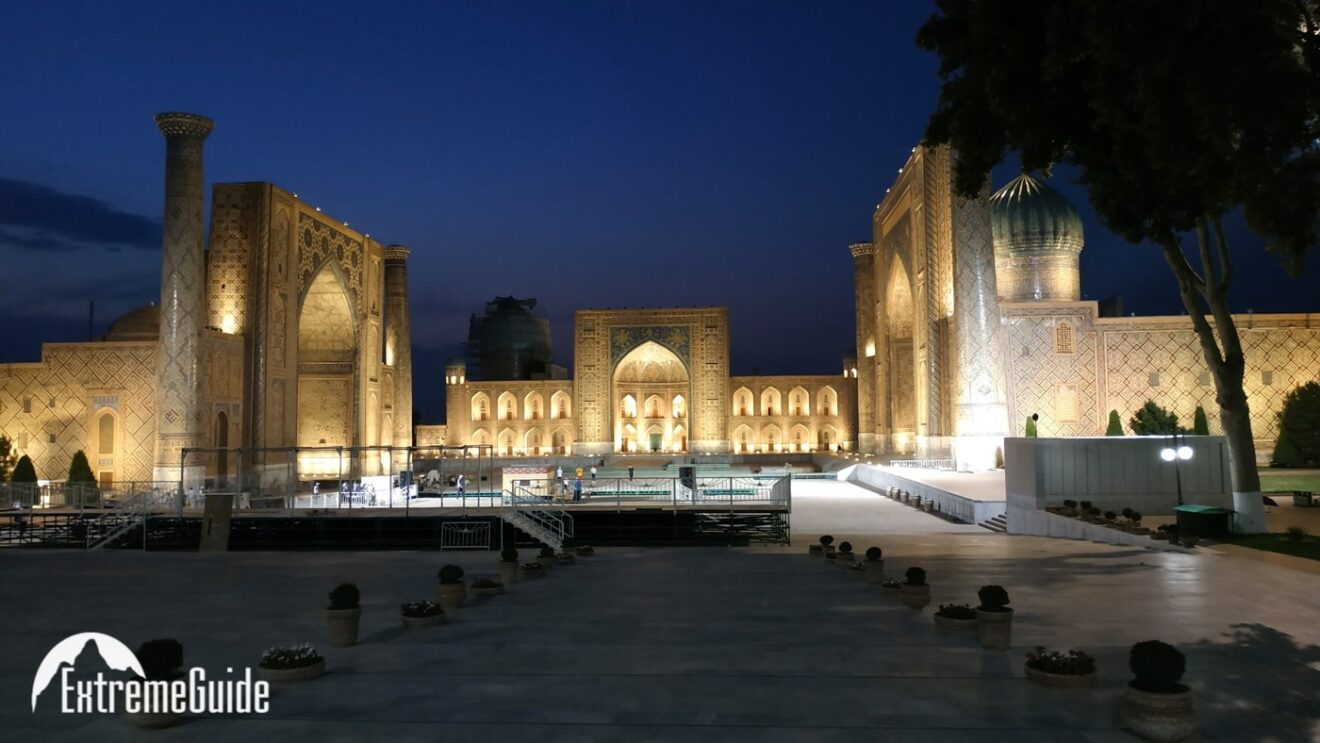
Для полного погружения в атмосферу города обязательно стоит посетить некрополь Шахи Зинда, который представляет собой уникальную улицу с мавзолеями, украшенными невероятной красоты керамической плиткой. Нельзя обойти стороной и гигантскую обсерваторию Улугбека, которая свидетельствует о невероятном развитии науки в средневековом городе.
Many travelers combine their acquaintance with Samarkand with a hike to the Fann Mountains, located nearby. This is one of the most beautiful mountain ranges in Central Asia with clear lakes and majestic peaks. This combination allows you to see not only the architectural heritage, but also feel the beauty of nature.
Ideal for a leisurely walk:
- Registan Square: the heart of the city, the most famous architectural ensemble.
- Shahi Zinda Alley: a unique necropolis with many mausoleums.
- The area around the Bibi-Khanum Mosque: one of the largest mosques in the Islamic world.
Every corner of this ancient city is filled with history, and a walk along its streets gives an unforgettable experience of meeting the past, which comes to life here in every stone, in every ornament.
Fan Mountains from the other side with Extreme Guide
 Tajikistan (Fan Mountains)
Dates:
July 12 – July 21
July 12 – July 24
July 25 – August 3
July 25 – August 6
August 8 – August 17
August 8 – August 20
Complexity:
Duration:
Height:

5.0 (15)
Left: 5 places