
The Andes are the longest mountain range in South America
The Andes Mountains are a massive natural structure that stretches along the entire western coast of South America. They are unmistakable for any other mountain range – so vast are they, so diverse in their natural zones, and so rich in cultural and historical heritage. From Patagonian glaciers to Ecuadorian volcanoes, from snow-capped peaks to high deserts, the Andes offer a journey that changes the very essence of mountains.
Where are the Andes Mountains?
The Andes are located on the continent of South America and stretch for almost 9 thousand kilometers along the western coast of the continent. They pass through the territories of seven countries: Venezuela, Colombia, Ecuador, Peru, Bolivia, Chile and Argentina. This is the longest mountain range on Earth, which not only amazes with its scale, but also forms the climate conditions of the entire region.

The relief and altitudinal zonation of the Andes vary depending on latitude. In the northern part there are tropical forests and volcanic plateaus, in the central part there are harsh waterless highlands, and in the south there are cold glaciers and windy plains. Despite their great length, the Andes remain a single geological structure with a profound influence on the lives of local residents, nature and the economy.
Geological structure and relief of the Andes
The Andes were formed when the oceanic Nazca Plate collided with the continental South American Plate. This process, which is still ongoing, has caused intense seismic and volcanic activity in the region. Earthquakes are common, and conical volcanoes are a characteristic feature of many parts of the Andes.
It is worth noting that the Andes are not continuous – they are divided into separate ridges and plateaus. The most famous geographic regions include the Cordillera Central, the Altiplano, and the Patagonian Andes. The height of individual peaks exceeds 6,000 meters, and the average level is about 4,000 meters above sea level.
Among the characteristic elements of the relief:
- high mountain plateaus;
- steep rocky slopes and gorges;
- volcanic craters and lava fields.
This relief creates extremely picturesque landscapes, but at the same time difficult conditions for travel and climbing.
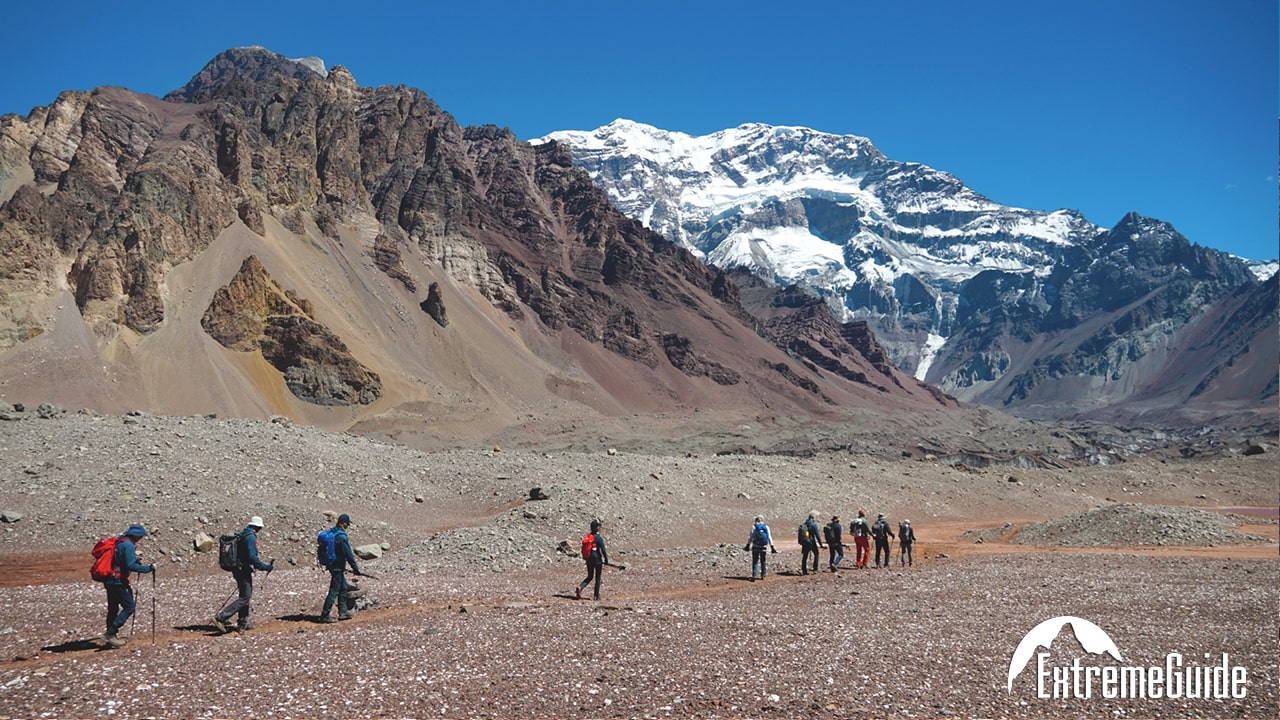
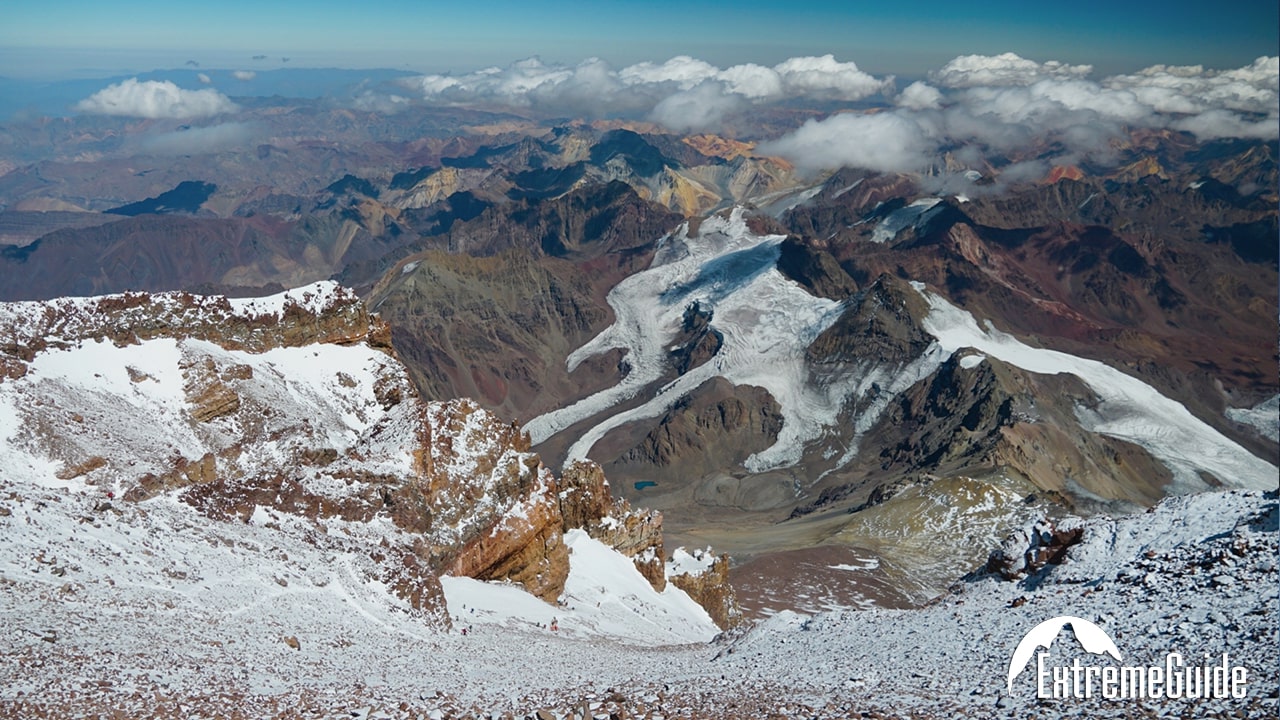
The Andes are the most famous peaks
The Andes mountain range is not only long, but also high. It is home to some of the most famous peaks in the Americas, three of which stand out.
Aconcagua
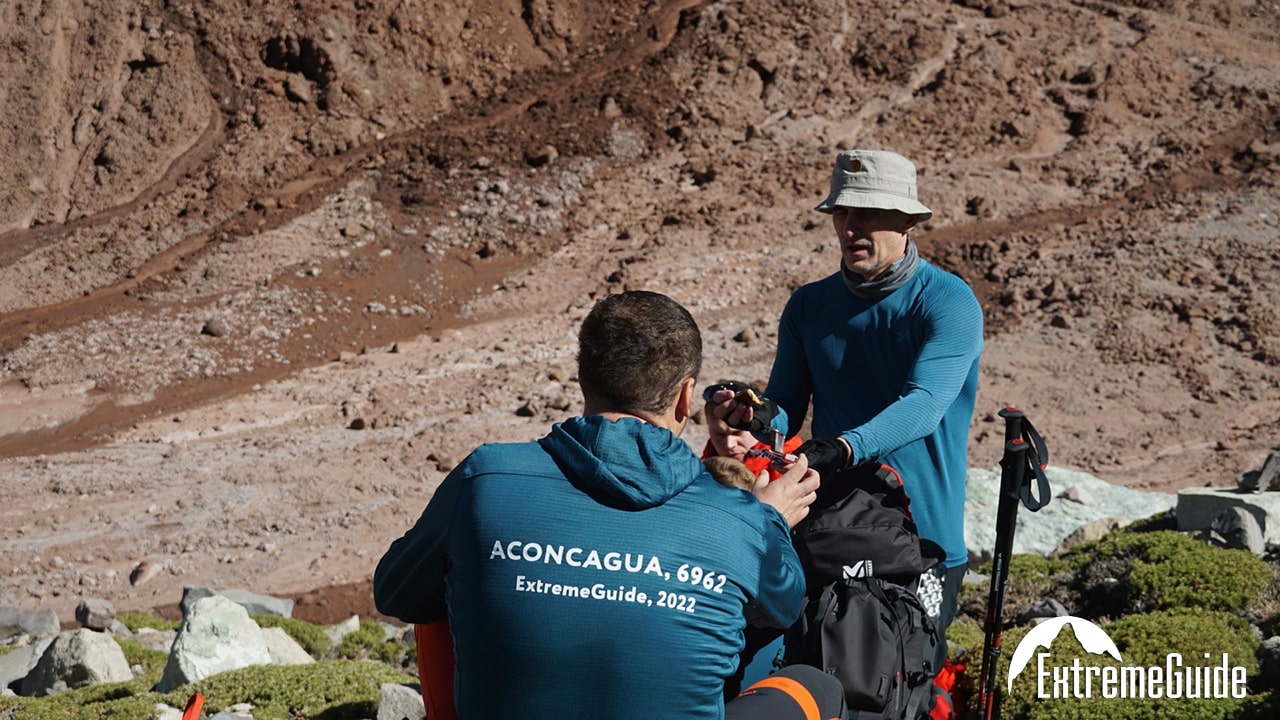
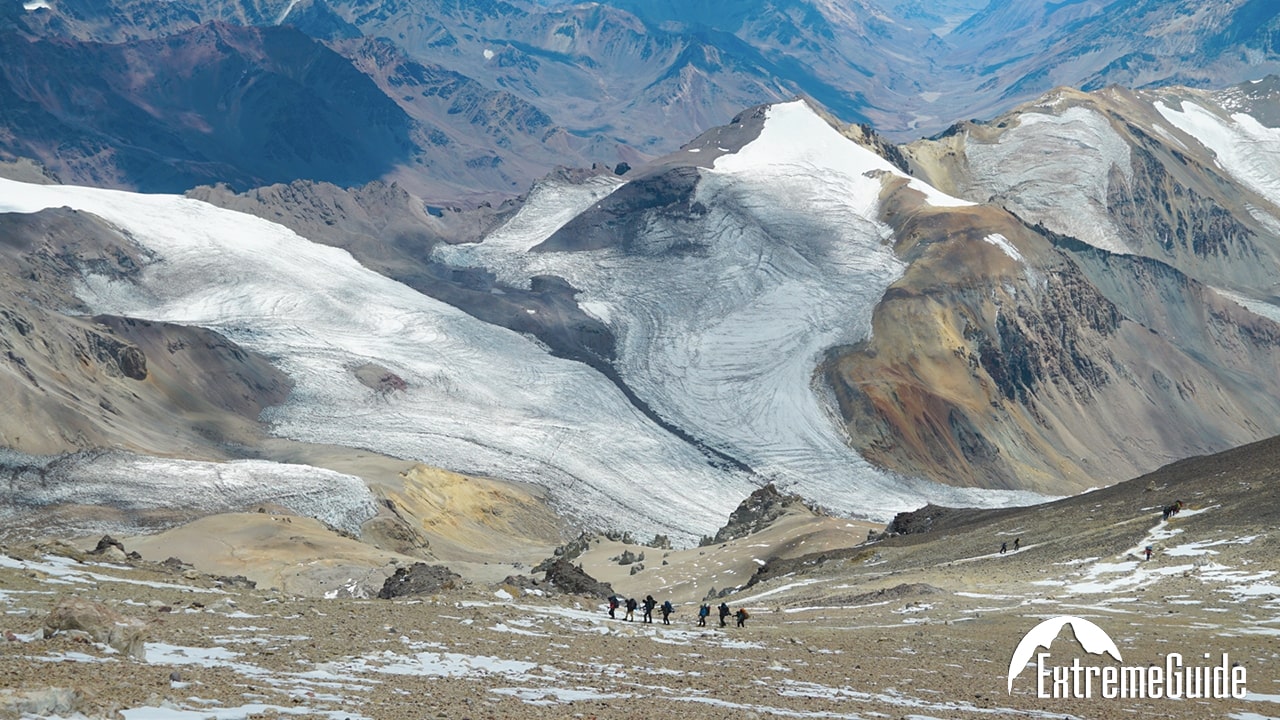
The highest point in South America is Mount Aconcagua, located in the Argentine Andes, reaching 6,961 meters. It is the highest peak outside the Himalayas and one of the main objects for mountaineers around the world. Climbing Aconcagua attracts both experienced mountain travelers and beginners, because the route from the northern side is technically not very difficult, although it requires serious acclimatization.
Chimborazo
Chimborazo is a dormant volcano in Ecuador that reaches a height of 6,263 meters. Due to the special shape of the planet, the summit of Chimborazo is the farthest point from the center of the Earth. Climbing Chimborazo not only opens up breathtaking views of the surrounding valleys and volcanoes, but also allows you to feel the real heights – both literally and figuratively.

Ojos del Salado
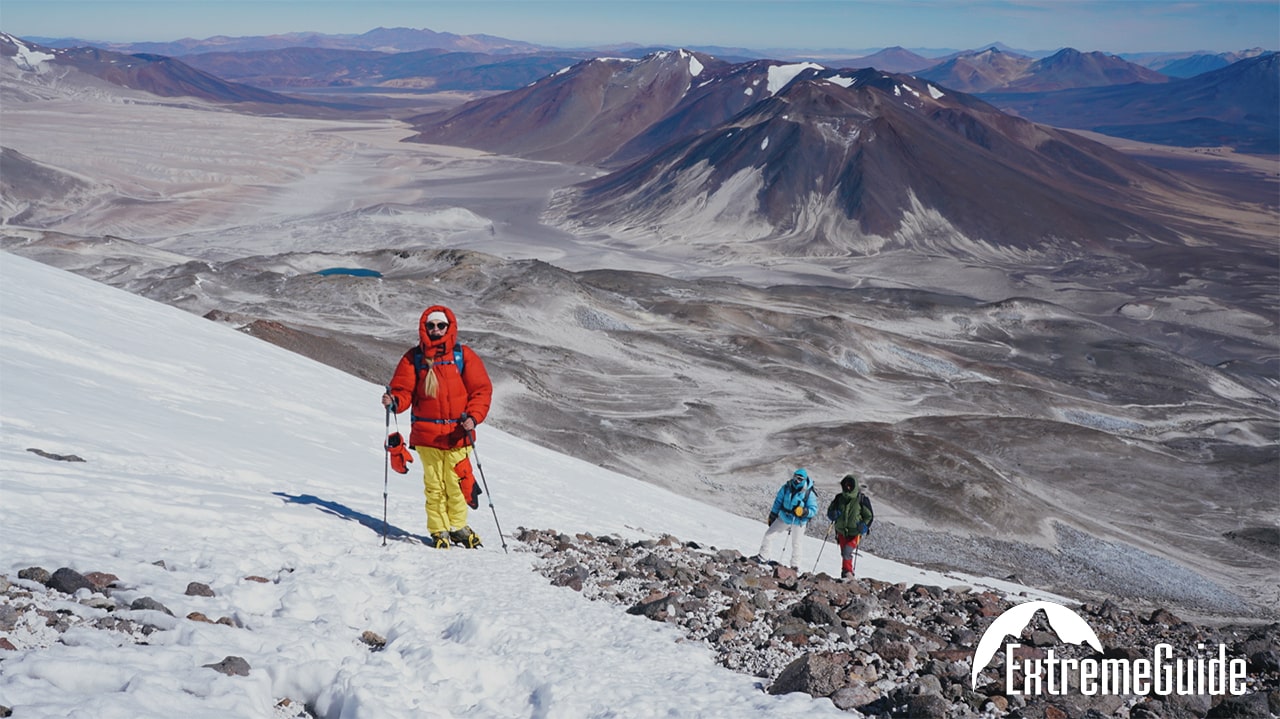
Situated on the border between Chile and Argentina, this volcano is the highest active volcano on the planet at 6,893 metres. Climbing Ojos del Salado is a unique opportunity to combine mountaineering and geothermal exploration, as one of the highest lakes in the world is located near the summit. Although the route is technically accessible, the weather conditions here are often harsh.
Climate zones of the Andes: contrasts of altitude and latitude
The Andes cover a vast area, from the equator to the temperate latitudes, so the climate changes not only from north to south, but also vertically. The higher you go up the mountains, the more noticeably the temperature, humidity, and precipitation change. All this creates a mosaic picture in which it is difficult to find repeating patterns, but it is easy to feel the grandeur of nature.
The Northern Andes, particularly Ecuador and Colombia, have a subequatorial climate with alternating wet and dry seasons. However, at the equator, such as in Quito, temperatures remain virtually constant throughout the year. Humidity is high and rain is frequent, especially on the eastern slopes. Temperatures and precipitation decrease with altitude, but there is more snow, and at 4,500 m there is even permanent snow.
The central part of the Andes, where such regions as the Altiplano and the Atacama Desert extend, exhibits a sharp climatic asymmetry. The western slopes are among the driest places on the planet. Here, the annual rainfall may not exceed 50 mm. In contrast, the eastern slopes, closer to the Amazon basin, receive up to 6,000 mm of rain per year. On the Puna plateau and in the Titicaca region, temperatures remain low, with large daily fluctuations and a dry, windy climate.
The southern Andes transition to a temperate climate zone. In Chile and southern Argentina, the western slopes are abundantly moistened by cyclones from the Pacific Ocean. Rain, fog, strong winds and low temperatures are frequent here, even in summer. In Santiago, for example, there is little precipitation – about 350 mm, and the temperature in summer does not exceed 20 °C. The further south you go, the more severe the weather conditions become. Tierra del Fuego has a cold oceanic climate with constant rain, strong winds and a small amplitude of seasonal temperature changes.
Flora and fauna
The vastness of the Andes means that the climate zones range from equatorial to subantarctic. This provides for an extraordinary biodiversity. In the mountain valleys of Peru, you can see gardens with corn and beans, while in the highlands, there are only mosses, lichens and tufts of paramo grass. The animal world is also impressive. The most famous inhabitants of the Andes are:
- vicuña and guanaco are wild relatives of llamas;
- Andean condor is one of the largest flying birds;
- Spectacled bear is the only bear in South America
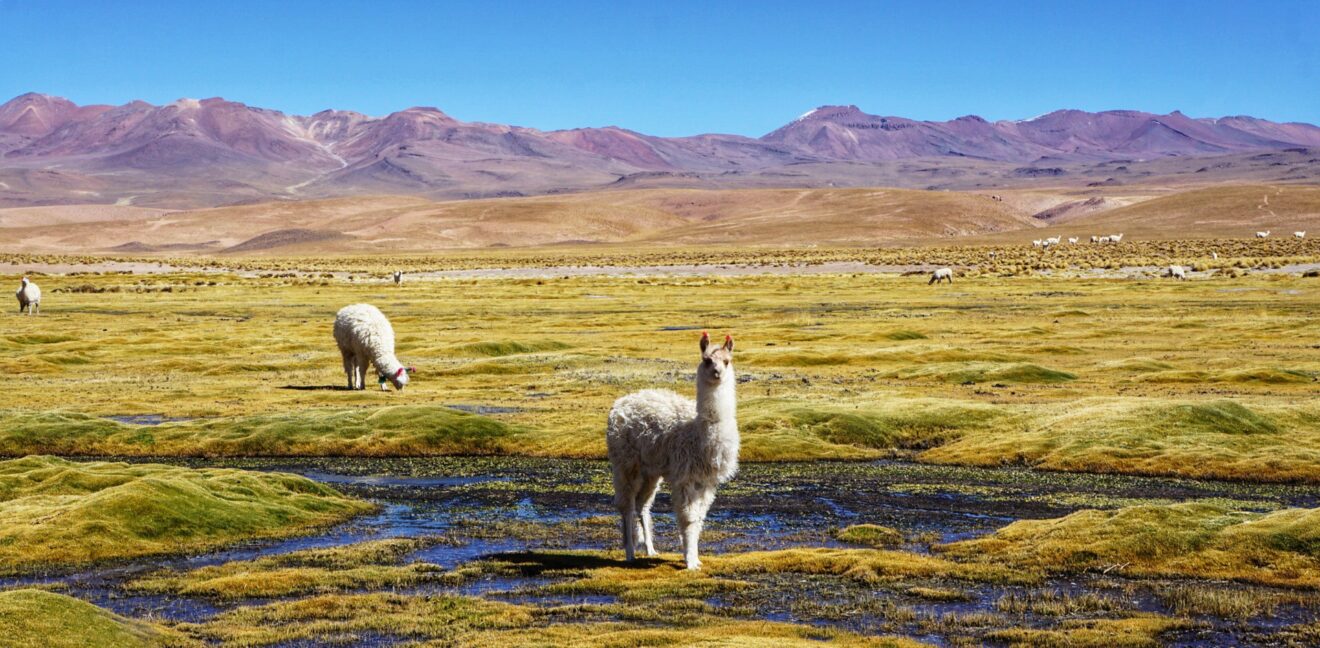
In the lower zones, tropical species such as jaguars, monkeys, and various parrots are found. In the highlands, there are mainly hardy, small mammals and birds that can withstand frost and lack of oxygen. The flora and fauna of the Andes constantly change with altitude:
- at an altitude of up to 1000 m – humid forests with lush vegetation;
- in the middle zone – dry steppes and shrubs;
- above 4000 m – alpine meadows and rocky deserts.
These contrasts give the mountains an incredible appeal for both explorers and nature lovers.
Your adventures in the Andes with Extreme Guide
 Argentina
Dates:
January 24 – February 16
Complexity:
Duration:
Height:

Left: 8 places
 Chile
Chile Dates:
January 9 – January 22
January 24 – February 6
Complexity:
Duration:
Height:
Left: 8 places
 Argentina
 Dates:
January 31 – February 16
Complexity:
Duration:
Height:
Left: 6 places
 Argentina
 Dates:
Complexity:
Duration:
Height:
 Ecuador
 Dates:
December 27 – January 7
December 27 – January 11
January 31 – February 11
January 31 – February 15
Complexity:
Duration:
Height:

5.0 (82)
Left: 8 places
 Peru
Peru
Dates:
May 2 – May 12
May 2 – May 17
May 2 – May 21
Complexity:
Duration:
Height:

5.0 (8)
Left: 12 places
 Chile
Chile
Dates:
Complexity:
Duration:
Height:
Negotiated