
The World’s Highest Mountains: Top 10 Stunning Peaks
Mountains have always attracted people with their grandeur and inaccessibility. Some dream of conquering the highest peaks, while others simply want to walk along the paths among the mountain ranges, enjoying the views. But what are the highest mountains in the world? Let’s figure it out!
Everest (8,848.86 m) – the highest mountain in the world
Mount Everest (or Chomolungma) is not just the highest peak in the world, but a true legend among climbers. Its height of 8848.86 meters makes it the king of the Himalayas. Climbing Everest is a very difficult task that requires months of preparation, acclimatization and endurance. Despite this, hundreds of desperate people try to conquer this peak every year, overcoming extreme weather conditions, oxygen starvation and exhaustion.

Due to its popularity, the route to the summit is now equipped with ropes and railings, but risks remain. The “death zone,” which begins above 8,000 meters, is extremely dangerous due to the extremely thin air. However, the views from there are truly astounding.
К2 (8611 m)
K2, or Chegori, is second only to Everest in height, but is significantly more difficult to climb. It is the second highest mountain in the world, but it is unforgiving. The mountain is located in the Karakoram, on the border between Pakistan and China. K2 is famous for its technically difficult routes and harsh weather conditions, making it one of the most dangerous peaks in the world.
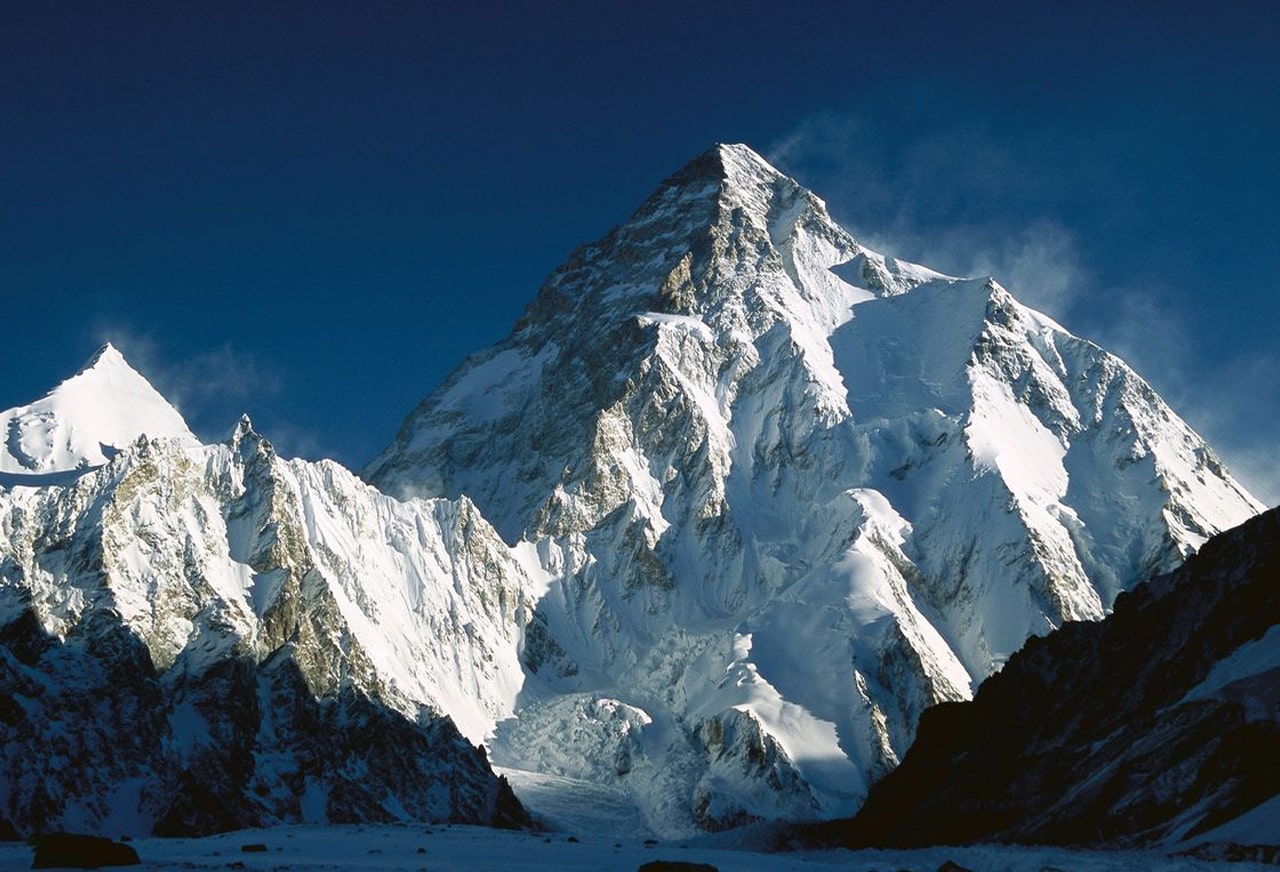
Unlike Everest, where the route is more commercialized, there are no pre-installed ropes or fixed camps on K2. Climbers are forced to make their own way, which greatly increases the risk.
Kanchenjunga (8586 m)
Kanchenjunga is located on the border between Nepal and India and is the third highest mountain in the world. Its name translates as “Five Treasures of the Great Snow” as it consists of five main peaks.
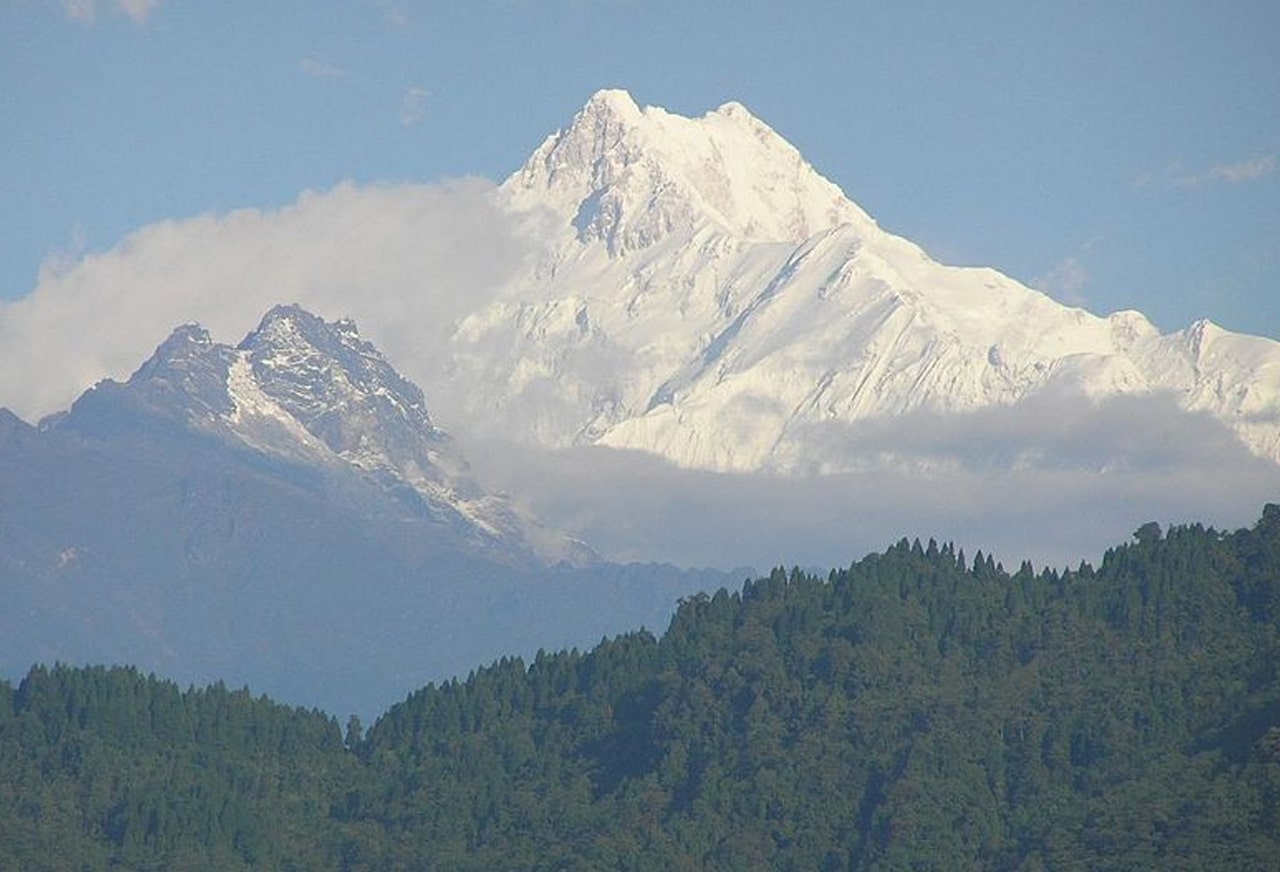
Unlike other eight-thousanders, this peak is less popular among commercial expeditions, which makes it attractive to real adventurers. Kangchenjunga is famous for its unpredictable avalanches and difficult weather conditions. It was long considered the highest mountain in the world until accurate measurements were made. Climbers who reach the summit traditionally stop a few meters away to honor local religious beliefs.
Lhotse (8516 m)
Lhotse is Everest’s neighbor, located just a few kilometers away. It often remains in the shadow of its giant brother, but is no less challenging to climb. The main route to the summit follows the same route as Everest, up to the South Col, after which climbers turn east.
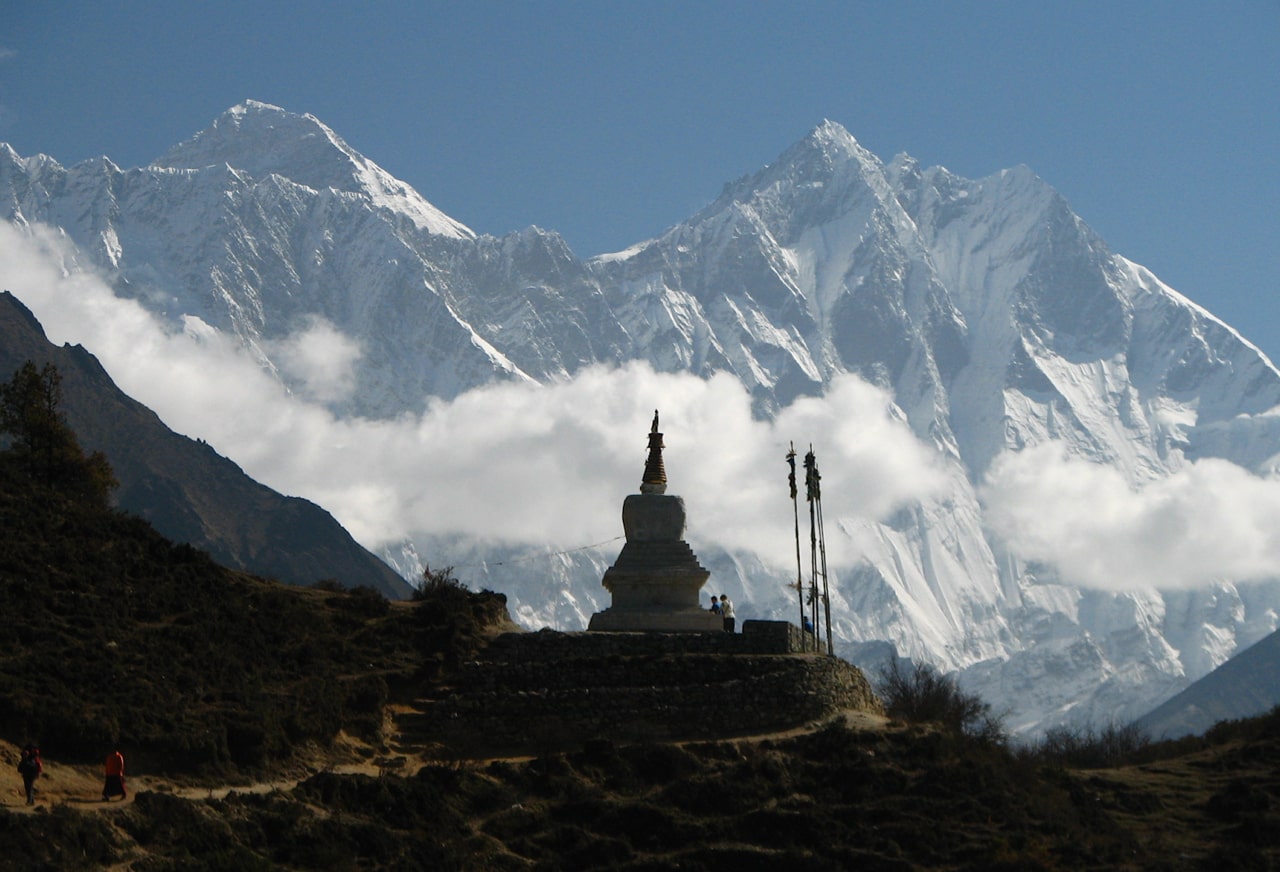
One of Lhotse’s unique features is its south face, one of the most difficult and dangerous to climb in the world. It is a nearly vertical cliff with a height of over 3,000 meters that will challenge even the most experienced climbers.
Makalu (8 485 m)
Makala is located only 19 km from Everest, but it is much less popular due to difficult access and technical difficulties. It has a pyramidal shape and looks very impressive against the backdrop of the Himalayas.
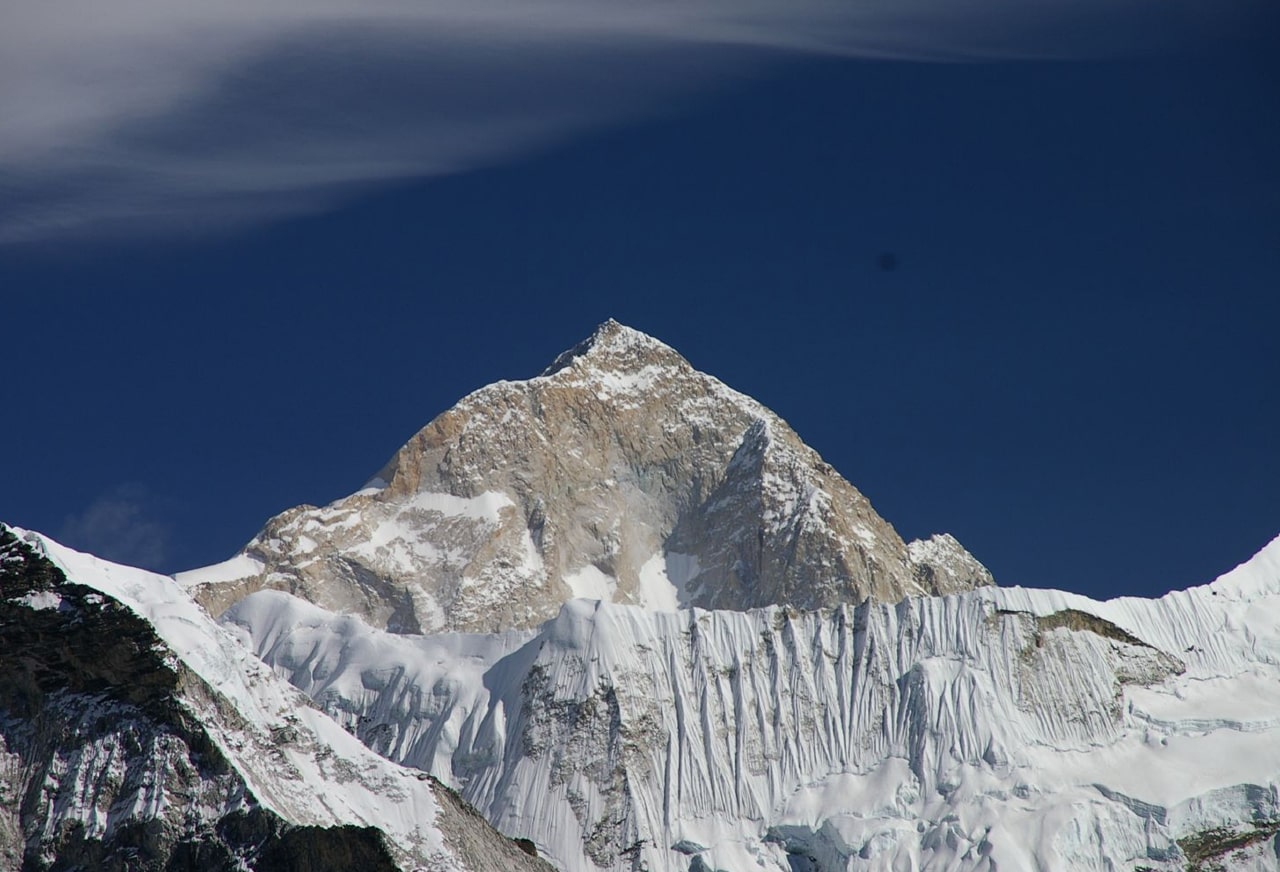
Climbing Makalu requires excellent physical fitness, as the routes here are very steep, with narrow ridges and icy slopes. The summit was one of the last to be conquered among the eight-thousanders, as it was long considered too difficult to climb.
Cho-Oyu (8188 m)
Cho Oyu, which translates as “Turquoise Goddess,” is the sixth-highest mountain in the world. It is located on the border of Nepal and Tibet, about 20 km west of Everest. Due to its relatively flat terrain and relatively stable weather, Cho Oyu is considered one of the “easiest” eight-thousanders to climb, making it a popular choice among beginner climbers.
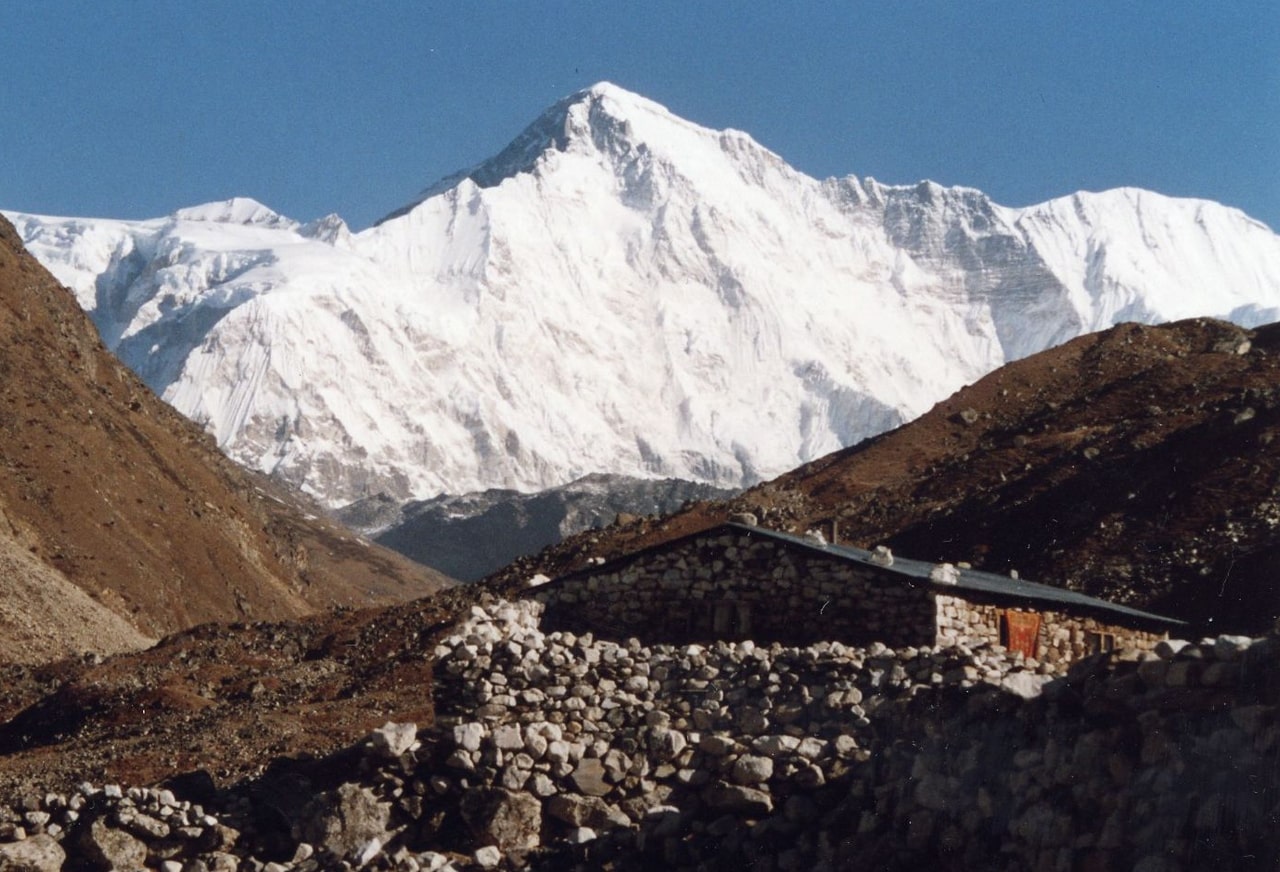
The first successful ascent to the summit was made by an Austrian expedition in 1954. Unlike many other eight-thousanders, the route to Cho Oyu does not contain technically difficult sections such as vertical ice walls or narrow ridges. However, this does not mean that the ascent is easy – the high probability of snow storms and the need for acclimatization make Cho Oyu a serious challenge.
Dhaulagiri (8 167 m)
Dhaulagiri, which means “White Mountain” in Sanskrit, is located in central Nepal. It is one of the most picturesque peaks in the Himalayas, and its massive snow-capped slopes and glaciers create a stunning landscape. At the same time, Dhaulagiri is known as one of the most difficult mountains to climb due to its steep routes, harsh weather conditions, and frequent avalanches.
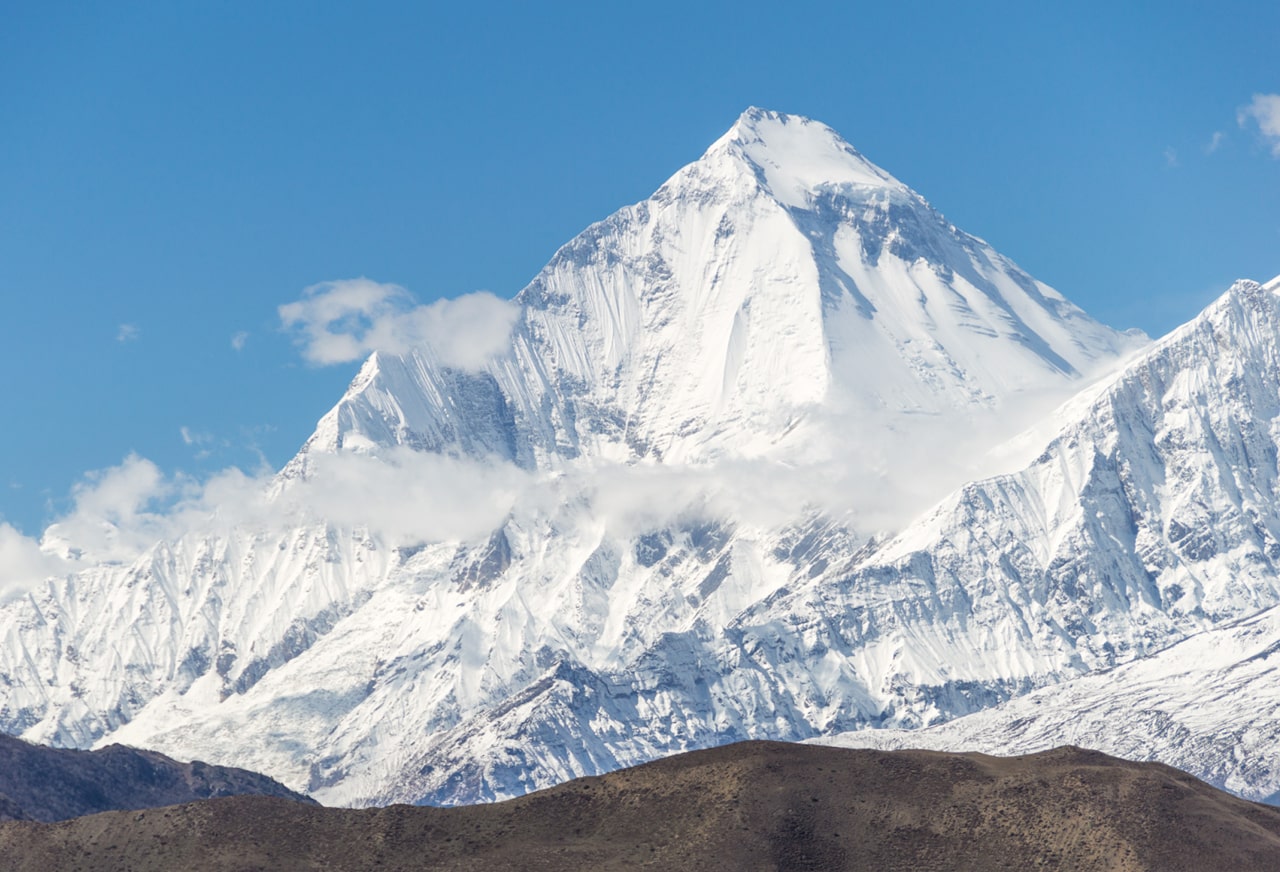
The first success in conquering this peak was in 1960, thanks to an international team of climbers. The main challenge during the ascent is the incredibly steep ice walls, which make acclimatization difficult, as well as the abundance of snowfall. Climbing Dhaulagiri requires a high level of training, so it is chosen by experienced climbers who are looking for a real challenge.
Manaslu (8 163 m)
Manaslu, the eighth highest mountain in the world, is located in Nepal and is surrounded by incredible Himalayan views. The mountain is less popular with commercial expeditions than Everest or Cho Oyu, making it an ideal choice for those seeking an authentic mountaineering experience.
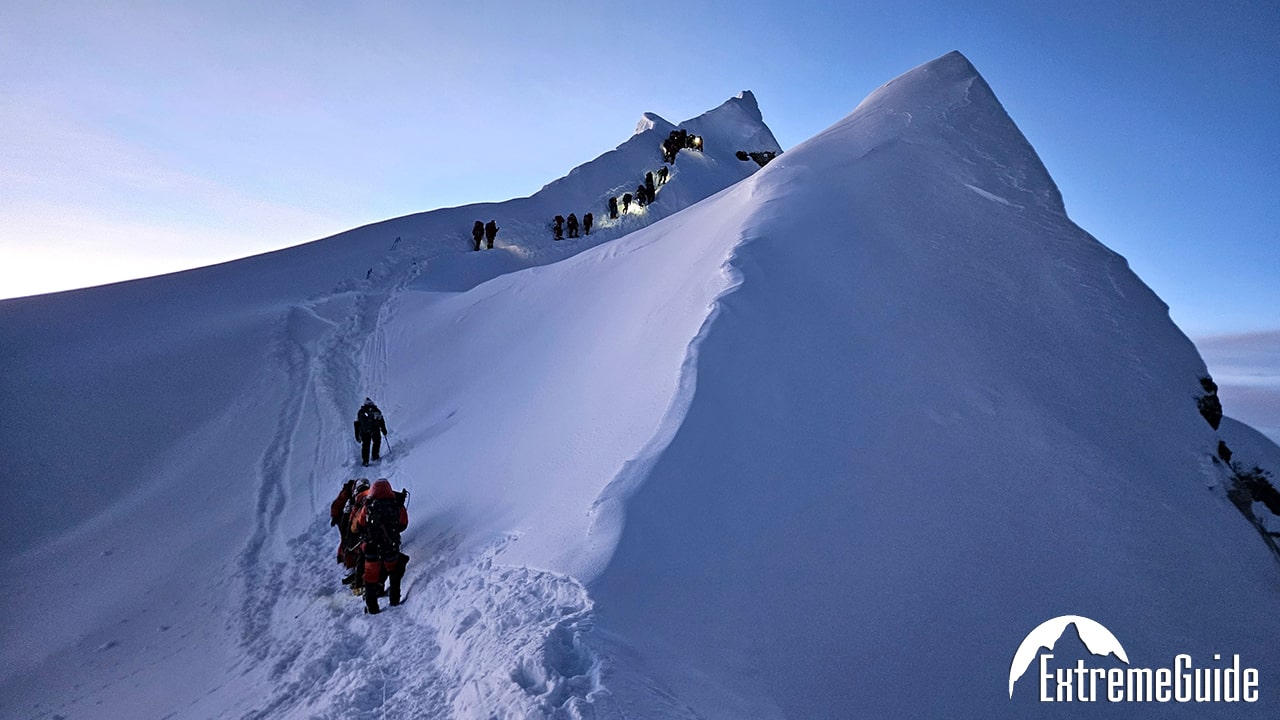
The first climb to the top took place in 1956 by a Japanese expedition. Climbers who choose Manaslu face serious challenges – harsh weather conditions, frequent avalanches and a dangerous ice zone. However, for those who are not ready for an extreme climb, there is the Manaslu trek – one of the most beautiful hiking routes in the Himalayas. It passes through traditional Nepalese villages, picturesque passes and valleys, opening up fantastic panoramas of the summit.
Nanga Parbat (8 126 m)
Nanga Parbat – is the ninth highest mountain in the world, located in Pakistan. It is known as one of the most dangerous mountains to climb due to its extremely difficult weather conditions and high fatality rate among climbers. This feature has earned the mountain the nickname “Killer Mountain”.
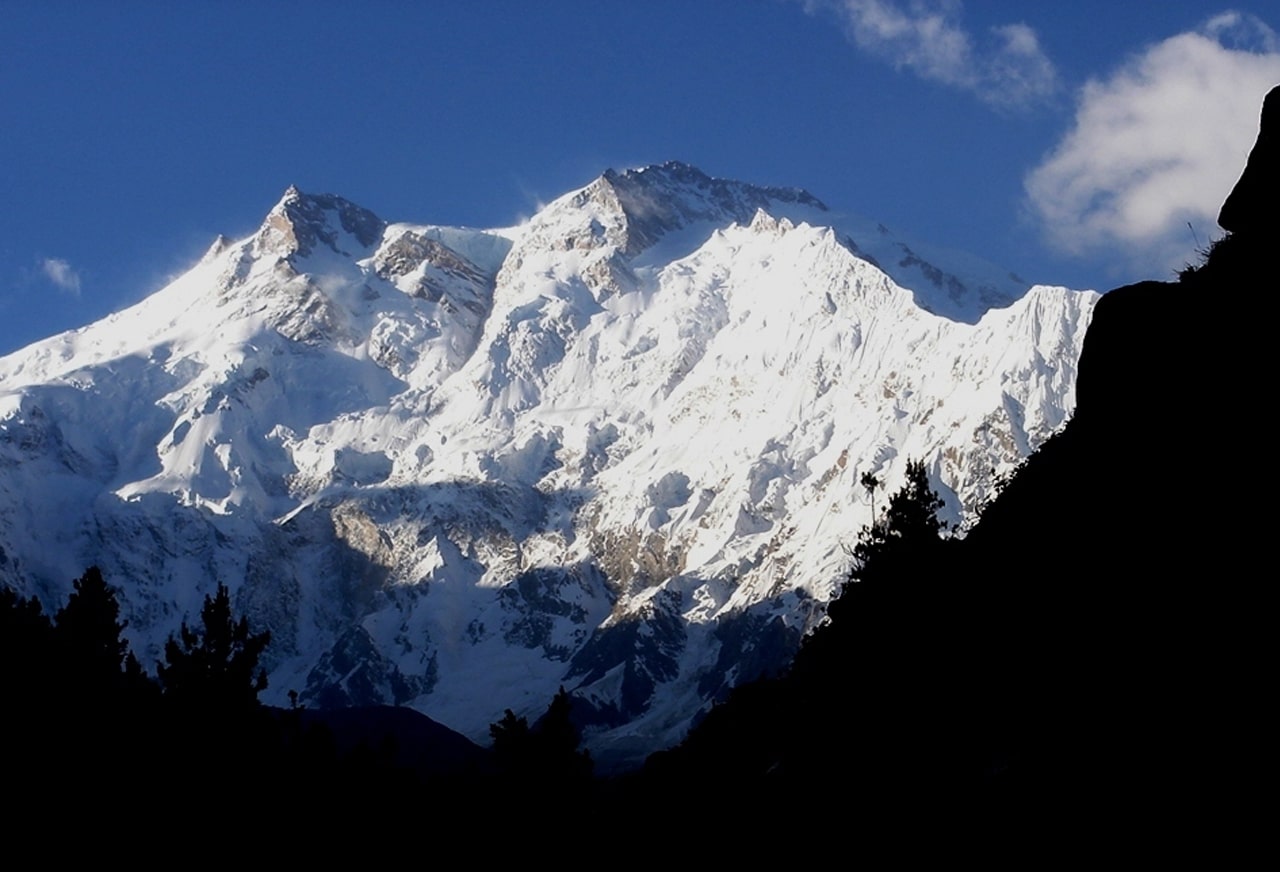
Climbing Nanga Parbat became possible only in 1953, when Austrian climber Hermann Buhl managed to reach the summit without oxygen. The routes here pass through huge vertical ice walls, including the Rupal Face, the highest in the world (4,600 m). Climbers face not only technical difficulties, but also extreme weather changes, which can instantly make the ascent dangerous.
Because of these factors, Nanga Parbat remains one of the most difficult mountains to conquer, although extreme sports enthusiasts try to test their strength on its slopes every year.
Annapurna I (8 091 m)
Annapurna I is the tenth highest mountain on the planet, but its mortality rate among climbers is higher than that of Everest. It is the first peak above 8,000 meters to be conquered by man – a French expedition successfully climbed it back in 1950.
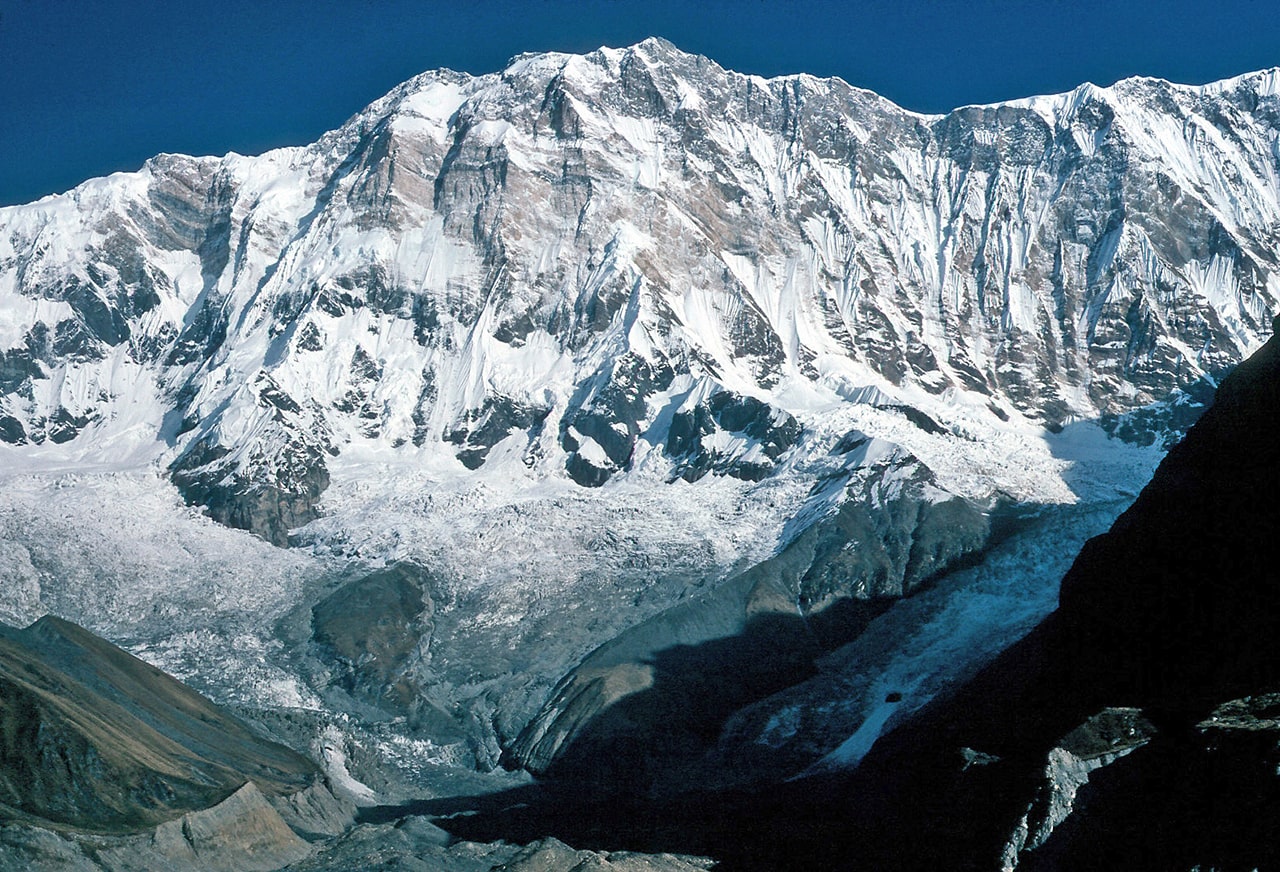
Despite this, the mountain is considered extremely dangerous due to frequent avalanches and difficult routes. Many climbers try to avoid Annapurna due to the high risk of death, but there is another way to enjoy its beauty – trekking around Annapurna.
This route is one of the most popular in the world, as it allows tourists to see the grandeur of the Himalayas without risking their lives. Trekking passes through unique landscapes, high mountain passes, Tibetan villages and ancient monasteries.
The highest mountains in the world – comparative table
| № | Mountain | Height (m) | Location |
| 1 | Everest | 8 848 | Nepal / Tibet |
| 2 | К2 | 8 611 | Pakistan / China |
| 3 | Kanchenjunga | 8 586 | Nepal / India |
| 4 | Lhotse | 8 516 | Nepal / Tibet |
| 5 | Makalu | 8 485 | Nepal / Tibet |
| 6 | Cho-Oyu | 8 188 | Nepal / Tibet |
| 7 | Dhaulagiri | 8 167 | Nepal |
| 8 | Manaslu | 8 163 | Nepal |
| 9 | Nanga Parbat | 8 126 | Pakistan |
| 10 | Annapurna I | 8 091 | Nepal |
To sum it up, the highest mountains in the world not only impress with their height, but also challenge climbers and travelers. Each of them has unique features – from dangerous routes to picturesque trekking trails. Regardless of whether you want to conquer the summit, or just enjoy incredible views, these mountains leave an unforgettable impression. They are symbols of the power of nature, which remind us that man can reach great heights – both literally and figuratively.
Tours to Highest Mountains
 Nepal (Himalayas)
Dates:
April 17 – May 23
Complexity:
Duration:
Height:

5.0 (86)
Left: 2 places
 Nepal (Himalayas)
 Dates:
September 6 – October 5
Complexity:
Duration:
Height:
5.0 (86)
Left: 4 places
 India
India
Dates:
Complexity:
Duration:
Height:

Negotiated
 Nepal (Himalayas)
 Dates:
October 25 – November 18
Complexity:
Duration:
Height:
5.0 (86)
Left: 4 places