
Who is Reinhold Messner?
Reinhold Messner is one of the most famous figures in the history of mountaineering, a man who changed the idea of what the body and spirit can do in the mountains. He was the first person in the world to conquer all 14 eight-thousanders without the use of oxygen, proving that even the highest peaks can be conquered alone, relying only on one’s own strength. His ascents were not just sporting achievements, but deep personal tests that turned into stories of courage, loss and incredible endurance.

Biography of Reinhold Messner
Reinhold Messner was born on September 17, 1944, in the small village of Vilnius (now South Tyrol, Italy). He spent his childhood among the Alpine peaks, which from a young age shaped his character and future passion for the mountains. Messner’s father was a teacher, which meant a lot in those days, and from an early age he taught his son discipline and responsibility. Already in his teens, Reinhold began making his first serious ascents together with his younger brother Günther, who became his most important partner in the early years of his mountaineering career. The turning point in their lives was 1970, when the brothers set off to conquer Nanga Parbat. After reaching the summit, on the way back, Günther died – it was a deep personal tragedy that left a mark for life. At the same time, this episode did not break Messner, but, on the contrary, hardened him even more and directed him onto the path of solo ascents – an extremely difficult and risky form of mountaineering.
Famous and most difficult ascents
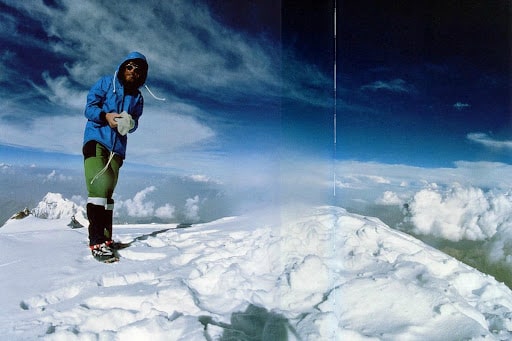
Among Reinhold Messner’s legendary achievements is the ascent of Everest in 1978 together with Peter Habeler. This historic moment has forever gone down in the annals of mountaineering, as it was the first successful ascent of the highest peak on the planet without the use of oxygen tanks. At that time, doctors and researchers considered this impossible – an altitude of over 8,800 meters was perceived as a death zone, where a person physically cannot function. But Messner and Habeler proved the opposite: slowly, with incredible effort, they reached the summit, becoming a symbol of a new approach to the mountains. Their ascent showed that endurance, technical training and psychological resilience can compensate for the lack of additional oxygen.

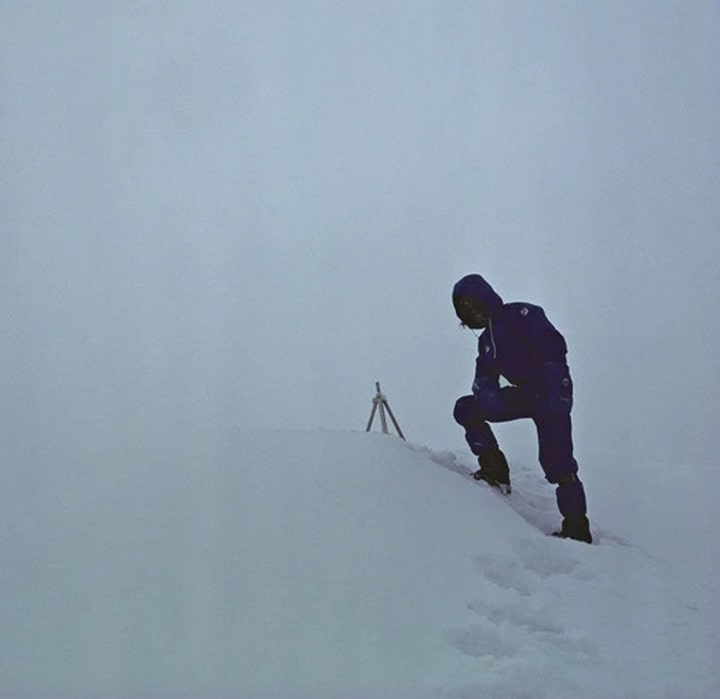

Two years later, in 1980, Messner returned to Everest, this time alone. This climb was even more risky – not only because of the lack of oxygen, but also because he chose a new route from the Tibetan side that had not been used for solo climbs before. He also did it during the monsoon season, when weather conditions on Everest are particularly unpredictable. The elements, isolation, and exhaustion became his constant companions for several days. Successfully reaching the summit in these conditions is considered one of the greatest feats in the history of mountaineering.
Another outstanding achievement was the climbing summit Manaslu, the eighth highest mountain in the world (8,163 meters), located in Nepal. This mountain is considered one of the most dangerous due to the difficult geography of the route and frequent avalanches. Messner climbed Manaslu without oxygen, during an expedition that required not only physical endurance, but also exceptional caution. At one point, he had to abandon the standard route due to deteriorating weather and choose a detour, which lengthened the expedition. His decision, as always, was based on a deep understanding of the mountains and intuition developed over years of experience.
Here are some of the peaks Messner has conquered without supplemental oxygen:
- Kanchenjunga is the third highest peak in the world, known for its technical difficulty
- Makalu is a steep and rapid mountain that requires exceptional technical skills
- Lhotse is Everest’s “neighbor”, with a dangerous route along the glacial slopes
- K2 is the second highest mountain in the world, which is called the “Wild Mountain” due to the high mortality rate among climbers
Messner did all this not for the sake of records or recognition. For him, each ascent was an act of personal transformation, a challenge that changes a person not from the outside, but from the inside. He emphasized more than once that a real ascent begins not with the first step up, but with an internal decision to take it.
Messner’s Cultural Heritage
Reinhold Messner is not just about the mountains. He became one of the most influential popularizers of mountaineering, a writer, director and founder of a series of museums called the Messner Mountain Museum. His books about expeditions have been translated into many languages, and they remain relevant for anyone interested in extreme travel and the psychology of endurance.
He paid special attention to the development of the ideas of “pure mountaineering”, where the main thing is not to conquer the mountain, but to interact harmoniously with it. He repeatedly emphasized that a mountaineer should not be a conqueror, but a student of the mountains. In this sense, his approach significantly influenced new generations of mountaineers and became the basis for the creation of more than one mountaineering school around the world, including in Ukraine.
In his cultural legacy, Messner managed to combine sport, philosophy and the aesthetics of living on the edge of the possible. His name became a symbol of human courage and a deep connection with nature.
Climbing the highest peaks with Extreme Guide
 Nepal (Himalayas)
Dates:
April 18 – May 4
October 25 – November 10
Complexity:
Duration:
Height:

5.0 (8)
2625 USD
Left: 3 places
 Argentina
 Dates:
January 31 – February 16
Complexity:
Duration:
Height:

Left: 6 places
 Nepal (Himalayas)
 Dates:
April 18 – May 24
Complexity:
Duration:
Height:

5.0 (82)
Left: 2 places
 Nepal (Himalayas)
 Dates:
October 25 – November 11
Complexity:
Duration:
Height:
Left: 6 places
Is mountain climbing like Rainhold Messmer did like being born into our world and respect life and its nature and thank for having this adventure. And not living to win against life.
my tought is raw and on the oher hand intellgent and respectful as it shows me this is the way to live. Respecting my self and life as it is.?