


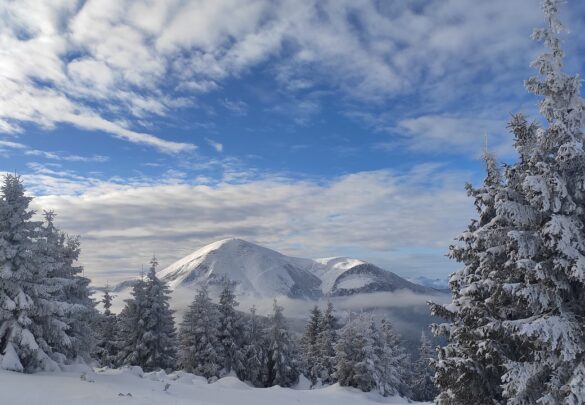
Climbing Hoverla: Reaching the Top of the Ukrainian Carpathians
The world of mountaineering also has its own unsolved problems. That’s why literally every Ukrainian mountain enthusiast, even the most experienced, needs to climb Hoverla at least once—to experience the highest peak in their home country. And we, ExtremeGuide, invite you to join us on a journey to the Carpathian peak. We’ll make your ascent exciting, well-planned, and as safe as possible.
There are various routes and methods for conquering the summit. You can even skip the summit and explore the foothills as part of a trekking session if you have children in your group. However, any hike to Hoverla requires preparation, and we can help you do it properly. Contact ExtremeGuide, and we’ll enroll you in a mountaineering school and help you find introductory programs for conquering the Carpathians. We also have exciting offers for all skill levels.

Hiking plan and route
We approach the preparation of Hoverla tours meticulously and individually. Therefore, the programs for trekking in the foothills and, say, climbing Petros on New Year’s Eve, differ greatly.
Here are some examples of popular routes:
- We meet the participants of the hike to Shpitsy in Vorokhta, introduce them to the beauty of the Marushevska Valley, visit the Gadzhina hut, traverse the Chornohora Ridge, admire the surface of Lake Nesamovyte, and finally conquer Hoverla itself.
- We set up camp near the village of Kvasy with its mineral springs, climb Petros and enjoy the clean air and panoramic views of the Black Tisa, sequentially conquer three peaks: Breskul, Pozhyzhevska, and Turkul, visit the ruins of the White Elephant, and arrive in Dzembron.
- After a briefing at the Zaroslyak tourist base, at 8-9:00 AM, we begin our assault on Hoverla: for five hours, we climb a gentle slope, admiring juniper forests and meadows covered in snow or strewn with flowers; We find ourselves at the peak, enjoy the moment, and descend to Vorokhta—that’s a blitz conquest of the Carpathians in one day.
These are just a few of the Hoverla climbing itineraries, and each one is subject to change. We are always ready to optimally adjust the route based on the group’s preferences, the participants’ condition, and the weather. We will objectively and promptly consider every significant factor during the trip.
Climbing Hoverla in summer, autumn, and winter: tourist climbing seasons
The beauty of the Ukrainian Carpathians is that they’re interesting at virtually any time of year. We’ve identified two seasons for conquering them. Why? Because the climbing season runs from May to October, encompassing the entire summer and fall. That’s two. But you can also climb Hoverla in winter, using one of ExtremeGuide’s original programs. That’s another.
To help you decide when to conquer the Carpathians, let’s take a closer look at each season.
Weather conditions and climbing features for each season
The nature and landscapes of the Ukrainian mountains are so rich and beautiful precisely because they have such a changeable and diverse, yet not capricious, climate. This is most evident in autumn, when temperatures fluctuate between daytime highs of 17°C and nighttime lows of 5°C. Rain is also common, although it’s more typical of summertime Hoverla, with temperatures ranging from 25°C to 10°C. Yes, sometimes the thermometer can drop to freezing, but this is very rare. Winters are moderately severe: -10°C is considered the norm, but frosts down to -30°C do occasionally occur.
- Summer is the best season to climb Hoverla because it allows you to fully appreciate its natural richness. While snow is still possible in May, in July the surrounding area will be covered in greenery, and in August you’ll be able to admire the scatterings of mushrooms, blueberries, and lingonberries along the way.

- Autumn offers relatively little time to conquer the Carpathian peaks—until about the end of September. Because in October, not just rain but downpours begins, the temperature fluctuates significantly, and in November, snowfalls arrive—the risks increase.
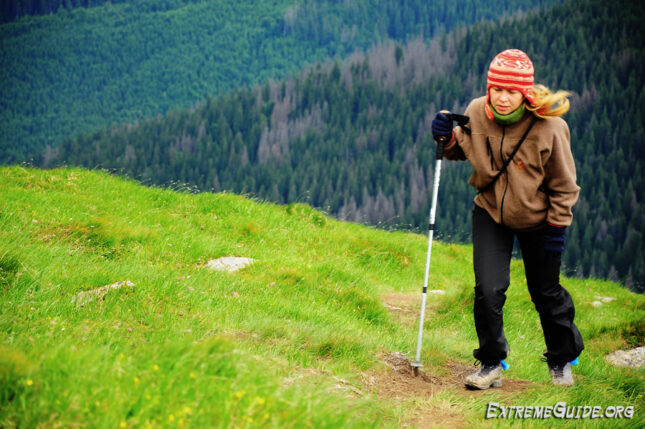
- Winter is a time for extreme climbing, and at this time of year, excursions to Hoverla are recommended only with guides. The snow-covered valleys and slopes pose many dangers, requiring an experienced guide.

ExtremeGuide offers Carpathian mountaineering programs for every season, from simple, kid-friendly options to truly challenging blitz challenges. We organize and personally guide you through all the routes.
Necessary equipment for the tour
Here you need to look at the nuances: what time of year the ascent to Hoverla takes place, the difficulty of the program, and so on. Therefore, a complete packing list should be clarified with the guide in advance, after booking a specific tour.
But in general, for hiking and storming the peaks of the Carpathians, you need:
- Comfortable trekking boots with thick soles;
- A change of shoes for camping; sneakers are also suitable;
- A spare set of socks, at least 3 pairs, thick and warm;
- Several changes of underwear;
- A t-shirt, a set of walking clothes (pants, sweater, jacket);
- A pair of gloves – thin ones for camping and windproof;
- Thermal underwear and a set of warm clothes (fleece pants and sweater, hat, buff, or balaclava);
- A raincoat and backpack, also with a protective cape;
- A down jacket or other warm jacket, but definitely with a hood;
- A set of camping utensils and a thermos;
- Trekking poles, ski mask, and headlamp;
- A personal first aid kit and personal hygiene items;
- Necessary documents;
- Nutrition bars and snacks for quick replenishment;
- Camera, video camera, smartphone, chargers, and power banks;
solid fuel and matches.
This is a general list, applicable to all seasons and occasions, but we may have missed something. Therefore, be sure to discuss equipment with your guide.
Packing for a hike: Everything a first-time traveler needs to consider
If you’re visiting the Carpathians for the first time, be aware that the comfort of your journey will depend heavily on weather conditions. When the weather is clear, visibility is excellent, but in rain or fog, many landmarks disappear. This is another reason why it’s best to climb Hoverla with guides—experienced guides know the terrain well and can navigate the route even with their eyes closed (though paper maps and GPS are also a good idea). Also, move carefully and slowly along the washed-out trails to avoid falls and injuries, as they become slippery.

In essence (and by designation), Hoverla is one large nature reserve: therefore, even in its foothills and surrounding areas, not only is littering prohibited, but fishing or picking mushrooms and berries is also prohibited. And rightly so: we should love nature, not harm it.
Hoverla’s summit is a fairly large, flat plateau buffeted by strong winds. Therefore, it’s best to take photos and explore the peak’s sights at a brisk pace.
Tourist lodges and kolybas (shepherd’s huts) are scattered along the route. While they’re free, they can be occupied or damaged by bad weather, so don’t count on staying there. It’s much safer and more comfortable to spend the night in Vorokhta, at the Kozmeshchik shelter or the Zaroslyak tourist base. Prices for a hostel or hotel room there are quite reasonable. And for a multi-day trip, sleeping bags, sleeping pads, and tents are always available.
Climbing Hoverla: Ascend the mountain with the ExtremeGuide team’s guides

Conquering the Carpathians is best done with help, so we offer you our full experience. The price of a Hoverla ascent with ExtremeGuide includes:
- Planning and adjusting the climbing program;
- Support at every stage of the route;
- Making operational decisions “on the spot”;
- Guide services for sightseeing;
- Organizing accommodation in shelters and tourist centers;
- Resolving issues with meals and transfers.
And many other excursion and everyday activities (too many to list at once). With us, exploring the Carpathians is more convenient, interesting, and safer—contact ExtremeGuide, and let’s climb Hoverla.