





Tours in Nepal
A tour of Nepal is difficult to compare to any trip to another country. Here, you feel as if you’ve arrived on another planet, where its own rules reign. Stirring temples and monasteries rival the magnificent natural landscapes. Exoticism permeates literally everything; the multitude of cultural attractions has made tourism in this country incredibly attractive.
Nepal is a small strip of land between India and China. Most of the territory is mountainous. People live in inaccessible gorges, in mountains above 4,000 meters. But every year, more than 2 million tourists come here to experience the beauty of the Himalayas firsthand.

Why is Nepal?
Tours to Nepal are inevitably alluring. Once you’ve visited, you’ll never be the same. This country possesses a unique character and uniqueness. Perhaps because all the world’s religions coexist peacefully here: Buddhism, Hinduism, Christianity, and Islam, though Hinduism is the most prevalent. And each religion has left its mark on Nepal’s history. After all, Gautama Buddha was born in a small town in southern Nepal 2,500 years ago, and Nepal is revered as a pilgrimage site for Buddhists. At the same time, there are a large number of Hindu shrines. Around 14 UNESCO World Heritage sites are located in Nepal. Perhaps this special magnetism also stems from the country’s long isolation, with mass tourism only beginning to develop after 1989, when the first mountain treks opened for tourists. Before that, Nepal was known only to a small circle of mountaineers.

Of course, when you arrive in Kathmandu on the first day of a Nepal tour, you might be shocked by the chaos on the roads, the dense construction, the dirt, dust, and the sheer poverty of the population. But as soon as you reach the mountains, everything changes. The mountains are majestic and beautiful. After a powerful emotional upheaval, an intense trek, and two weeks of isolation high in the Himalayas, Kathmandu no longer seems so scary and dirty; it feels like home, and you don’t want to leave. That’s why every second person dreams of returning here within a year. Everything is simple in Nepal, and so are the Nepalese. Life here is very relaxed, the people are very friendly and always happy to see you.
Why are tours to Nepal so popular?
Why are trekking in Nepal so popular? It’s easy to explain: the country boasts ten of the highest mountains on the planet, along which numerous routes are laid. Here, you can start with an easy trek to test your strength.
The only accessible way to explore Nepal, fully immerse yourself in its culture and ethnicity, and see its mountains is to go trekking in Nepal. We offer over ten different routes, including climbing. The average tour duration is 14-18 days, as it’s impossible to see this country, 80% of which is mountainous, in a week.
For more information on trekking in Nepal, see a lecture
Trekking in Nepal with ExtremeGuide, why with us?
- We love tours to Nepal and want you to love them as much as we do.
- We’ve been working in Nepal since 2008.
- Each season, we take 50-60 people (6-8 groups) on treks and climbs to Nepal.
- Experienced company guides and local guides.
- All routes have been conducted multiple times, so everything is thought out to the last detail.
- We offer support from local tour operators, and we’ll resolve any issue in Nepal, including helicopter evacuation from Everest, very quickly.
- Transparent pricing, no hidden costs or surprises.
- We’ll help you pack the necessary gear.
- We’ll help you buy the best tickets.
- We’ll tell you how to best train before your trek.
Why is trekking so popular in Nepal?
70% of tourists who come to Nepal come for mountain trekking. There’s plenty to choose from, from short three-day trips to independent expeditions lasting up to 30 days.
Nepal is filled with stories and incredible legends, and our guides will be happy to share this information with you. A tour to Nepal is not just a trek; it is an ethnographic journey where we will immerse ourselves in the history and everyday life of the local people. Hindu culture is richly represented along each route, and Buddhist culture is ubiquitous.
Yes, you need to be physically prepared for the stress of hiking 10-15 km a day, but all this is more than compensated for by the emotions and views that await you. Therefore, we guarantee you’ll have 1,000+ photos at the end of the trip.
Features of trekking in Nepal
Trekking is a buzzword. This type of trek involves walking from village to village, staying overnight in hotels or huts, and traveling lightly or with a small backpack. In fact, trekking in Nepal can be considered ecotourism. Since you’re following a marked trail, it often passes through villages where you can stop for a snack or lunch, tea, or cola. You spend the night in local lodges (mountain inns) run by locals. The treks are very comfortable, with logical overnight spots usually every 10-15 km, and the daily elevation gain is 500-600 m. Furthermore, the lodges have showers, electricity, and internet access. You can order a variety of meals and drinks from the hotel cafe. Porters will carry your luggage for a small fee. All this makes this type of vacation very attractive to a wide audience. Therefore, during a tour to Nepal, you can meet people from various countries well over 60.
Kathmandu and what else to see
Kathmandu is a large village that began to expand rapidly in the 20th century. The city’s population now stands at approximately 3 million. The country’s population is 30 million.
If you thought the streets in Europe were very narrow, you’d be mistaken – in Kathmandu, they’re even narrower, so much so that the roofs of houses facing each other touch. However, don’t worry about being run over by busy drivers of various vehicles; they maneuver perfectly among pedestrians, deftly avoiding unwary tourists.
In one tour you are unlikely to be able to see all the sights of Nepal, let alone its capital. But first, you should definitely visit the Pashupatinath temple complex, the majestic Swayambhunath, the incredible Boudhanath stupa, the Durbrar Palace and the small town of Patan. We include all these attractions in our programs after the main trek to provide a thorough understanding of the history and culture of ancient Nepal.

What to consider before booking a tour to Nepal
Globalization is slowly creeping into Nepal, especially in cities and large villages. But a sense of mystery and mysticism, fueled by the local culture, still permeates every corner. Travelers are literally touched by the amazing mysteries that fill Nepal.
We organize tours and climbing trips in Nepal in the spring and fall. You can also plan a New Year’s trip with us.
There are just a few things to consider when planning your trip:
- Kathmandu, Nepal, is Asia at its most vibrant. It won’t offer super-luxury, cleanliness, speed, or superb service. They say about Nepal: “Everything is simple in Nepal.”
- In Nepal, no one is in a hurry, so those with a European mindset need to relax and try not to resist the flow of events.
Trekking and Climbing Season in Nepal
The best time for trekking and hiking in Nepal is spring and fall, with some routes also accessible in winter. If you’re planning to climb one of the six-thousanders, the optimal time is spring and fall.
Hiking in Nepal in autumn
Autumn is the most popular trekking season in Nepal. By late September, the summer monsoons have lost their strength, and dry, clear weather settles over Nepal. However, short-term rainfall is still possible during this time. Although the weather in the mountains turns toward winter, at altitudes up to 4,000 m (13,500 ft) you can still wear a T-shirt and light fleece during the day; at altitudes above 5,000 m (16,500 ft), there can be a slight frost at night. Therefore, October and all of November are safe months to plan a trip to Nepal.
Trekking in Nepal in spring and during the May holidays
In spring, the weather is more changeable. Clouds cover the mountains in the afternoon, and short rains may occasionally fall, with snow in the mountains. Overall, this period is much warmer than October and November. Rhododendrons and other trees begin to bloom in the mountains. The optimal period for a tour during this time is late March to mid-May. As summer approaches, precipitation increases in the mountains and valleys, and by June, the monsoon arrives in Nepal, with heavy, daily rainfall.
Trekking in Nepal in winter and New Year
Winter in the mountains and lowlands brings very dry and stable weather with little precipitation, but strong winds can occur in the mountains, and above 4,000 meters (13,200 feet) temperatures can drop below freezing even during the day. During this time, there are few tourists in the mountains, which is why many prefer this period. However, it’s important to wrap up warm and bring a warm sleeping bag, as the loggias are unheated, and be prepared for freezing temperatures in the sleeping quarters at night. During the day, the sun is quite warm, and Sherpas and mountaineers try to heat the dining room in the morning and evening.

Trekking Accommodation, Lodges in Nepal
A unique feature of trekking in Nepal is that on most popular treks, you don’t sleep in tents, but rather walk from village to village and stay in lodges—guesthouses. Accommodations are 2-3 people per room, and there’s a dining room where you can order meals (dinner, breakfast, and lunch). There’s also a hot shower, a toilet sometimes in your room, and paid Wi-Fi. So, you admire the mountain beauty during the day, and in the evening, you find yourself in relative comfort, able to regularly text your loved ones. This level of comfort is typical for trekking to Everest, around Annapurna, Langtang. But if you trek around Dhaulagiri or to Kanchenjunga, you should be prepared for no internet. The lodges are very basic, and sometimes it’s better to sleep in a tent. The dining room menu is very simple—rice, potatoes, and eggs.
You can watch a video about lodges in Nepal
Trekking difficulty in Nepal: which route to choose?
There are 10 main treks in Nepal, mostly to or around the base of the main Himalayan peaks. Duration ranges from 7-8 active days to 30 days. On average, we’ll cover 10-15 km per day. Porters are always available to provide luggage. You’ll reach altitudes of 3,500-5,000 m. We’ve compiled a selection of the most interesting.
For example, one of our easiest routes, which we recommend for beginners, is the Annapurna trek. This trek has low altitudes, moderate treks, and the active, mountainous section lasts only eight days. The tour starts at 1,000 meters (3,300 ft) and gradually climbs each day to 4,600 meters (15,500 ft) – Annapurna Base Camp.
The next most challenging trek is the Around of the Annapurna, which starts at an altitude of 2,000 meters. It’s slightly longer and involves crossing a 5,600-meter pass. The difficulty of this trek is offset by the diversity of landscapes, scenery, and cultural heritage: temples, ancient remote villages, Buddhist and Hindu settlements. Comfortable lodges and internet access are available along the route.
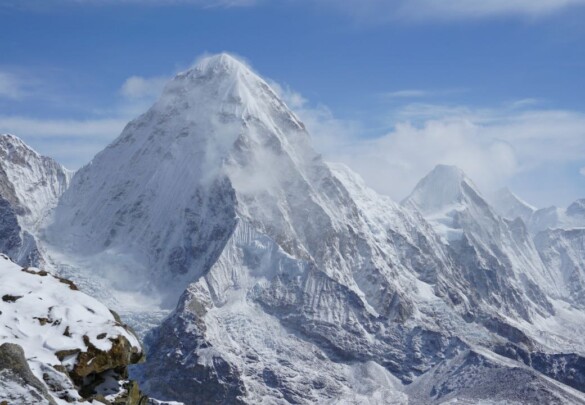
Trekking to Everest is undoubtedly the most popular tour in Nepal. Everyone wants to see Everest. But this route is very treacherous, and people above 4,500 meters often experience symptoms of altitude sickness, sometimes in severe forms. Therefore, we recommend this route, of course, to those who have already been to the mountains and are prepared for the stress and hardships associated with altitude. There are also comfortable lodges and hotels with internet access.
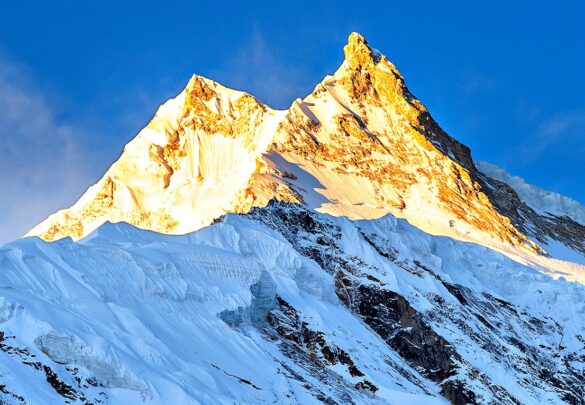
The Manaslu trek is one of the few tours where civilization seems to be at a standstill. Along this route, mountain villages have retained their unique character. It’s like stepping into a museum of Nepalese history. There are lodges and internet access, but the crowds are far lower than on the Everest and Annapurna treks.
The closed kingdom of Mustang is a journey to a remote part of Nepal, where not all villages have electricity, internet, or mobile phone service. Mustang was closed to tourists for a long time, only reopening in the 2000s. A permit for this tour is very expensive—$500—so the number of tourists here is ten times lower than on popular tours.
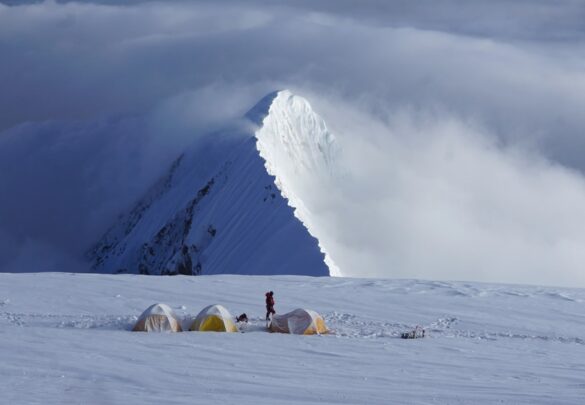
The Dhaulagiri trek and the Kanchenjunga trek are the wildest of our routes, but these are remote areas of Nepal with little developed infrastructure, some overnight stays in tents, and virtually no phone service. Lodges and showers are only available in the lower villages. The food in the villages is very simple: rice, potatoes, eggs, and sometimes rice noodles. The highest altitude on the route is 5,300 meters. Therefore, we recommend this route to experienced participants who have already visited Nepal or have experience with mountain trekking and ascents to altitudes of 3,000-5,000 meters.
We also offer you climbing programs in Nepal at 6000 m: Island Peak, Mera Peak, Chulu West, Amadablam, Dhampus Peak.
What you need to be prepared for when trekking, preparation
The peculiarity of trekking in Nepal is that your things are carried by a porter. You can give him 20-25 kg, and you can share the luggage with 2-3 people if you wish. We usually include the cost of the porter in the total price of the trip, as it greatly simplifies your life and reduces the risk of altitude sickness. You carry a small 20-30 liter backpack, which contains a thermos of tea, a camera, valuables, and a warm jacket.
Mountain sickness – it is very important to control your condition, not to overexert yourself during the day, watch your pace during the ascent to the mountains. Drink plenty of fluids, do not overcool or overheat during transitions. Above 3500 meters, it is important to walk slowly and gain no more than 500-700 meters per day. In organized groups, this problem can be avoided if you listen to the recommendations of the guide.
Therefore, we recommend that you begin preparing your body 3-4 months before the start of the hike by doing cardio workouts: running, swimming, functional training, and strengthening your legs.
Clothes and equipment for tour in Nepal
Considering that a porter will be carrying your gear and the different climates you’ll encounter during your hike, you won’t be short on gear, but keeping it under 10 kg and a 60-liter duffel bag is quite feasible. A detailed list and overview can be found in the video.
If you missed out on anything before the trek, don’t worry. Kathmandu has plenty of affordable Chinese gear and clothing stores where you can buy a complete set of trekking clothing and footwear for $200-300. There are also brand-name stores.
For information on choosing equipment for trekking in Nepal, see the review
Cost of trekking in Nepal, expenses along the route
The most accessible and budget-friendly tour in Nepal is the Annapurna trek, as it doesn’t involve complex logistics; you can reach the tour start point by bus or taxi from Pokhara. The most expensive is the Everest trek, as a round-trip flight from Kathmandu to Lukla costs $450. Furthermore, food is the most expensive on the Everest trek, with an average meal costing $15-20 without drinks. Daily meals on this tour, including internet, showers, and cell phone charging, cost $30-40. The higher you go, the more expensive the services and food. A standard lodge room costs $15-20 for a double room without a shower or toilet, while a room with a shower and toilet costs $30-50, but such comfort is only available in the lower villages. Above 4,000 meters, conditions are more spartan, and the lodges are colder. Nepal and its tourism industry are constantly developing, and the availability of internet and mobile phone service above 5,000 meters is a miracle. A comfortable hotel and possibly a cable car will soon be built near Everest. 🙂 You should also be prepared to pay for a porter, which can be shared between two or three people (costs $23/day), insurance, and a visa, which can be obtained upon entry into the country (a monthly visa costs $50). Accommodation in Kathmandu costs $30-50 depending on the hotel’s comfort level, and the average bill in a cafe or restaurant is $15-25.
Airfare costs around $1,000 on average.
You can find out the full cost and purchase a tour to Nepal on our program pages; all expenses are detailed within the page!
How to get to Nepal, air tickets from Europe and other CIS countries
From the ex-CIS countries, the following companies fly regularly: FlyDubai, Airarabia, Qatar, Turkish airlines. On average, the flight duration is 12-20 hours with a transfer at one of the airlines’ hubs. Tickets can be viewed directly on the airlines’ websites, which is cheaper and allows you to avoid problems when exchanging and returning tickets in case of force majeure.


