Physical and mental preparation before climbing and hiking in the mountains
Height and people
When rising to altitude, atmospheric pressure, the partial pressure of oxygen in the atmosphere and pulmonary alveoli, as well as the saturation of hemoglobin with oxygen simultaneously decrease (98% of O2 in the blood is transported by red blood cells and only 2% by plasma). This can cause hypoxia (oxygen starvation) – a condition that occurs when there is insufficient supply of oxygen to tissues or disruption of its use in the process of biological oxidation. Close in meaning is the term hypoxemia – low oxygen content in the blood.
How to train for heights
When the partial pressure of air drops, the oxygen saturation of a person’s lungs during breathing decreases. As a result, oxygen starvation of various tissues of the body occurs. Which leads to a weakening of the processes of oxidation and reduction and other reactions in the process of human life. After which the general tone and performance of a person decreases (with prolonged fasting, loss of consciousness, swelling of the lungs and brain). In order to obtain the required amount of oxygen, we reflexively take more inhalations and exhalations, which leads to increased heart rate, further processes of fatigue and accumulation of lactic acid in the body, as a result of insufficient oxygen supply to the body and overload of the heart. The body, in order to obtain the necessary volume of oxygen for its vital functions, stimulates the heart to work more intensely, that is, it increases the frequency of contractions per unit time. But as we know, only trained athletes can work at a high heart rate for a long time, but one way or another the heart gets tired. Therefore, the way out of the situation is to increase the volume of the heart muscle, i.e. the working volume of pumped blood per unit of time, at which the heart rate will remain unchanged or will change, but not significantly. Thus, we will be able to perform physical work at height for a long time without significant loss of ability to work.
We will not delve into the biochemical processes of the heart under various types of loads, in particular oxygen starvation of the body during intense physical activity and other adaptation processes within the body, which depend not only on the person’s fitness, but on the work of the body at the molecular, hormonal level (and these Each person’s indicators are individual, the Sherpa people, Nepal, at the molecular and hormonal level, are of course initially more resistant to high-altitude ascents, since they are born and live at an altitude of 4000-4500 m above sea level). But we know (as a result of research) that skiers (cross-country skiers) and long-distance runners are the most prepared for such types of loads. The reason for this is the larger volume of the heart relative to the total mass of a person (in wrestlers and jocks, the muscular volume of the heart is much lower than in track and field athletes and even lower than in non-athletes). This allows you to pump a larger volume of blood per unit of time at a certain heart rate, and thereby more intensely nourish the body’s tissues with oxygen, in conditions where there is little oxygen and a person performs physical activity. The heart is a muscle that has great resource and endurance. Thus, the larger this muscle volume, and the more it is trained, the faster and better the adaptation occurs in high mountain conditions. The optimal training in the winter is skiing, and in the off-season – cross-country running.
The lion’s share of the physical preparation of those who are going to high mountains should be devoted to these trainings. Not so long ago, scientists were debating which balance of forces when running is optimal. Some thought it was variable, others thought it was uniform. It really depends on your training level.
To increase heart volume, long-term training is used not at the maximum heart rate, but at a pulse corresponding to the maximum stroke volume. «Long-term training at maximum stroke volume is, relatively speaking, “flexibility” exercises for the heart. The muscles pump blood, and the heart begins to stretch with this flow of blood. Traces of such stretching remain, and gradually the heart increases significantly in volume. It can be increased by 2 times, and by 35-40% is almost guaranteed, since the heart is a “hanging” organ, unlike skeletal muscles, and stretches quite easily. The decrease in heart rate in endurance athletes is compensated by an increase in systolic volume. If in an untrained person at rest it averages about 70 ml, then in highly qualified athletes (with a resting heart rate of 40-45 beats/min) it is 100-120 ml.
If the heart is severely hypertrophied, then the heart rate can drop to 40-42 and even 30 beats/min. Such a pulse was, for example, the Finnish runner, winner of the 70s Olympics, Lasse Viren. Along with running, he and other Finnish athletes included walking uphill with long, long strides, with a pulse of 120. Such walking uphill for several hours leads to stretching of the heart and recruitment of muscle fibers into “oxidative” ones (from IIb they turn into type IIa ).
If you need to increase the stroke volume of the heart by 20%, then you need to train at least 3-4 times a week for 2 hours (at a heart rate of 120-130 beats/min, at which the maximum stroke volume is achieved). If you need to increase 50-60%, then you need to train 2 times a day for 2 hours, at least 3-4 days a week. To achieve 100% hypertrophy, that is, to make the heart 2 times larger, very large volumes are already required. This is every day for 4, 5 hours. Such training should be continued for about 4-5 months. After this, the person will simply have a stretched heart. Moreover, this state will be maintained quite easily»
For those who have not yet reached the professional level, in order not to overwhelm your body and avoid severe fatigue, at first it is worth starting with short distances of 3 km and in two weeks of training increase the duration to 5-6 km – 2-3 times a week. Then, as soon as you get stronger, reach the given level of training 3-4 times a week with a given duration.
These recommendations are given for climbing above 5600-6000 m above sea level. seas. When planning to climb Elbrus, you must create your training schedule in such a way that you run for at least 10 km and the total duration is at least 1 hour, excluding warm-up and other exercises to develop general physical endurance.
IMPORTANT NOT TO GO TO THE MOUNTAINS OVERTRAINED!!!!
The last month before departure should focus on recovery:
- proper sleep, good nutrition, increasing hemoglobin, healing old injuries, teeth, etc.;
- peak of athletic form must be achieved at least 1 month before leaving for the mountains;
- further training before leaving should be reduced, in my opinion, to recreational jogging of 5-6 km, every day be sure to walk at least another 8 km – this will bring the body closer to hiking mode;
- In the last 7-10 days before departure, races should be completely excluded.
In general, it should be said that great athletes, especially those with insufficient high-altitude experience (low, short, with a break in the seasons) in the mountains are four times at risk due to:
- incorrect reaction of the body to altitude;
- vulnerable immunity;
- states of overtraining;
- completely different expectations of their role in the group for themselves and for others.
We need to remember this. As well as about the danger of “hardening” and swimming on the routes, and about eating snow. Messner always remembered his “weak throat.” And many novice high-altitude climbers don’t even realize that sometimes one or two hundred seconds are enough for hypothermia in the mountains when demonstrating a wet back, open throat, and lack of a hat. 40% of the body’s heat is produced in the head; there is no better way to quickly release it than to walk without a hat. According to the laws of physics, a layer of sweat instantly evaporating in the wind takes away much more heat during this time than contact with cold water (one of the hardening methods is based on this principle – wiping with hot water, which requires great care and gradualness).
List of general and special contraindications for participation in high-mountain expeditions and ascents
- diseases of the cardiovascular system and blood with hemodynamic disorders;
- pulmonary diseases with significant impairment of ventilation;
- endocrine diseases;
- diseases of the airways and lungs (tracheitis, bronchitis, pneumonia, pleurisy, acute pulmonary tuberculosis);
- acute infectious diseases of the ENT organs (rhinitis, tonsillitis, pharyngitis, sinusitis), polyps, otitis media, mastoiditis, etc.;
- acute infectious diseases of the gastrointestinal tract, chronic diseases of the abdominal organs, etc.;
- cardiovascular diseases (coronary heart disease, degenerative changes, rheumatic carditis, heart rhythm disturbances with ventricular extrasystole, etc.);
- mental disorders and neuroses, cerebral vasopathies with a tendency to vasospasms;
- organic diseases of the central nervous system, epilepsy, etc. – all forms of endatheritis;
- vein diseases;
- hypertonic disease;
- all forms of anemia.
There are also a number of diseases that prevent you from going on a serious hike or climb – detailed you will find the list here.
Read more about this condition as “Altitude Sickness” in the article.
PREVENTION OF IRON DEFICIENCY ANEMIA
If stocking up on most vitamins for future use, in advance, is mostly useless, then with regard to increasing the hemoglobin content, the opposite happens. In order to prevent iron deficiency anemia, iron consumption at least a month (at least 3 weeks) before the mountains should be increased in the diet due to:
- foods richest in easily digestible iron: meat, liver (especially beef). 6% of iron is absorbed from meat, 2 times less from eggs and fish, and only 0.2% from plant foods.;
- apples, spinach, currants, juices, porcini mushrooms;
- peas, beans, hazelnuts, chocolate;
- cereals: buckwheat, oatmeal; rye bread (many grains and vegetables are good sources of iron, but not heme iron. Although the body only absorbs a small percentage of this form of iron, eating such foods at the same time as meat can help improve its absorption);
- consider the effect of calcium, tea and coffee. The large amounts of calcium and phosphorus found in milk and cheese may somewhat interfere with iron absorption. Tannin in tea and coffee binds iron, preventing it from being absorbed. If you take both iron and calcium supplements, take them at different times. Do not drink tea or coffee immediately after meals;
- Combine foods rich in iron with foods high in vitamin C, which promotes iron absorption.
- use special supplements containing medicinal iron (a mandatory requirement for iron-containing preparations is the presence of folic acid and cyanocobalamin). Recommended:
- HemoHelper (a concentrate of iron, which is in a highly accessible heme form for humans, and a complex of essential amino acids);
- Ferrum lek (chewable tablets);
- Fenyuls (capsules).
The complex of iron with ethylenediamine-succinic acid has proven itself very well. What exactly does normal or increased hemoglobin content mean for mountains? According to my own feelings, it mainly softens the first days of staying at altitude. Is this not enough?
Read more in the article Acclimatization in the mountains.
Purity of consciousness and thoughts in the mountains
Mountains are part of the planet earth, the universe, a substance that exists with its own life, various processes of birth, life, and dying take place in them: glaciers, mountain building, moraines, mudflows, mountain rivers. Life in the mountains follows its own laws, laws that are not subject to mathematical calculations and physical formulas. There are some things that a person, based on his empirical and sentimental experience (intuition, experienced events in the past) can explain, calculate, predict, but many processes in the mountains are beyond our control… That is why mountains are a high-risk zone. The degree of risk and the boundaries of its zone for different mountains are different and depend on factors: height, autonomy, inaccessibility, terrain complexity, climate and weather, etc., But we must understand that the rules of life in this part of the earth’s surface are already different and different from those to which we are accustomed in the city.
One way or another, we “come to visit the mountains,” and they can “accept us” or “not accept us.”
It is important to understand this point that they stand and will stand, and we can only climb a mountain or pass, thanks to a number of accompanying factors, but any way we cannot “conquer the mountains…”. Because the mountains will one day “conquer” you!!! The cunning human brain is designed in such a way that we conquer ourselves and our internal enemies, but it seems to us that we are struggling with universal problems, solving theorems and problems of a global nature, conquering mountains.

Due to the fact that a person in the mountains looks much deeper inside himself, the connection with the common information space becomes much stronger. We can make wishes and they will come true, sometimes right on the hike in a short time, sometimes a little later at home. In the mountains, you can plan and program your future life, if you can think and really visualize that far into the future. Sometimes with the power of thought you can influence the course of events in the mountains for several days (weather, safe passage of the route by all participants, just luck), but this is an advanced level of consciousness… I was able to make wishes: stew, strawberry jam, a down jacket, flashlight shoe covers, the weather on the climb, and other things that are not worth writing about… Some of the desires were conscious, some were not fully realized and came from the depths of consciousness. Therefore, you need to be careful with desires and thoughts so as not to regret them later. But in fact, in the mountains, at some stage, without the slightest effort we manage to remain “here and now”, completely distance ourselves from the problems and bustles of the city, and not think about what was and what will be. Enjoy the moment of unity with nature, life and the processes of self-awareness and internal work on yourself. But still, thoughts need to be controlled and they must be pure both in relation to themselves and in the direction of their comrades. Because with the power of thought we can attract not only good weather and condensed milk, but also negative events.
Thus, knowing all this, you can plan in advance the moments of realizing your desires in the mountains. Those. a desire arises in front of us, then this desire takes on forms, specific boundaries, methods of achievement, and then with all our essence we desire and send thoughts into the general information matrix, but we must remember that the desire must be conscious and come not from the brain, but from the inner Self , from the heart. There are also unconscious processes that we cannot fully control, but this is also our Self. And in such situations it becomes more difficult. From my experience I can say that if I wanted to go home during a hike, the hike ended very soon for various reasons: injuries and illnesses of the participants, worsening weather.
It was the same if one of the participants also really wanted to go home… I can also say that people also caused many emergency situations in the mountains with their negative thinking before going to the mountains and already in the mountains. And many of them could have been avoided if these people had simply stayed in the city during this season and simply solved their problems. But mountains, for us, are a way of escaping from the “reality” of the city, from problems… And here is “stop”!… Mountains are action, a change of pictures, an escape from “reality”, but not from ourselves.
You shouldn’t carry your incurable tangle of problems and worries to the mountains “… for who comes to a wedding in black clothes?…”. The more difficult the event in the mountains, the smaller the border between the conscious and unconscious within us and the more the unconscious asks to come out. And the unconscious is not only joy, love, a feeling of satisfaction and happiness. Very often it is: Pain, fear, hatred, fatigue and hopelessness. Stop!!!! Here everything is read from your brain automatically.
Pain, fear, hatred, fatigue and hopelessness – these conditions should be avoided before visiting the mountains and during!!!
Therefore, it is important to develop a positive mindset before going to the mountains and during the event. Avoid conflicts with friends and family and try to resolve serious matters before the trip, or it’s better not to start them at all. In general, only good thoughts and constant visualization of yourself at key points of the route, at the top of the mountain, etc.
Compiled based on the article: Problems of acclimatization in the mountains – Oleg Yanchevsky, Kiev
Editing and additions – Oleg Ivanchenko.
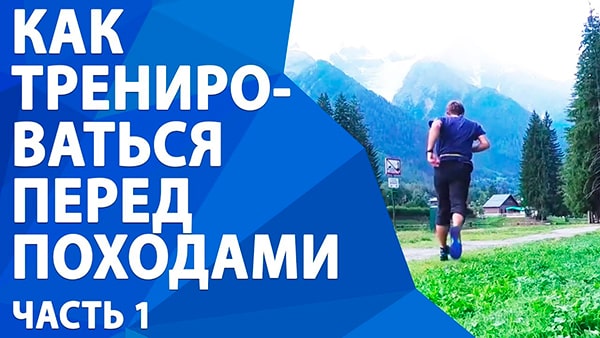
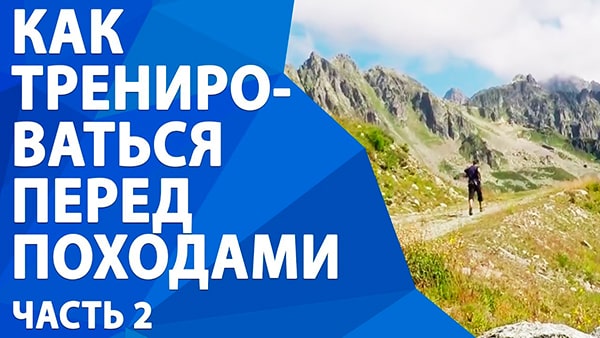
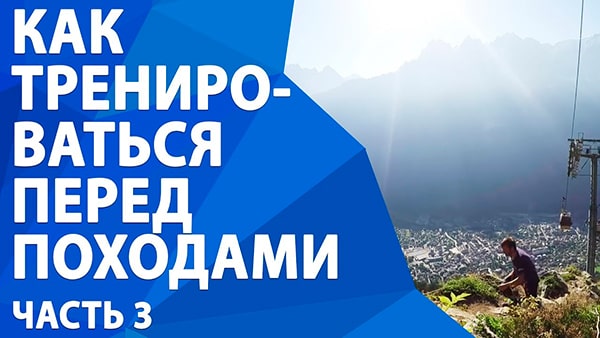
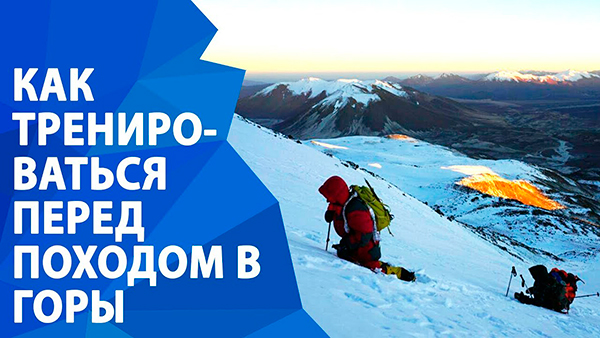
Video about training and preparation:
Subscribe to our channel