
Each gorge in the Fann Mountains is unique in its own way due to the different types of rocks that predominate in a particular valley. Sometimes the mountains have a purple hue, sometimes red, sometimes yellow, and sometimes gray. In addition, try the Asian flavor, the inhabitants of the mountains in Tajikistan are very kind and welcoming, especially if you are a tourist.
If we talk about Fann Mountains a little bit more, then you, of course, should visit here to enjoy the unique Asian nature of these mountains: tree-like centuries-old junipers (archa), see hundreds of lakes with crystal clear turquoise water, the beautiful walls of the peaks Zamok, Chapdara and Parandas.
In this program you will have the opportunity not only to see the Fann Lakes with your own eyes, taking a hike through the Fann Mountains, but also to try your hand at mountaineering and climb one of the highest points of the Fann Mountains – Peak Energia (5120 m). The Energia peak, in terms of difficulty and steepness of the climb, corresponds to a good mountaineering 2B-3A, snow and ice.
Try mountaineering with us!
Главные впечатления от похода по Фанским горам:
The route for climbing the Energy peak and hiking in the Fann Mountains:
Khujand/Tashkent – Artuch village – Kulikalon lakes – Alauddin pass (3800 m) – Alauddin lakes – Chimtarga pass (4500 m) – Energy peak (5120 m) – Big Alo lake – Tashkent – Samarkand – Bukhara – Tashkent
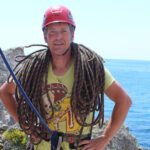
Your guides for climbing Energy Peak and hiking in the Fann Mountains
The route of climbing the Energy peak and hiking in the Fann Mountains by days
day
You can also fly to Khujand, Tajikistan, by morning flight (plan arrival time no later than 10:00). Meeting and getting to know the guide. Transfer by car to the mountains through Khujand, to Artuch village. The transfer will take about 4-6 hours from Khujand (7-9 hours from Tashkent). Arrival in Artuch late in the evening.
day
Trek to Lake Bibidzhanat, which is located at an altitude of 2800 meters in the Kulikalon lakes system. The Kulikalon Lakes chain is located in the Kulikalon Basin, around which there are high rock walls that attract many climbers. The peaks of Maria (4970 m) and Mirali (5170 m) are reflected in the waters of the Kulikalon lakes. After lunch, walk to Lake Dushakha, at the foot of Mirali Peak. Travel time is 5-6 hours, 14 km.
day
Breakfast. Ascent and crossing of the Alauddin Pass, descent to the Alauddin Lakes. Lunch by the lake. If desired, you can have a delicious lunch in one of the two teahouses near the lake. After lunch, a walk and photo session on the lakes. Overnight in tents. Travel time 6-7 hours, 16 km.
day
Breakfast. Ascent to Mutnoye Lake. Lunch by the lake, followed by a walk around the lake. Dinner and overnight in tents. Travel time: 4–5 hours, 10 km. Alpine climbing technique training.
day
Radial exit and training up to an altitude of 4400 m. Overnight in tents near Lake Mutnoye.
day
Breakfast. Ascent under the Chimtarga pass at an altitude of 4500 m. Training on the glacier. Dinner and night in tents. Travel time 5-6 hours.
day
Early breakfast. Departure no later than 4:00. Ascent to the summit. The camp remains at an altitude of 4500 (under the Chimtarga pass). The ascent from the pass to the summit takes about 2 hours. Return to the camp under the Chimtarga pass. Rest. Total time The ascent takes about 8-10 hours in total, including the descent (the average time depends on the size of the group).
Today, if possible, you need to lose altitude and get to the first green areas in the Zindon Valley (+5 km, 2-3 hours)
The Energy Peak, in terms of difficulty and steepness of the climb, corresponds to a 2B-3A mountaineering grade. The climb goes along the ridge. About 200 meters of the climb goes along a snow-ice slope with a steepness of 35°-40°. The last 100 meters of the climb are destroyed rocks 45°-50°. The summit is rocky. Descent along the ascent route.
At the beginning of summer, most of the summit is covered with snow, in August and September the terrain is more icy. Most of the climb is movement along fixed ropes using a jumar, descent by rappel. The route is hung by a guide and an assistant. Good physical fitness and jumaring skills on steep slopes (can be acquired during training) are important for a successful ascent.
day
Overnight in a tent. The travel is about 10 km, 5-6 hours.
day
Overnight in the village of Gaza (1967 m). Farewell evening in the mountains. Overnight in a guest house, local dishes. The transition is about 20 km, 8-9 hours.
day
A separate transfer to Khujand is also possible. Flight home from Samarkand/Tashkent. And those who participate in the full 13-day program will have an amazing excursion to the city of Samarkand, Uzbekistan. Transfer and check-in. Night in a comfortable hostel or apartment.
The program ends in 10 days (plan your flight home on the 11th day).
day
We will see the famous tomb of Timur, the observatory of Ulugbek, Registan, ancient cities and holy places, as well as the Samarkand bazaar! In the evening, you can go to a laser show or taste local cuisine and wine (optional). Night in a hostel.
day
Sightseeing tour of Bukhara. Return to Samarkand. For those flying from Tashkent, transfer by train/taxi to Tashkent. Night in a hostel (or transfer to the airport).
day
In the morning transfer to the airport and flight home from Samarkand / Tashkent.
Note:
— The program is not final and can be adjusted depending on the weather, the condition of the participants and other factors;
— if desired, you can take a porter for the entire route, the cost is from $ 30 per day + extra charge for food and a place for a porter in a tent.
Attention! For those who are planning a program for only 10 days, it is best to plan a flight after 22:00 or early in the morning on the 11th day of the program.
Map of the route for climbing the Energy peak and hiking in the Fann Mountains:


Why is it profitable to go hiking with Extremeguide?


Cost and conditions of climbing the Energy peak and hiking in the Fann Mountains
Is this trip right for you?
To participate in this program, you need good physical preparation and previous experience of hiking in the Crimea, Carpathians, Caucasus, and go through a mountaineering school in Bulgaria with us.
Included in the price:
- meeting the group in Tashkent and Khujand;
- transfers according to the program (Tashkent – Artuch a/l – Gaza – Tashkent);
- work of two guides for a group of 5 or more people during the
- ascent of Mt. Energia;
- meals during the hike;
- rental of gas equipment and pots;
- rental and accommodation in tents;
- accommodation in a comfortable hostel/apartments according to the program;
- transfer by train to Samarkand and Bukhara and back to Tashkent;
- entrance tickets to Registan, Lyabi-Khauz, Poi Kalyan;
- transportation of part of the cargo by mules (first 4 days);
- registration at the Department of Visas and Registration upon arrival in Tajikistan;
- environmental fee for visiting the district and national parks;
- storage room for city things and their delivery at the end of the route;
- GPS and satellite phone for emergency communication;
- first aid kit with the guide;
- a memorable souvenir from ExtremeGuide.
The price does not include:
- international flight to Tashkent/Khujand (600 €);
- visa costs (citizens of the former ex CIS do not need a visa);
- additional excursions;
- personal equipment rental (daisy chain – free, jumar – 10 €, carabiners – 5 €, descender – 5 €, crampons – 30 €, harness – 10 €, helmet – 10 €, ice axe – 20 €);
- accident insurance and medical coverage from €30,000, cost €3-10/day depends on the chosen insurance program, residency. Check the cost;
- tips for the guide (optional, but he will be glad to have them);
- other expenses not specified in the program.
Cost depending on the number of participants
| Number of participants | Cost per 1 participant | Cost per 1 participant |
|---|---|---|
| 10 days | 13 days | |
| 8 | 1000 EUR | 1200 EUR |
| 7 | 1100 EUR | 1300 EUR |
| 6 | 1200 EUR | 1400 EUR |
| 5 | 1300 EUR | 1500 EUR |
| 4 | 1400 EUR | 1700 EUR |
| 3 | 1600 EUR | 2400 EUR |
| 2 | 2300 EUR | 2900 EUR |

Best price guarantee!
- We have included in the price all possible basic expenses for the program and guarantee that there are no hidden additional costs, while we have retained the best service at a low price: transfers, hotel accommodation, guides and staff!
We have a flexible discount system
Find out the details right now:
Necessary equipment
Basics:
- Backpack 60-80 l. (please note that in addition to personal belongings, it should also accommodate food and communal equipment) (More about choosing a backpack);
- Assault backpack 30-45 l.;
- Sleeping bag comfort -0…-5 С (More about choosing a sleeping bag);
- Loam pad (It is advisable to have a thick and warm rug) (More about choosing a pad).
Shoes and clothing:
- Mountaineering boots (it is important that the shoes are comfortable and worn in. Usually shoes are chosen with a thick socks and 1.5 – 2 sizes larger than the foot size) (More about choosing clothes and boots);
- Change of shoes (sneakers, sandals or flip-flops);
- Gaiters (shoe covers, flashlights) for boots;
- Down jacket or warm jacket;
- Warm hat;
- Walking pants (Gore-tex, cotton or synthetic);
- Warm pants;
- Walking jacket (Gore-tex, cotton or synthetic);
- Rain cape (if your walking clothes get wet);
- Thermal underwear set (if you don’t have thermal underwear, long johns and a sweater);
- Warm sweater (polar, fleece, or, in extreme cases, a sweater);
- Socks 2 pairs (“thermal socks” or other thick ones);
- Socks for overnight stays (preferably wool or down);
- Gloves or mittens (down or ski; the main thing is that they are windproof);
- Warm spare gloves;
- T-shirt;
- Change of underwear;
- Sun protection hat;
- Balaclava.
Rest:
- Backpack cover (or large plastic bags for packing things);
- Mug, spoon, bowl, knife (all of this should be as light as possible – made of stainless steel or special plastic; do not take ceramic mugs or enamel dishes);
- Headlamp + set of batteries;
- Hygiene items (a toothbrush and a small tube of toothpaste, a bar of soap and a little shampoo will be enough; do not take full bottles of shower gel and shampoo, heaps of creams and lotions with you);
- Documents;
- Individual first aid kit (plaster, cold, stomach, head. You also need to take into account specific and chronic diseases, if any. In addition to the individual first aid kit, the instructor has a general);
- Mountaineering goggles (protection category 3-4);
- lip balm chapstick ;
- Sunscreen ointment (with SPF 30-50);
- Water bottle ( 1-2 l.)
Special gear:
- Harness;
- Dynamic Safety Lanyard — 2 pcs.;
- Descender as Reverso Petzl or ATX Guide Black Diamond;
- Carabiners 4 pcs (2 medium);
- Climbing helmet (ski helmet doesn’t match!);
- Ascender;
- Classic ice ax;
- Crampons (that match your boots).
Ideally, all your gear should weigh no more than 8-10 kg with a backpack.
The amount of special equipment depends on the specific event, here is the most extensive list. Also, depending on the specific event, this equipment is either included in the price or not, in which case you do not need to buy it, but can rent it from us.
Equipment rental from ExtremeGuide.
- Thermos (0.5 – 1.0 liters);
- Camera;
- Seating but pad;
- Work gloves;
- Trekking poles.
Additional information
Previous mountain climbing experience is required: Elbrus or Kazbek, Mont Blanc. We also recommend completing the Mountaineering School in Bulgaria, Chaukhi, Chamonix.
Citizens of the former ex CIS do not need a visa; upon arrival in Uzbekistan and Tajikistan, it is necessary to register with the Department of Visas and Registration.
Insurance in case of an accident and medical care are mandatory for the entire period of the program for climbers.
The most convenient way to look at flights is on aggregator sites, such as: Avisales and Skyscanner.
Meeting point – Tashkent (Uzbekistan) until 8:00, Khujand (Khudzhand) until 10:00. Return flight from Tashkent / Samarkand (Uzbekistan).
Transport – custom SUV such as Toyota Rav4 and Land Cruiser during the program transfers.
Moving on a closed glacier in crampons and in ropes, moving on steep rocks, spending the night in tents for the entire period of the program, autonomous tracks with a backpack up to 25 kg. During the ascent, early rises at 1:00 and a long and intensive walking day up to 12 hours (ascent to the Energy peak). Actively assist the guide at bivouacs and insure the guide on difficult sections.
Tents 2-3 persons.
During the autonomous climbing program, the food is for the hike: breakfast porridge: buckwheat, oatmeal, rice + dessert, lunch sandwiches with tea, dinner – soup, tea + dessert, cheese, sausage, lard is a must!!! The guide cooks, the participants actively help. In the cities and during transfers, food is self-sufficient.
Cross-country running at least 5-8 km, 2-3 times a week, general physical training, see more details
Features of acclimatization in high mountains
Physical and mental preparation before climbing and hiking in the mountains
At the hiking and trekking, the guide has a first aid kit. You can contact rescuers by phone from almost anywhere. You also need to have individual medications (plaster, cold, head, stomach and chronic diseases, if any).
Before the start of the tour you make an advance payment of 30%, the rest either before the start of the tour or directly on site to the guide. More details
Up to +30ºС in the valleys, up to -10ºС in the highlands.
This program is potentially dangerous to the health and life of any of the participants.
Guides provide the necessary safety provided that the participants comply with safety regulations.
The decision to stop the ascent in conditions that threaten the safety of the participants is the exclusive responsibility of the guide and is not subject to discussion.
List of diseases, in case of insufficient physical, technical, moral and psychological preparation for the safety of you and other participants, the guide has the right to refuse the final ascent to Mount Chimtarga or Energia, without compensation for the cost of the tour and other expenses.
The table shows the basic cost for a group and may change depending on the number of people in the group. For the calculation of the cost of the tour for a smaller number of people and individual groups, see the «Price» block for more details.
We guarantee that on the dates indicated in the table, even if there is a minimum number of people allowed in the group, the tour will take place 100% with a minimum change in cost.
Pleasant bonuses, which everyone receives when ordering a tour with us


Photo of previous trips


Reviews of our travelers

Как в песне Визбора, я так же “сердце свое оставила в Фанских горах”. Неописуемой красоты озера и горы вокруг. Спасибо гиду Олегу за прекрасное путешествие. More

I was impressed by this beautiful landscape here. Thank you very much! More
Шел я в Фанские горы взойти на вершину категории 2b, получить технические навыки. И конечно же впечатлиться красотой гор, природой. Техничски это довольно сложно, но очень интересно. More
Приехала сюда чтобы получить навыки в области альпинизма и поработать со снаряжением. Тем, кто сюда собирается, советую постепенно овладевать навыками альпинизма, иметь хотя бы небольшой опыт. More
Горы – это сочетание всего, что отличает городскую жизнь и природную. Я постепенно дошел к Фанам, и это фантастические горы, неописуемой красоты. Хоть и были трудности, но это однозначно того стоит. Спасибо за достойную организацию Экстримгид. More
Recommended tours
 Ukraine
Dates:
March 7 - March 10
March 21 - March 24
April 4 - April 7
April 18 - April 21
Complexity:
Duration:
Height:

Left: 4 places
 Ukraine
 Dates:
March 7
March 21
Complexity:
Duration:
Height:
Left: 8 places
 Slovakia (Tatras)
Dates:
March 21 - March 22
Complexity:
Duration:
Height:

5.0 (2)
Left: 3 places
 Georgia
 Dates:
June 14 - June 20
July 18 - July 24
August 16 - August 22
September 20 - September 26
Complexity:
Duration:
Height:

5.0 (8)
Left: 12 places
 Georgia
 Dates:
July 4 - July 12
August 15 - August 23
September 12 - September 20
Complexity:
Duration:
Height:
5.0 (8)
Left: 10 places
 Nepal (Himalayas)
 Dates:
October 25 - November 11
Complexity:
Duration:
Height:

Left: 6 places
 Nepal (Himalayas)
 Dates:
October 18 - November 4
Complexity:
Duration:
Height:
Left: 12 places
 Nepal (Himalayas)
 Dates:
Complexity:
Duration:
Height:
 Bolivia
 Dates:
Complexity:
Duration:
Height:
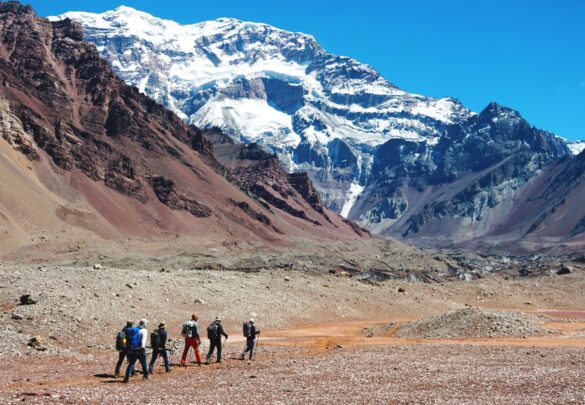 Argentina
 Dates:
Complexity:
Duration:
Height:
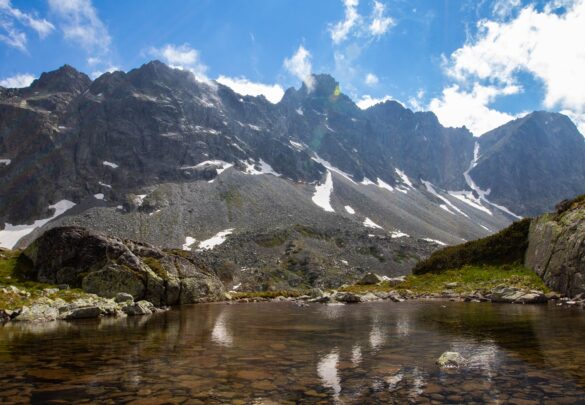 Slovakia (Tatras)
 Dates:
Complexity:
Duration:
Height:
 Nepal (Himalayas)
 Dates:
Complexity:
Duration:
Height: