
Mera Peak is the highest trekking peak in Nepal. The popularity of this peak is due to the fact that with a significant height (6476 m.) the ascent route to it is quite simple technically and accessible even to beginner climbers, the ascent to this peak is comparable in strength and complexity with the ascent to Elbrus or Kazbek. Therefore, we recommend this mountain as the first easy six-thousander in Nepal. In addition, the trekking (hiking) to the mountain and its base camp itself will pleasantly surprise you with its wild nature, mountain landscapes and incredible views of Kusum Kangaru, Kaishar, Thamserku, Kantega, the absence of a large number of tourists, there will be no caravans of yaks and mules, which means you can enjoy the time spent in the mountains among new friends even more. Mera Peak is located in the Makalu-Barun National Park.
The view from the summit of Mera Peak is one of the best in the Himalayas, as it offers views of five eight-thousanders: Everest, Lhotse, Cho Oyu, Makalu and Kanchenjunga. The classic route from the north involves a high-altitude hike along a glacier. The routes from the western and southern sides of the peak are more technically challenging.
The flow of tourists on the trek to Mera Peak is much smaller than to Everest. Most of the people on the trail are local Sherpas who serve lodges and tourists, as well as climbers. Separately, as a trekking area, Mera is of little interest. Quite comfortable lodges are located in the valleys, there is Internet. The distance between the lodges is 10-15 km in the lower part of the track, so in the first days we will leave very early and arrive at the overnight place by evening. Above 3500 m, the lodges are also located compactly, but the distance between them is not large, usually by lunchtime we are already at the overnight place. As in all of Nepal, your things are carried by porters. There is a shower and electricity from solar panels almost everywhere.
The group leader guide is an experienced guide with experience of climbing to 6000-7000 in Nepal and Pamir, trained according to international IFMGA standards. The peculiarity of our climbing program is 2 reserve days, well-thought-out acclimatization and a whole day of rest, before the climb you will have training and more than 3 nights at an altitude of 5000 m, going to the assault camp, which is the main factor for a successful climb. Two guides work with a group of 4 people (leader guide and local certified Sherpa). The cost of our program is transparent and most of the main expenses are already included.
During the program, we will also visit the capital of Nepal, the Kathmandu city, which is often called the Florence of Asia. Kathmandu is the greatest treasure trove of Hindu and Buddhist art – “there are as many temples as there are houses, and as many gods as there are people.”
The program will be of interest to those who would like to try themselves in the world of mountaineering, heights, and will require good health from the participants.
The track to the Mera base camp itself is no more difficult than the trek to Everest and the elevation gain is balanced, we gain no more than 500 m daily. Even on the day of the assault, the elevation gain is just over 600 m. The climb to the summit itself is technically not difficult, somewhere like Elbrus and Kazbek in the summer. The climb is done in crampons and with an ice axe. Most of the climb is on a gentle glacier, 25-30 degrees maximum, in the lower part of the glacier there are small steep sections that can be passed on fixed ropes.
Thanks to well-planned acclimatization, participants usually do not have problems with altitude; even in the assault camp at 5800 they manage to sleep.
We conduct annual trekking to Everest, Annapurna, Island Peak Climbing, Dhaulagiri Around Trekking, Mera Peak Climbing. All groups have successfully completed their programs.
The percentage of successful ascents of Mera Peak approaches 100%.
Главные впечатления от похода по Фанским горам:
Climbing route to Mera Peak:
Kathmandu — Lukla — Chatuk village — Kote village — Tagnag village (4300 m) — Kare village (4900 m) — Base Camp (5200 m) — Assault Camp (5800 m) — Mera peak (6476 m) — Kare village — Kote village — Tuli Kharka village (4200 m) — Lukla — Kathmandu
Your Mera Peak Climbing Guides

Route of ascent to Mera Peak by days
day
Check-in at the hotel. Rest after the flight. In the evening, meeting the group. We buy the necessary equipment, walk around the city. Night at the hotel.
day
Get up early in the morning. Flight to Lukla, 2880 m (about 35 minutes). The landing itself at this mountain airfield is impressive in its unusualness. Meeting with porters, redistribution of luggage. Transfer to the village of Paiya, 2730. About 10 km, 4-5 hours. Night in the lodge. The next two days we will live in fairly simple lodges, but there will be Internet and possibly a shower.


day
Trekking along a forest path, among thickets of magnolias and bamboos to the village of Chatuk. Trekking time: 6-7 hours, 14 km.


day
On this day we have a long trek (7-8 hours), about 16 m to the village of Kote. Overnight in the lodge. The lodge has a shower and paid wireless Internet.


day
A gentle climb along the river to the village of Tagnag (4300 m), located in a beautiful place at the confluence of several streams. On this day we will see Mera Peak in all its glory for the first time. The mountain is very large, we will walk along it for another 4 days of our trek. In the evening, an acclimatization walk to the glacial lake Sabai Tso (4450 m). The lake is at the foot of the beautiful mountain Kyashar (6769 m). Total 4-5 hours, 10 km.

day
Acclimatization and rest in the village of Tagnag. Return to the lodge.

day
A short and easy hike to the village of Kare (4900 m.) — 3-4 hours. We enter the high-mountain zone. The forest ends and is replaced by high-mountain bushes. After lunch, we prepare for tomorrow’s exit to the glacier: we rent the missing equipment, etc.

day
Acclimatization hike towards the Mera La pass, 5300 m. Snow and ice training. Return to the village of Kare.

day
Rest in Kara. Preparation for the ascent.

day
After lunch, transfer to Base Camp 5200. Overnight in tents. Prepare freeze-dried food. Transfer 2-3 m, 2 hours.


day
We reach the Mera La Pass and along a gentle ridge we reach the assault camp, which is located on a cliff surrounded by a glacier on all sides. The place is protected from the wind and is practically flat. Up to 100 people can be here at a time. The transition is about 4 hours. Accommodation in pre-installed tents. Discussion of the upcoming ascent, instructions from the guides. Early lights out.

day
Departure from the camp no later than 4:00. The ascent route is not technically difficult and will take up to 6 hours to the summit. Only in the pre-summit part before reaching Mera Central (6461 m) and on the ridge to Mera North (6476 m) may it be necessary to hang a fixed rope. Usually groups climb to the central peak due to its proximity and the logical ascent. From the summit, a stunning panorama of the Himalayas opens up. Five eight-thousanders are visible: Everest, Lhotse, Makalu, Cho Oyu and Kanchenjunga. A 360-degree panorama of the mountains. Descent from the summit to the assault camp, fold up the tents and continue the descent to the village of Kare. With the descent down, we have a day to go for 12-14 hours.


day
Overnight stays in Kota (3600 m) and Tuli Kharka (4200 m).

day
Overnight stays in Kota (3600 m) and Tuli Kharka (4200 m).
day
Overnight stays in Kota (3600 m) and Tuli Kharka (4200 m).
day
day
Flight to Kathmandu, check-in at the hotel. Walking around the city, buying souvenirs. Farewell party in the evening, presentation of certificates.

day
Farewell to the group, departure home. Mileage: 70 – 80 km. Note: The program is not final and can be adjusted depending on the weather, the condition of the participants and other factors.
Why is it profitable to go hiking with Extremeguide?


Cost and conditions of climbing Mera Peak
Is this trip right for you?
This program can be recommended to people with experience of mountain hikes at 4000-5000 m or with experience of climbing Kazbek, Mont Blanc and Ararat.
Included in the price:
- Ukrainian-speaking certified guide with 7000+ experience;
- accompaniment by a certified high-altitude Sherpa guide during the climb (for groups of more than 3 people);
- all transfers around the country (meeting and seeing off at the airport);
- return transfer from the airport on the last day of the program;
- local staff insurance;
- accommodation in a 4* hotel in Kathmandu – 3 nights;
- permit to Sagarmatha National Park;
- permit to climb Mera Peak;
- air flight Kathmandu-Lukla and back;
- public special climbing equipment;
- camping equipment (tents, burners, gas, dishes);
- high-altitude meals during the autonomous part of the climb (dinner, breakfast and snack);
- porters for public equipment;
- porters for personal equipment up to 12 kg per person;
- Nepalese staff insurance;
- transport trunks for personal belongings;
- assistance in purchasing tickets and preparing for the climb;
- first aid kit and navigation aids from the guide;
- climbing certificate and souvenirs.
The price does not include:
(Total price without airfare and equipment rental 1000 $ -1200$)
- flight to Kathmandu from $1200;
- medical insurance with coverage of more than $30,000 (mandatory) – $150-200;
- expenses related to flight cancellation to/from Lukla from $150;
- accommodation on the trek in a lodge;
- additional nights in Kathmandu associated with an unplanned change of program;
- meals on the trek and in Kathmandu, shower and internet in lodges – up to $700;
- rental of personal equipment and climbing shoes ($70-100 per set);
- tips for local service staff and guide (about $150);
- tips for the main guide (optional);
- excess weight on the domestic flight Kathmandu – Lukla – Kathmandu (weight over 15 kg is paid at $1 / kg);
- entrance tickets and transfers during excursions ~$50;
- other expenses not specified in the program.
Cost depending on the number of participants
| Number of participants | Cost per 1 participant |
|---|---|
| 6 | 2800 USD |
| 5 | 3100 USD |
| 4 | 3400 USD |
| 3 | 3900 USD |
| 2 | 4400 USD |

Best price guarantee!
- We have included in the price all possible basic expenses for the program and guarantee that there are no hidden additional costs, while we have retained the best service at a low price: transfers, hotel accommodation, guides and staff!
We have a flexible discount system
Find out the details right now:
Necessary equipment
Basics:
- Assault backpack 20-30 l (More about choosing a backpack);.
- Sleeping bag (comfort — 10°С — despite the fact that we will be spending the night in houses, it is not worth taking a summer sleeping bag, because the temperature can often drop below zero at altitude) (More about choosing a sleeping bag);
- Transport bag 80-100 l for essential things.
- Warm pad
Shoes and clothes:
- Trekking boots (it is important that the shoes are comfortable and worn in. Usually shoes are chosen with a thick socks and 1.5 – 2 sizes larger than the foot size) (More about choosing clothes and boots);
- Double mountaineering boots, for altitudes 6000 m and above;
- Change of shoes (sneakers, sandals or shower slippers);
- Down jacket with a hood;
- Warm pants (fleece is possible);
- Warm hat;
- Buff or scarf;
- Lightweight walking pants;
- Running pants (Gore-tex);
- Walking jacket (Gore-tex);
- Rain cape (if your walking clothes get wet);
- Thermal underwear set – 2 pcs.;
- Warm sweater (polar, fleece);
- Socks 4-5 pairs (“thermal socks” or other thick ones);
- Socks for overnight stays (wool or fleece);
- Fleece gloves;
- Warm gloves;
- Mittens/Top-shirts
- Sleep shirt – 1 pc.;
- Thermal shirt 2 pcs.;
- Change of underwear;
- Sun hat;
- Balaclava/buff.
The rest:
- Headlamp + spare set of batteries;
- Mug and spoon (preferably made of lightweight stainless steel or plastic);
- Hygiene items (a toothbrush and a small tube of toothpaste, a bar of soap and a little shampoo will be enough; do not take full bottles of shower gel and shampoo, heaps of creams and lotions with you);
- Documents;
- Individual first aid kit (plaster, cold, stomach, head. You also need to take into account specific and chronic diseases, if any. In addition to the individual first aid kit, the instructor has a general);
- Glasses with UV protection (protection category 2-4);
- lip balm chapstick ;
- Sunscreen ointment;
- Water container (1-2 l);
- Thermos (0.5 – 1.0 l);
- Trekking poles.
Special equipment:
- Crampons, maybe aluminum;
- Climbing system;
- Ice axe;
- Helmet.
Overview and Gear List for Climbing in Nepal
- Camera;
- Seating pad.
Additional information
Mera Peak Central was first climbed on May 20, 1953 by Jimmy Roberts and Sen Tensing. Jimmy Roberts (1916-1997) can probably be credited with establishing the trekking industry in Nepal in the early 1960s. He was posthumously awarded the Sagarmatha (Everest) National Award by the government in May 2005.
The summit of Mera Peak North was first conquered by French climbers Marcel Jolly, D. Baus and L. Honnilsi in 1975. The area was first extensively explored by British expeditions in the early 1950s before and after the ascent of Everest. Those teams included Edmund Hillary, Eric Shipton and George Law.
Minimum experience required for a successful ascent: previous trekking experience in Neaale or experience of climbing Elbrus, Kazbek, Mont Blanc, Belukha.
The visa is made at the airport upon arrival and does not require additional documents, costs $40. You should have:
— international passport, the expiration date of which is not less than 6 months from the start of the track and a sufficient number of free pages;
— 2 3×4 photographs for visa and permit processing;
— accident and medical insurance (insurance with coverage of at least 10,000 USD and insuring risks associated with active stay in the mountains).
Be sure to check out more details here!
Meeting the group at Kathmandu airport — the time will be specified once we know your exact arrival time.
An important feature of trekking in Nepal is that you have the opportunity to give most of the load on the track to a porter, and thus make happy both you and the Nepalese whom you will help to earn 15-20 $, although you can refuse this service. The average weight of a porter’s backpack is 25 kg. And we will live and eat in lodges.
In Kathmandu we live in a comfortable 3* hotel, where we can leave city and unnecessary things for storage.
That’s why we take everything we need to the track: running clothes. It is necessary to take into account that it will be very warm down there for the first 2-3 days, and the usual outfit is shorts, a T-shirt and a Panama hat, a scarf around the neck. It is cooler up there, so the necessary trekking pants, a windbreaker jacket. It is better to leave the hair dryer, hair curler and portable toaster at home.
Since we will spend the night not only in the loggias, but also in tents, we need a sleeping bag for a comfort temperature of -5 … – 10 C.
A loggia is a guest house where there is accommodation for 2-3 people in a room, a shower and toilet on the floor, and a dining room downstairs. The conditions are an order of magnitude worse than in a regular hotel, but still better than in a tent. For a comfortable overnight stay, we recommend taking a sleeping bag (since it can be quite cool at night and the blanket in the room does not warm you much). In the upper villages, there may also be no light or a stationary shower (you can only wash yourself from a bucket of hot water). The rooms in the huts are the simplest with two or three beds.
We will eat in the lodges, where you can order food from the menu. The price of a plate of rice + salad is 7-8$. The average bill for food per day is 20-25$ – breakfast, lunch and dinner. Tune in to a cuisine based on rice and rice noodles and oatmeal for breakfast. Bread is very expensive. Chocolate and cookies cost 3-4 USD. In addition, it is better to forget about meat dishes in the upper lodges for a while. You can take with you some products that you will not have on the trek: sausage, canned goods, chocolate, dried fruits, a portable burner and heat up tea with sandwiches during halts. But keep in mind that cooking your own food in the lodges is not allowed, the Sherpa owners are against people eating outside their dining room (that is how their business is built), they charge a small fee for housing, and build their main profit on the sale of food.
Local children love sweets and willingly allow themselves to be photographed in exchange for candy or chocolate.
Meals in Kathmandu in a restaurant per day cost the same 25-30 USD, in colorful establishments for locals – 15-20 USD.
During the period of autonomous exits to the Base and assault camp, food is field food, freeze-dried food. We cook independently on burners.
Please note that the total weight you can give to the porter is 12-15 kg per person. Your small backpack will weigh up to 5-7 kg.
The guides will have a first aid kit for emergency medicine. But you need to have personal medications for chronic and individual diseases, adhesive plaster, headache pills, anti-cold and painkillers, definitely + vitamin C and group B for better adaptation in the mountains.
Connection on the track 3G – with a local SIM card only up to Chutanga. Above that, the Internet is only paid $ 5 for 200 MB.
The weather in Kathmandu is hot, the usual temperature is +25… +30°С.
On the mountain trek the first couple of days are +20… +15°С, but then it will get colder. During the day -5°С, at night – up to -10… -25°С.
This route passes at altitudes above 4000 m, where solar radiation is several times stronger than on the plain, the mountain climate and thin air affect the body’s condition during the first 5-7 days of the trek. If you do not acclimatize properly and gain altitude quickly, you may develop altitude sickness.
Therefore, we have developed a special acclimatization program and control of the condition of each participant on the route. The track is not technically difficult and goes along a mountain road, but requires good physical preparation and compliance with safety rules in the mountains. All instructions of the guide on the route are mandatory!
The currency of the country is Nepalese rupees. The rate is about 125 rupees to $1. You can almost always pay in dollars, but the rate is not always favorable. The guide will tell you how much money is best to exchange before the trek. It is better to take cash with you, preferably $. You cannot exchange hryvnias, or tenge anywhere in Nepal. Withdrawals from plastic cards start at 5%. Always bargain with the Nepalese, sometimes the price can be reduced several times.
Absence of diseases incompatible with active tourism: List of diseases
Features of acclimatization in high mountains
Physical and mental preparation before climbing and hiking in the mountains
This climbing program does not require special training and is within the power of any average person who has already been in the mountains at altitudes of 3000-4500 m. Experience of previous hikes is required.
We recommend that you start training no later than two months before the start of the track: running, swimming, cycling. The total anaerobic load should be at least 1 hour 30 minutes (running on rough terrain at least 8-10 km), then you are guaranteed not to have health problems on the track.
For more information about training, see our Youtube video channel. In case of chronic diseases, we recommend consulting a doctor.
A shower on the track is paid – $3-5, charging a device “to a full battery” – $1-3. Therefore, these expenses should also be included in the estimate.
Bottled water is 1-3 USD, but there is an alternative – tap water, which comes from clean mountain streams. We will walk slowly, enjoying the views and taking pictures. Usually we leave the overnight stay at 8 am and arrive at the final destination at 3:00 pm – 4:00 pm. During this period, it is already dark by about 6:00 pm – 6:30 pm.
Since most of you are flying in transit through the UAE and plan to stay in the transit area for more than 6 hours, we recommend taking a sleeping bag and a mat in your hand luggage in order to spend the time more comfortably when the residents of Asian countries will be hovering around you. There are also enough food areas and a developed duty-free in the transit area. A hotel in Sharjah and Dubai airports costs about 120 per night.
The table shows the basic cost for a group and may change depending on the number of people in the group. For the calculation of the cost of the tour for a smaller number of people and individual groups, see the «Price» block for more details.
We guarantee that on the dates indicated in the table, even if there is a minimum number of people allowed in the group, the tour will take place 100% with a minimum change in cost.
Pleasant bonuses, which everyone receives when ordering a tour with us


Photo of previous trips


Reviews of our travelers

Нам очень повезло с погодой, потому восхождение удалось. Благодаря хорошей организации и опытным гидам Сергею и Саше мы взошли на Мера Пик. Маршрут был новый, мне понравилось. More

Организовано все на высшем уровне. Благодарю команду Экстримгид. More
Программа понравилась, трек очень интересный. Особенно переход через перевал. Запомнился вкусный ужин от гида Олега, с видом на 8ми-тысячники Гималаев. Для меня это пока самая высокая вершина, на которую я подымался. Невероятной красоты природа. Спасибо за эмоции ребятам! More
Вся команда смогла взойти, а я сумел подняться первее всех и ждал ребят на вершине. Штурм горы оказался для меня самым тяжелым. Понравилась физическая нагрузка, которую мы получили в этом восхождении. Красиво, и это однозначно стоит усилий. Большое спасибо Экстрим... More
Восхождение понравилось, но немного сложно из-за перепадов вверх-вниз. Не имея скалолазных навыков, можно взойти на Мера Пик. Особенно заполнились последние 100 метров, это была работа на максимальном пределе. Самое главное, не останавливаться, и идти только вперед. В этом нам помогали... More
Recommended tours
 Slovakia (Tatras)
Dates:
March 21 - March 22
Complexity:
Duration:
Height:

5.0 (2)
Left: 3 places
 Tajikistan (Fan Mountains)
 Dates:
July 12 - July 21
July 12 - July 24
July 25 - August 3
July 25 - August 6
August 8 - August 17
August 8 - August 20
Complexity:
Duration:
Height:

5.0 (15)
Left: 5 places
 Nepal (Himalayas)
 Dates:
October 25 - November 11
Complexity:
Duration:
Height:

Left: 6 places
 Mexico
 Dates:
March 14 - March 23
March 14 - March 30
Complexity:
Duration:
Height:

4.9 (27)
Left: 8 places
 Kyrgyzstan
 Dates:
July 11 - July 23
Complexity:
Duration:
Height:
Left: 3 places
 Kyrgyzstan
 Dates:
July 18 - August 8
Complexity:
Duration:
Height:
5.0 (15)
Left: 6 places
 Turkey
 Dates:
May 2 - May 9
September 28 - October 5
Complexity:
Duration:
Height:
Left: 4 places
 Argentina
 Dates:
January 24 - February 16
Complexity:
Duration:
Height:
Left: 8 places
 Nepal (Himalayas)
 Dates:
Complexity:
Duration:
Height:
 Bolivia
 Dates:
Complexity:
Duration:
Height:
 Argentina
 Dates:
Complexity:
Duration:
Height:
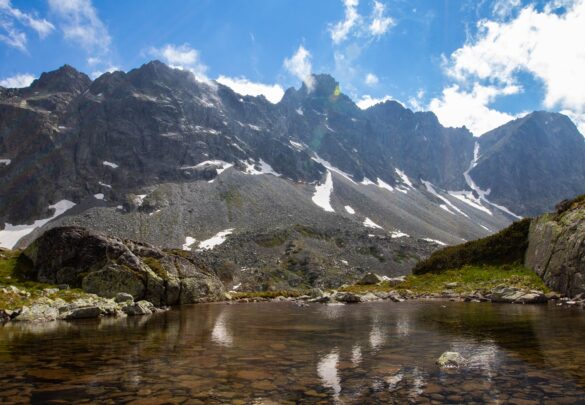 Slovakia (Tatras)
 Dates:
Complexity:
Duration:
Height: