
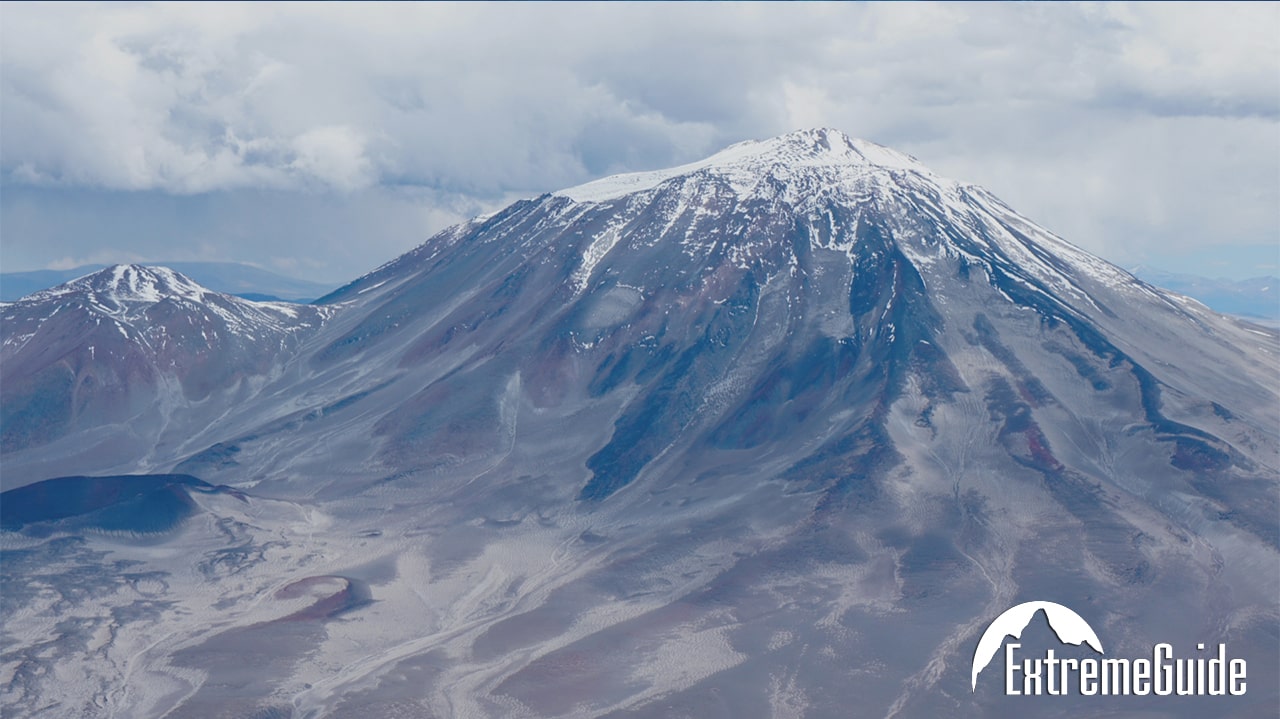
Ojos del Salado (6893 m) — the highest volcano on Earth and the second highest peak in South America after Aconcagua. About 600 climbers from different countries climb to the top every year. And that’s not much for such an iconic mountain. Ojos del Salado is located in Chile, in the Atacama Desert, which is considered the driest on the planet.
Climbing Ojos del Salado – the highest volcano on Earth
Climbing Ojos is a real adventure, due to its remoteness from civilization and sparse attendance. We will travel by SUV. We will visit several salt lakes, see alpacas (llamas) and flamingos, and visit real high-mountain salt marshes.
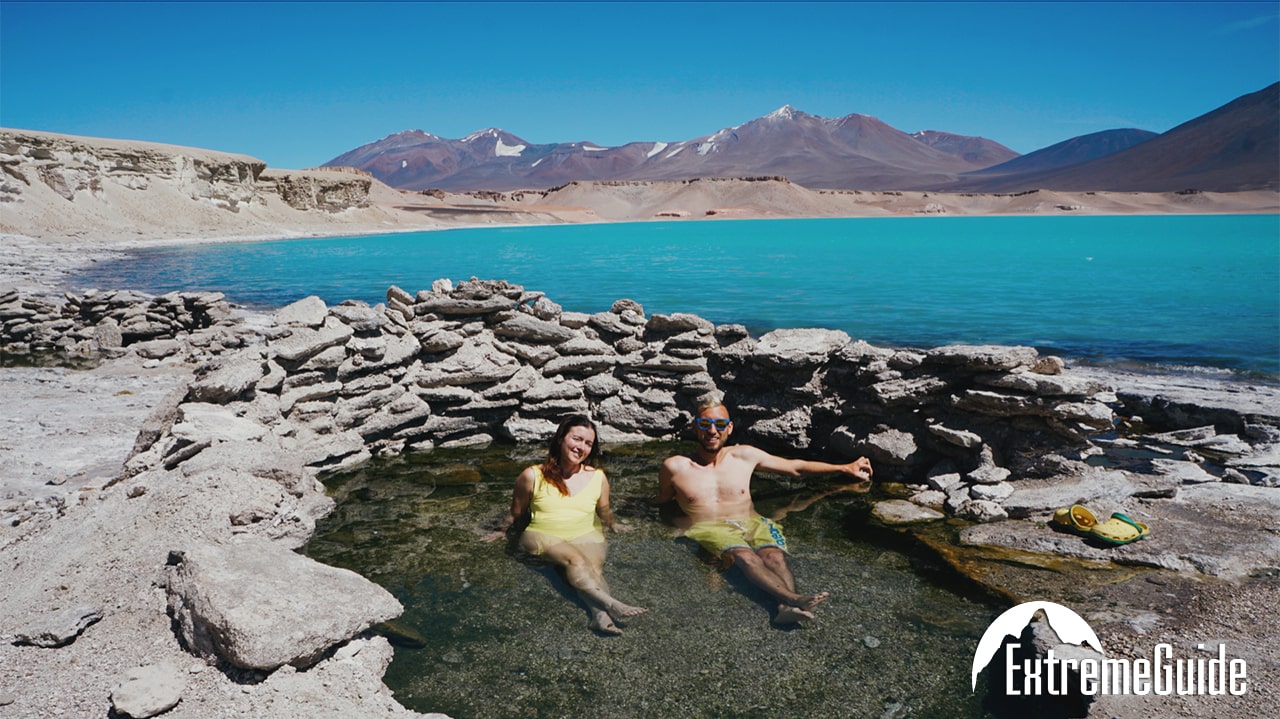
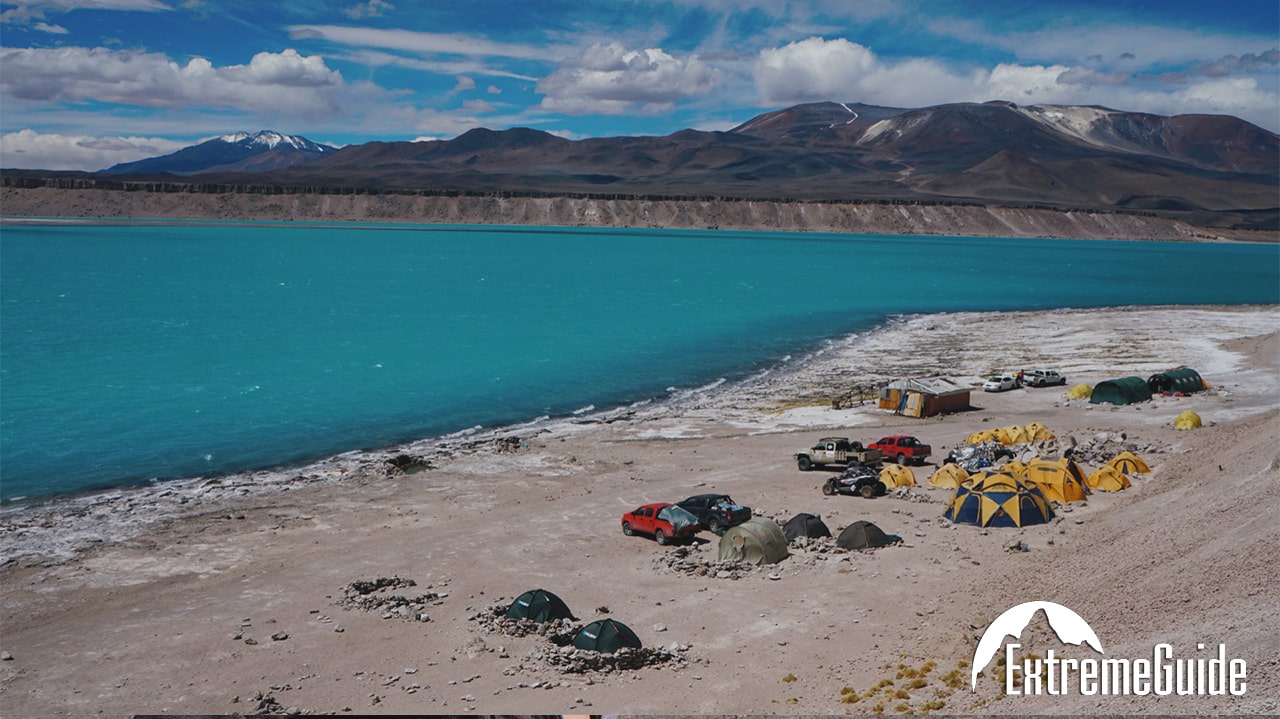
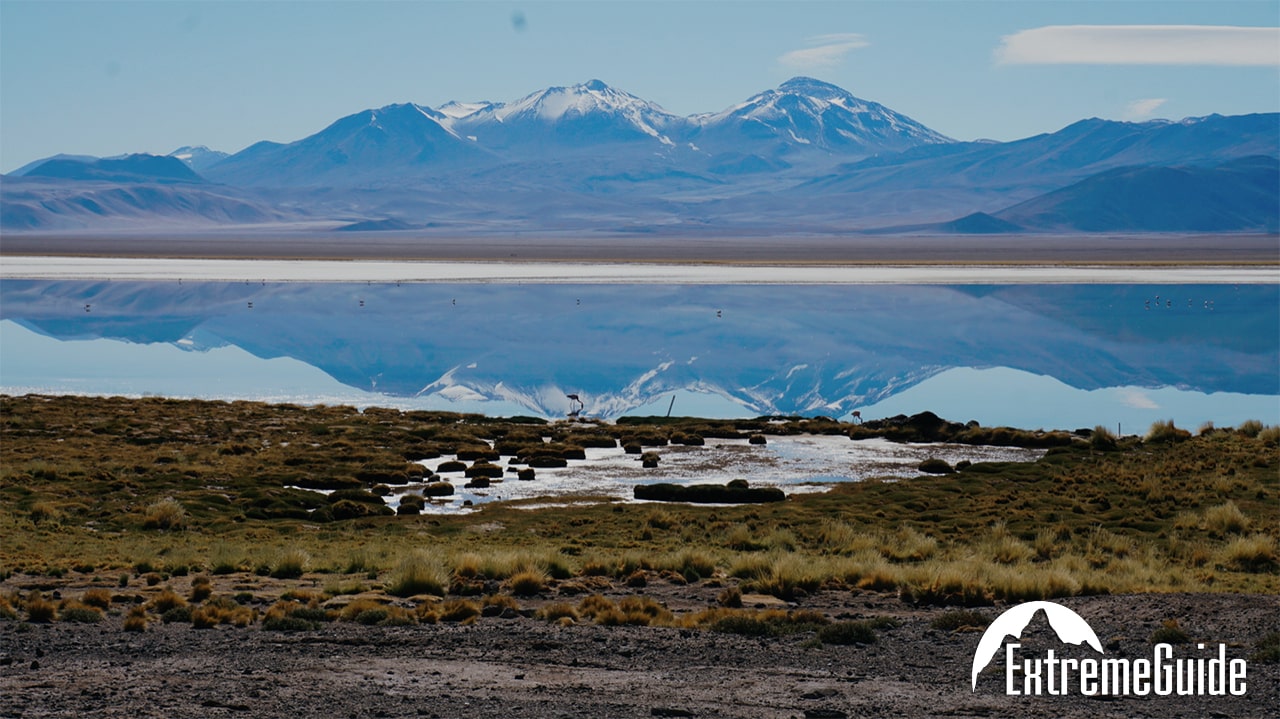
We will set up our first camp at Laguna Rosa (Pink Lake), and then spend the night at Laguna Verde (Green Lake), where we will bathe in the thermal springs. Laguna Verde is our main base camp, where we will meet climbers from around the world who also dream of climbing Ojos del Salado.
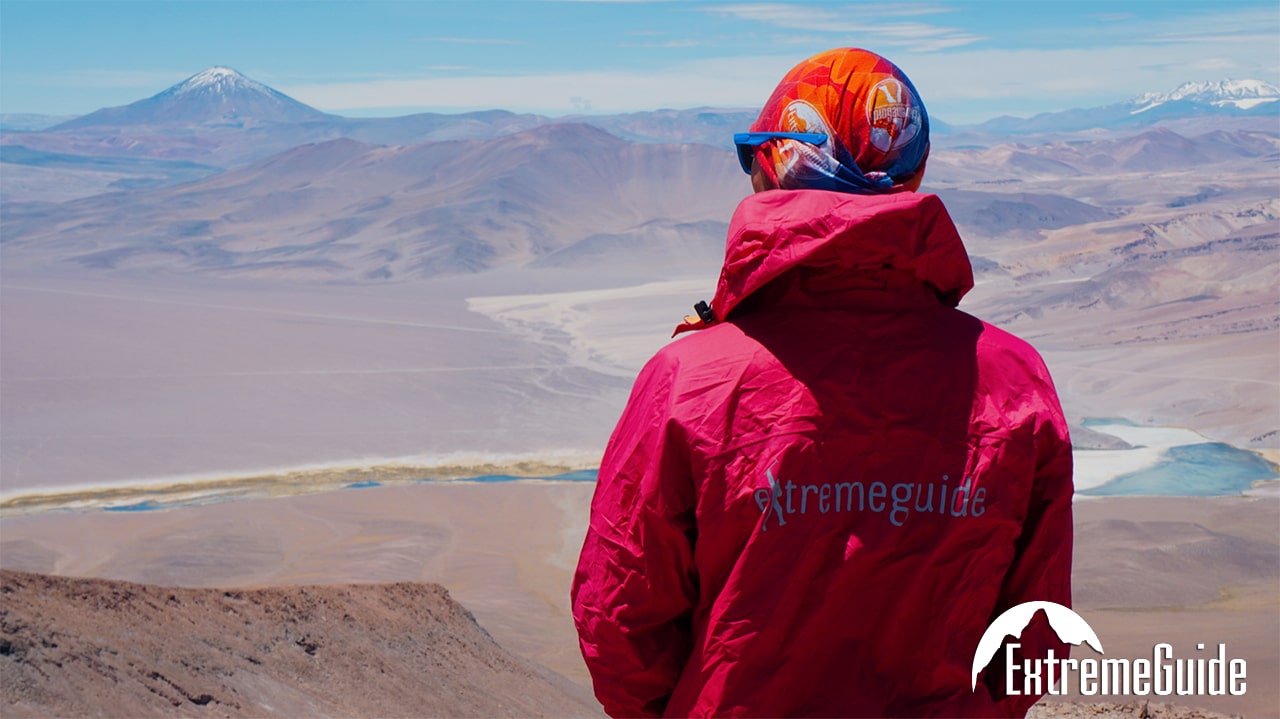
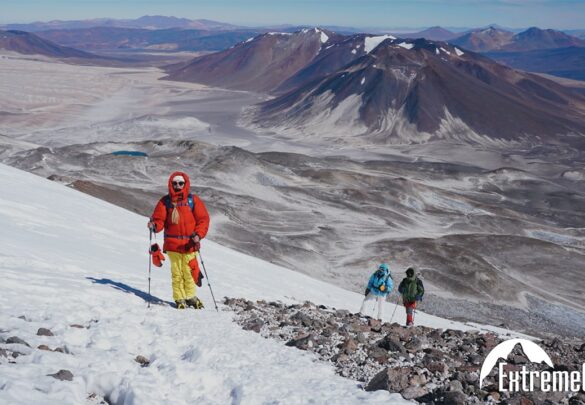
The Atacama Desert in the area of the Ojos del Salado volcano is hundreds of extinct volcanoes covered in snow. On the eastern slope, in the crater of the volcano, is the highest lake in the world (at an altitude of 6,390 meters).
The volcano is considered extinct. The last major eruption was over 200 years ago. The first ascent to the top of Ojos del Salado was made in 1937 by Justin Voignis. The Incas considered this mountain sacred, and on its slopes you can find the remains of sacrificial altars.
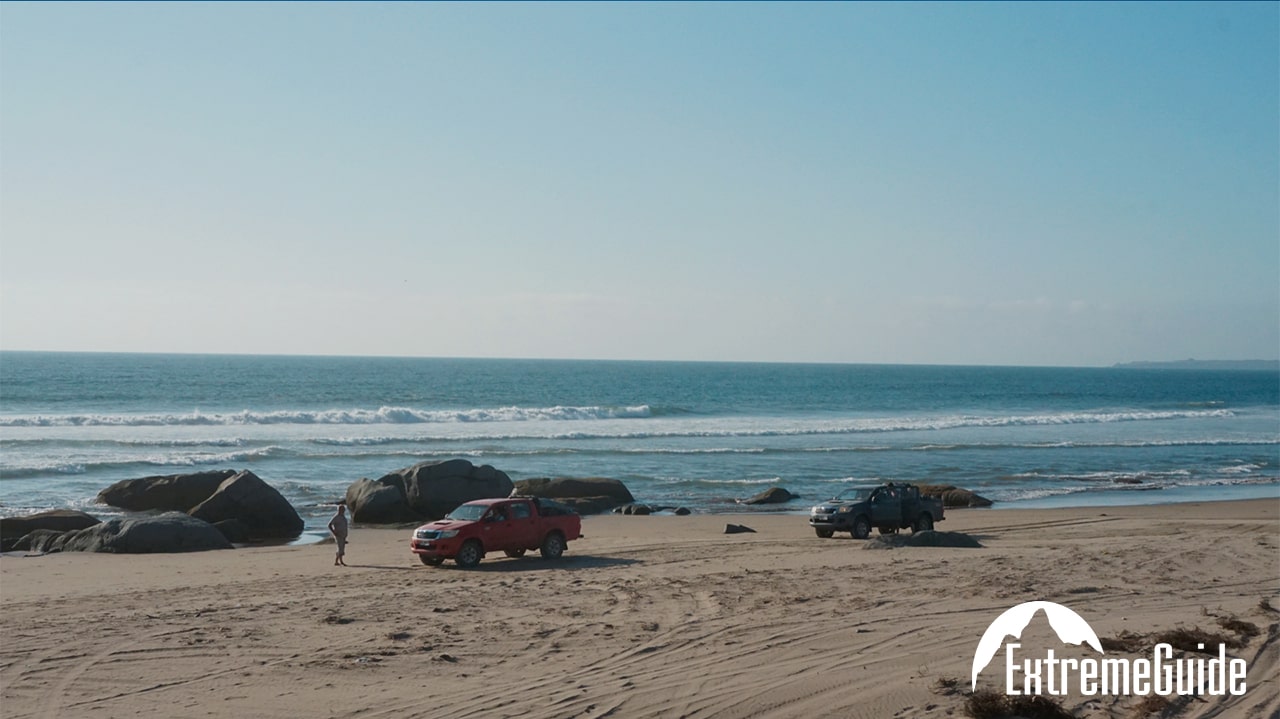
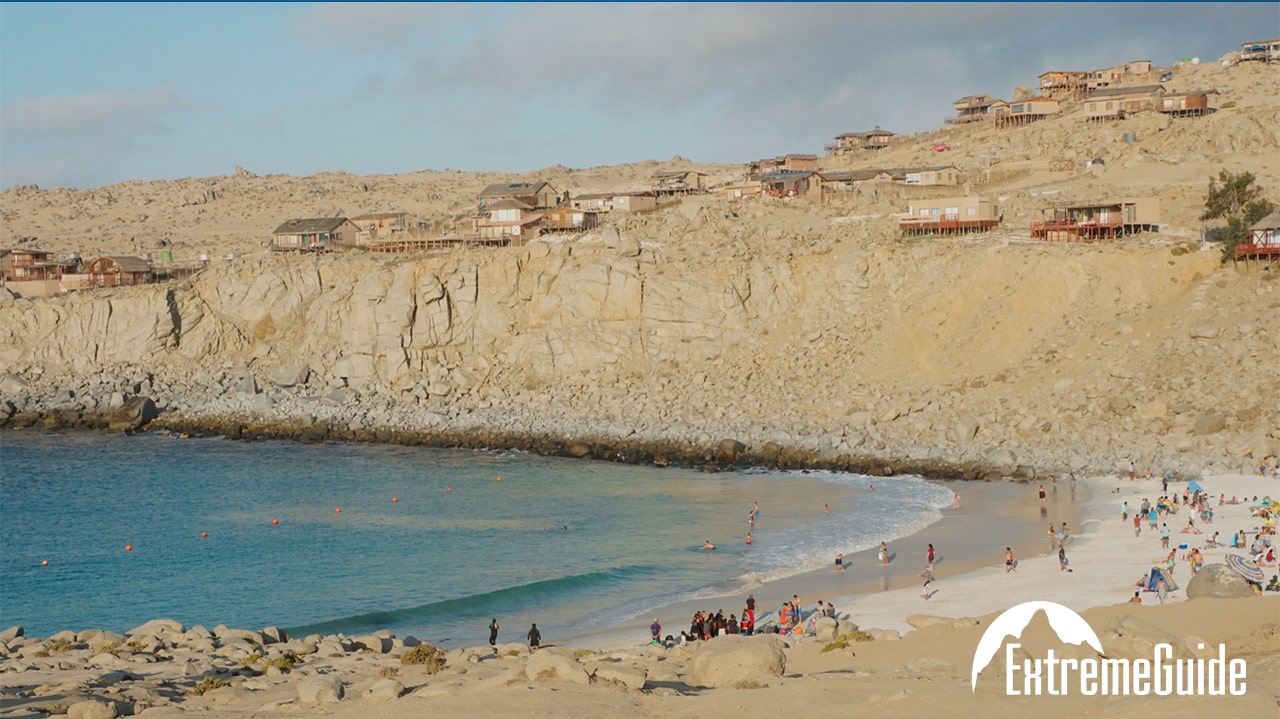
If you wish, you can continue your holiday on the beaches of the Pacific Ocean, which is only 70 km from Copiapo.
Difficulty of climbing Ojos del Salado
Although Ojos del Salado is considered one of the most accessible six-thousanders, underestimating it can lead to serious consequences. The main difficulty of climbing Ojos del Salado is related to the high altitude, which requires climbers to carefully acclimatize and prepare.
Key factors affecting the difficulty of the climb:
- Altitude: Climbing to almost 7,000 meters requires the body to adapt to the thin air and reduced oxygen levels.
- Climate conditions: The Atacama Desert is known for its extreme temperatures and dryness, which can complicate the climb.
For a successful climb, it is recommended to:
- Carry out high-quality acclimatization.
- Maintain good physical shape.
- Have experience in high-altitude climbing.
Despite its relative accessibility, climbing Ojos del Salado remains a serious challenge that requires a responsible approach and preparation.
Главные впечатления от похода по Фанским горам:
Climbing route to Ojos del Salado:
Santiago – Copiapo – Laguna Rosa (3800 m) – Laguna Verde (4340 m) – San Francisco (6000 m) – Atacama Shelter 5200 m – Tejos Shelter 5800 m – Peak of Ojos del Salado 6893 m – Copiapo – Santiago
Route of the ascent to Ojos del Salado by days
day
This is a small mining town, the gateway to the Atacama region. Overnight at the hotel. General briefing and discussion of plans for the next 14 days.
day
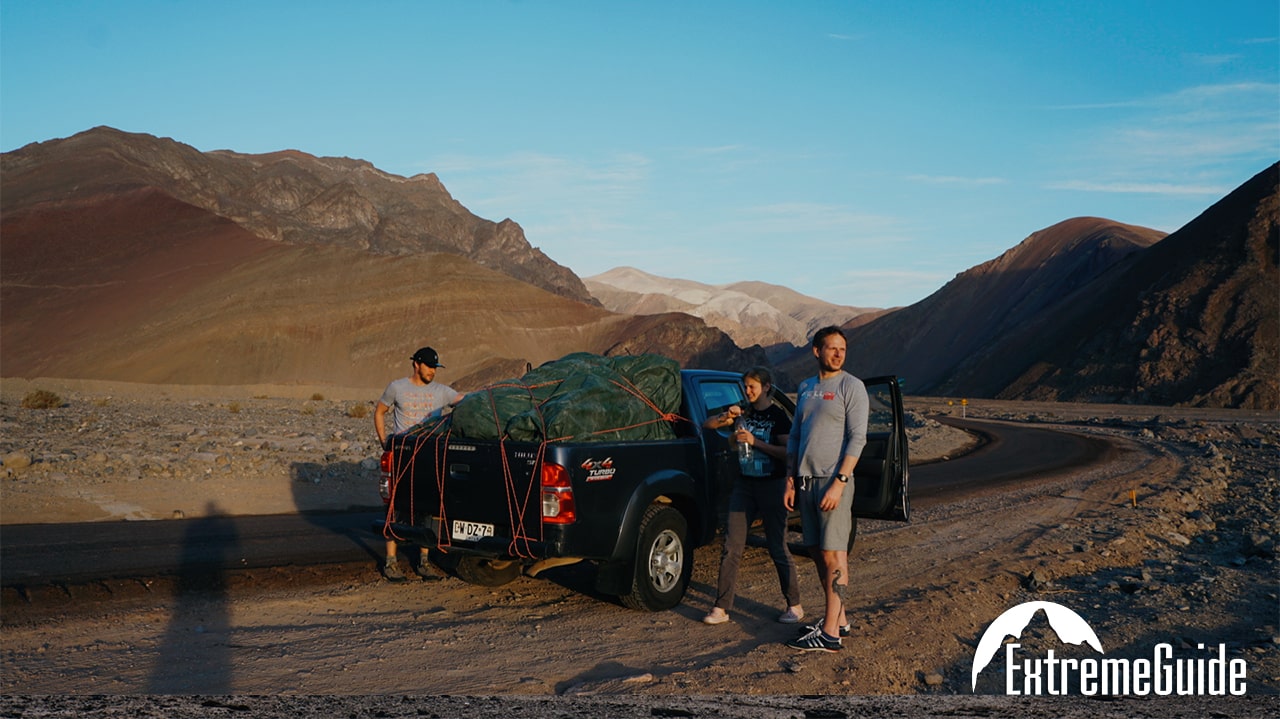
We rent an SUV. We buy food. The drive to the picturesque lake Laguna Santa Rosa (3800 m) takes about 3-4 hours, 150 km.
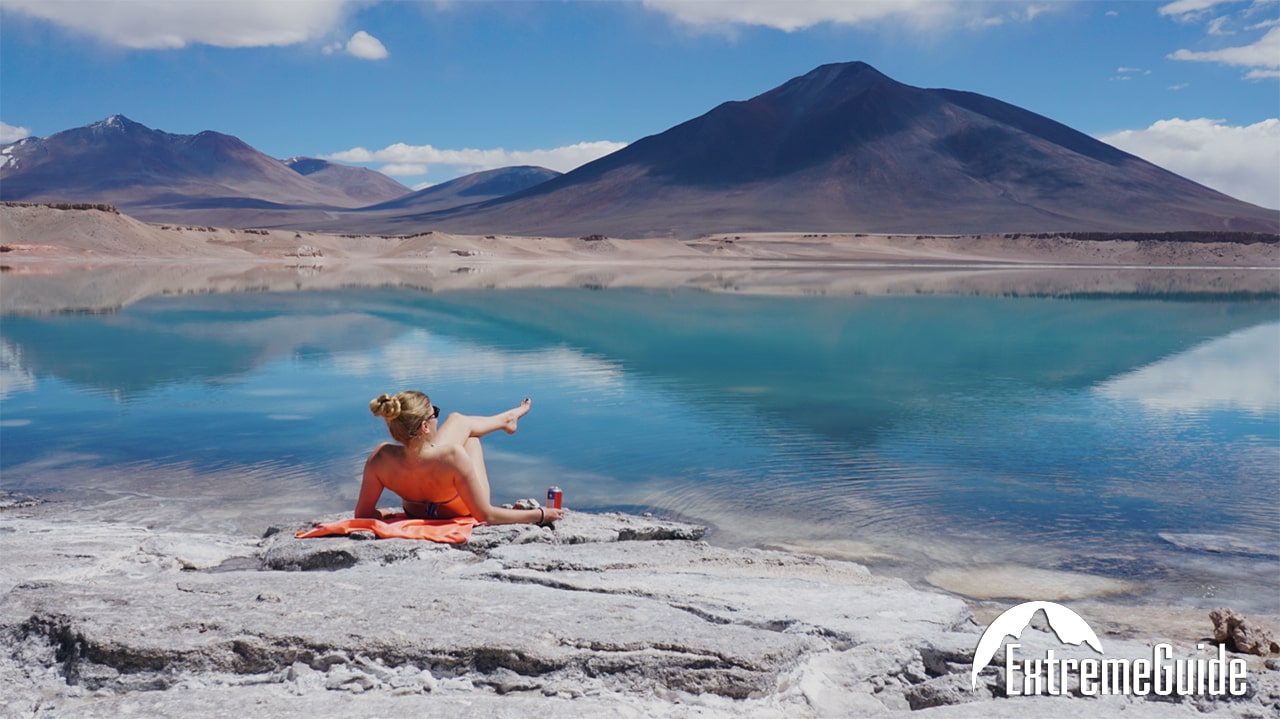
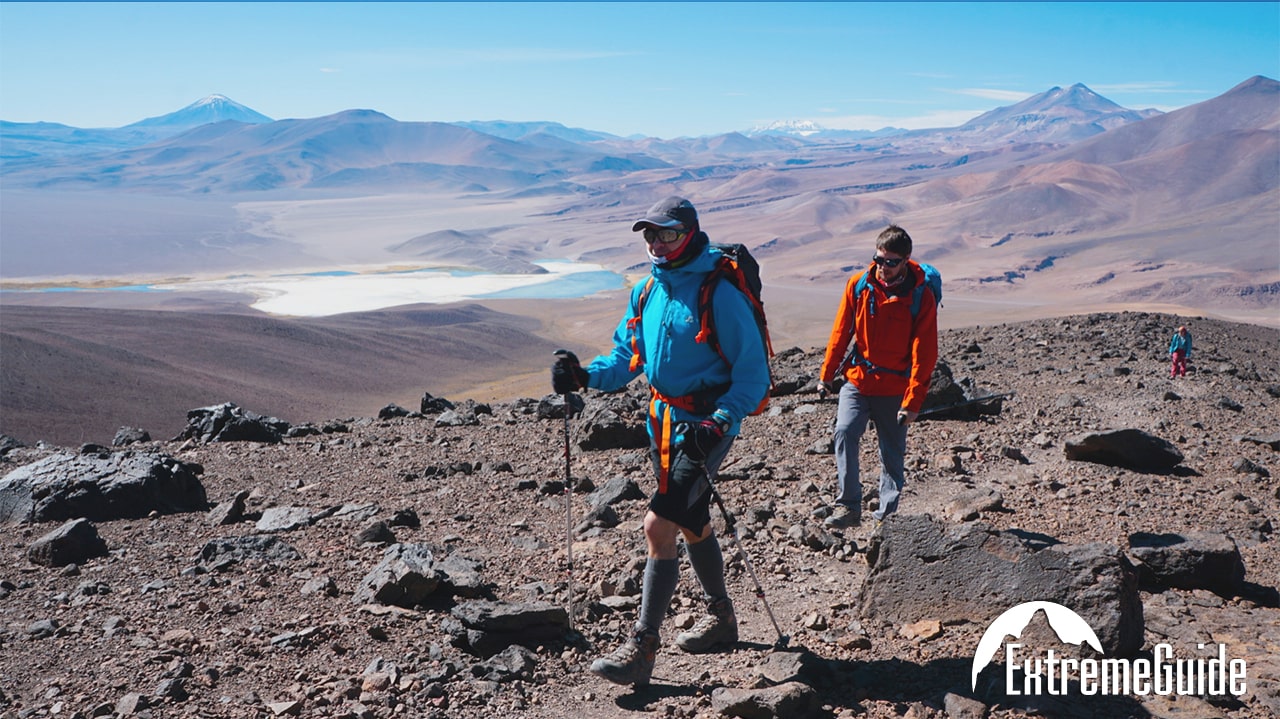
Laguna Rossa means “pink lake” in Spanish. It is a huge salt lake, part of which is covered by water. Many birds live here, including Chilean pink flamingos. Also, if you are lucky, you will see alpacas (a type of llama).
Setting up camp at the lake campsite. Dinner, rest. Overnight in a tent camp (if desired, you can spend the night in a house).
day
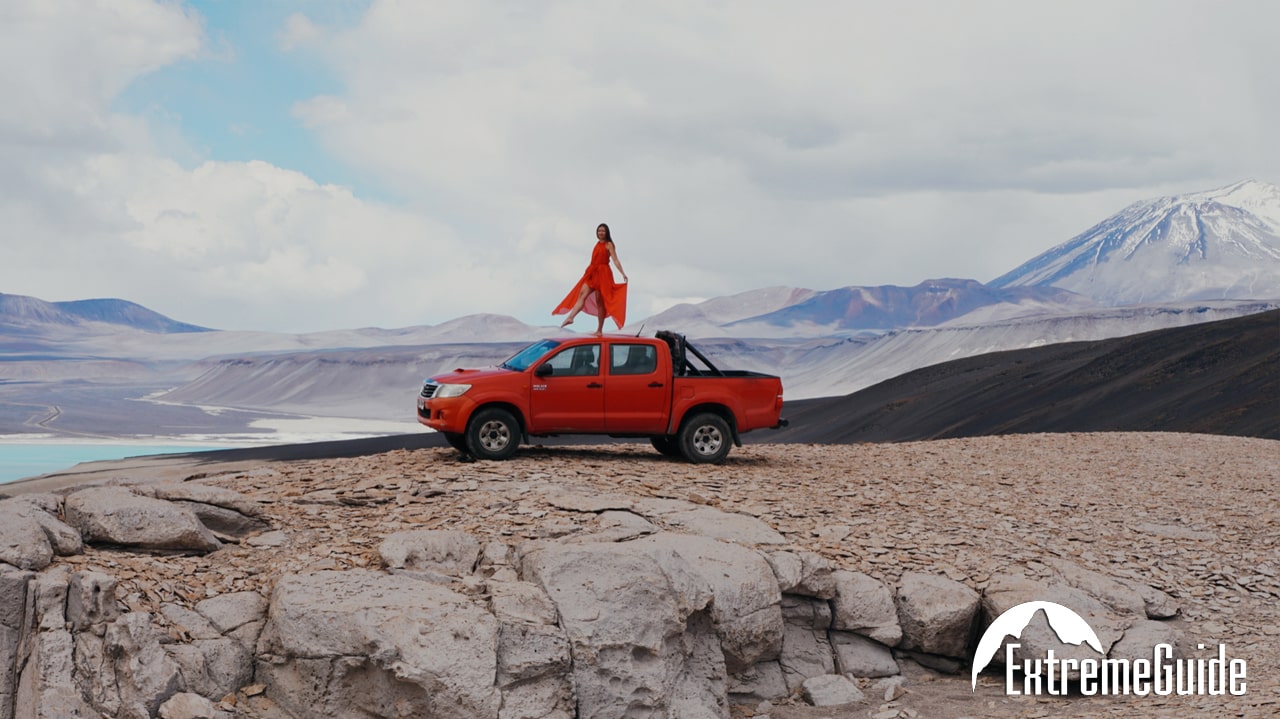
Today is the first morning at this altitude, we try not to put much stress on the body during the first days. Therefore, today we will take a short walk around the lake Laguna Rosa (for better acclimatization at altitudes up to 4500). Night in the camp.
day
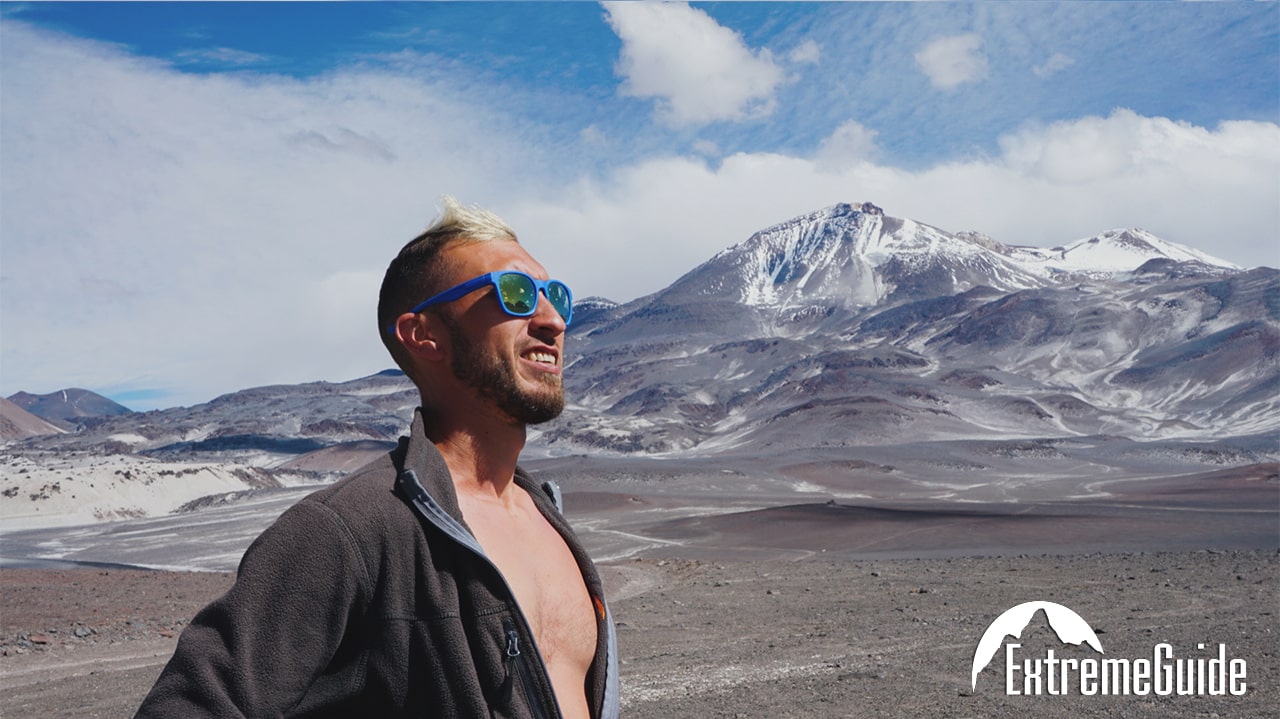
In the morning after breakfast, acclimatization ascent to the summit of “7 Sisters” (4850 m). The ascent takes about 4 hours. Descent to the cars, transfer to Laguna Verde (4340 m), 2.5 hours – 130 km. On this day we will see Ojos del Salado (6893 m), the highest and largest peak in this region, for the first time. Night in tents Laguna.
day
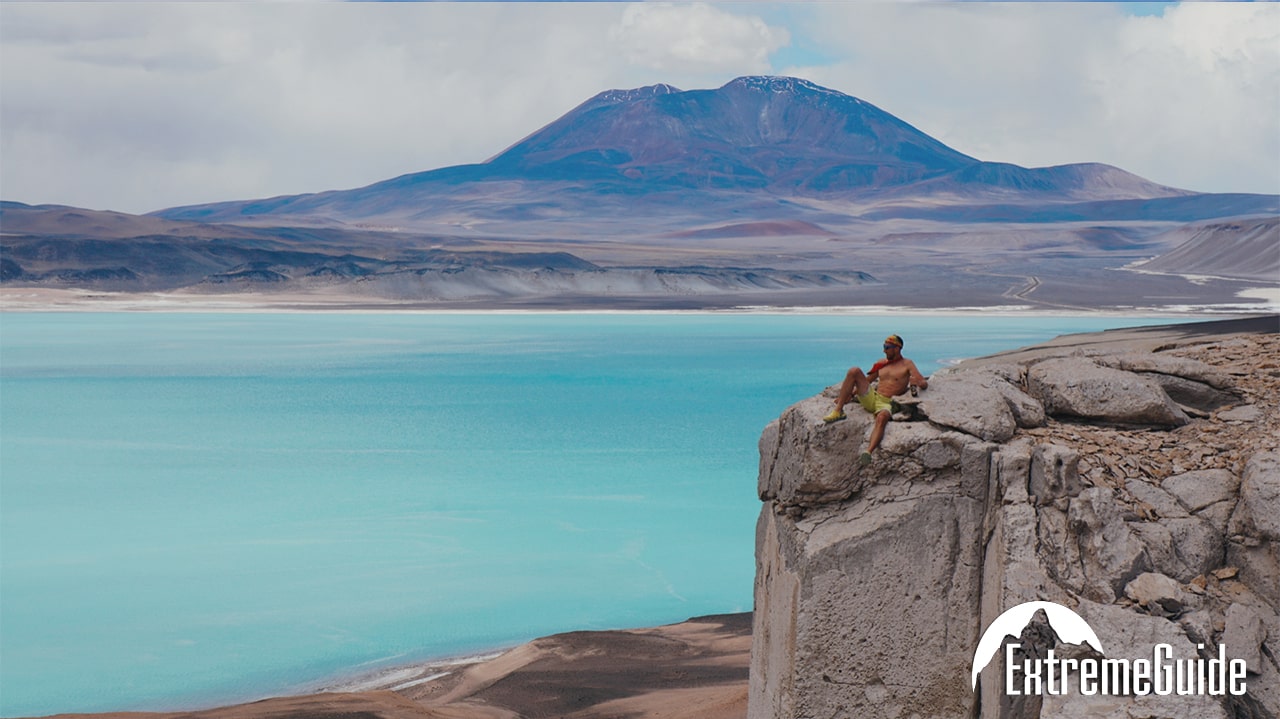
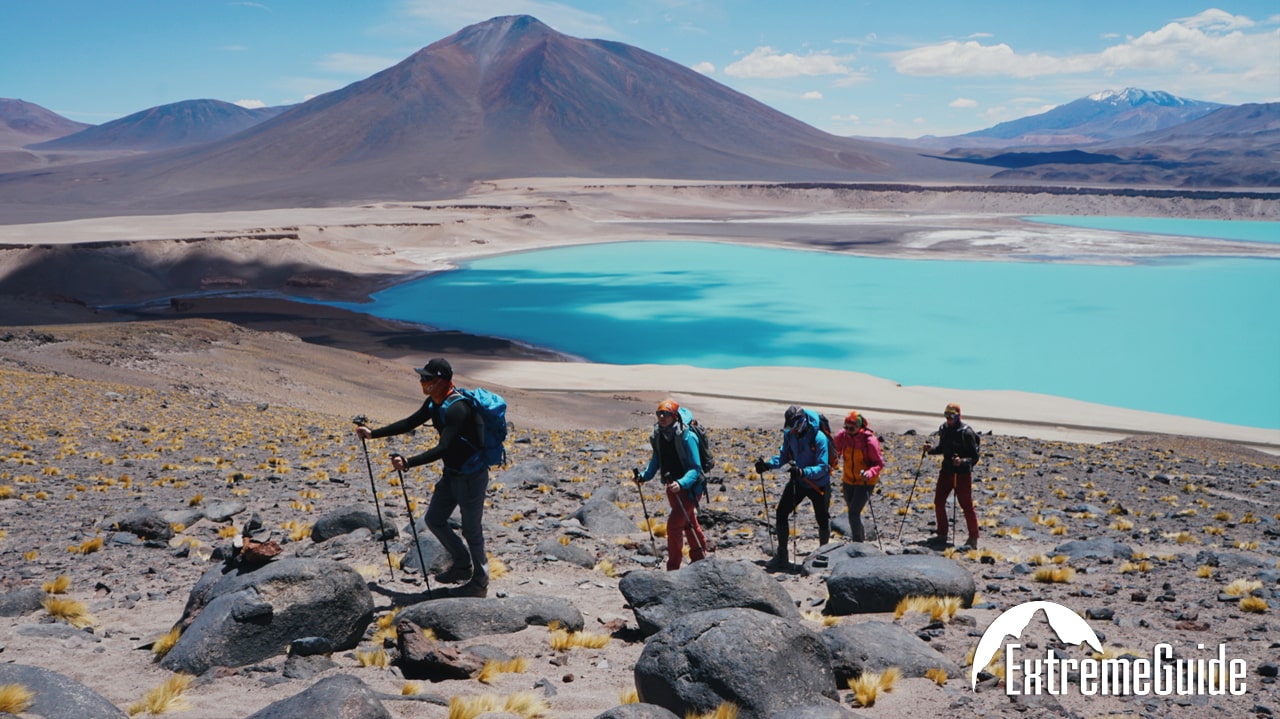
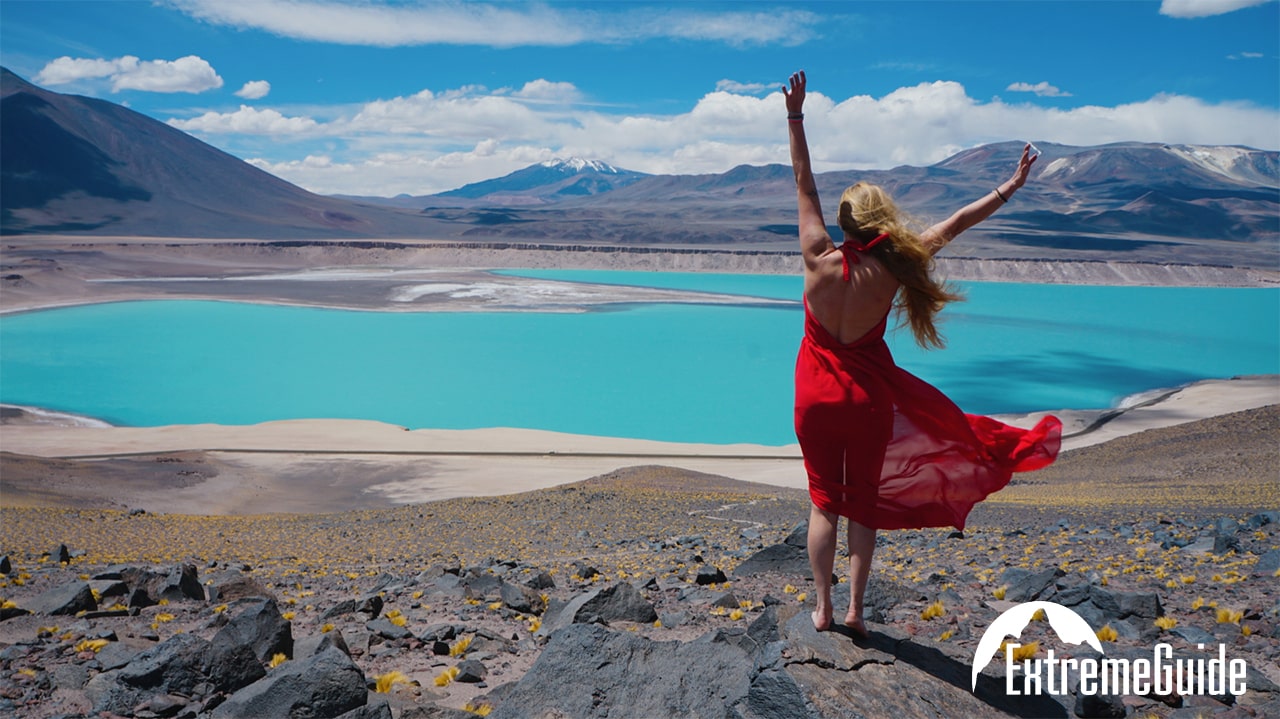
This morning we slowly climb the neighboring peak – Mount Muerto Mule (from Spanish “dead mule”) to the 5000 m mark. Descent to Laguna Verde. Rest. Night in tents (4340 m). Laguna Verde means Green Lake in Spanish. It is notable not only for being one of the highest salt lakes in the world, but also for the fact that it is surrounded by numerous thermal springs and several baths with moderate temperatures, where you will happily return after a climb or a long day at altitude, after the snow and cold of Ojos del Salado.
day
The mountain is located 20 km from Laguna Verde on the Chile-Argentina border. Transfer to an altitude of 5100 m. Then walk along the trail. The path to the top takes 5-6 hours. Descent to Laguna Verde. Rest. Night in tents (4340 m).
day
day
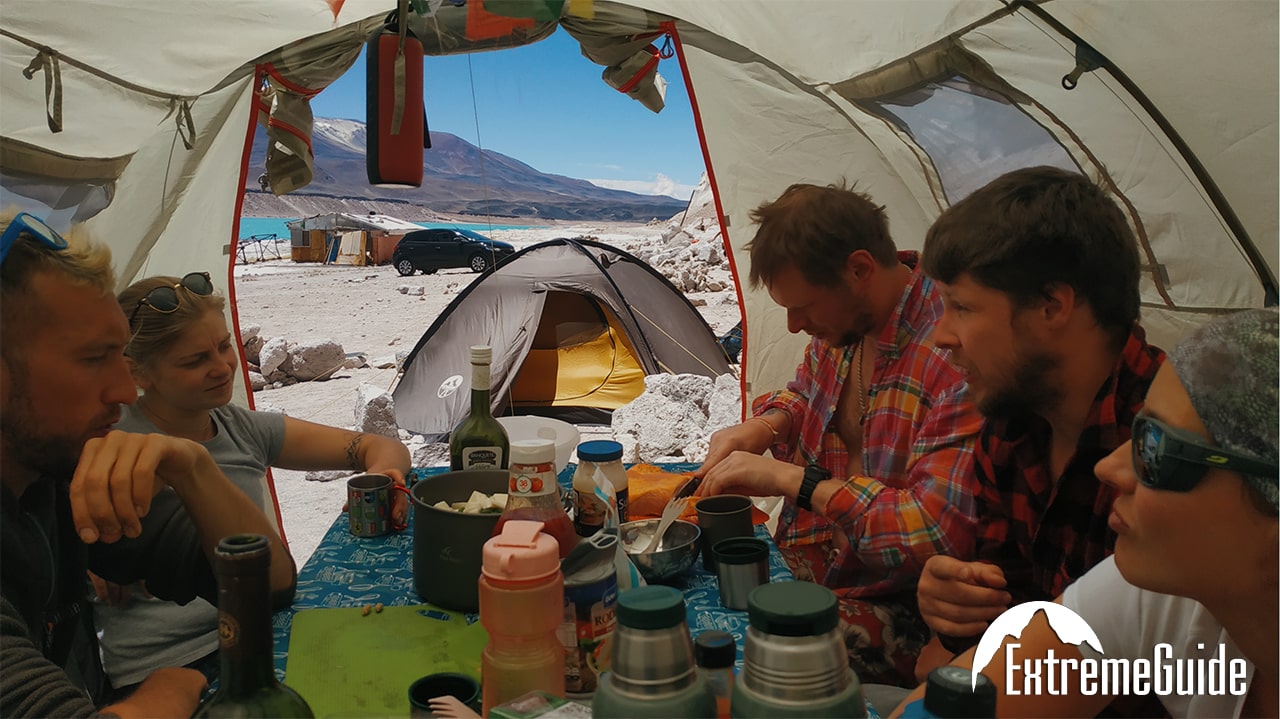
1 hour drive or about 40 km from Laguna Verde off-road. Walk to 5600 m, return to the Atacama refuge. Set up camp at the refuge. The refuge is a large container for 6-8 people, so we do not really count on spending the night in it.
day
Transfer to the Tejos refuge and, if possible, climb to 6200-6400 m. The road to the refuge is quite difficult and requires attention, often after heavy snowfalls it is impossible to get to the Tejos refuge, and the car remains at the Atacama refuge, and we go on foot. Return to Laguna Verde, 4200 m.
day
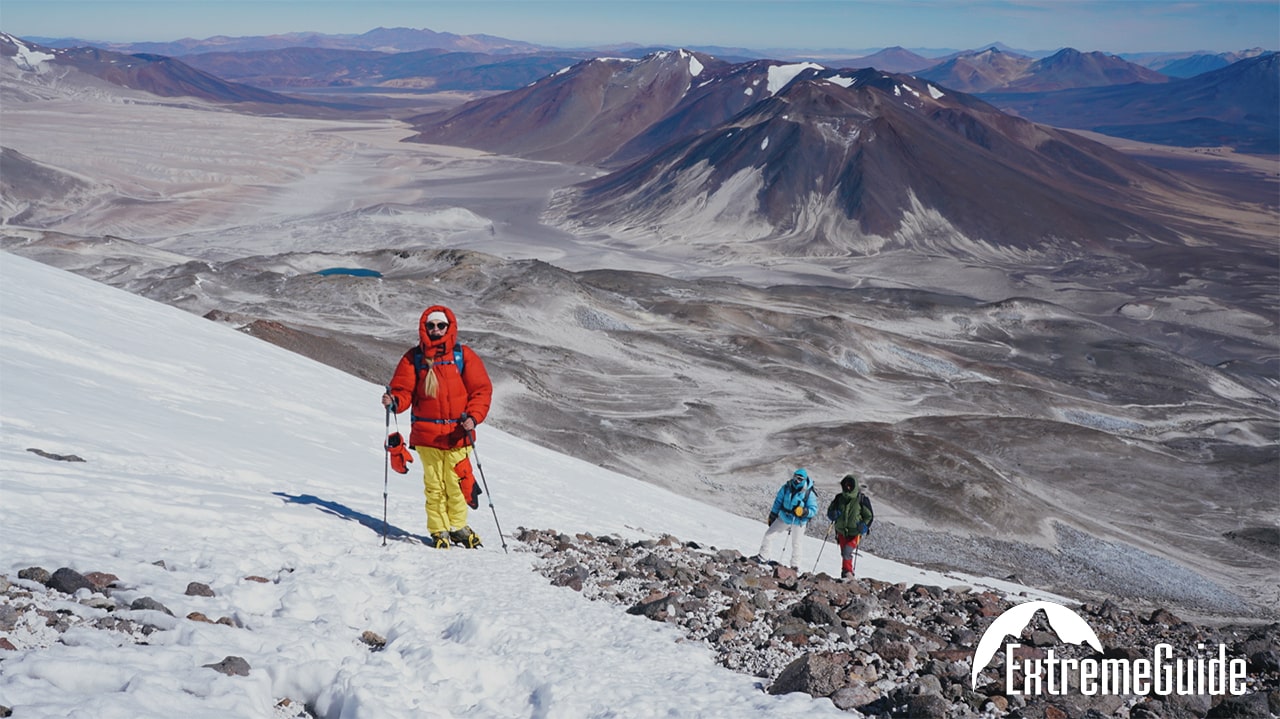
We will try to go to bed early so that no later than 0:00 hours we can leave in the direction of the Tehos refuge and begin our assault on the summit.
day
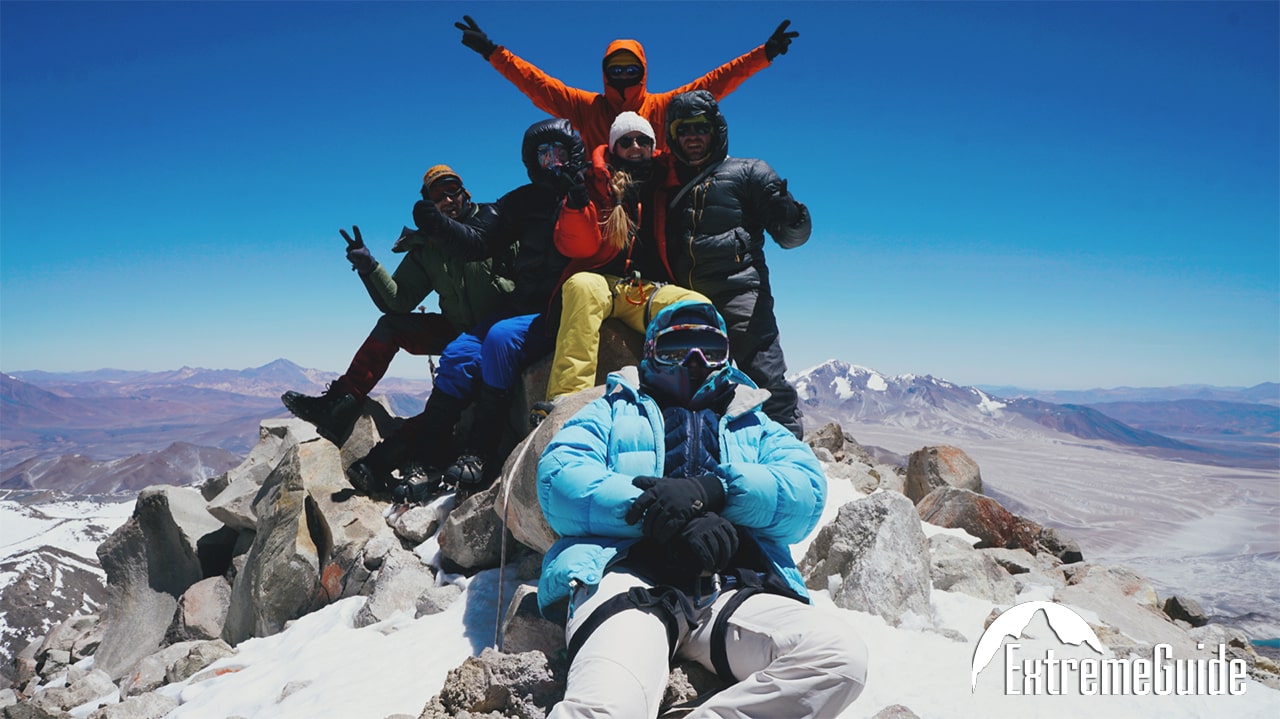
Early start. The way to the top takes about 8-10 hours and back 3-5 hours. The classic route of the ascent is an oblique traverse, exit to the crater of the summit and 20 m along simple rocks to the summit. And here we are at the top of the highest volcano – Ojos del Salado (6893 m). Descent to Laguna Verde.
day
Reserve day in case of bad weather and other circumstances.
day
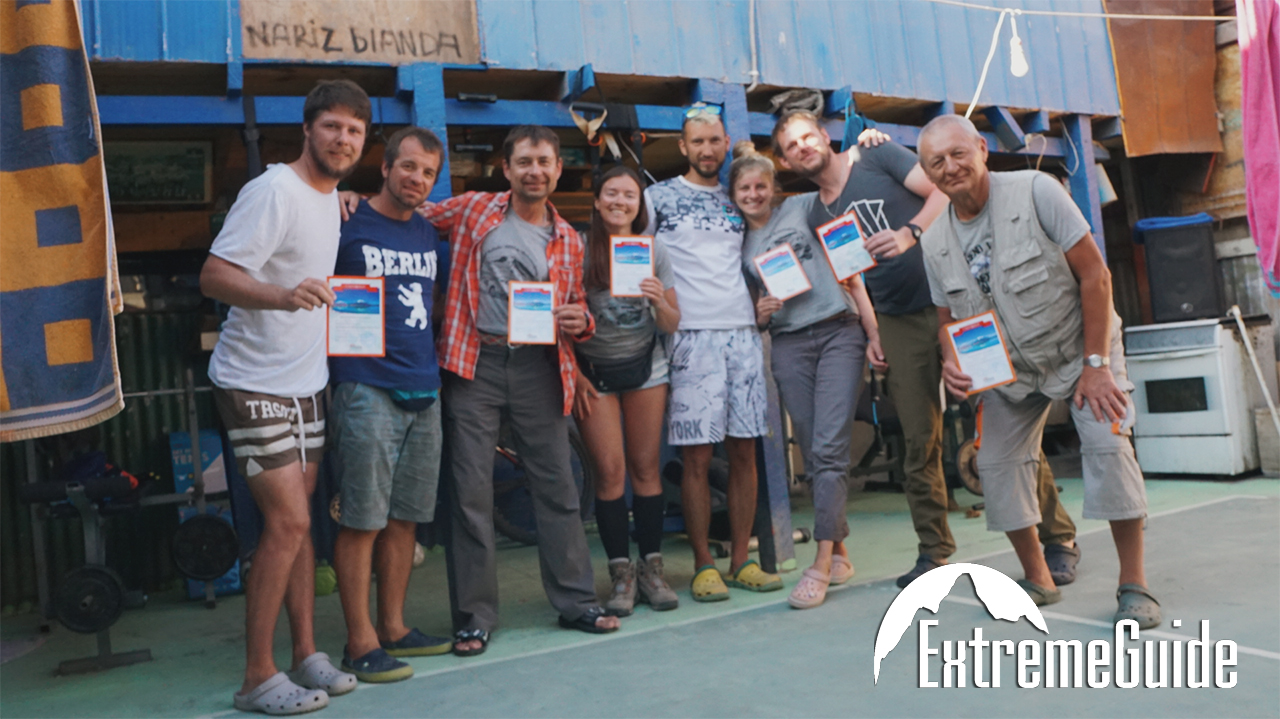
Overnight at the hotel. Farewell dinner, summing up and presentation of certificates.
day
Farewell to the group. Morning departure to the airport.
Note:
The program is not final and may be adjusted depending on the weather, the condition of the participants and other factors.
Map of the ascent route to Ojos del Salado:

Why is it profitable for you to go to Ojos Del Salado with Extreme Guide?


Cost and conditions of climbing Ojos del Salado
Is this trip right for you?
The ascent is not technically difficult and starts at a height of 5200 meters (delivery to this height is by jeeps), but the altitude factor still plays a significant role. Therefore, it is advisable to undertake this ascent if you have experience climbing peaks of 4500 – 5000 meters (for example, Kazbek, etc.).
Included in the price:
- guide work, one guide per group of up to 4 people;
- second guide, if the group is more than 4 people;
- all transfers according to the program;
- accommodation in hotels in 3* Santiago and Copiapo (2 nights);
- accommodation in tent camps Laguna Santa Rosa, Laguna Verde, Atacama shelter and Tejos according to the program;
- security (group first aid kit, GPS navigator);
- climbing permit;
- rent of public equipment (tents, kitchen, gas);
- common tent, mess room;
- furniture (tables, chairs, cooking utensils);
- full meals on the active part of the route (day 2 – day 12), participants cook for themselves;
- jeep rental and gasoline to the camp at 5800 m (12 days in total), one car for 3-4 people;
The price does not include:
- international flight to Santiago (from $1,000);
- flight Santiago-Copiapó-Santiago (from $150);
- transfer to/from the airport in Santiago and Copiapó;
- additional nights at a hotel in Santiago and Copiapó;
- Chilean visa (citizens of Ukraine do not need a visa);
- personal mountaineering equipment (system, crampons, carabiners);
- accident insurance and medical coverage from 30,000 €. (issued by ExtremeGuide), cost 3-10 €/day depends on the selected insurance program, residency. Check the cost;
- cook’s work;
- meals in cities ($20-40/day);
- tips for the guide (optional);
- additional days of jeep rental + gasoline for more than 14 days ($150 per day);
- any additional expenses arising in connection with early termination or change of the tour program;
- additional excursions and overnight stays in cities;
- other expenses not specified in the program.
Note: Additional costs for the guide are shared equally by the group.
Price depending on the number of participants
| Number of participants | Cost per 1 participant |
|---|---|
| 4 | 3400 USD |
| 3 | 4200 USD |
| 2 | 5200 USD |
| 1 | 10500 USD |

Best price guarantee!
- We have included in the price all possible basic expenses for the program and guarantee that there are no hidden additional costs, while we have retained the best service at a low price: transfers, hotel accommodation, guides and staff!
We have a flexible discount system
Find out the details right now:
Necessary equipment
Basics:
- Transport bag 100-120 l or large backpack. We won’t be carrying them, everything will be in the car;
- Assault backpack 30-40 l. (Read more about choosing a backpack);
- Sleeping bag, comfort -5…-10 С (Read more about choosing a sleeping bag);
- Pad (It is advisable to have a thick and warm rug) (Read more about choosing a pad).
Shoes and clothing:
- Mountaineering boots, double-layer (Read more about choosing clothes and boots);
- Trekking shoes/boots (for acclimatization);
- Change footwear (sandals or flip-flops);
- Gaiters (shoe covers, flashlights) for boots;
- Down sweater or light warm jacket;
- Down jacket or warm jacket (minimum temperature -20 … -25 on the night of the ascent);
- Warm hat;
- Walking trousers (synthetic);
- Insulated trousers (down, primaloft);
- Membrane trousers;
- Walking jacket, windproof (Gore-tex, cotton or synthetic);
- Rain cape (if walking clothes get wet);
- 2 of Thermal underwear sets (if there is no thermal underwear, long johns and a jacket);
- 2 Warm jackets (polar, fleece);
- Socks at least 3 pairs (“thermal socks” or other thick ones);
- Socks for overnight stays (preferably wool or down);
- Mittens (down or ski; the main thing is that they are windproof);
- Warm fleece gloves;
- T-shirt;
- Change of underwear;
- Swimming trunks/swimsuit
- Headgear for protection from the sun;
- Balaclava.
The rest:
- Hermo packaging for things 2 pcs – 20 l / (large plastic bags for packing things);
- Mug, spoon, bowl, knife (all of this should be as light as possible – made of stainless steel or special plastic; do not take ceramic mugs and enamel dishes);
- Headlamp + set of batteries;
- Hygiene supplies;
- Documents in hermetic packaging;
- Individual first aid kit (plaster, cold, stomach, head. Also, specific and chronic diseases, if any, should be taken into account. In addition to the individual first aid kit, the guide has a
communal one); - Mountaineering glasses (protection category 3-4);
- Ski mask (in case of wind and precipitation on the mountain);
- Hygienic lipbalm;
- Sunscreen ointment;
- Water container (1-2 l.);
- Seating pad.
Special equipment:
- Trekking poles;
- Crampons;
- Climbing system;
- Carabiners – 3 pcs;
- Climbing loop 120 sm;
- Descender.
Ojos del Salado Equipment List Overview
- Thermos (0.75 – 1.0 liters);
- Camera;
- Work gloves.
Additional Information
Climbing Ojos is a real adventure, due to its remoteness from civilization and sparse attendance. We will travel by SUV. We will visit several salt lakes, see alpacas (llamas) and flamingos, and visit real high-mountain salt marshes.
Citizens of Ukraine do not require a visa to visit this country. Upon arrival at the airport, you only need to present a passport valid for 6 months from the date of entry.
The mountain is technically simple, there is almost no snow in the dry season, but you should not underestimate it. You need to prepare as for any 7000-ku. Hard, exhausting training, 3-4 times a week: running, swimming, cycling, functional training. For more information on preparation, see here
Physical and mental preparation before climbing and hiking in the mountains
For 10 days we will live in autonomous conditions without a shower, internet or mobile communication. Instead of a shower we will have regular warm baths on Laguna Verde lake, temperature +30 C.
The peculiarity of the ascent is that we have practically no approaches and movements with a heavy backpack, we drive up to the foot of the acclimatization peaks and Mt. Ojos del Salado by car. For example, the camp in Laguna Verde is at an altitude of 4300 m, and the start on Ojos is at 5800.
There are no poisonous insects or dangerous predators. The main factor that influences the success of the event is smooth acclimatization and the absence of diseases.
Hotel in Copiapo – 2 nights, the rest of the time – tents, 2 people per night.
We prepare our own meals and buy food from the supermarket (there is a very large selection). Hotels include breakfast, and there are cafes and restaurants in the city.
We also recommend that you do a medical check-up and check for the absence of diseases incompatible with active tourism: List of diseases
The guide will have a general first aid kit. You should also have a personal first aid kit with personal medications for chronic diseases, as well as colds, throat and nose, plasters, vitamins, ibuprofen for headaches and Diamox.
This program is potentially dangerous to the health and life of any of the participants.
Guides will provide you with the necessary safety, provided that you comply with safety regulations. The guide has a radio, GPS (satellite navigation device), and other necessary group equipment.
The decision to stop the ascent in conditions that threaten the safety of the participants is the exclusive responsibility of the guide accompanying the group on the route, and is not subject to discussion.
The guide is obliged to take measures to ensure the safety of the group on all types of mountain terrain.
The table shows the basic cost for a group and may change depending on the number of people in the group. For the calculation of the cost of the tour for a smaller number of people and individual groups, see the «Price» block for more details.
We guarantee that on the dates indicated in the table, even if there is a minimum number of people allowed in the group, the tour will take place 100% with a minimum change in cost.
Pleasant bonuses, which everyone receives when ordering a tour with us


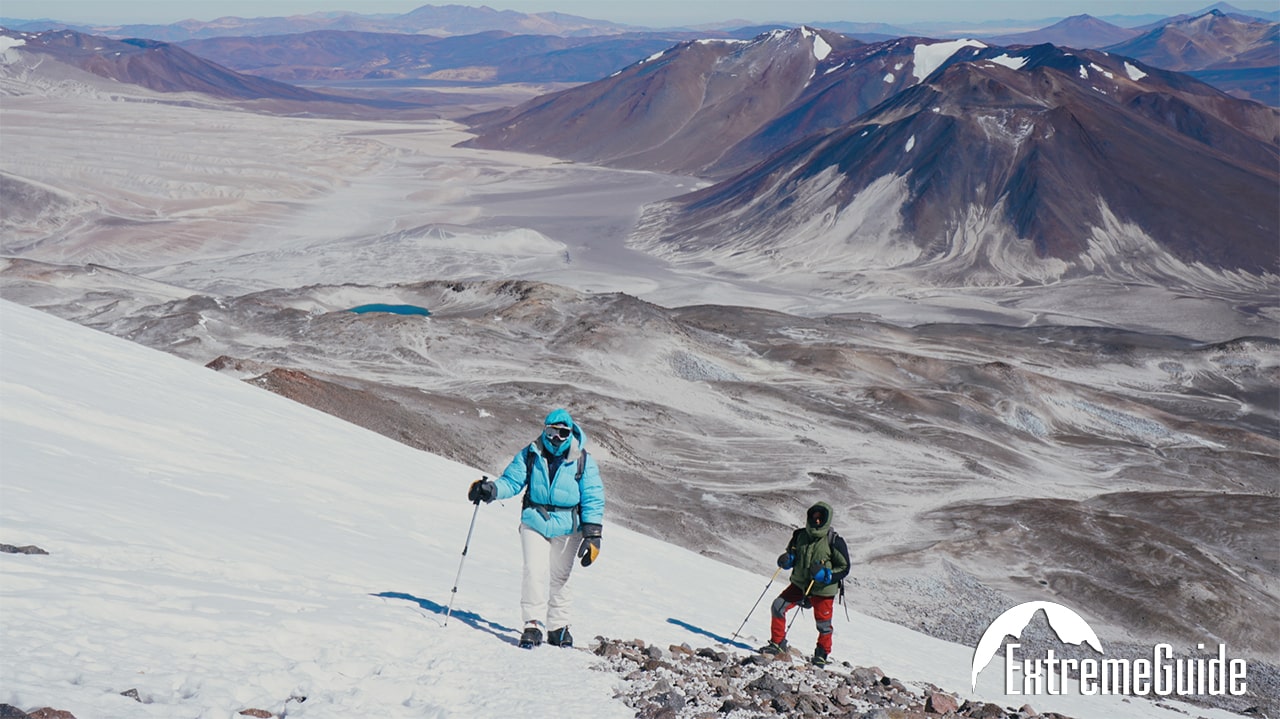
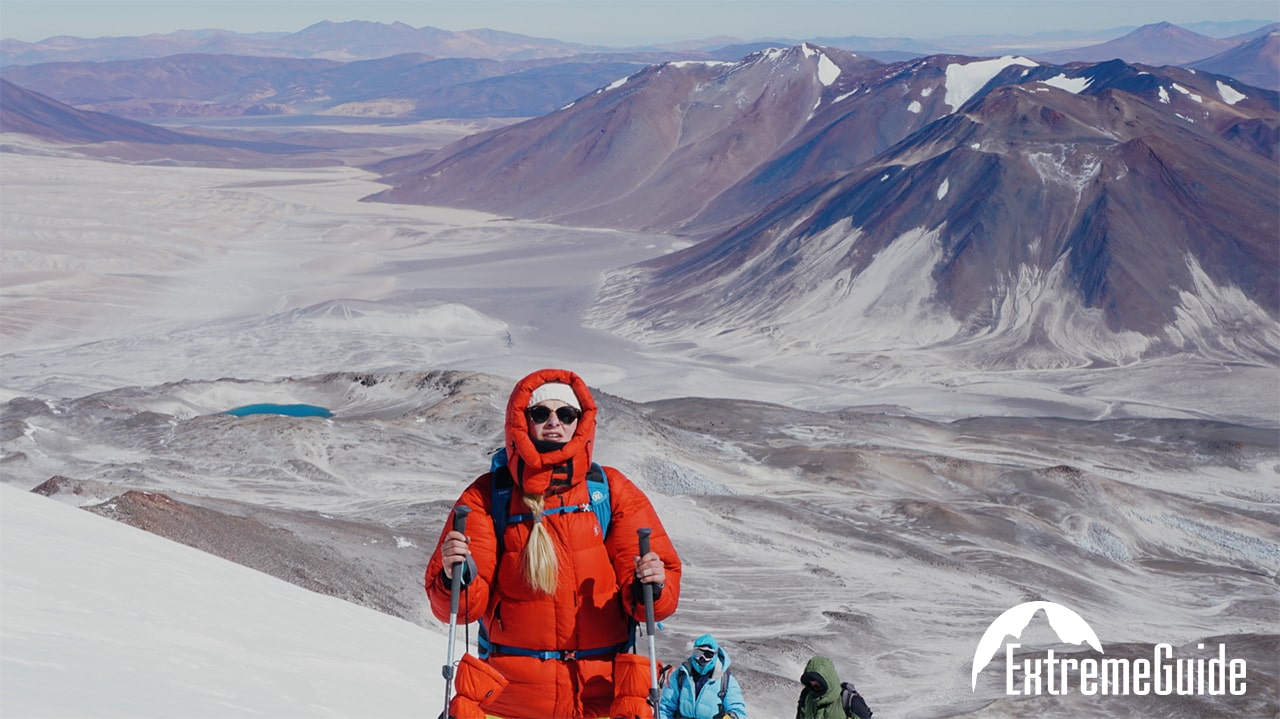
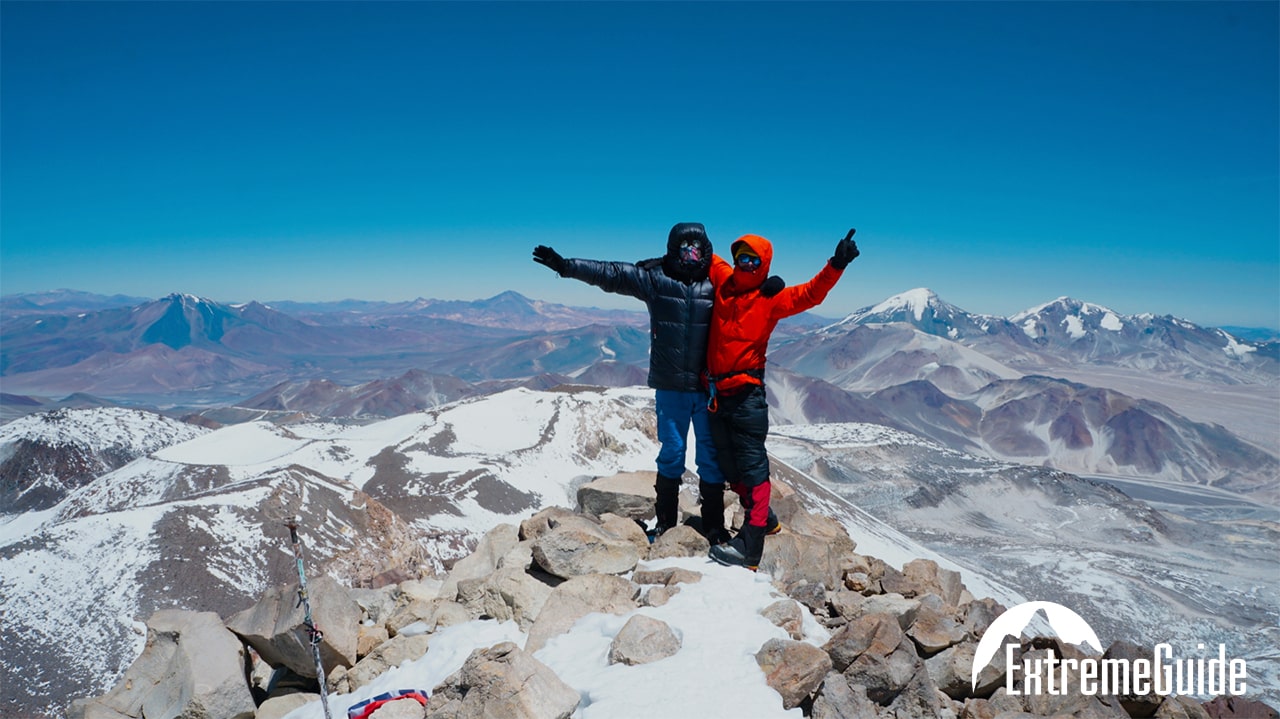
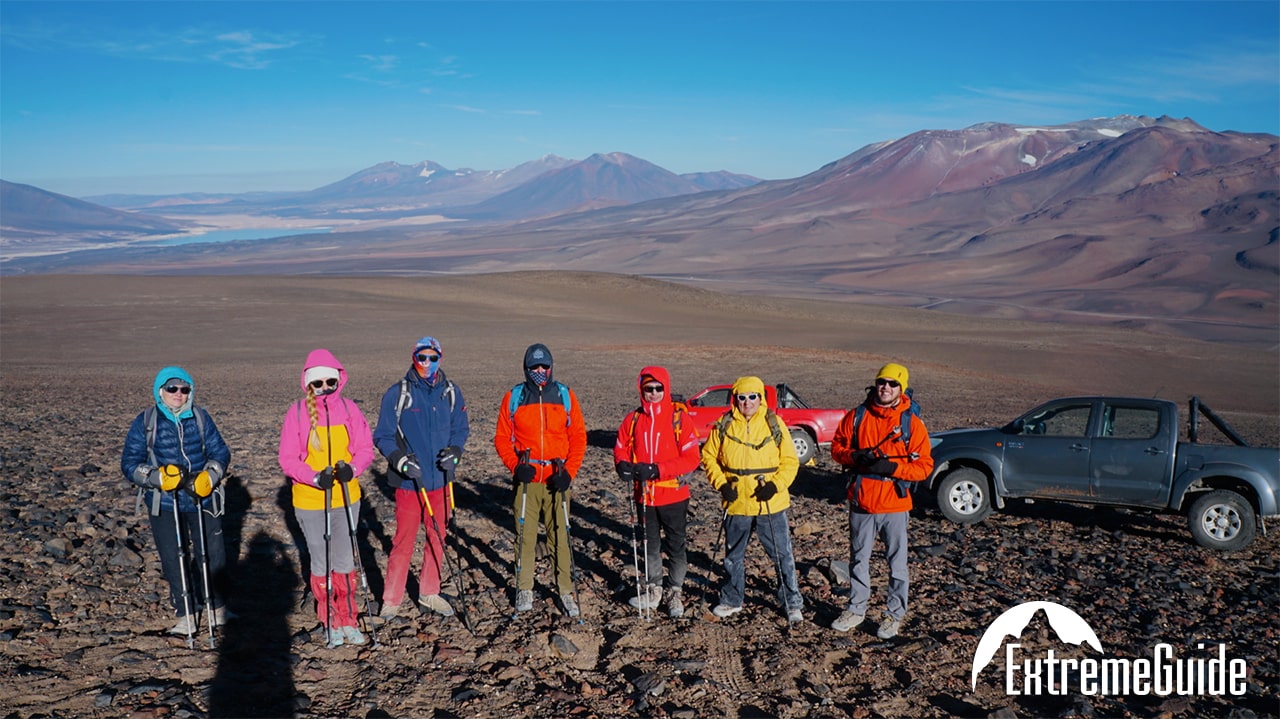
Photo of previous trips




Reviews of our travelers
Recommended tours
 Argentina
Dates:
January 31 - February 16
Complexity:
Duration:
Height:

Left: 6 places
 Argentina
 Dates:
January 24 - February 16
Complexity:
Duration:
Height:
Left: 8 places
 Nepal (Himalayas)
 Dates:
October 25 - November 18
Complexity:
Duration:
Height:

5.0 (82)
Left: 4 places
 Kyrgyzstan
 Dates:
July 18 - August 8
Complexity:
Duration:
Height:

5.0 (15)
Left: 6 places