


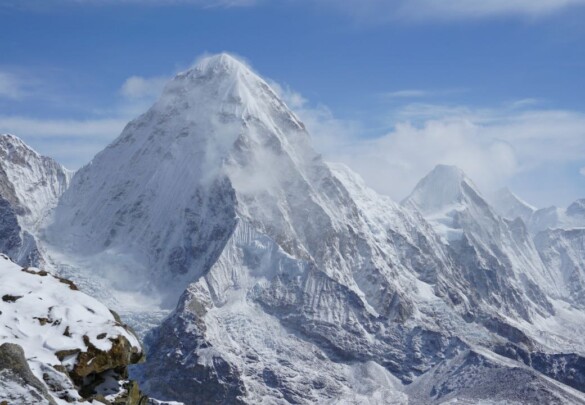
The Himalayas have always attracted climbers. This is the highest mountain system in the World, 8 out of 14 eight-thousanders are in this country:
- Chomolungma (Everest), 8848 m;
- Kanchenjunga, 8586 m;
- Lhotse, 8516 m;
- Makalu, 8485 m
- Cho Oyu, 8201 m;
- Dhaulagiri, 8167 m;
- Manaslu, 8156 m;
- Annapurna, 8091 m;
- Shishabangma, 8027 m.
There are more than 10 different routes to each of the peaks. But there are classic ones, on which dozens of climbers from different countries try their hand every year. Of course, the most popular peak is Everest, which is climbed by more than 500 people every year.
Climbing 8000 peaks requires extraordinary physical fitness, good health and financial investment in training, equipment and participation in such programs. On average, the cost of participation in a climbing program, for example to Manaslu, will cost you $10,000 from the start. But in order to climb Everest or Manaslu, you need to start from the lower peaks. And so you have experience of Elbrus, Kazbek or Mont Blanc and you want to try your hand at the peaks in Nepal. We recommend starting your “high-altitude career” in the Himalayas from peaks of 6000 m and above.

Features of climbing peaks 6000 m in Nepal
The most popular regions for climbing peaks 6000 m and above are the Everest and Annapurna regions. This is due to developed infrastructure and accessible logistics. Besides this, climbing in these regions is beautiful. You will always be surrounded by the majestic peaks of Everest, Lhotse, Cho Oyu, Makalu, Kanchenjunga and Annapurna.
About 10 peaks at 6000 m are considered relatively simple and accessible. The Nepalese classify them as “trekking peaks” because as part of a regular trek to Everest Base Camp, Annapurna Base Camp or around Dhaulagiri, you can take an extra 2-3 days to climb the beautiful mountain. These peaks include: Island Peak, Lobuche, Mera Peak, Tent Peak, Chulu Western and Eastern, Dhampus Peak, Yala Peak.
But there are difficult and inaccessible peaks, they are called “expedition peaks”, which reach a height of 6000 m or more: Amadablam, Pumori, Kyajo Peak, Thamserku, Tilichio Peak, Bokta Peak, Zhannou and many others.
On the “trekking” peaks, you can try your hand at high-altitude mountaineering with minimal hardship, maximum 1-2 nights in tents. Usually, near each such popular peak there is an equipment rental where you can find: shoes, an ice ax, a system, a helmet. It’s better to have your own everything else, including warm clothes and a sleeping bag. We have experience when people with no mountaineering experience at all climbed these peaks.
In “expedition climbs” you will spend most of your time in tents; to climb these peaks you will need previous experience and skills in working with equipment.
Another special feature of climbing in Nepal is that for a small surcharge ($20) you can hire a personal porter who will accompany you to the base camp. If you want to hire a high-altitude porter, you will have to pay a more significant amount of $50-100 per day. Very often, local companies provide full service and the cost of a porter is already included in the price of the climb, you will also be accompanied by a cook and the tents will already be in the camp.
When planning climbs in Nepal, you need to remember that climbing to the peaks here is paid. The government introduced a tax – a permit for lifting. The most expensive for Everest starts from $11,000, for peaks 6000 $125-250, for peaks 7000 – $500, for less popular 8000 permits cost $1000-2000.
In addition, an attractive feature of Nepal is its stable weather during the season, which allows you to almost always plan a successful climb.
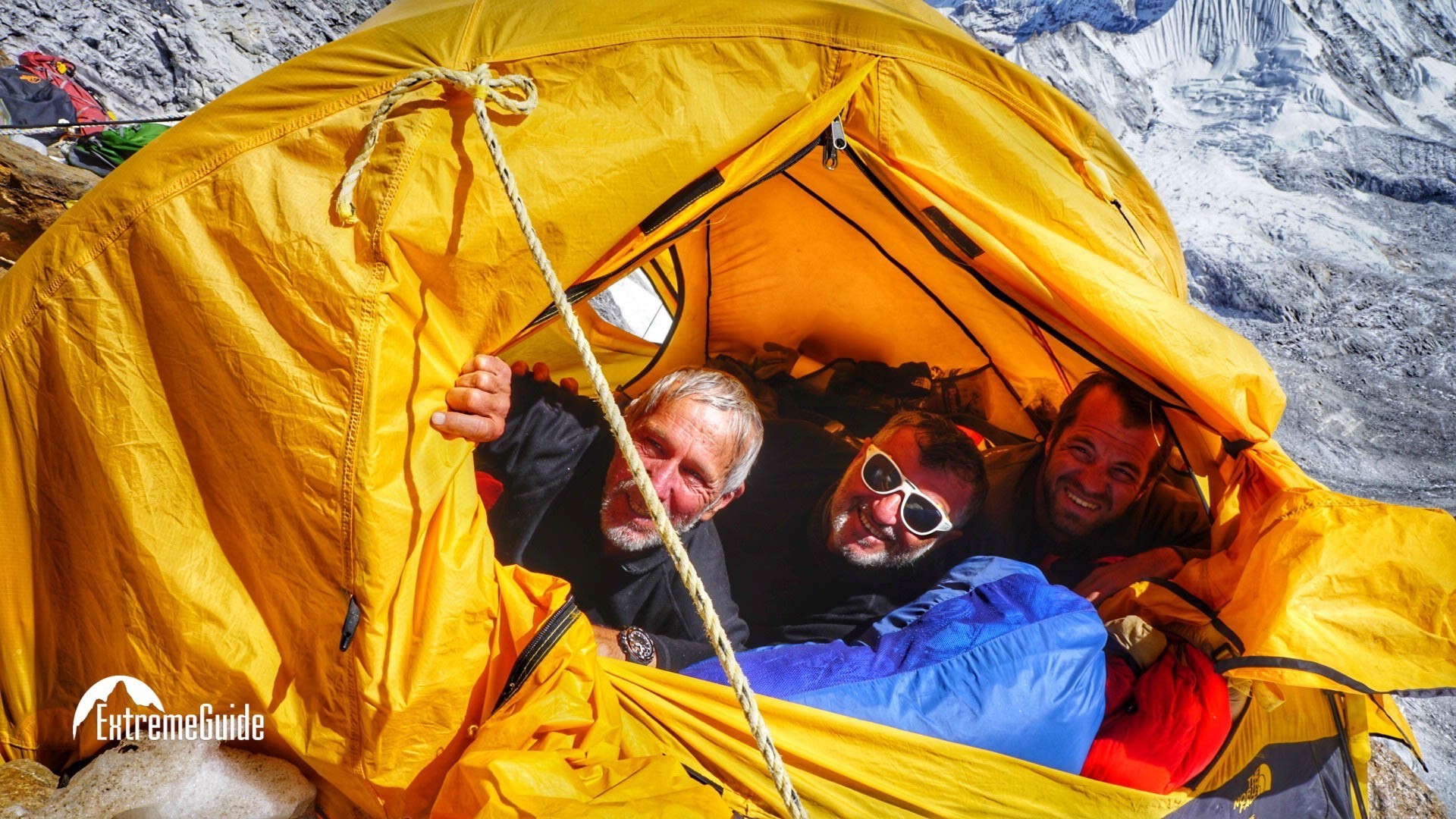
About loggias in Nepal
Difficulty of climbing in Nepal
Of course, if you plan to climb Amadablam, you are unlikely to succeed without experience. To climb this peak, you need to have a full arsenal of mountaineering skills: moving on rocks, moving with crampons on ice, working with ropes, climbing/descending vertical ropes, experience in autonomous bivouacs in the mountains, high-altitude experience, since some of the overnight stays will be above 5000 m. Despite the fact that the route is roped, its difficulty is about 5 A k.tr.
For most trekking peaks, good physical fitness is a prerequisite; mountain climbing experience is desirable. There are few long technical sections on Mera Peak. The skill of moving in crampons and with a jumar can be acquired immediately before the start. The difficulty of climbing accessible trekking peaks is 2A-3A grade.
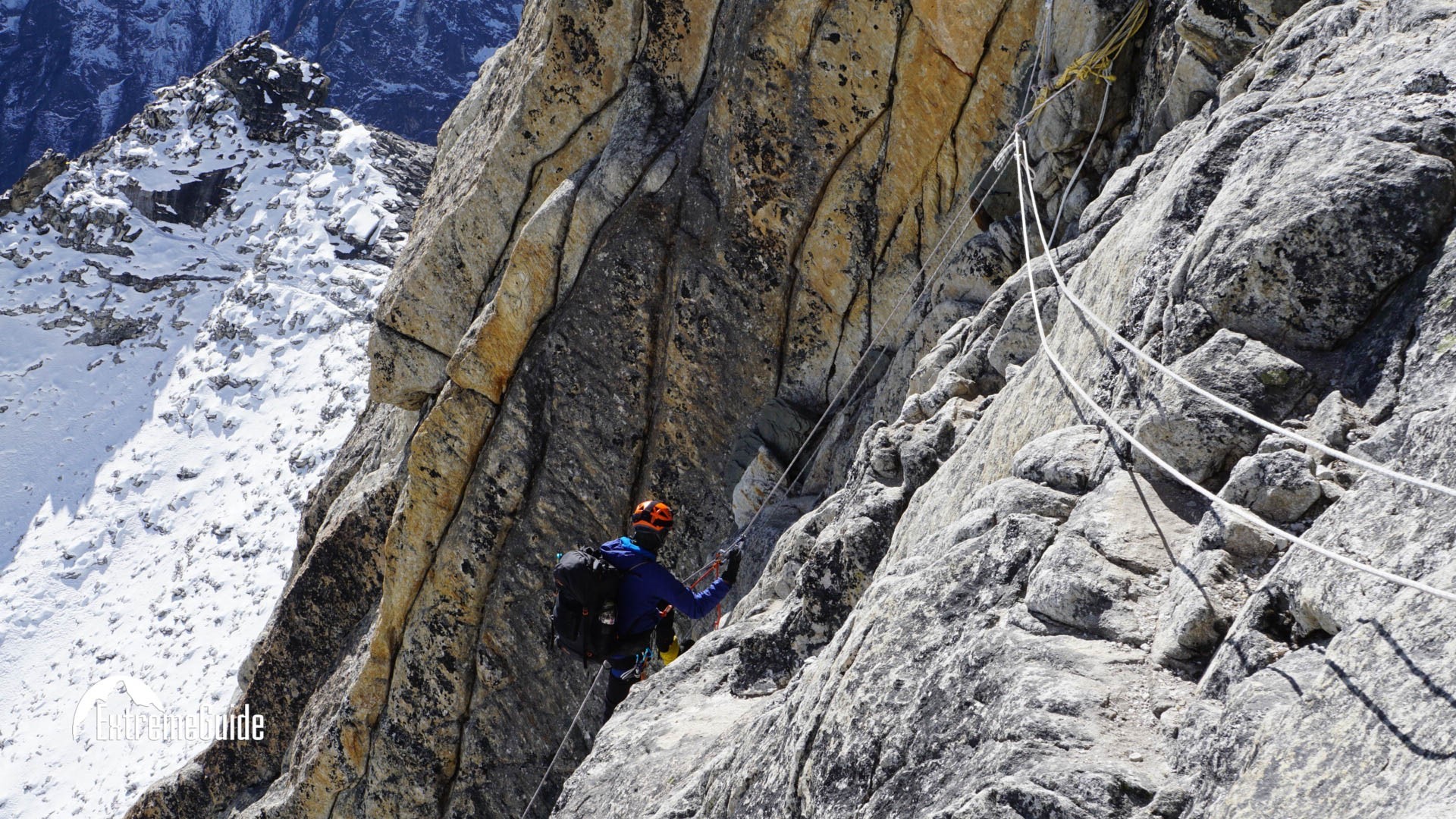
What you need to be prepared for
As we wrote, preparation for climbing begins with choosing a route. One way or another, despite the conditional availability, you need to be prepared for the fact that for 15-25 days you will live in conditions different from home. Some nights will be in loggias, where there is electricity, shower and internet. Some nights will be in tents. You can give your things to the porter. But you need to be prepared for physical exertion, an altitude gain of 500-600 m during acclimatization and 1000-1500 on the day of the assault. Long walking days are 10-15 hours or more. All this makes climbing in Nepal a very important undertaking. Although the food in the loggias is varied and simple, there will be no delicacies or delights here; during the assault, most likely you will be eating freeze-dried bags.
Preparing for the climb, training
Of course, in order to successfully summit a peak in the Himalayas, preparation must begin much earlier than 2 months in advance. Optimally no later than 6 months before the start. Include running, swimming and cycling in your workouts. The number of workouts should be at least 3-4 per week. For more information about training, watch the video series:
Which route to choose?
For people who are going to the mountains for the second time, and you only have mountain trekking or climbing Kilimanjaro in your arsenal, we recommend considering the option of climbing Mount Mera Peak, 6450 m. Firstly, there is a very picturesque and wild trek to this mountain, which will also appeal to those who want to see a different Nepal and have already been trekking to Everest. The climb to the top is not technically difficult, there are no vertical sections, but at the very top you will need crampons.
Island Peak, 6189 m, is perhaps the most technical peak of all trekking peaks available. In order to climb to the top on the day of the assault, you will have to overcome the icefall, the last obstacle is to climb vertical ice with a steepness of 40-50 degrees, 150 m. In addition, this ascent can be combined with the popular trekking to Everest. Before the assault, you will have one, maximum two nights in tents.
Lobuche Peak is not inferior to Island Peak in terms of technical difficulty; there are 2 times more sections with fixed ropes, although the average slope is less steep. This climb can also be combined with a visit to Everest Base Camp. As on Island Peak, you will have one night in tents before the assault.
Climbing Chulu West Peak, 6419 m, is a good opportunity to combine the climb with a visit to the trek around Annapuna. The number of autonomous nights here is 3-4. But in general, the climb is accessible to people with minimal experience in mountaineering, for example Elbrus or Kazbek.
Climbing Amadablam, 6814 m. Amadablam is the pearl of the Khumbu Valley, one of the most beautiful and desirable peaks. Technically, this is one of the most difficult climbs in the Khumbu region. We need to prepare for this peak, since we will live one third of the time in tents, part of the nights at an altitude of 6000 m. The entire program lasts 25 days.
Climbing Manaslu, 8156 m. In this program you will be able to test your limit and climb to the top of 8000 meters, accompanied by experienced guides. Everything will be real here, the program will last 30-40 days, overnight stays in the snow, in camps at 6400 and 7000 m.
Climbing season in Nepal
Spring
The climbing season in Nepal in spring is the second half of March to mid-May. This is the warmest period in the mountains, before the arrival of the monsoons. The weather is stable almost all the time, sometimes precipitation is possible. At altitudes of 5000 and above snow is possible.
Summer
In the summer in Nepal it is the rainy season, there is snow in the mountains, low clouds. This is not a favorable period for climbing.
Autumn
The driest period in Nepal begins from the second half of September until the end of November. At this time it is a little colder than in spring, but there is practically no precipitation, although strong winds are possible at the peaks. This is the most popular period for climbing.
Winter
Winter in the mountains of Nepal is short, with little snow, but windy and cold. Snow lies from heights of 3000 m.

Plan your climbs to the mountains of Nepal with ExtremeGuide:
✅we love Nepal and want you to love it as much as we do 🙂
✅work experience since 2008;
✅Every season we send 50-60 people to Nepal with us. (6-8 groups) for treks and ascents;
✅experienced company guides + support from local guides;
✅all routes were carried out more than once, so everything is thought out to the smallest detail;
✅support for local tour operators, we will resolve any issue in Nepal, including evacuation from Everest by helicopter, very quickly;
✅transparent prices, no hidden costs or “surprises”;
✅we will help you collect the necessary set of things;
✅assistance in purchasing profitable tickets;
✅we’ll tell you how best to train before going on a hike.