
Famous female mountaineers
The history of mountaineering is replete with the names of daring adventurers who conquered the highest peaks on the planet. Among them, women climbers hold a special place. Their achievements not only expanded the boundaries of human capabilities but also inspired entire generations to overcome their own fears. These renowned climbers proved that fortitude and determination can overcome any obstacle.
1. Tabei Junko (Japan)
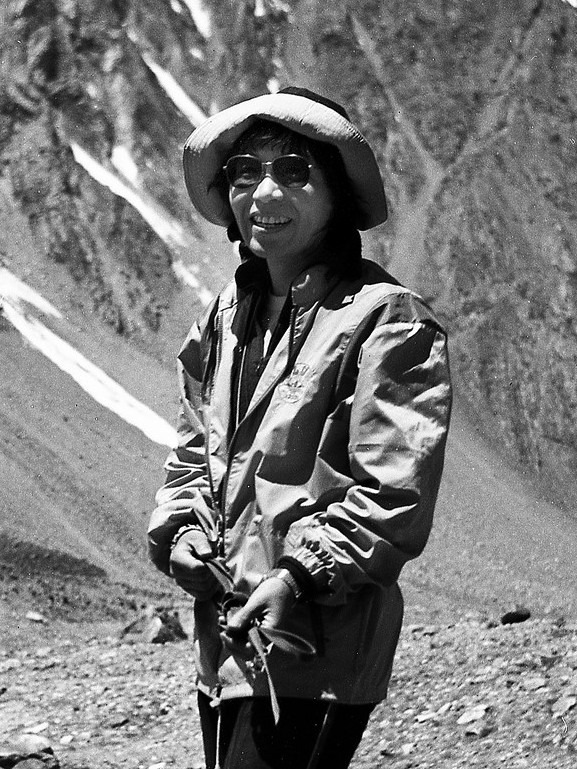
Junko Tabei is a Japanese mountaineer who forever made history as the first woman to reach the summit of the world’s highest peak. Born on September 22, 1939, in Miharu, Fukushima Prefecture, she was fascinated by mountains from childhood, despite being considered weak and fragile. Her first ascent, at the age of ten, on Mount Nasa, marked the beginning of her destiny.
Tabei’s mountaineering career developed rapidly, despite financial difficulties and social obstacles. In 1969, she founded the Joshi-Tohan Women’s Mountaineering Club, the first such association in Japan. This was a bold move for the time, as many male climbers were skeptical of women in the sport.
Junko Tabei’s most important mountaineering achievements:
- First female ascent of Everest (May 16, 1975)
- First female completion of the Seven Summits program
- Conquest of Annapurna III in 1970 – the first woman to reach this summit
- More than 70 high mountains around the world
Her journey to Everest was particularly challenging—during the 1975 expedition, an avalanche hit her camp, and Tabei spent several hours buried under the snow before being rescued by Sherpas. However, she continued climbing and reached the summit with her guide, Ang Tsering.
After Everest, Tabei continued to set ambitious goals for herself. She systematically conquered the highest peaks on every continent: Kilimanjaro in Africa (1980), Aconcagua in South America (1987), Denali in North America (1988), Elbrus in Europe (1989), Vinson Massif in Antarctica (1991), and Puncak Jaya in Australia and Oceania (1992). This achievement made her the first woman to complete the Seven Summits program.
Beyond her mountaineering exploits, Junko Tabei was an active advocate for mountain conservation. She organized environmental expeditions to clean up Everest of trash left behind by climbers and engaged in educational activities. Her contributions to mountaineering were even recognized in space—the asteroid 6897 Tabei and the Tabei-Montes mountain range on Pluto were named after her.
2. Gerlinde Kaltenbrunner (Austria)
Austrian mountaineer Gerlinde Kaltenbrunner, born on December 13, 1970, in Kirchdorf an der Krems, became one of the most remarkable female climbers in history. Her name is forever etched in the annals of mountaineering achievement as the first woman to summit all 14 eight-thousanders on Earth without supplemental oxygen. She maintained this impressive feat for 13 years, beginning in 1998.
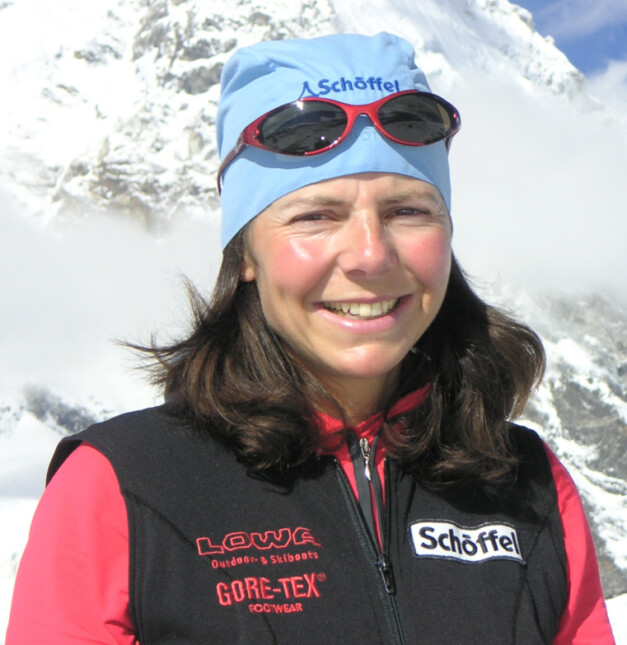
The path to the Crown of the Himalayas and Karakoram was long and arduous, with each ascent requiring careful planning and physical preparation. A hallmark of Kaltenbrunner’s style was her principled refusal to use oxygen, making her achievements even more significant in terms of mountaineering ethics and human physiological capabilities.
A chronology of her successful ascents of eight-thousanders:
- Cho Oyu (May 6, 1998)
- Makalu (May 14, 2001)
- Manaslu (May 10, 2002)
- Nanga Parbat (June 20, 2003)
- Annapurna (May 28, 2004)
- Gasherbrum I (July 25, 2004)
- Shishabangma (May 7, 2005)
- Gasherbrum II (July 21, 2005)
- Kangchenjunga (May 14, 2006)
- Broad Peak (July 12, 2007)
- Dhaulagiri (May 1, 2008)
- Lhotse (May 20, 2009)
- Everest (May 23, 2010)
- K2 (August 23, 2011)
Of particular note is her ascent of Kanchenjunga, where she became only the second woman in history to reach the summit. The final and most difficult eight-thousander in her collection was K2, which she conquered in August 2011, finally completing her unique series of ascents.
The path to success was certainly not without obstacles—Kaltenbrunner unsuccessfully attempted Lhotse twice in 2006 and 2008, each time exceeding 8,000 meters. In 2007, she also failed to reach the summit of K2 due to unfavorable weather conditions. However, these setbacks only strengthened her character and helped her better prepare for future attempts.
Her successful ascent of Lhotse in 2009, alongside Ralf Dujmovits, was a significant milestone in her career. This victory demonstrates that perseverance and a professional approach can overcome even the most difficult obstacles. Today, Gerlinde Kaltenbrunner remains a role model for many climbers around the world, and her achievements prove that women can reach the highest peaks—both literally and figuratively.
3. Wanda Rutkiewicz (Poland)
Wanda Rutkiewicz is a Polish mountaineer who forever made history as the first woman to conquer K2 and the third woman to reach the summit of Everest. Her mountaineering career began by chance: while running out of fuel on her Junak motorcycle, she met experienced climber Bogdan Janowski, a meeting that shaped her future.
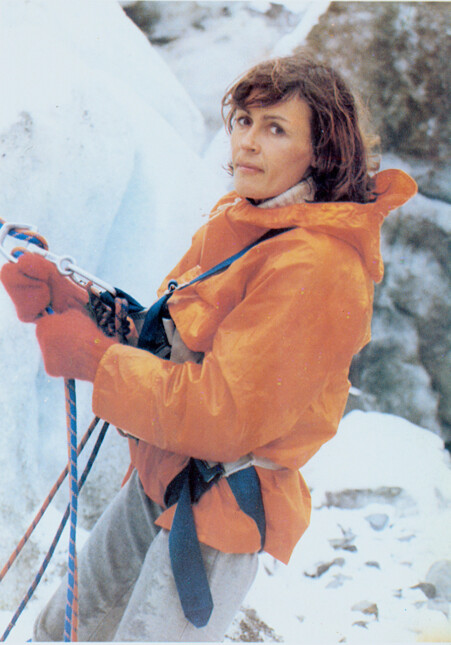
Rutkiewicz’s first major expedition to the Pamirs with Andrzej Zawada proved challenging due to her difficult relationships with male climbers. After returning, she began organizing her own expeditions, often all-female, developing her own unique leadership style. Her determination and organizational skills enabled her to achieve a number of remarkable ascents.
Wanda Rutkiewicz’s most important mountaineering achievements:
- First female ascent of K2 (1986) without supplemental oxygen
- Third female ascent of Everest (1978), the first by a European female climber
- Ascent of eight eight-thousanders between 1975 and 1991
- Participation in the first female ascent of Gasherbrum III (1975)
It’s especially important to note that Wanda made her ascent of Everest on October 16, 1978—the very day Cardinal Karol Wojtyla was elected Pope John Paul II. The Pope later quipped of this coincidence: “It was God’s will that we should climb so high on the same day.”
Rutkiewicz’s last documented ascent was of Kanchenjunga in 1992. Her mountaineering legacy includes numerous records and the establishment of standards for women in high-altitude mountaineering. In 2019, on the 41st anniversary of her Everest ascent, Wanda Rutkiewicz became the subject of a daily Google Doodle, and 2022 was declared the “Year of Wanda Rutkiewicz” in Poland.
4. Catherine Destivelle (France)
Catherine Destivelle, a French mountaineer and climber, is considered one of the most significant figures in the history of mountaineering. Born in 1960 in Algeria, she began mountaineering at the age of 12, joining the French Alpine Club. Her early ascents in Fontainebleau and the Alps laid the foundation for her incredible future achievements in high-altitude mountaineering.
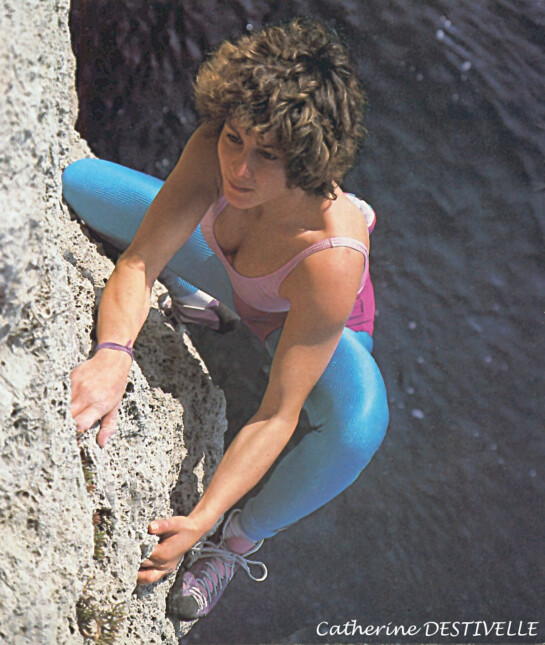
Destivelle became renowned for her daring solo ascents and innovative routes in the Alps and Himalayas. Her unique style combined technical mastery of rock climbing with a deep understanding of mountaineering, allowing her to reach peaks previously considered inaccessible to women. She became a pioneer in female mountaineering, pushing the boundaries of what was possible in this sport.
Catherine Destivelle’s most significant mountaineering achievements:
- First female solo ascent of the Bonatti Pylon (Petit Dru, 1990)
- First female ascent of the new route “Court des Destivelles” (Petit Dru, 1991)
- Winter solo trio of the north faces of the Eiger, Grandes Jorasses, and Matterhorn (1992–1994)
- Ascents of Namless Tower and Shishapangma in the Himalayas
Her contributions to mountaineering have been recognized with numerous awards, including the Legion of Honor and the Golden Ice Axe for lifetime achievement, where she became the first woman to receive this prestigious award.
5. Lynn Hill (USA)
American climber Lynn Hill revolutionized rock climbing with her incredible achievements both outdoors and in competitions. Born in 1961, she began climbing as a teenager and quickly became one of the sport’s most influential figures. Her name is forever associated with the legendary “The Nose” route on El Capitan in Yosemite.
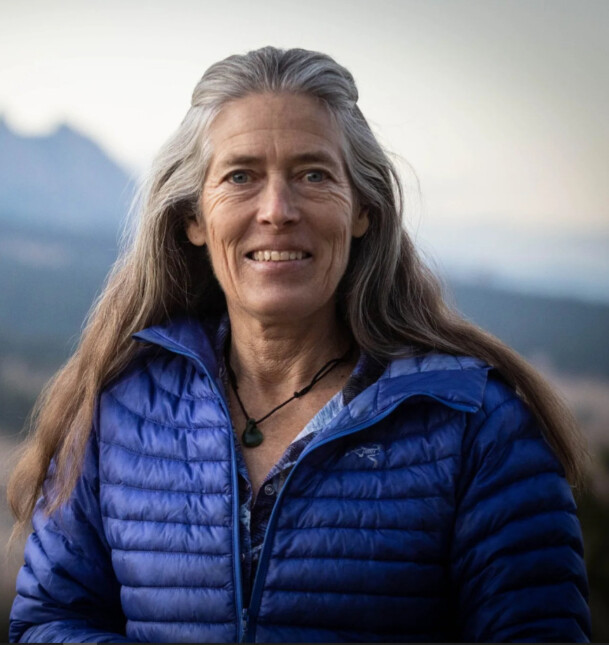
In 1993, Hill became the first person to climb the route in a single day, and the following year, she repeated the feat free climbing. It was an incredible achievement that surpassed all expectations of climbing capabilities. Her style combined physical strength, technical mastery, and a profound understanding of movement.
Lynn Hill’s key achievements:
- First free ascent of The Nose in one day (1994)
- Numerous climbing competition victories
- Development of women’s climbing worldwide
Today, Lynn Hill remains active in the climbing community, teaching workshops and advocating for the preservation of natural rock.
6. Maria Paradis (Kingdom of Sardinia, present-day France)
Marie Paradis made history as the first woman to climb Mont Blanc, the highest peak in the Alps. This historic ascent took place in 1808, when mountaineering was still in its infancy. Born in Chamonix, she was familiar with the mountains from childhood, having worked as a guide.
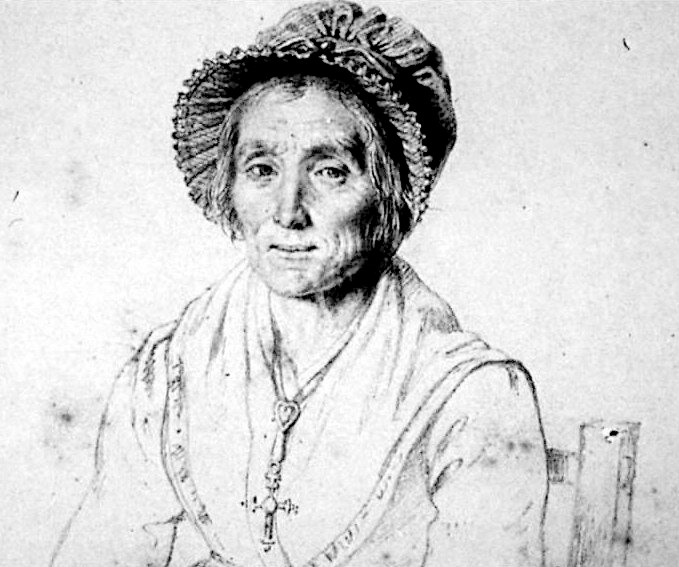
The story of her ascent of Mont Blanc is surrounded by legends. According to one version, she accompanied a group of British climbers as a guide, but subsequently reached the summit herself. This achievement was particularly impressive given the equipment of the time and the lack of modern mountaineering techniques. Her attire for the ascent consisted of a simple dress and ordinary shoes.
The most important moments of her biography:
- First female ascent of Mont Blanc (1808)
- Working as a guide in the Alps
- Promoting mountaineering among women
Maria Paradis is remembered as a pioneer of women’s mountaineering, paving the way for future generations of climbers.
7. Naila Kiani (Pakistan)
Pakistani climber Naila Kiani became the first Muslim woman to climb Everest from the Pakistani side. Born in 1985, she began mountaineering relatively late in life but quickly achieved significant success. Her ascent of Everest in 2017 became a symbol of female emancipation in conservative Pakistani society.
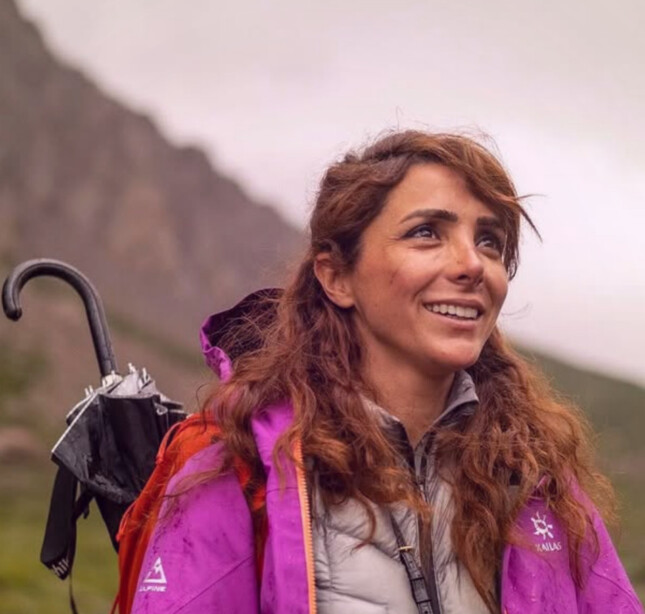
Kiani had to overcome numerous cultural and social barriers to pursue mountaineering. Her decision to become a professional climber drew both support and criticism in Pakistani society. However, she continued to pursue her goal, inspiring other young women in Pakistan and Muslim countries.
Naila Kiani’s Key Achievements:
- First Pakistani woman to climb Everest (2017)
- Breaking cultural barriers in sport
- Inspiration for Muslim women climbers
Today, Nayla Kiani continues to climb and is an active advocate for women’s rights in sports.
8. Kristin Harila (Norway)
Norwegian mountaineer of Sami descent, Kristin Harila, born on March 28, 1986, initially trained as a skier, placing 24th and 25th at the 2006 Norwegian Championships. However, she found her true calling in mountaineering, where she achieved incredible results in speed ascents of the world’s highest peaks. Her transition from skiing to mountaineering demonstrates the versatility of her athletic abilities and her desire for new challenges.
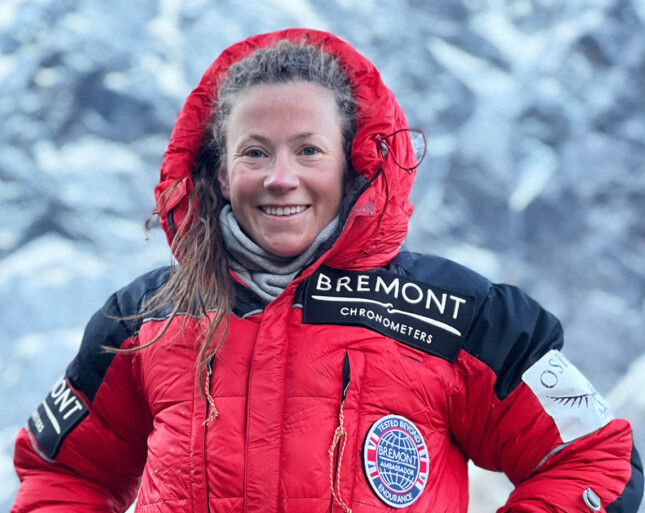
Harila’s most impressive achievements are associated with the Bremont 14 Summits project, during which she set several world records. In 2022–2023, she completed an incredible series of ascents of all 14 eight-thousanders, demonstrating unrivaled speed and endurance. Her approach to mountaineering combines meticulous planning, innovative tactics, and the use of modern technology for maximum efficiency.
Key records of Kristin Harila:
- Fastest ascent of all 14 eight-thousanders in 92 days (2023)
- World record for the fastest double ascent of Everest and Lhotse in 8 hours
- First woman to climb all 14 eight-thousanders in a single climbing season
Of particular note is her achievement in May 2021, when she set her first world record by summiting Everest and Lhotse in under 12 hours. She improved this time in 2022, reducing her time to 9 hours 5 minutes, and then to 8 hours. In 2023, together with a guide, she completed the ambitious project of summiting all 14 true geographic summits of the eight-thousanders in record time.
Harila’s climbing technique involves using helicopters to transport between base camps, optimizing time and energy. Although she initially planned to conquer the peaks without supplemental oxygen, safety concerns forced her to use oxygen tanks during her record-breaking attempts. Her team invested approximately 15 million Norwegian kroner in organizing the expeditions, demonstrating the scale of the project.
Among the climber’s numerous awards, the title of “European Adventurer of the Year 2022” stands out. Her ascent chronology is impressive in its intensity: starting with Kilimanjaro in 2015, she has climbed the most challenging eight-thousanders, including K2, Annapurna, Kangchenjunga, and other peaks. Christine Harila continues to set new standards in mountaineering, combining athletic prowess with an innovative approach to high-altitude climbing.
9. Antonina Samoilova (Ukraine)
Antonina Vladimirovna Samoylova, born on September 26, 1988, in Cherkasy, is one of the most famous modern Ukrainian mountaineers. She began her mountaineering journey relatively recently, in 2018, after successfully climbing Africa’s highest peak, Mount Kilimanjaro. Although she trained as an interior designer in London, the mountains became her true calling.
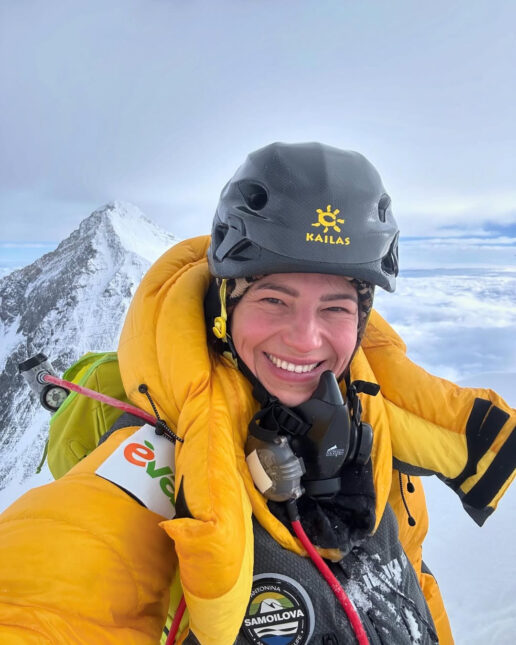
Antonina progressed rapidly in mountaineering, demonstrating incredible determination and a passion for excellence. By 2022, she had already achieved impressive results, becoming the only Ukrainian to raise the national flag on Everest that year.
Antonina Samoylova’s most important mountaineering achievements:
- Three ascents of Everest (2022, 2023, 2024)
- First Ukrainian female ascent of K2 (2022)
- Conquest of the eight-thousanders Manaslu (2023) and Kangchenjunga (2025)
- Ascent of the Seven Summits of the World, including Mount Vinson in Antarctica
Her impressive 2022 mountaineering season is particularly noteworthy, when in nine months she conquered six difficult peaks, including Everest and K2. This achievement made her the first and only Ukrainian woman to complete such a number of difficult ascents in a single season. Antonina dedicates all of her mountaineering successes to the Ukrainian people and their struggle for freedom, which gives her work special significance.
Today, Antonina Samoylova continues to set new standards for Ukrainian women’s mountaineering, remaining an active sports figure and inspiring the younger generation to push their own boundaries. Her journey proves that even a late start in mountaineering is no obstacle to achieving outstanding results in this demanding sport.
10. Lucy Walker (UK)
British mountaineer Lucy Walker made history as the first woman to summit the Matterhorn and one of the most famous climbers of the Victorian era. Born in 1836 in Canada, she soon moved with her family to Liverpool, where her father, Francis Walker, a successful businessman and mountaineer, introduced her to mountaineering. Lucy’s mountaineering career began in 1858, when, on the advice of a doctor, she joined her father and brother, Horace, on a trip to the Alps to treat her rheumatism.
During her 21 years of active mountaineering (1858–1879), Lucy Walker took part in 98 expeditions, making 28 successful ascents of four-thousanders in the Alps. Her unique style included adhering to Victorian etiquette and wearing long skirts even during challenging climbs. Lucy worked primarily with the renowned guide Melchior Underregg, and also as part of a family team with her father and brother.
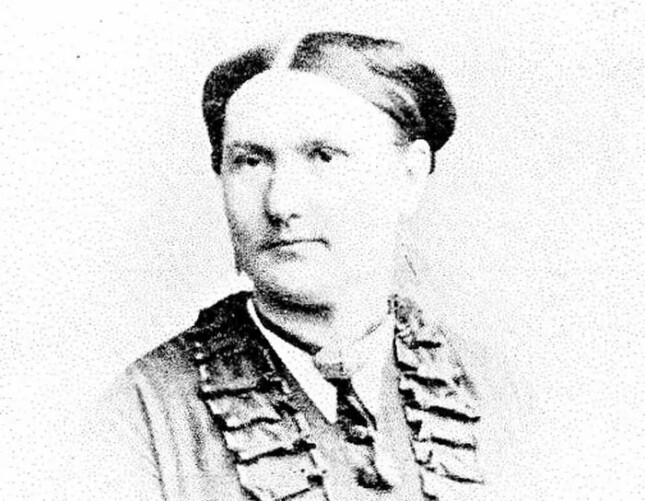
Lucy Walker’s most important achievements:
- First female ascent of the Matterhorn (July 22, 1871)
- First ascent of the Balmhorn (1864)
- 16 first female ascents in the Alps
- First female ascent of the Eiger (1864)
From 1913 to 1915, Lucy Walker served as president of the world’s first Women’s Alpine Club, continuing to promote the development of women’s mountaineering. Her contribution to the history of mountaineering is difficult to overstate—she demonstrated that women could reach the summits on par with the best male climbers without violating the social norms of their time.
Mountaineering with Extreme Guide
 Slovakia (Tatras)
Dates:
March 21 – March 22
Complexity:
Duration:
Height:

5.0 (2)
Left: 3 places
 Tajikistan (Fan Mountains)
 Dates:
July 12 – July 21
July 12 – July 24
July 25 – August 3
July 25 – August 6
August 8 – August 17
August 8 – August 20
Complexity:
Duration:
Height:

5.0 (15)
Left: 5 places
 Nepal (Himalayas)
 Dates:
October 25 – November 11
Complexity:
Duration:
Height:

Left: 6 places
 Mexico
 Dates:
March 14 – March 23
March 14 – March 30
Complexity:
Duration:
Height:

4.9 (27)
Left: 8 places
 Kyrgyzstan
 Dates:
July 11 – July 23
Complexity:
Duration:
Height:
Left: 3 places
 Kyrgyzstan
 Dates:
July 18 – August 8
Complexity:
Duration:
Height:
5.0 (15)
Left: 6 places
 Turkey
 Dates:
May 2 – May 9
September 28 – October 5
Complexity:
Duration:
Height:
Left: 4 places
 Argentina
 Dates:
January 24 – February 16
Complexity:
Duration:
Height:
Left: 8 places
 Africa
 Dates:
March 25 – April 4
August 10 – August 20
September 19 – September 29
November 11 – November 21
December 24 – January 3
January 3 – January 13
January 31 – February 10
February 28 – March 10
Complexity:
Duration:
Height:

5.0 (1)
Left: 8 places
 Georgia
 Dates:
June 27 – July 8
July 11 – July 22
July 25 – August 5
August 8 – August 19
August 22 – September 2
September 5 – September 16
Complexity:
Duration:
Height:

5.0 (1)
Left: 4 places
 Ecuador
 Dates:
December 27 – January 7
December 27 – January 11
January 31 – February 11
January 31 – February 15
Complexity:
Duration:
Height:

5.0 (82)
Left: 8 places
 Chile
Chile Dates:
January 9 – January 22
January 24 – February 6
Complexity:
Duration:
Height:
Left: 8 places