
Mont Blanc mountain
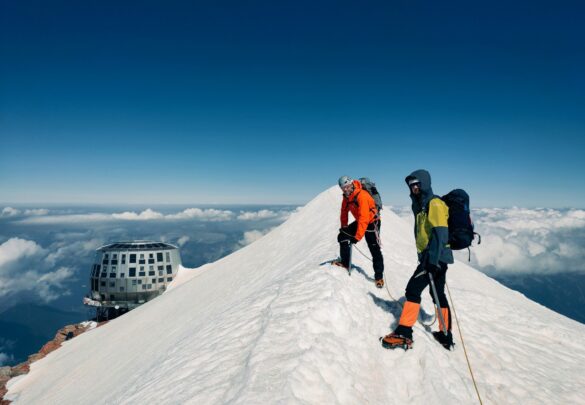
Mont Blanc, whose name translates from French as “White Mountain,” is one of the most famous mountain peaks in the world. This natural giant has attracted travelers, climbers, and simply lovers of beautiful landscapes for centuries. Its snow-capped massif, sparkling in the sun, has become a true tourist mecca for millions of people from around the world.

The history of this mountain’s exploration spans hundreds of years, with the first documented ascent of its main summit dating back to 1786. Since then, Mont Blanc has become not only a destination for mountaineering feats but also an important center for international tourism, scientific research, and cultural exchange.
In which country is Mont Blanc located?
Mont Blanc’s geographic location is quite interesting and unique. The mountain range to which the peak belongs straddles the border between two European countries, making it a true symbol of international cooperation and cultural unification. The region surrounding the mountain boasts a rich history and unique traditions, shaped over centuries by the influence of different cultures.
Mont Blanc is located in Western Europe, in the heart of the Alps—the highest and most picturesque mountain range on the continent. Specifically, the peak belongs to the Mont Blanc Massif, which is part of the Graian Alps. This region is renowned for its stunning natural beauty, rich vegetation, and unique fauna.
As for national affiliation, there are certain geopolitical nuances:
- The main peak of Mont Blanc is traditionally considered French territory.
- The southern and eastern slopes belong to Italy, where the mountain is known as Monte Bianco.
- The entire surrounding area encompasses both countries.
This division has historical roots and is rooted in ancient agreements between neighboring states. Today, both countries are jointly developing tourism infrastructure and environmental programs in the region, making Mont Blanc a model of international cooperation in preserving natural heritage.
What is the height of Mont Blanc?
Mont Blanc’s elevation is the subject of ongoing scientific observation and research, as it fluctuates under the influence of various natural factors. Snow cover on the summit can increase or decrease depending on the season, and glaciers gradually move, altering the terrain. Geologists note that the mountain itself rises by several millimeters annually due to tectonic processes in the Alps.

Official measurements conducted in September 2021 yielded results that differ slightly from previous data. According to the latest estimates, the height of the main peak is 4807.81 meters above sea level. This value is approximately one meter lower than the 2017 measurements, demonstrating the dynamic nature of the mountain landscape.
There are various factors to consider that influence the exact height of the summit:
- Snow and ice cover thickness, which varies seasonally
- Tectonic movements of the earth’s crust in the Alpine region
- Climate change and its impact on glaciers
Climbing Mont Blanc requires careful preparation and consideration of altitude conditions, which are significantly different from typical mountain trekking. Climbers face thin air, low temperatures, and the need to acclimatize their bodies to extreme conditions. Professional guides always emphasize the importance of gradually gaining altitude during the ascent to avoid altitude sickness.
Climatic features and weather conditions
Mont Blanc’s climate is characterized as high-altitude alpine, with sudden changes in weather and significant temperature fluctuations. Meteorologists note that weather conditions at the summit can change within minutes, posing a serious danger to climbers. In winter, temperatures can drop below -40°C, while in summer, sunny areas sometimes reach 15°C.

Winds at high altitudes often reach hurricane force, especially in the fall and winter. The most dangerous phenomenon is the so-called “east wind,” which brings sharp cold snaps and snowstorms. Local guides always closely monitor the forecast and advise postponing the ascent at the first sign of deteriorating weather.


The average amount of precipitation at different altitudes varies significantly:
- In the valleys around the massif, the annual precipitation is approximately 1,000 mm.
- At an altitude of 2,000-3,000 meters, it is up to 2,000 mm.
- In the highest areas, solid precipitation in the form of snow predominates.
- Snow cover at the summit can reach several meters.
Mont Blanc’s glaciers, which cover a significant portion of the massif, are sensitive indicators of climate change. Over the past decades, scientists have recorded their gradual retreat, raising concerns among environmentalists. Research shows that ice thickness has decreased by an average of 3-4 meters over the past 30 years, significantly impacting the local ecosystem.
Flora and fauna of the Mont Blanc massif
The flora around Mont Blanc boasts an impressive diversity, varying with altitude. The valleys are home to dense coniferous and mixed forests, dominated by spruce, fir, and beech. Above the tree line, alpine meadows bloom with flowers in the spring and summer.

The wildlife is also striking in its diversity, despite the harsh high-altitude conditions. Roe deer, red deer, foxes, and badgers inhabit the forest zone, while alpine ibex and mountain hares can be found in higher elevations. Ornithologists have recorded over 100 bird species, among which golden eagles, bearded vultures, and alpine choughs are particularly notable.
Environmental organizations carefully protect the unique natural environment of the Mont Blanc massif. National parks and reserves established around the mountain ensure the preservation of biodiversity and protect rare species from human impact. Tourists and climbers must adhere to strict rules of conduct to avoid disturbing the fragile high-altitude ecosystem.
Historical information and development of the mountain
Human interaction with Mont Blanc spans centuries, though the mountain remained unclimbed for a long time due to fear and superstition. Locals believed the summit to be home to evil spirits and dangerous creatures. The first attempts to climb it began in the second half of the 18th century, when scientific interest outweighed traditional concerns.
The successful conquest of the summit occurred on August 8, 1786, when Jacques Balmat and Michel-Gabriel Paccard reached the summit. This event is considered the birth of modern mountaineering as a sport and recreational activity. The following years saw numerous expeditions exploring various ascent routes and compiling the first detailed maps of the massif.
Important milestones in the history of the exploration of Mont Blanc include:
- 1741 – First scientific exploration of the massif by Englishmen Wyndham and Pocock
- 1786 – First successful ascent of the main summit
- 1808 – Marie Paradis becomes the first woman to reach the summit
- 1890 – Opening of the railway, which contributed to the development of tourism
- 1965 – Opening of a tunnel under the mountain, connecting France and Italy
Today, Mont Blanc remains one of the most popular mountaineering destinations in the world, attracting both professional and amateur climbers. The well-developed infrastructure around the mountain includes numerous huts, information centers, and rescue services, making the climb safer yet no less exciting. Every year, thousands of people attempt to retrace the path of the pioneers, experiencing the unparalleled joy of reaching the summit.
Tours on Mont Blanc with Extreme Guide
 France
Dates:
June 20 – June 27
July 4 – July 11
July 18 – July 25
August 1 – August 8
August 15 – August 22
Complexity:
Duration:
Height:

Left: 4 places
 France
 Dates:
June 21 – June 23
July 5 – July 7
July 19 – July 21
August 2 – August 4
August 16 – August 18
August 30 – September 1
September 13 – September 15
September 27 – September 29
Complexity:
Duration:
Height:

5.0 (13)
Left: 2 places
 France
Dates:
June 20 – July 1
July 11 – July 22
August 8 – August 19
September 5 – September 16
Complexity:
Duration:
Height:

5.0 (15)
Left: 6 places
 France
 Dates:
July 11 – July 22
August 15 – August 26
Complexity:
Duration:
Height:
Left: 2 places
 France
 Dates:
July 1 – July 6
July 15 – July 20
July 29 – August 3
August 12 – August 17
August 26 – August 31
September 5 – September 10
Complexity:
Duration:
Height:
Left: 2 places
 France
 Dates:
June 25 – June 28
July 16 – July 19
July 30 – August 2
August 20 – August 23
Complexity:
Duration:
Height:
Left: 2 places
 France
 Dates:
June 13 – June 20
June 20 – June 27
June 27 – July 4
July 4 – July 11
July 11 – July 18
July 18 – July 25
July 25 – August 1
July 26 – August 2
August 1 – August 8
August 2 – August 9
August 8 – August 15
August 15 – August 22
August 22 – August 29
August 29 – September 5
September 5 – September 12
September 12 – September 19
September 19 – September 26
September 26 – October 3
Complexity:
Duration:
Height:
5.0 (13)
Left: 1 place
 France
 Dates:
Complexity:
Duration:
Height: