
Tourism Day: history, traditions, interesting facts
They say that traveling is not an escape from reality, but a path to your true self. Anyone who has ever felt the wind in the mountains or got lost in the streets of a strange city knows how the perception of the world changes after a trip. This is what Tourism Day is about. The holiday is not about suitcases and selfies, but about discoveries, culture, respect and new meanings. It reminds us that traveling is not a luxury, but part of what makes us human.
When is World Tourism Day celebrated?
Traveling seems to be a personal matter. But World Tourism Day, celebrated annually on September 27, proves that this phenomenon is much deeper. It was on this day in 1970 that the Charter of the World Tourism Organization was adopted – it all began with it. Since 1980, the date has been officially established, and since then it has become a symbol of the global dialogue on tourism.

It is interesting that the celebration has a new face every time. In some countries, routes for disabled tourists are opened on this day, in others, lectures are held on responsible travel, someone organizes a festival of local cuisine, and somewhere they invite people to a mountaineering school. In fact, such diversity makes tourism what it is – a space for everyone.
International Tourism Day is the slogan of the holiday
One of the traditions of this day is an annual motto. What does it mean? UNWTO (the same organization that initiated it) chooses a main theme every year: what we, as tourists, should think about right now. It can be something global, such as digitalization or climate, or local, such as the role of youth or cultural heritage.
Sometimes these mottos sound trivial, but there is often a lot of work behind them. Exchange programs are built on their basis, new routes are created, educational courses are formed. In the end, each year in tourism has its own atmosphere – and the motto helps to understand it.
Here is a selection of World Tourism Day slogans since 1980:
| Year | Slogan |
| 1980 | Tourism as a contribution to the preservation of culture, peace and mutual understanding |
| 1981 | The Impact of Tourism on Quality of Life |
| 1982 | The most valuable thing in travel is hospitable hosts and conscious guests |
| 1983 | Traveling is not only everyone’s right, but also their responsibility |
| 1984 | Tourism to support peace, cooperation and international dialogue |
| 1985 | Youth Travel: Discovering History for Friendship and Peace |
| 1986 | Tourism as a driving force of global peace |
| 1987 | Travel as a tool for regional development |
| 1988 | Tourism as a Path to Universal Education |
| 1989 | Freedom of movement for tourists is creating a new global reality |
| 1990 | Tourism as an undervalued industry that requires development |
| 1991 | The role of education, communication and information in the formation of tourism |
| 1992 | Tourism as a bridge of social cohesion and international solidarity |
| 1993 | Harmonious combination of tourism and nature conservation |
| 1994 | Professional staff is the key to quality tourism |
| 1995 | WTO: 20 years in service of the global tourism industry |
| 1996 | Tourism as a means of tolerance and peace between peoples |
| 1997 | Tourism as a Key to Employment and Environmental Protection in the 21st Century |
| 1998 | Cooperation between government and business is the driving force behind tourism development |
| 1999 | Tourism and Heritage Conservation at the Threshold of the New Millennium |
| 2000 | Technology and Nature: Challenges for 21st Century Tourism |
| 2001 | Tourism as a language of peace and intercivilizational dialogue |
| 2002 | Ecotourism as a foundation for a sustainable future |
| 2003 | Tourism in the fight against poverty and for strengthening social balance |
| 2004 | Sport and tourism: two forces bringing cultures and societies closer together |
| 2005 | From Jules Verne’s Dreams to the Reality of Modern Travel |
| 2006 | Travel as a path to personal enrichment |
| 2009 | Tourism as a celebration of cultural diversity |
| 2010 | Travel that enriches experience and worldview |
| 2011 | Tourism as a bridge between cultures |
| 2012 | Tourism and Sustainable Energy for a Common Future |
| 2013 | Water Resources and Tourism: Responsibility for the Common Good |
| 2014 | The Impact of Tourism on Local Community Development |
| 2015 | A Billion Travelers – A Billion New Opportunities |
| 2016 | Tourism without barriers for all |
| 2017 | Sustainable tourism as a tool for development |
| 2018 | Tourism in the Age of Digital Transformation |
| 2019 | Travel as a Basis for Quality Employment |
| 2020 | Tourism and rural development |
| 2021 | Tourism for Equitable and Just Growth |
| 2022 | Tourism that needs to be rethought |
| 2023 | Green Investments as the Future of Tourism |
| 2024 | Tourism in the global context of the modern world |
These mottos are not just for beauty — they reflect the policies, trends, and challenges that the industry faces at a certain point in time. Post-pandemic recovery, digitalization of tourism, new formats of interaction with nature — all of this is reflected in the annual themes.
What will Tourism Day be like in 2025?
At a time when the world is increasingly traveling and the word “tourism” is often associated with entertainment and economics, the Vatican reminds us that travel can and should have a deeper meaning. On the eve of World Tourism Day 2025, Archbishop Rino Fisichella released a message in which tourism is not just an industry, but a space of humanity, responsibility and hope.
This year’s theme is “Tourism and Sustainable Development.” It seems to capture the spirit of the times: on the one hand, environmental challenges, on the other, the growing number of travelers, and all this in the year when the Catholic Church celebrates its Holy Jubilee. According to the Archbishop, tourism today is not just a question of the route. It is a lifestyle choice that must take into account not only the pleasure of the traveler, but also the well-being of the people who work in this field and the state of the environment where we all want to go.
The Vatican emphasizes: “fairness” in tourism is not a loud phrase, but very specific things. For example, fair wages for guides, cooks, and maids. This is counteracting speculation, when tourist prices skyrocket just because it’s “season.” And, ultimately, this is a sincere attitude toward those who come — without closed doors, without the tired “there are too many of you.”
A separate topic is the impact of tourism on nature. Here Fisichella speaks directly: tourism should not deplete the Earth, but should help preserve it. This is a call not only to governments or large companies, but also to everyone who packs a backpack or books a hotel. After all, even the smallest decision – traveling without plastic, choosing a less popular route, respecting local rules – already matters.
And yet, says the archbishop, tourism does not lose its spiritual dimension. Many people travel precisely to “take a breather,” to leave the hustle and bustle behind and touch something greater. That is why the Vatican especially emphasizes the role of shrines as places of silence and encounter – not only with God, but also with oneself.
Future events are also mentioned: in October, the Ninth World Congress on Tourism Care will take place in Rome. There, they will talk not only about strategies, but also about meanings: how to make tourism a space for human growth, and not just another industrial project.
The entire text of the message sounds like an attempt to return depth to tourism. To remind that a real journey is not just a change of landscape, but an internal transformation. And if this happens with respect for nature, for others and for oneself, then we are on the right path.
Popular tours withExtreme Guide
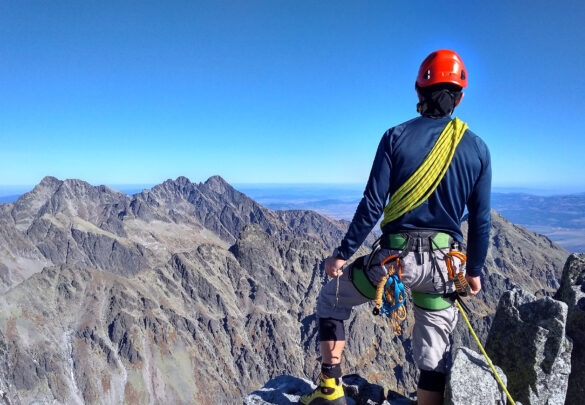 Slovakia (Tatras)
Dates:
June 13 – June 17
July 25 – July 29
August 1 – August 5
August 22 – August 26
September 12 – September 16
October 3 – October 7
Complexity:
Duration:
Height:

5.0 (2)
Left: 6 places
 Ukraine
Dates:
March 7 – March 10
March 21 – March 24
April 4 – April 7
April 18 – April 21
Complexity:
Duration:
Height:

Left: 4 places
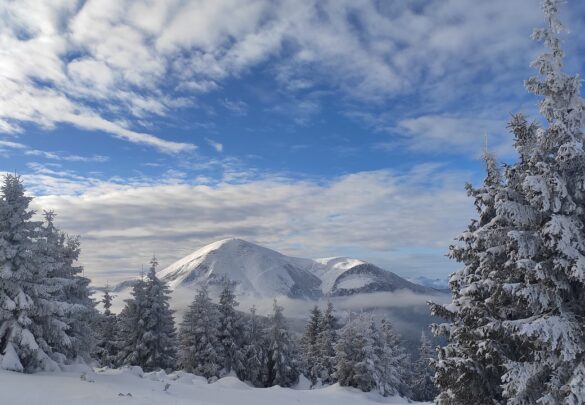 Ukraine
 Dates:
March 7
March 21
Complexity:
Duration:
Height:
Left: 8 places
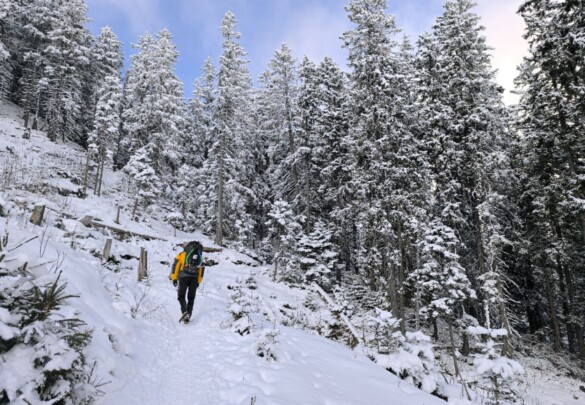 Slovakia (Tatras)
Dates:
March 21 – March 22
Complexity:
Duration:
Height:
5.0 (2)
Left: 3 places
 Georgia
 Dates:
June 14 – June 20
July 18 – July 24
August 16 – August 22
September 20 – September 26
Complexity:
Duration:
Height:

5.0 (8)
Left: 12 places
 Tajikistan (Fan Mountains)
 Dates:
July 12 – July 21
July 12 – July 24
July 25 – August 3
July 25 – August 6
August 8 – August 17
August 8 – August 20
Complexity:
Duration:
Height:

5.0 (15)
Left: 5 places
 Georgia
 Dates:
July 4 – July 12
August 15 – August 23
September 12 – September 20
Complexity:
Duration:
Height:
5.0 (8)
Left: 10 places
 Peru
Peru
Dates:
May 2 – May 12
May 2 – May 17
May 2 – May 21
Complexity:
Duration:
Height:
5.0 (8)
Left: 12 places
 Kyrgyzstan
 Dates:
July 11 – July 23
Complexity:
Duration:
Height:

Left: 3 places
 Turkey
 Dates:
May 3 – May 12
October 25 – November 3
Complexity:
Duration:

4.9 (27)
Left: 12 places
 Turkey
 Dates:
March 7 – March 15
October 25 – November 2
Complexity:
Duration:
5.0 (8)
Left: 8 places
 Turkey
 Dates:
May 2 – May 9
September 28 – October 5
Complexity:
Duration:
Height:
Left: 4 places