
What Is the Everest Season and Why Is the Summit Attempted for Only a Few Weeks a Year? 
When people first learn about climbing Everest, many are surprised by one fact: you cannot climb the world’s highest mountain at just any time of year. Despite advances in technology, satellite communications, and modern equipment, the season for safe commercial Everest expeditions is still limited to just a few weeks. It is during this period that hundreds of climbers from around the world travel to Nepal and Tibet to attempt to reach the official elevation of 8,848.86 metres.

The Everest season is not simply a few days of summit attempts. Behind this concept lies a complex system of logistics, route preparation, Sherpa support, multi-stage acclimatization, and waiting for a rare weather window that makes the climb physically possible.
What Is Meant by the Everest Season
The Everest season generally refers to the spring expedition period (the pre-monsoon season), which begins in March and ends in late May or early June. During this time, the mountain offers the most favourable and relatively safe conditions for high-altitude mountaineering.
The reason for this timing is linked to the climate of the Himalayas. In winter, the summit is affected by powerful polar jet streams that bring extreme cold and winds exceeding 150–200 km/h. In summer, the situation changes as monsoon systems from the Indian Ocean bring heavy snowfall and dense cloud cover, significantly increasing the risk of avalanches.
There is also a post-monsoon climbing season, usually in September and October. However, it is considerably less popular than the spring season due to lower temperatures, shorter daylight hours, and fewer stable weather windows. Nevertheless, spring remains the period when the overwhelming majority of successful Everest summits take place.
A relatively short window of stable weather develops between the winter storms and the summer monsoon, and mountaineering expeditions take advantage of it. Sometimes ideal conditions for the final push last only a few days, and occasionally just a few hours.
When Does the Everest Climbing Season Begin?
For expedition members, the season begins long before the summit attempt — the entire programme usually lasts around two months.
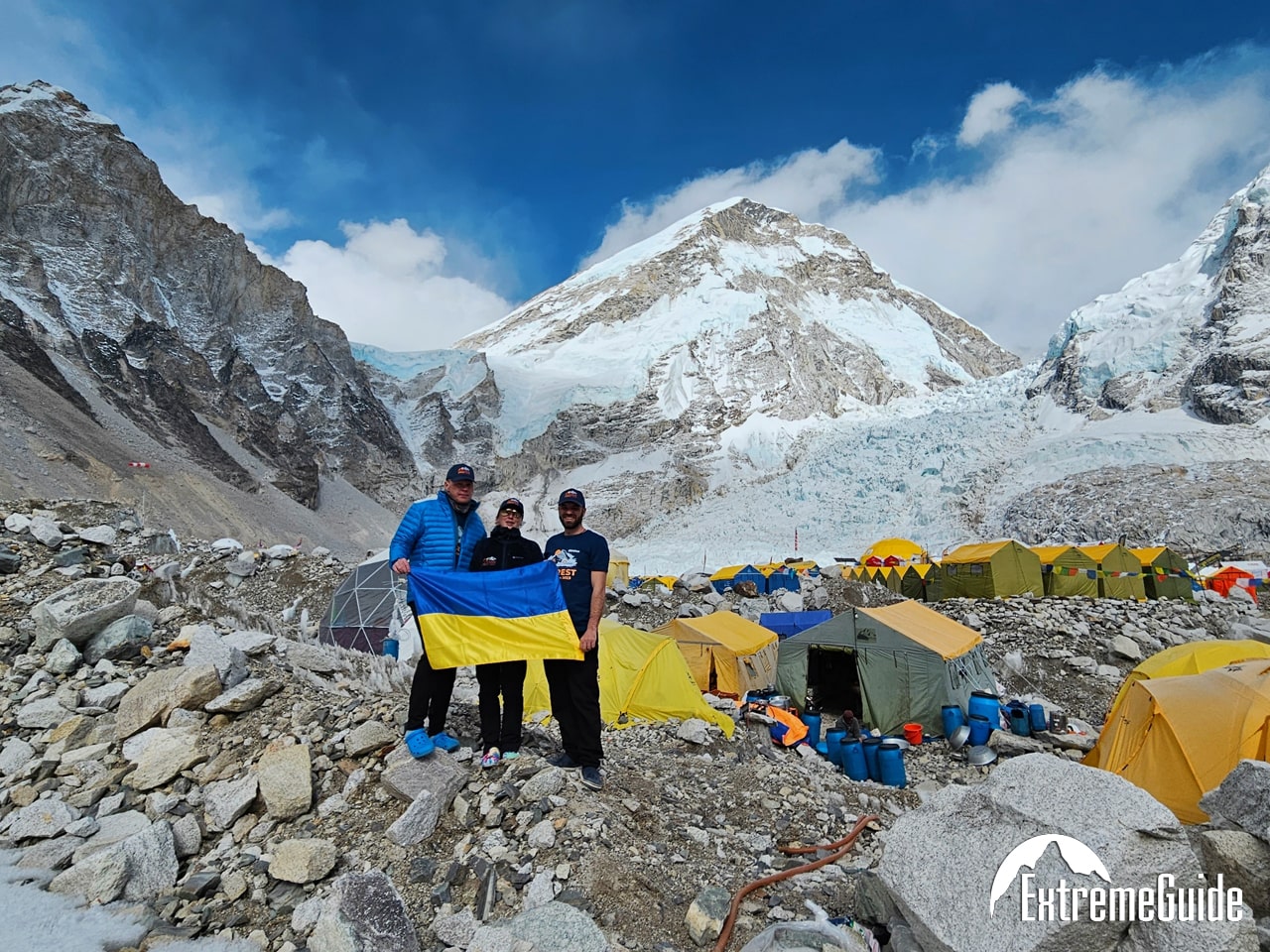
In March, the first teams arrive in Kathmandu, attend briefings at the Nepal Ministry of Tourism, obtain official permits, and travel to the Sagarmatha National Park region. After 7–10 days of acclimatization trekking through Namche Bazaar, expeditions reach Everest Base Camp, located at approximately 5,364 metres.
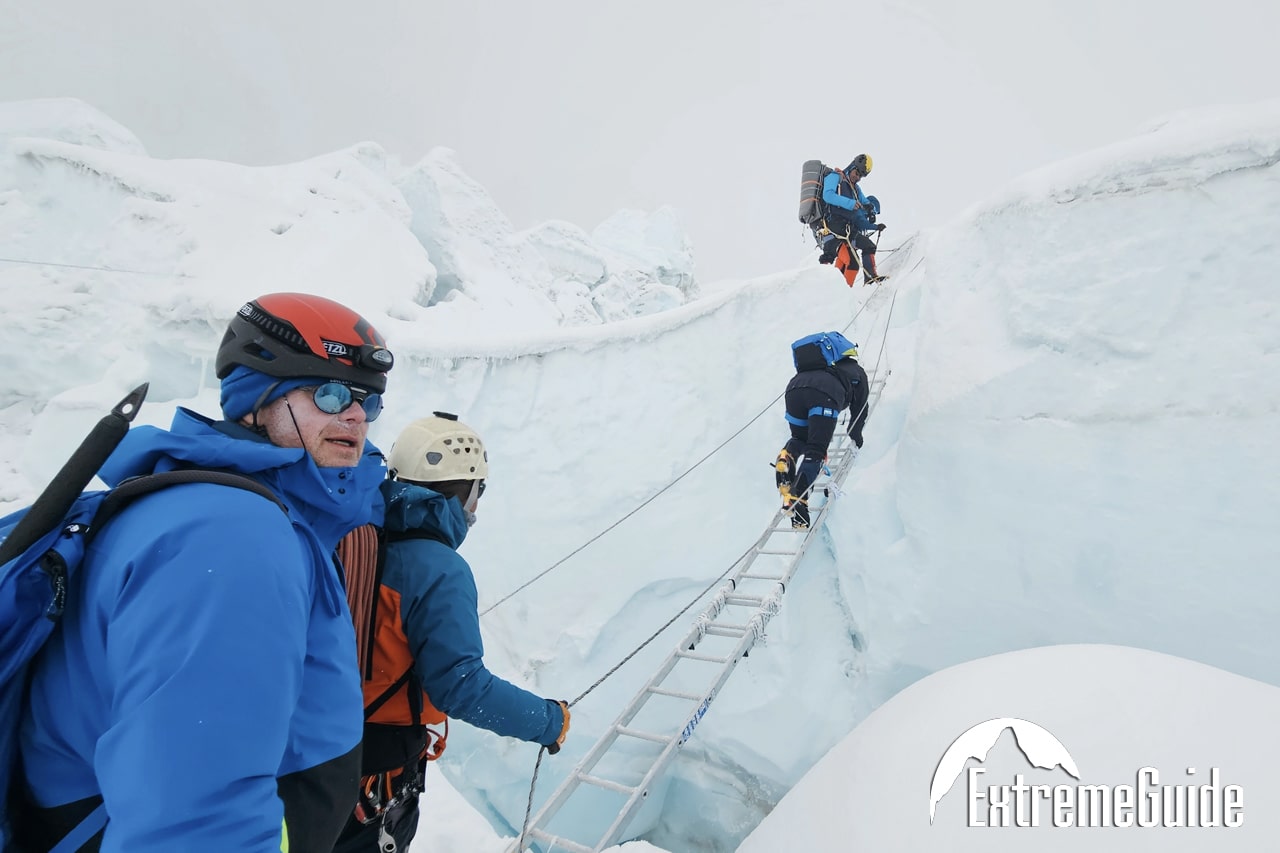
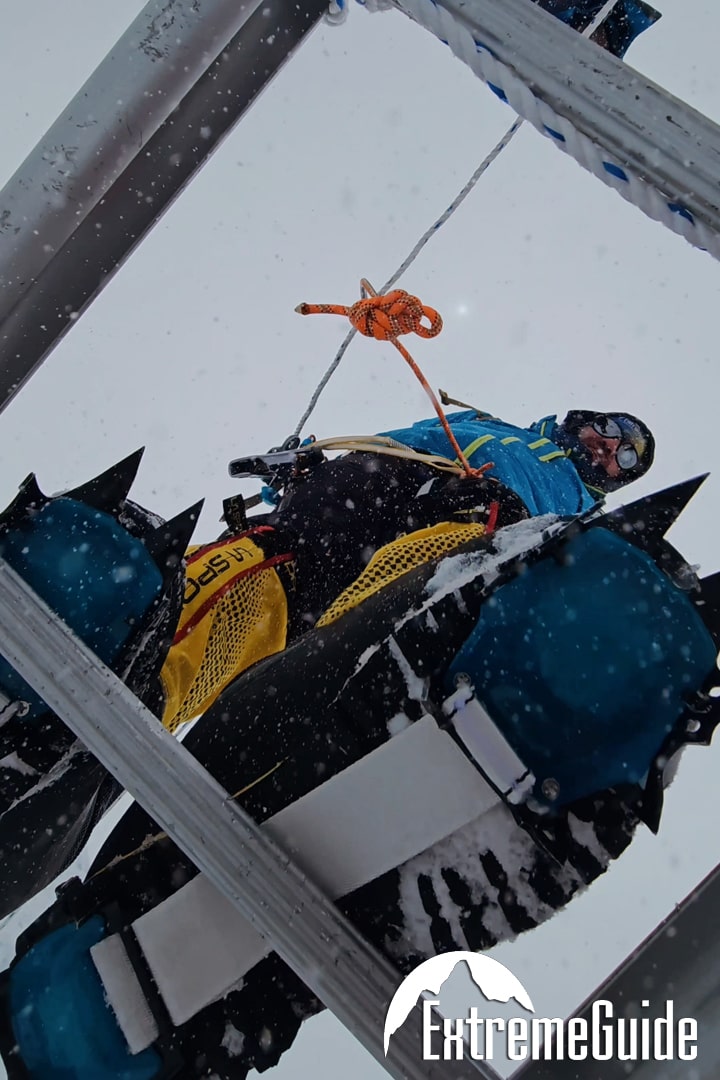
At the same time, crucial technical work begins to prepare the route. The first people onto the glacier are the so-called Icefall Doctors — a specialised team of experienced Sherpas who establish a route through the constantly shifting Khumbu Icefall. They install aluminium ladders across deep crevasses, secure kilometres of fixed ropes, and monitor the condition of the ice terrain every day.
At the same time, the high-altitude camps are being established. Throughout April, Sherpas and guides carry hundreds of oxygen cylinders, tents, food supplies, and other equipment required for work at extreme altitude.
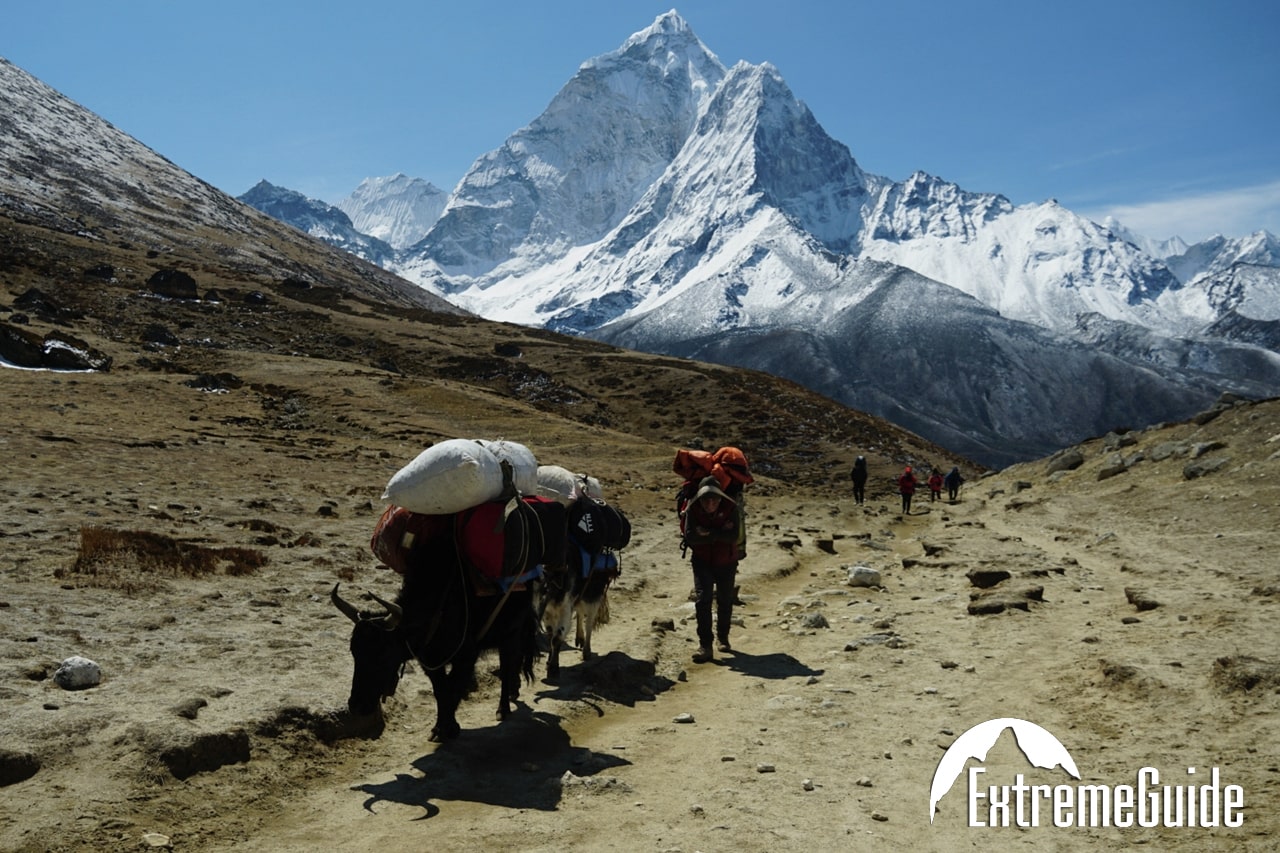
From mid-April, participants begin acclimatization climbs, known in mountaineering as rotations. Climbers ascend to Camp I and Camp II, spend several nights there, and return to Base Camp to recover. The strongest climbers make an ascent to Camp III on the steep Lhotse Face. These cycles are repeated several times, allowing the body to increase red blood cell production and adapt to severe oxygen deprivation.
Why Is May Considered the Best Time to Climb Everest?
The main reason is atmospheric circulation over the Himalayas. In May, the powerful polar jet stream, which literally blasts everything off the slopes of Everest throughout the winter, shifts northwards towards the Tibetan Plateau. As a result, wind speeds at altitudes above 8,000 metres temporarily decrease to levels that make climbing possible.
Mountaineers refer to this period of calm as a weather window.
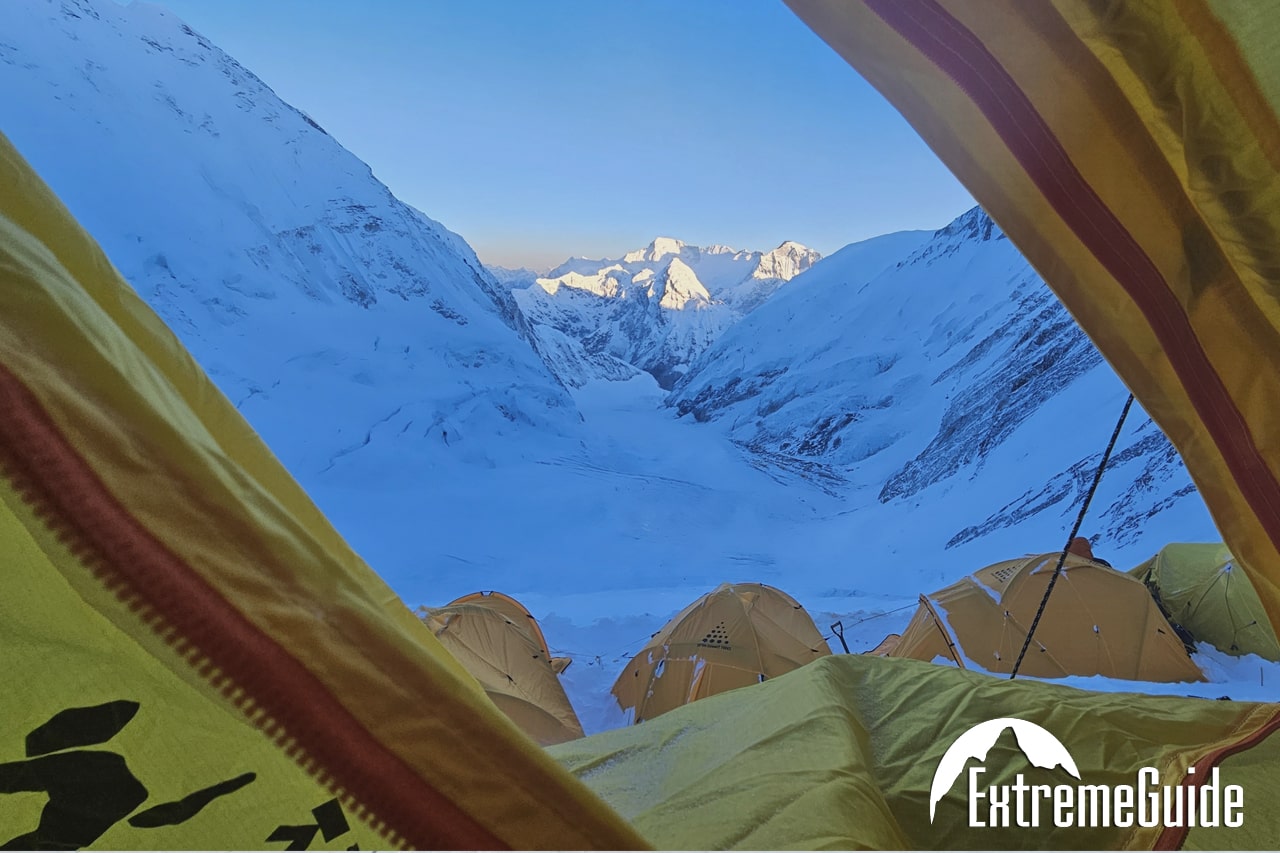
This is why experienced guides often say that the success of an ascent is determined not on summit day, but weeks beforehand. An inaccurate forecast or a rushed decision can undo months of preparation.
For expedition members, waiting for a weather window becomes a serious psychological challenge. Teams may spend weeks at Base Camp, analysing satellite weather forecasts every day. As soon as meteorologists confirm a stable forecast, the summit push begins, taking around 4–5 days from Base Camp to the summit.
How Does an Expedition Work During the Everest Season?
In reality, the climb is a carefully structured, multi-stage process. On the classic southern route from Nepal, the expedition uses a system of several high-altitude camps:
- Base Camp (5,364 m) — home to expedition members for one and a half to two months, with sleeping tents, a kitchen, medical facilities, and communications.
- Camp I (5,940 m) — an intermediate point just above the Khumbu Icefall.
- Camp II (6,400 m) — on the southern route, it serves as the Advanced Base Camp.
- Camp III (7,160 m) — a tented camp on the Lhotse Face.
- Camp IV (7,920 m) on the South Col — the summit camp and gateway to the so-called Death Zone.
The Death Zone refers to the area above 8,000 metres, where atmospheric pressure is approximately one-third of that at sea level and the human body is virtually unable to recover properly.
The summit push usually begins well before dawn — around 20:00–23:00. The ascent from the South Col to the summit and the descent back to a safer altitude can take between 10 and 20 hours of continuous movement.
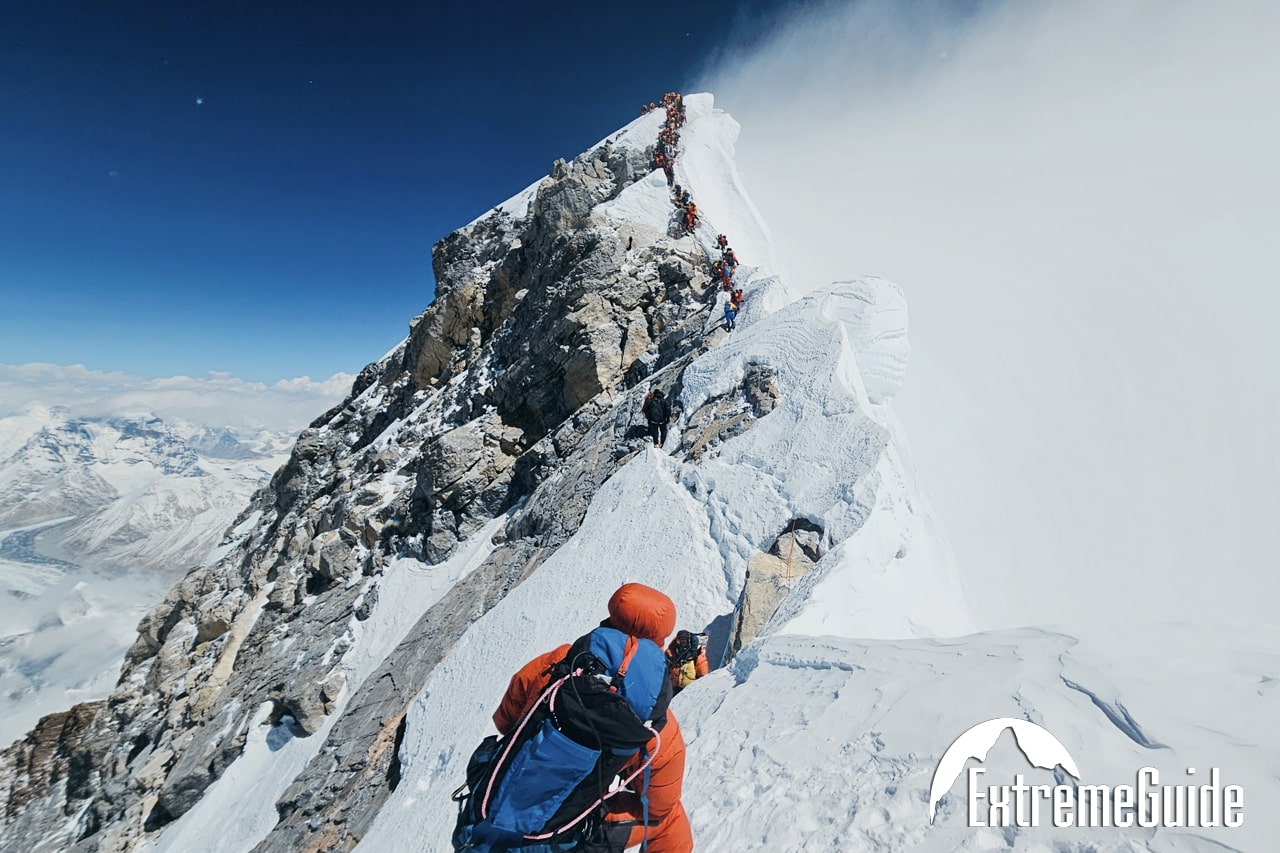
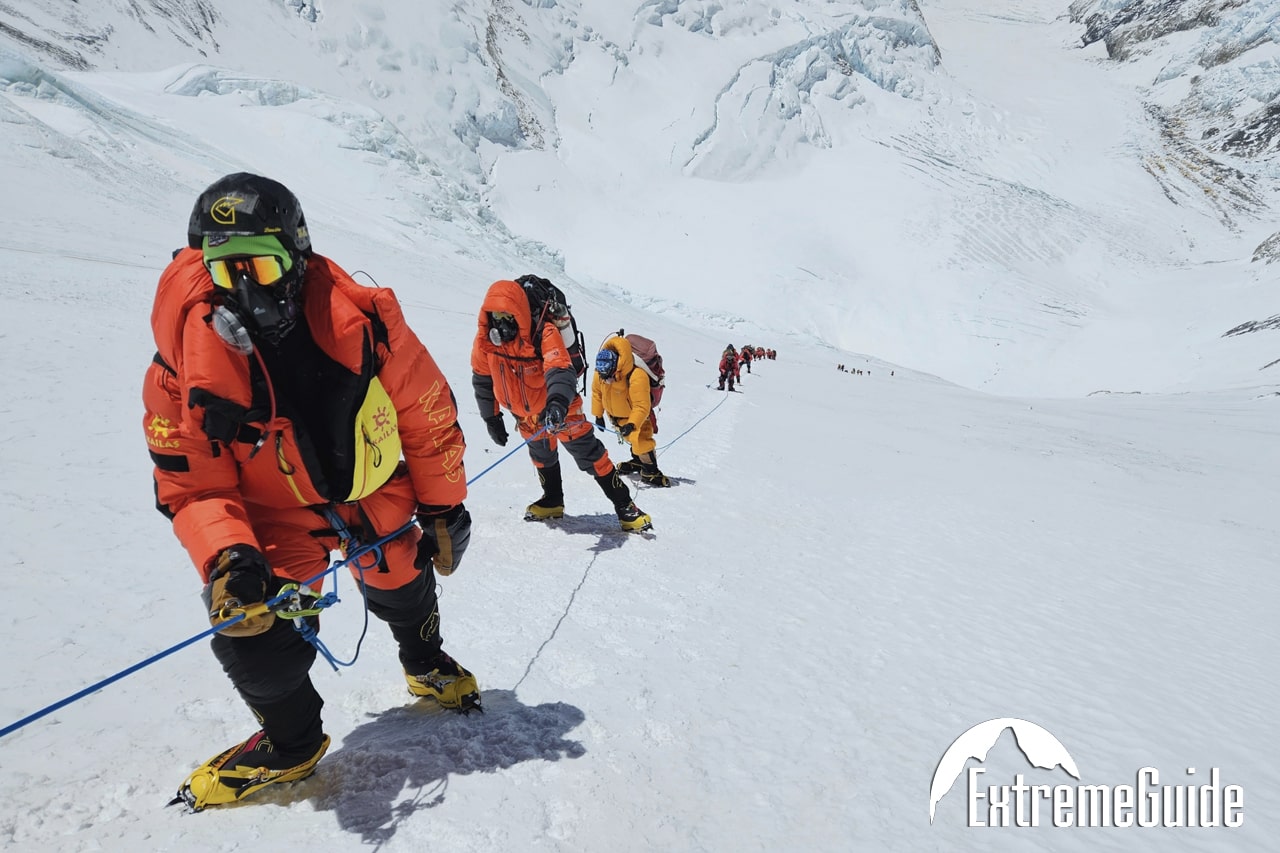

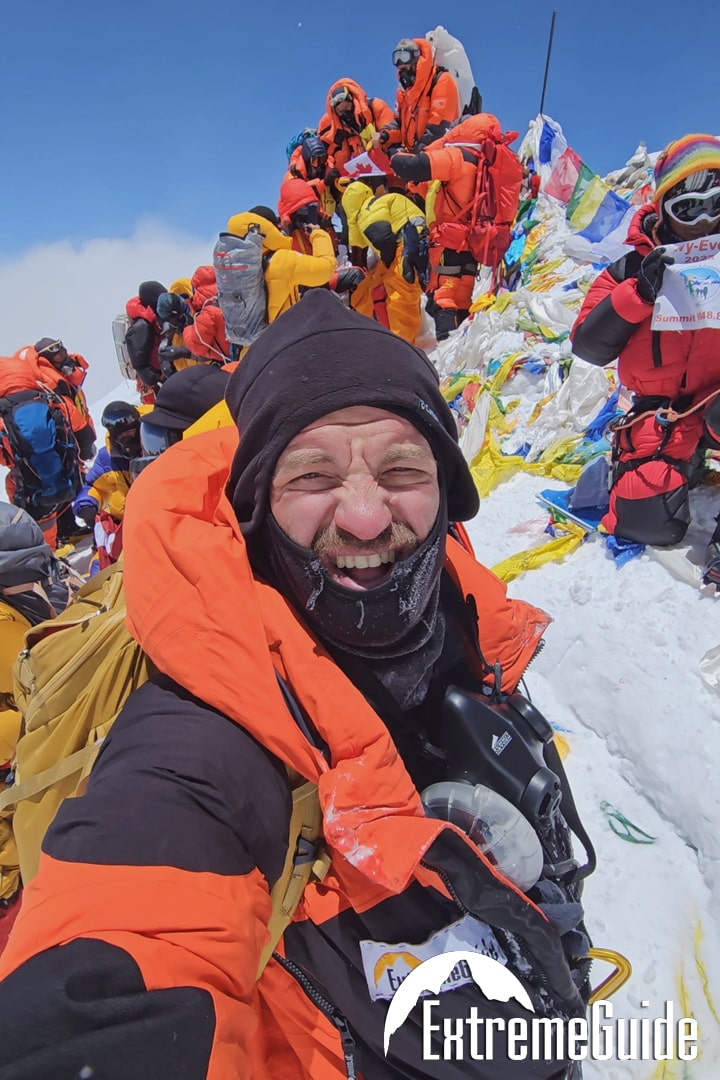
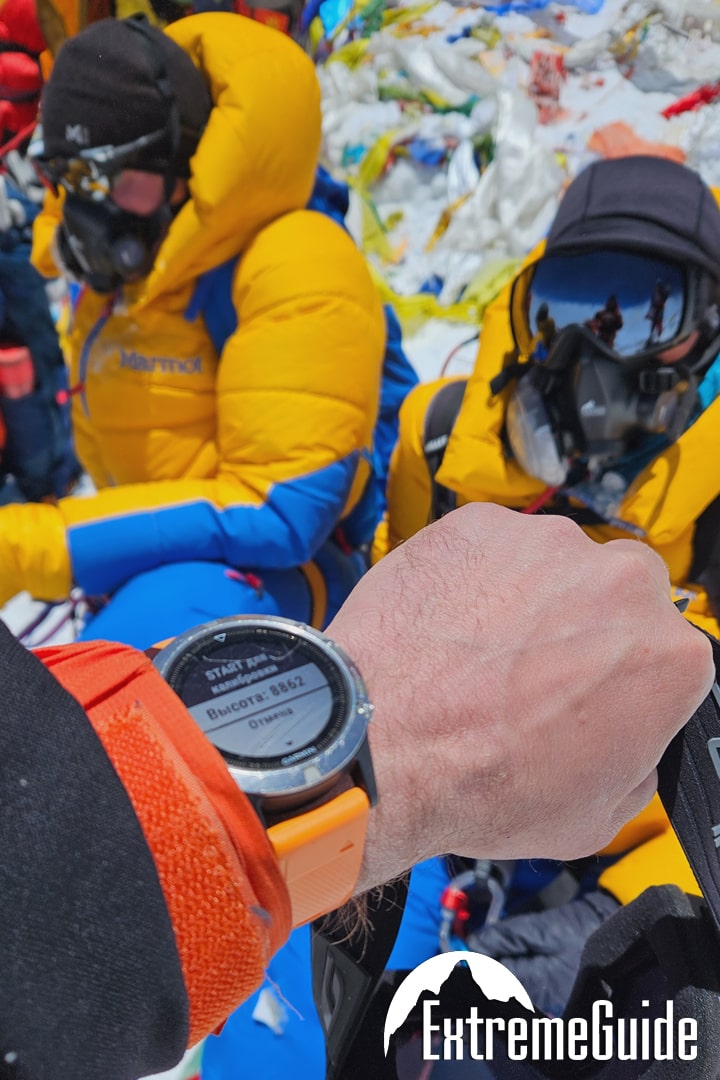
As a result, summit day itself accounts for only a small part of the entire expedition. The experience of ExtremeGuide founder Oleg Ivanchenko, who reached the summit of Everest on 17 May 2023, illustrates this particularly well. As with most high-altitude expeditions, the decisive factors were not the few hours spent on the summit, but weeks of acclimatization, the work between camps, and the correct choice of weather window.
The Main Routes to the Summit of Everest
Today, commercial mountaineering primarily uses two main routes: from the south through Nepal and from the north through Tibet (China).
Route Through Nepal
The classic route used by Tenzing Norgay and Edmund Hillary to reach the summit in 1953. Today, it remains the most popular route thanks to well-developed helicopter evacuation logistics and a milder microclimate.
The main disadvantage is the Khumbu Icefall — one of the most dangerous and unpredictable sections of the entire mountain. After crossing it, the route continues through the Western Cwm, up the Lhotse Face, and to the South Col.

Route Through Tibet
The northern route begins on Chinese territory. Its key advantage is the absence of the Khumbu Icefall during the lower section of the climb.
However, after the North Col, climbers face challenging rock sections at extreme altitude — the famous First, Second, and Third Steps (Step 1, Step 2, and Step 3), which require confident movement over rock in crampons at altitudes above 8,500 metres. In addition, the northern side is considerably more exposed to freezing winds.
| Parameter | Route Through Nepal (South) | Route Through Tibet (North) |
|---|---|---|
| Popularity | Very high | Lower |
| Main danger | Khumbu Icefall and avalanches | Rock steps and strong winds |
| Logistics | Trek to Base Camp, well-developed aerial evacuation | Road access to Base Camp, more complex bureaucracy |
| Number of expeditions | Higher | Lower |
| Likelihood of queues | High | Moderate |
Why Do Queues Form on Everest?
Photos of climbers forming a long line along the summit ridge have long become a symbol of modern Everest. The main reason for these bottlenecks is the extremely short weather windows.
If forecasters predict only 2–3 favourable days throughout May, most expedition leaders will give the go-ahead at roughly the same time. As a result, hundreds of people may begin their summit attempts within a single day.
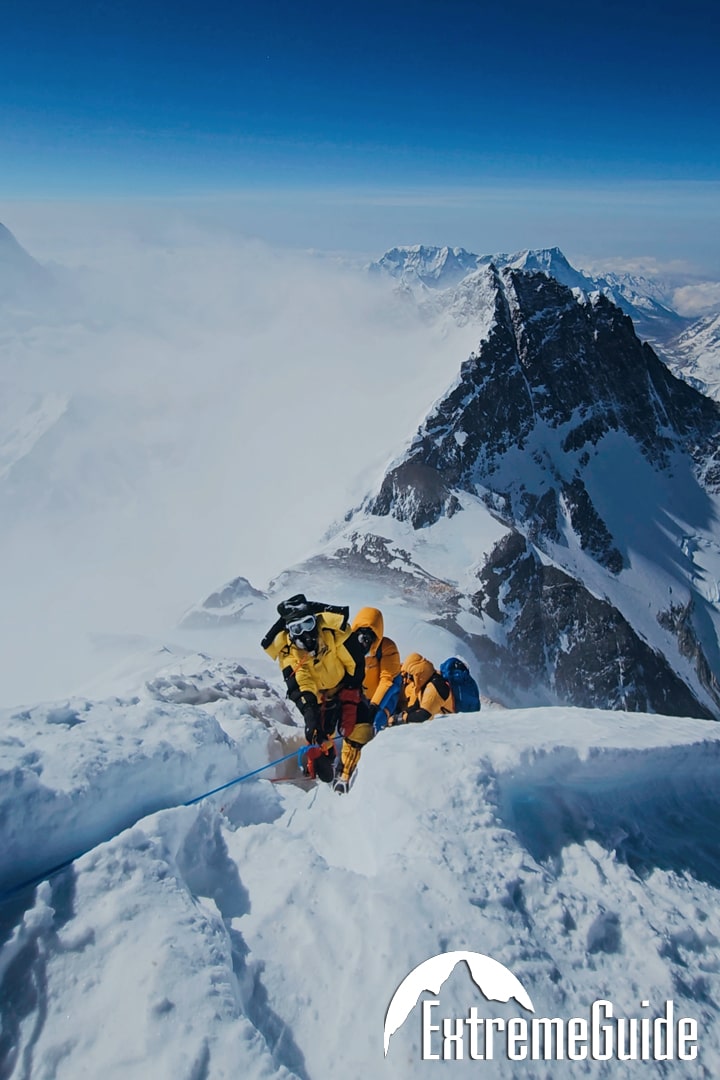
The terrain also plays an important role. Above 8,000 metres, some sections of the route are so narrow that movement is possible only along a single line of fixed ropes. If one climber begins moving more slowly or runs out of strength, the entire line behind them is forced to wait, consuming their limited oxygen supply.

How Is the Everest Season Changing Today?
The modern Everest season is noticeably different from what it was just twenty years ago. Expeditions now have access to highly accurate weather forecasts, satellite internet directly at Base Camp, GPS trackers, and more efficient oxygen systems.
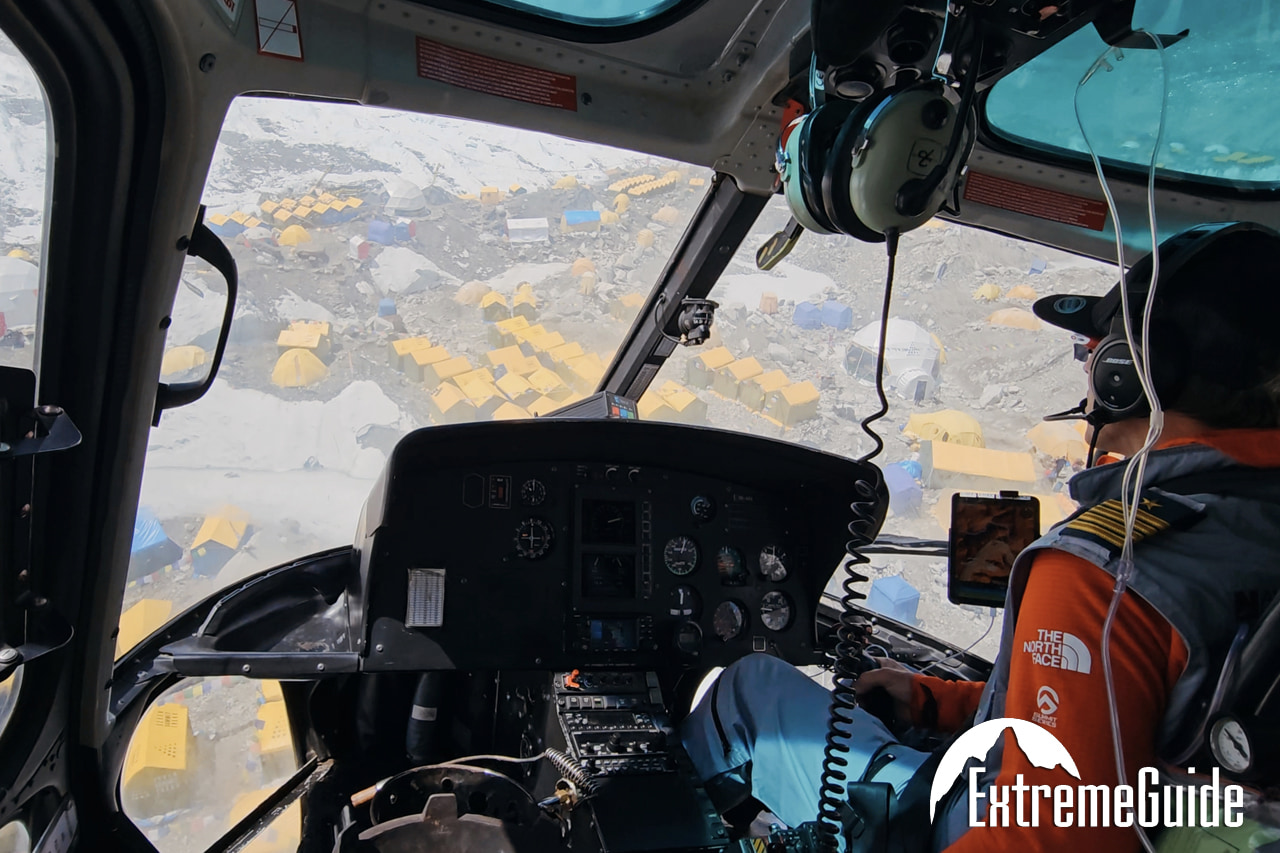
New technologies are gradually being introduced as well. Cargo drones capable of transporting equipment and oxygen cylinders across some of the most dangerous sections of the route are being used more frequently. This helps reduce the workload on Sherpas and decreases the number of risky crossings through the Khumbu Icefall.
The end of the season always comes quickly. In early June, the spring weather window finally closes: the approaching monsoon blankets the mountain in snow, while the Icefall Doctors remove the ladders and fixed ropes from the Khumbu Icefall. Base Camp empties until the following year.
Despite all the technology of the modern era, the mountain itself remains unchanged. Altitude, lack of oxygen, freezing temperatures, and complete dependence on weather conditions still determine success. The Everest season is a unique annual phenomenon in which a short spring weather window determines the outcome of two months of work by hundreds of people. And it is in this waiting, patience, and respect for the forces of nature that the true magic of the highest summit on Earth lies.
Climbing Everest and other peaks of Nepal
 Himalayas
Dates:
April 17 – May 23
Complexity:
Duration:
Height:

5.0 (90)
Left: 2 places
 Himalayas
Dates:
April 17 – May 3
Complexity:
Duration:
Height:
5.0 (90)
Left: 6 places
 Himalayas
Dates:
April 17 – May 4
Complexity:
Duration:
Height:

Left: 6 places
 Himalayas
Dates:
April 17 – May 11
Complexity:
Duration:
Height:
5.0 (90)
Left: 4 places