
Aconcagua (6962 m) — the highest point in South America, the highest peak in the Western and Southern Hemispheres, and the highest mountain outside Asia. Aconcagua is located in the Midwest of Argentina on the border with Chile. The peak is part of the world’s longest mountain range, the Andes.
There are several versions of the name of the mountain. It could come from the Quechua language, Ackon Cahuak (Stone Guardian, or Guardian of the Stone), or Anco Cahuac (White Guardian) or Aqun Qhawaq (Looking at (her) Sands). There is also an opinion that the peak owes its name to the expressions Janq’u Q’awa in the Aymara language (White Stream), or Kon-Kawa (Snowy Mountain) as the Aymara Indians living in the territory of Mendoza call the mountain.
Climbing Aconcagua — this is an opportunity to visit the Aconcagua National Park and make an acclimatization trek to the South Face of Aconcagua, where we will discover one of the most impressive views in the world. Then we will move to the base camp – Plaza de Mulas (4350 meters), from where we will make a series of acclimatization trips and continue climbing to the highest point of South America – Aconcagua. At the end of the tour we will visit the picturesque town of Mendoza – the wine-producing capital of Argentina. Aconcagua means meetings and acquaintances with climbers from different countries of the world.
The first successful ascent of the mountain was made by the Swiss Matthias Zurbriggen on January 14, 1897.
Every year, about 5,000-6,000 people attempt to climb the mountain, and every year the number of those wishing to climb increases. We have also joined the international mountaineering community. Despite its reputation as the most accessible 7000m (without 40 meters), Aconcagua is not the easiest mountain; official statistics indicate that on average 25-30% of climbers reach the summit. As it turns out, the accessibility of the mountain is very imaginary and every day a dozen patients with various exacerbations of chronic diseases or manifestations of mountain sickness are taken away by helicopter from BC and upper camps.
Climbing Aconcagua is part of the 7 Summits program — climbing the highest peaks of all continents. And in terms of height, of all the peaks included in this program, Aconcagua is second only to Everest. More than 5,000 people attempt to reach the summit every year. The success of the climb depends on various factors: weather, proper acclimatization and the physical condition and preparedness of the climbers. Despite its relative accessibility, the availability of infrastructure and the presence of information on the Internet that this is the most affordable 7000-k, do not underestimate the mountain. The climb is quite difficult physically and the weather here changes very often. The successful percentage of ascents on the mountain is on average 30%; having an experienced guide greatly increases your chances of climbing.
Why it’s profitable for you to go to Aconcagua with ExtremeGuide:
- We have been working since 2008;
- experienced guides, 4-5 people per guide;
- the best acclimatization program;
- transporting stuff on mules to base camp;
- delivery of group equipment and food to camp Canada, Berlin. Backpacks will be as light as possible;
- delicious food;
- assistance in preparing for the climb and training plan;
- assistance in selecting equipment and clothing;
- thoughtful service at an affordable price.
Главные впечатления от похода по Фанским горам:
Climbing route to Aconcagua:
Mendoza – Los Penitentes – Camp Confluencia – Plaza France – Plaza Mulas – Camp Canada – Plaza Mulas – Camp Nido de Condores – Camp Berlin – Aconcagua 6962 – Camp Plaza Mulas – Mendoza
Climbing route to Aconcagua by days
day
At Buenos Aires airport, gather all participants and fly to Mendoza. The beautiful resort town is located in the La Rioja Valley. The settlement is one of the largest wine and olive oil production centers in Argentina. Endless vineyards and colonial architecture attract tourists from all over the planet.
We rent the missing equipment, repack things, and get to know each other.
day
In the morning we issue permits – permission at the central office of the Ministry of Tourism. We purchase the necessary products. We are preparing our trunks for moving to the mountains.
Transfer to Los Penitentes, the journey takes about three hours (180 km). The intermediate point (2700 m) is significant for acclimatization. Not far from the village there is an ancient stone bridge; according to legend, this bridge was built by the Incas when they were exploring the Andes. Penitentes immediately give some of the things for transportation to the mules, since they go with things to the first camp very early.
Rest before the hike. Overnight in a hostel/apartment.
day
Departure to the National Park. Equipment is transported to the base camp by mules.
We will make the first trek to Confluence (3400 m). There is a shower and electricity, there is no mobile connection, but vouchers for Internet connection are sold.
Overnight in tents.
Travel time 2.5-3 hours, 9 km. Height gain 500 m.
day
Today is a day of additional acclimatization. We will see the south wall of Aconcagua today. Leave immediately after breakfast. The radial route to the Plaza France camp will take us all day. The camp is set up at a level of 4200 meters. The most beautiful view of the seven-thousander opens from this point. We will have lunch while admiring the magical landscapes. Along the way we will see a powerful glacier. Return to camp Confluence.
Overnight in tents.
Travel time 7-8 hours, 22 km. Height difference 1600 m.
day
The most tiring day of the entire acclimatization is today. Long walk to Plaza de Mulas. Departure at 7:00. The trail goes along the river bed, along a rocky and sandy path. The alpine camp is set up in a safe place, near an ancient glacier. Approach to the camp along a steep rocky path. Along the way we will take a long break and have a snack.
Camp Plaza Mulas is a large clearing on the glacier moraine where several companies are located. Everything here is quite civilized: there is electricity, the Internet, mobile communications, a shower with hot water, a massage room, a cafe with wine, a helipad and even an art gallery that contains works by the artist Miguel Dour. During the season, about 5,000 travelers from all over the world gather here.
Travel time 8-9 hours, 20 km. Elevation gain 900 m.
day
Rest. Let’s take a walk to the Orcones glacier. Preparing backpacks with equipment for acclimatization at 5000-6000 m. Exit to the upper camps is allowed after medical supervision by a doctor. Therefore, we must undergo medical control with a mark of permission.
day
We gather strength before lunch. After crossing 5000 meters to Canada. The journey takes about 2.5-3 hours. We set up tents. From here there is a gorgeous view of the sunset, and we will watch it. In the drought, there is a problem with water in the camp, so it may be necessary to bring water from Plaza Mulas. Travel time 3 hours, 3 km. The height range is 800 m.
day
After breakfast, climb to the assault camp (6000 m). We will stay a little high and go back to Canada. Here we will need warm things, because it is much colder and the wind is stronger higher up. Return to base camp. Travel time 7-8 hours, 12 km. The height difference is 1900 meters.Travel time 3 hours, 3 km. Elevation gain 800 m.
day
In the morning, taking our time, we descend to Plaza de Mulas. The process of acclimatization is quite exhausting and boring, there is a lot of free time, but this is the peculiarity of high altitude mountaineering: you have to learn to wait and stick to the schedule.
day
Spare time. We relax on our own, take photos as memories, communicate with people from different countries. We try to sleep.
day
Around 11-12:00 we leave for Nido de Condores (5500 m). The transition to this camp is quite long and tiring, as it follows a scree path, so we recommend hiring a porter for a group or 2-3 people, who will bring a tent, food and some personal belongings. In the “comfort” package, the porter is already included in the price of the program. Overnight in tents. Trek 6 km. Height gain 1300m.
day
Today is a short walking day, so it is better to slowly make the trek to Kohler, 5950 m. This camp is a little lower than the Kohler camp, but it is cleaner, less crowded and more sheltered from the wind. In addition, we know an alternative path that takes a short way to the top. It is from this point that the real climb to the top begins. Preparation for a responsible tomorrow. Early bounce. There is no water in the camp, so most likely you will have to melt the snow.
day
Early night rise and departure. We usually go out at 3:30-4 in the morning to stay ahead of the main tourist crowds and not throw rocks at each other. Dawn will meet us on the road, somewhere at an altitude of 6400-6500.
The assault consists of several parts:
— crossing an easy stony path to Puenta Inca (6400 m);
— A smooth ascent, but complicated by a difficult road.
We go in crampons to the Grotto (6650 m);
— The final section of Canalet with a steep path and sections with ice and snow. Crampons may be needed.
Climbing Aconcagua generally takes 8-10 hours.
Ascent control time 14-15:00. In the event that you do not have time to climb at this time, the guide has the right to deploy at any point of the route.
We are at the top. We admire the landscape, have some time for photos, and rejoice in a small victory. We remember what the realization of a dream looks like. We descend by climbing to the Berlin camp, on average, the descent takes 3-4 hours.
Overnight in tents. Crossing 12-14 hours, 14 km, drop 1900 m.
day
In case of bad weather, additional acclimatization.
day
Descent down to Plaza de Mulas. Relaxing after a physically exhausting adventure. Return to civilization. We celebrate a successful finish. Overnight in tents. Crossing 3-4 hours, 7 km, descent 1650 m.
day
Today is the most fun day, when you have to walk about 30 km. Leaving the camp no later than 10:00. We head back to the exit from the National Park. The transition will last about 6-7 hours. Late evening transfer to Mendoza. Finally, a night in a hotel on a soft bed.
day
Farewell to the team and return home.
Important! The program is not final, it may be adjusted depending on other weather conditions, the health of participants and unforeseen circumstances.
Note:
The program is not final and may be adjusted depending on the weather, the condition of the participants and other factors.
Map of the route to climb Aconcagua:

Why is it profitable to go hiking with Extremeguide?




Cost and conditions for climbing Aconcagua
Is this trip right for you?
To participate in the expedition, you must have experience in climbing with altitudes of 5000 m and above, for example, climbing Kazbek, Island Peak, Mera Peak, Ararat, and good physical shape.
The price includes:
- The work of a professional ukrainian-speaking guide is one guide per group of up to 5 people;
- additional guide for the period of ascent in a group of 6 or more participants;
- meeting at Mendoza airport;
- climbing permit to Aconcagua;
- hotel accommodation in 4*, Mendoza (2 nights);
- hotel/apartment accommodation in Penitentes (1 night);
- customized transfer from Mendoza to the beginning of the route and back;
- delivery of goods by mules to the base camp (20 kg per person);
- delivery of group equipment and food to the base camp;
- rental of group equipment: gas equipment, tents;
- accommodation in tents in the lower and upper camps (accommodation for 2 people);
- high-altitude nutrition in the upper camps (sublimates);
- full meals in the canteen of the base camp Confluence and Plaza de Mulas (cooked by the chef), 2 days in Confluence, up to 6 days in Plaza de Mulas;
- use of base camp infrastructure: toilet, electricity, water;
wardroom tent for all days of the Confluence stay and in BC Plaza de Mulas; - porters for public equipment and food during the period of acclimatization trips (camps Canada, Condores, Colera) and during the ascent;
- hot shower in base camps (up to 3 times);
- luggage storage in BC;
- assistance in purchasing cheap air tickets;
- photo and video filming throughout the trip;
- camping first aid kit.
Not included in the price:
- Flight to Mendoza from 1300 USD;
- accident and medical insurance coverage from 30,000 €. (issued by ExtremeGuide), the cost is from 10 €/day depending on the chosen insurance program and residence. Check the price;
- meals in the canteen of the Plaza de Mulas camp if it is necessary to use spare days ($160 per day);
- additional nights in Mendoza;
- additional costs associated with early completion of the program;
- meals in cities (except for breakfast in hotels);
- Internet, satellite phone, shower at base camp;
- porters for personal belongings (porters, on average 15 USD/kg)*;
- rental of personal equipment;
- tips for the guide (optional);
- other expenses not specified in the program.
*Cost of porter services:
Plaza de Mulas — Canada (5050 m): 170 $ (20 kr/porter)
Plaza de Mulas — Nido de Condores (5550 m): 250 $ (20 кг/porter)
Plaza de Mulas — Berlin Cólera (6000 m): 300 $ (20 кг/ porter)
Transferring cargo from the upper camps to the lower ones costs the same.
Price depending on the number of participants
| Participants number | Price per 1 participant |
|---|---|
| 5 | 7500 USD |
| 4 | 8000 USD |
| 3 | 9000 USD |
| 2 | 11000 USD |
| 1 | 17000 USD |

Best price guarantee!
- We have included in the price all possible basic expenses for the program and guarantee that there are no hidden additional costs, while we have retained the best service at a low price: transfers, hotel accommodation, guides and staff!
We have a flexible discount system
Find out more now:
Required equipment
Basic equipment:
- Trunk bag – 80-100 L;
- Assault, mountaineering backpack 35-45 L (Read more about choosing a backpack);
- Sleeping bag comfort -10 С…-15С (Read more about choosing a sleeping bag);
- Pad foam (it is advisable to have a thick and warm pad) (More information on choosing a pad).
Shoes and clothing:
- High-altitude mountaineering boots, two-layer (Read more about choosing clothes and boots);
- Sneakers/trekking boots (for acclimatization);
- Changeable shoes (sandals or flip flops);
- Gaiters (shoe covers, flashlights) for boots;
- Down sweater or light warm jacket;
- Down jacket or warm jacket (minimum temperature -20…-25 on the night of ascent);
- Warm hat;
- Walking pants (Gore-tex),
- Walking pants (cotton or synthetic);
Insulated pants (down, primaloft); - Running jacket, windproof (Gore-tex, cotton or synthetic);
- Thermal underwear set (in the absence of thermal underwear, underpants and a jacket);
- Warm jacket (polar, fleece);
- Rain cape (if your walking clothes get wet);
- Socks of at least 3 pairs (“thermal socks” or other thick ones);
- Sleeping socks (preferably wool or down);
- Mittens (down or ski mittens; the main thing is that they are not blown through);
- Warm fleece gloves;
- T-shirt;
- Change of underwear;
- Sun hat;
- Balaclava;
- Swimming trunks/swimsuit.
Additionally:
- Cape for a backpack (or large plastic bags for packing things);
- Mug, spoon, bowl, knife (all this should be as light as possible – made of stainless steel or special plastic; do not take ceramic mugs or enamel dishes);
- Headlamp + set of batteries;
- Hygiene supplies (a toothbrush and a small tube of paste, a bar of soap and a little shampoo will be enough; you should not take full bottles of shower gel and shampoo, heaps of creams and lotions with you);
- Documents;
- Ind. first aid kit (plaster, cold, stomach, head. You also need to take into account specific and chronic diseases, if any. In addition to the individual first aid kit, the guide has a general one);
- Mountaineering glasses (protection category 3-4);
- Chapstick lip balm;
- Sunscrenn cream;
- Water bottle (1-2l.);
- Thermos (0.5 – 1.0 liters);
- Seat;
- Work gloves.
Special equipment:
- Trekking poles;
- Crampons;
- Climbing system;
- Mountaineering helmet.
Overview of equipment list on Aconcagua
Recommendations for choosing shoes for Aconcagua
Camera.
Additional information
This climbing program does not require good physical shape and can be done by any average person who has already been in the mountains at altitudes of 5000 or more. Previous trekking experience is required!
We recommend that you start training no later than three months before the start of the trek: running, swimming, cycling. The total anaerobic load should be at least 1 hour 30 minutes (cross-country running at least 8-10 km), then you are guaranteed not to have health problems on the track.
For more information about training, see our Youtube video channel. In case of chronic diseases, we recommend consulting a doctor.
— Residents of most countries do not need a visa to visit Argentina;
— accidant and medical insurance (insurance with coverage of at least $30,000 and insure risks associated with mountaineering).
Group meeting in Mendoza, Argentina. The optimal flight route is your city Buenos Aires – Mendoza or your city – Santiago, Chile – Mendoza.
Flight from Europe to Argentina and Chile – Air France , Turkish airlines, Luftgansa, Iberia, Alitalia, Latam
To long treks of 6-8 hours during the acclimatization period, to strong temperature changes (daytime +30, at night – 5 , Plaza Mulas) during the day, to overnight stays in a tent throughout the entire program, to movement along rocky paths. During the period of acclimatization trips, if you do not resort to the help of porters, the weight of the backpack is 10-15 kg.
In cities, accommodation in comfortable 3*-4* hotels, on the track in tents, accommodation for two people. The base camps have showers, electricity, a mess tent, a lounge area, a cafe and wireless Internet. In the upper camps there are only tents.
Biowaste must be transported by participants to base camps themselves.
Meals for the active part of the program are included in the price. In the base camps Confluence and Plaza Mulas, full meals are provided (prepared by the participants or the cook, depending on the package chosen). Breakfast, lunch (hot or sandwiches), dinner.
During the period of autonomous trips to intermediate and assault camps, the food is camp, freeze-dried food. We cook it ourselves on burners.
Things and equipment are transported by mules to Plaza Mulas. During acclimatization and radial trips to camp Canada, Nido Condores and Kolera, the participant carries personal belongings on their own; food and equipment, depending on the package, are carried by porters.
The guides will have a traveling first aid kit for emergency medicine. But you need to have personal medications for chronic and individual diseases, adhesive plaster, headache pills, anti-cold and painkillers + vitamin C and group B for better adaptation in the mountains.
There is a doctor and medical oxygen at the base camp.
If you have a local SIM card in Plaza de Mulas, there is 3G, in the upper camps and in Confluence there is no connection. There is also paid internet – 1 hour about $10.
The weather in Mendoza is hot, normal temperatures +25… +30°С.
First couple of days on the track in the mountains +25… +20°С, but it will get colder further. During the day +10°С, nighttime– till -15°С. In Plaza de Mulas at night the temperature reaches – 5 °С.
This route takes place at altitudes above 5000 m – 6000 m, where solar radiation is many times stronger than on the plain, the mountain climate and thin air affect the state of the body during the first 5-7 days of the trek. If you do not acclimatize properly and gain altitude quickly, you may develop altitude sickness.
Therefore, we have developed a special program for acclimatization and monitoring the condition of each participant along the route. The trek is not technically difficult and goes along a mountain road, but it requires good physical preparation and compliance with safety rules in the mountains. All instructions from the guide along the route must be followed!
The country’s currency is the Argentine pesso. In the city you can pay with a card; on the track it is better to have a pesso for expenses. Money can be exchanged on the first day of the guided program. You can also pay in dollars or euros.
We recommend reading the article about acclimatization in the mountains.
Peculiarities of acclimatization in high mountains
Also watch a video about altitude sickness
Also read the article about preparation: Physical and mental preparation before climbing and hiking in the mountains
And watch a series of videos about the training process.
No diseases incompatible with active tourism: List of diseases.
The table shows the basic cost for a group and may change depending on the number of people in the group. For the calculation of the cost of the tour for a smaller number of people and individual groups, see the «Price» block for more details.
We guarantee that on the dates indicated in the table, even if there is a minimum number of people allowed in the group, the tour will take place 100% with a minimum change in cost.
Pleasant bonuses, which everyone receives when ordering a tour with us


Photo of previous trips


Reviews of our travelers

Эмоции и впечатления в видео отзыве. More
Дуже багато вражень, але треба бути готовими до того, що це важка гора, висока, звідси і складнощі у сходженні. Майже 7 тис, це не просто, але неймовірно та захоплююче. Завдяки гіду Олегу сходження здійснили успішно. Дякую компанії ExtremeGuide. More
Полезный отзыв гид программы о восхождении на Аконкагуа. Будем полезно посмотреть тем, кто мечтает об этом путешествии. More
Recommended tours
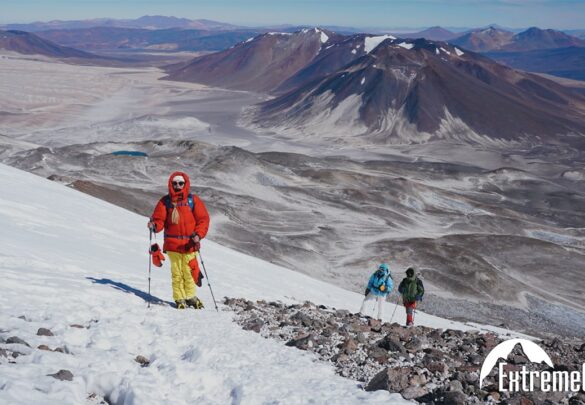 Argentina
Dates:
January 24 - February 16
Complexity:
Duration:
Height:

Left: 8 places
 Chile
Chile Dates:
January 9 - January 22
January 24 - February 6
Complexity:
Duration:
Height:
Left: 8 places
 Nepal (Himalayas)
 Dates:
October 25 - November 18
Complexity:
Duration:
Height:

5.0 (82)
Left: 4 places
 Kyrgyzstan
 Dates:
July 18 - August 8
Complexity:
Duration:
Height:

5.0 (15)
Left: 6 places