
Ecuador – a country of volcanoes and amazing flora and fauna, located right on the equator.
Ecuador contains all the climatic zones of our planet; the country has more than 20 national parks and ecological reserves, occupying about 16% of the territory.
We invite you to climb Chimborazo (6310 m.) – an extinct volcano, the highest point in Ecuador. This volcano is unique in that its peak is the farthest point on its surface from the center of the Earth. From the 16th century to the beginning of the 19th century, Chimborazo was considered the highest peak on Earth.
Cotopaxi (5897 m) is the second highest volcano in Ecuador (after Chimborazo), which we will also climb as part of our acclimatization. It is one of the most famous volcanoes in South America and one of the most active. The largest crater at the top of Cotopaxi is 550 x 800 m in diameter. The Cotopaxi ecosystem is home to a wide variety of animals and plants. Here you can find unique pine tree species, and animals include wolves, pumas, bears, rabbits, condors, wild horses and foxes.
In this program, as part of acclimatization, we will also climb the volcano Pichincha (4776 m), Quilotoa (3900 m). We live in comfortable hotels and atmospheric mountain lodges. Only one night before Chimborazo will be in a stationary tent camp.
In addition, we will devote a separate day to exploring the historic center of Quito, visit a resort town with thermal springs – Baños, ride the famous swing over the cliff and raft down the turbulent equatorial river. We will visit the “Equator line”.
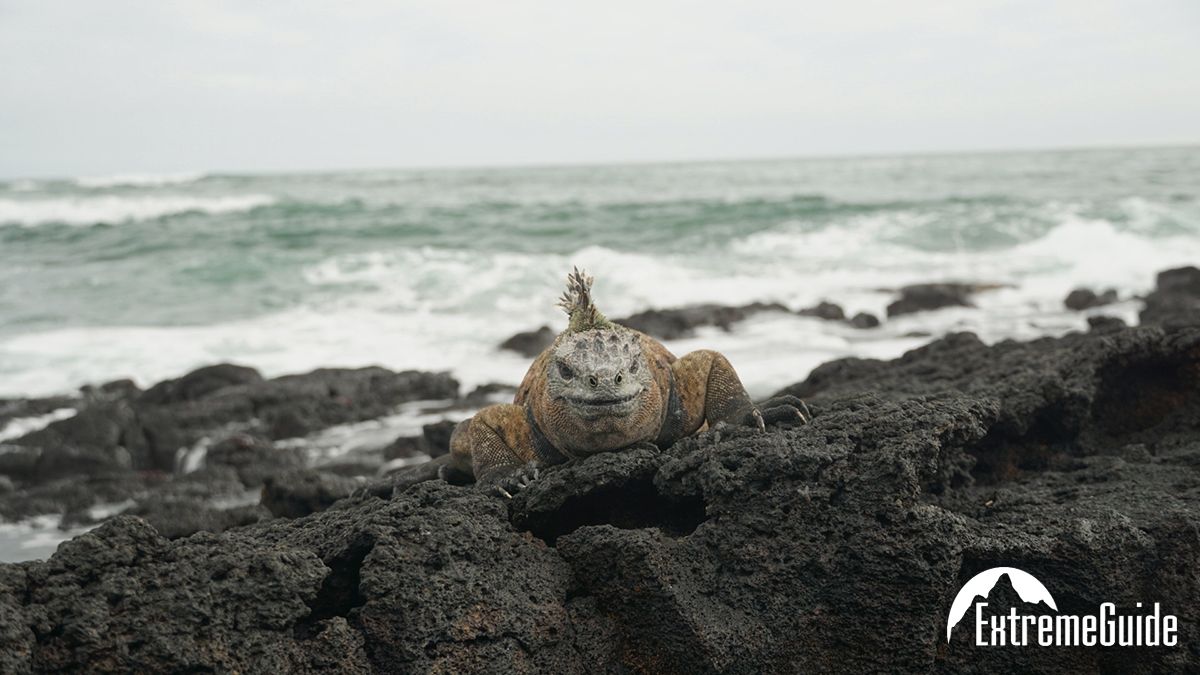
The finale of the trip, and its highlight, is the Galapagos Islands, where we will spend 3 nights. We’ll explore the unique flora and fauna, swim and enjoy time on the ocean.
Главные впечатления от похода по Фанским горам:
Climbing route to Cotopaxi and Chimborazo volcanoes + Galapagos Islands:
Quito — Mitta del Mundo village — Quito — Pichincha volcano (4696 m) — Quito — Lake Quilotoa (3900 m) — Machachi town (3600 m) — Rivas refuge (4800 m) — Cotopaxi volcano (5897 m) —Machachi town (3600 m) — Baños town (1800 m) — Chimborazo National Park — Chimborazo Upper Camp (5300 m) — Chimborazo Volcano (6310 m) — Hermanes Carel refuge (4800 m) — the town of Baños (1800 m) — Quito — Santa Cruz Island — Isabela Island — Quito

Your guides for climbing Cotopaxi and Chimborazo volcanoes + Galapagos Islands
Cotopaxi and Chimborazo volcano ascent route by days
day
Today you can fly in at any convenient time. Group members meet at the airport or directly at the hotel. Check-in to a hotel in Quito. The capital of Ecuador is located at an altitude of 2800 m on the slopes of the Pichincha volcano.
The historic center of Quito is a UNESCO World Heritage Site and should be visited for at least a day. Staying in Quito is also about acclimatization, as the body needs time for an hour of adaptation and also to get used to the altitude. Night at the hotel.

day
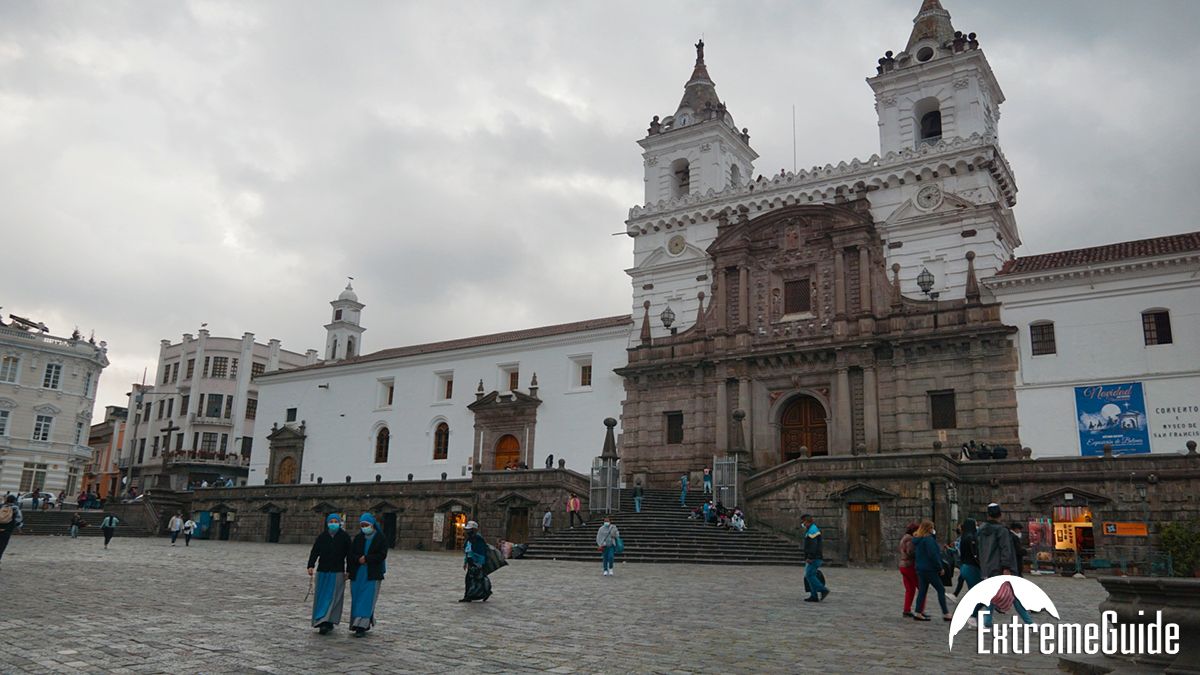
First, we’ll go on a sightseeing walk through the streets of the old city. An incredible number of cathedrals, churches, palaces, and unusual buildings from the colonial era. Quito is built on hills among majestic mountains, which adds to its charm.
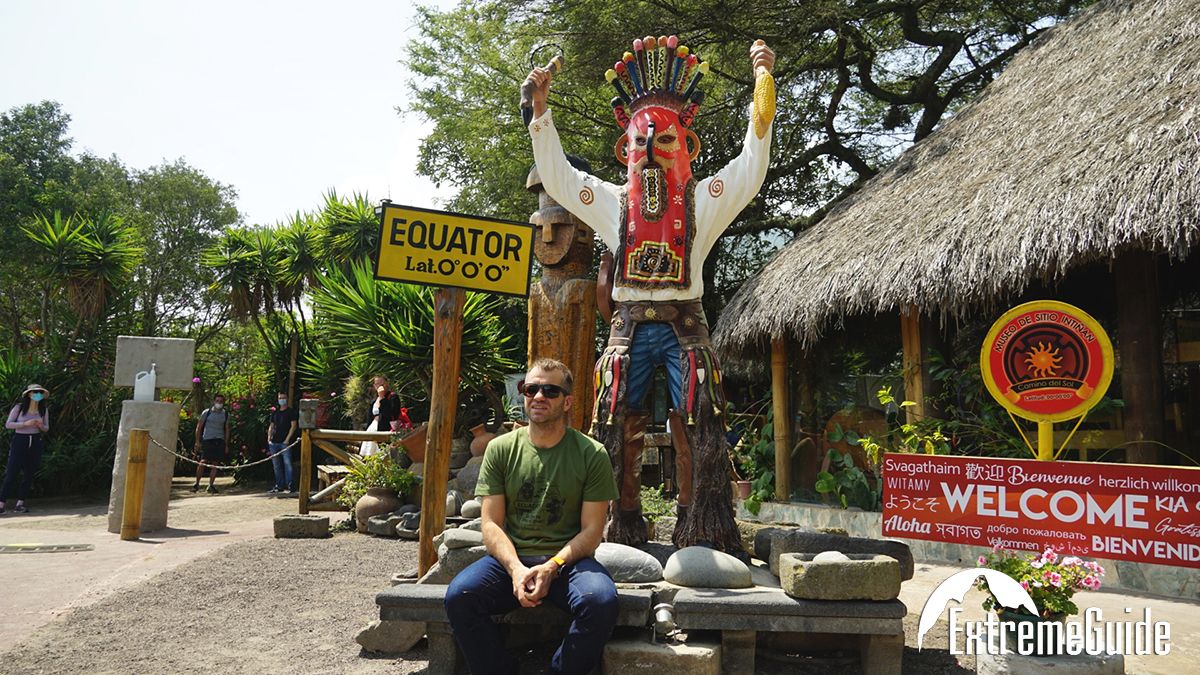
Next we will move to the equator line, which is 24 km from Quito. The zero latitude is in the village of Mitta Del Mundo. The place is marked with a yellow line, there is a monument with a huge globe. We will also visit the “Museum of the Equator”. Return to the hotel.

day
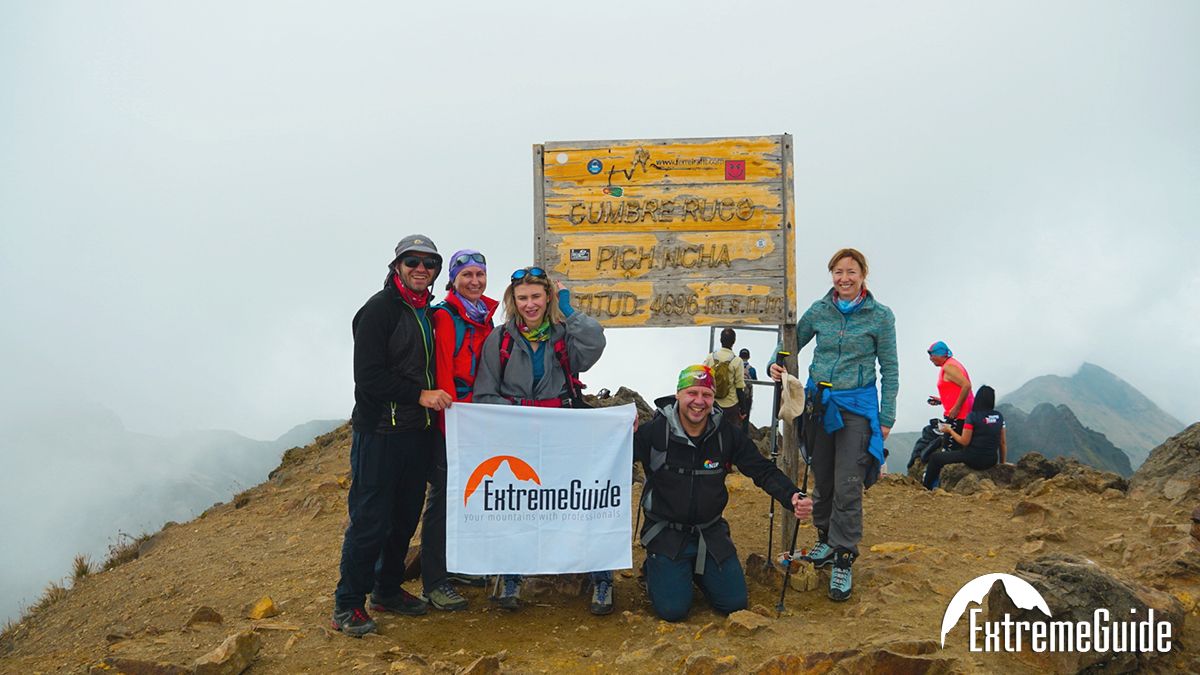
The first two days in Quito can also be called acclimatization. Early breakfast and transfer to the Pichincha volcano (4696 m). We will rise to 4000 m on the cable car “Teleferico”. By the way, it is considered the highest cable car in the world. We will cover the remaining 696 m on foot. In cloudless weather it is possible to observe the magnificent landscape of the outskirts of Quito.
The ascent initially goes along a beautiful dirt road, and immediately below the summit along a rocky path.
Descent. Return to the city. Overnight at the hotel, Quito.

day
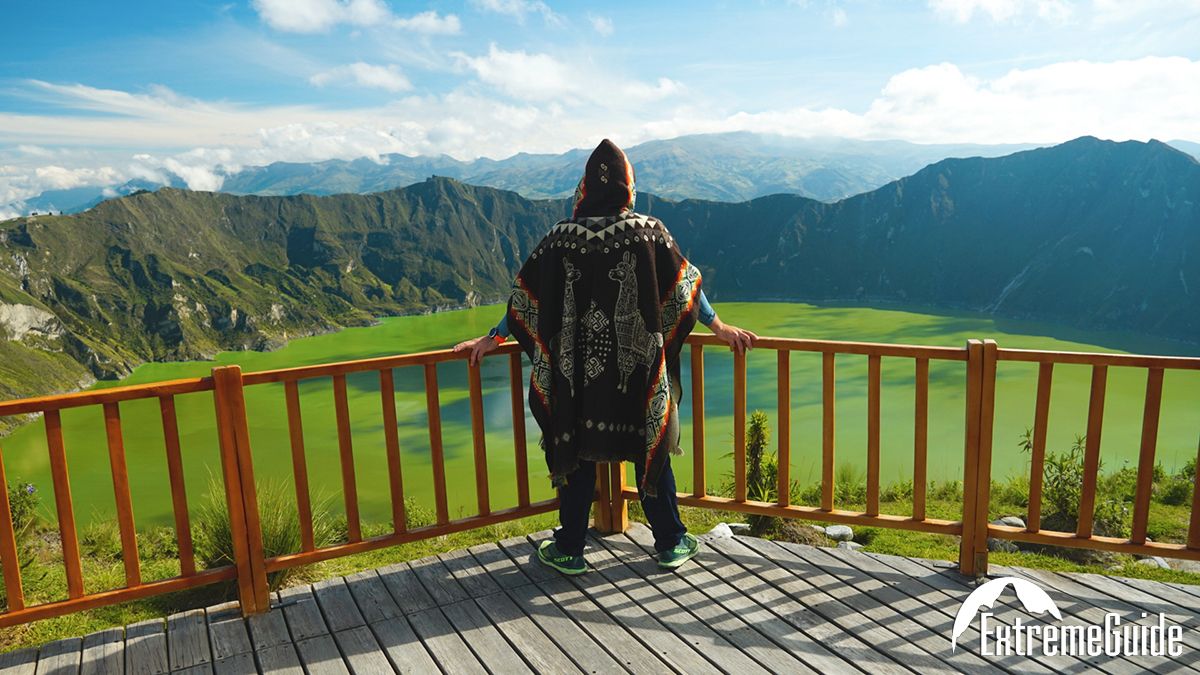
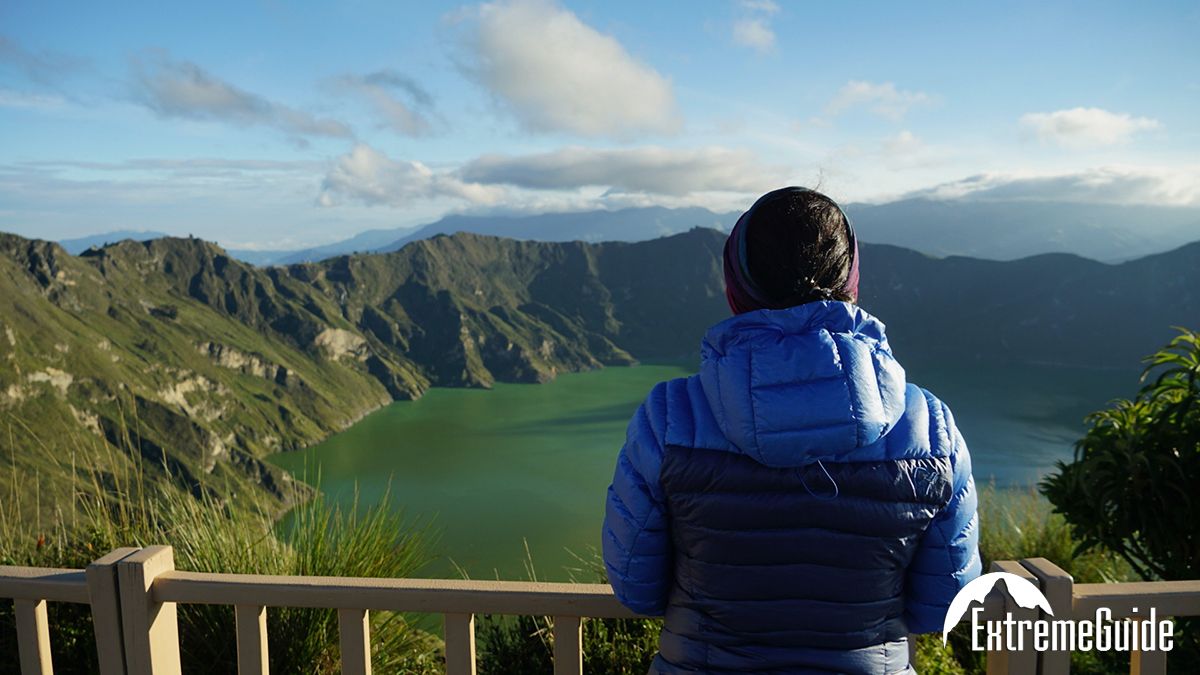
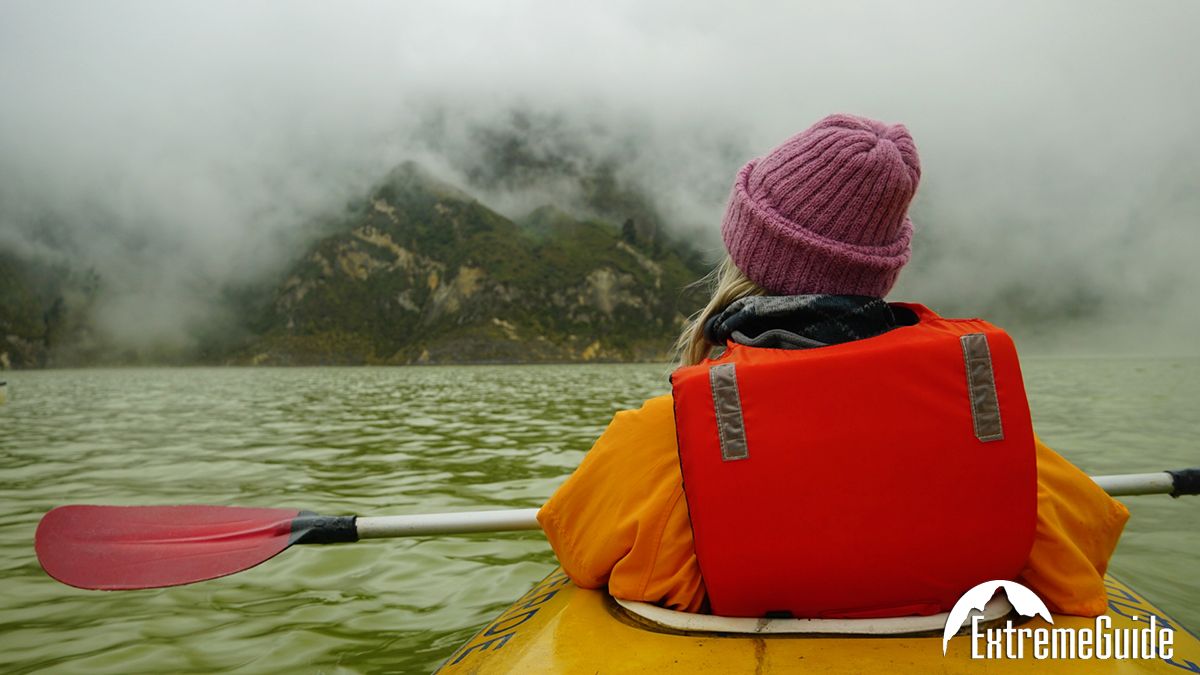
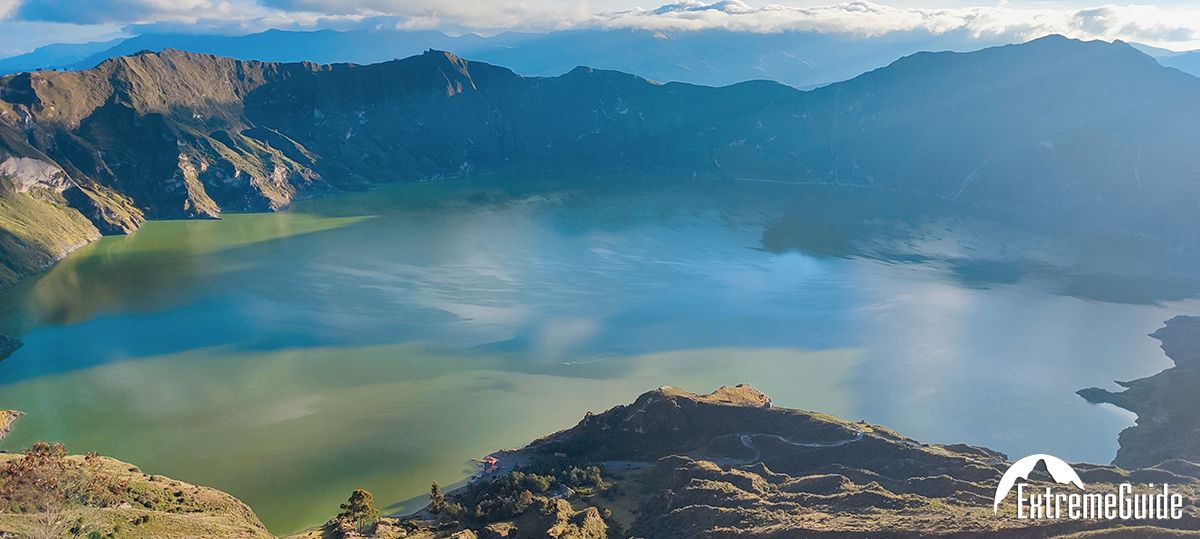
We continue our acclimatization. Today we are leisurely packing up, after breakfast we are going to Lake Quilotoa by a chartered bus – a beautiful lake in the crater of a volcano. The journey takes about 3 hours. Walk to the crater. Overnight at a hotel near the lake.

day
After breakfast, you can walk along the edge of the Quilotoa crater. Free time. After lunch, we will move to the small town of Machachi, and then to a very authentic mountain lodge (hacienda) at the foot of Cotopaxi, which is located at an altitude of 3600 m. From here, in clear weather, there are beautiful views of Cotopaxi. You can devote your free time to walks in the surrounding area.
Overnight stay in a hacienda at 3600.

day
Moving to the national park at the foot of the Cotopaxi volcano. The bus will take us to the parking lot. From here the distance to the shelter is about 2 km (1 hour walk), you need to walk to the shelter. If you wish, you can take a porter to carry personal items. We carry a sleeping bag and equipment for climbing.
The shelter is quite comfortable, there is even a small climbing wall – perhaps the highest climbing wall in the world. Early lights out.
Night in a high mountain shelter (4810 m).

day
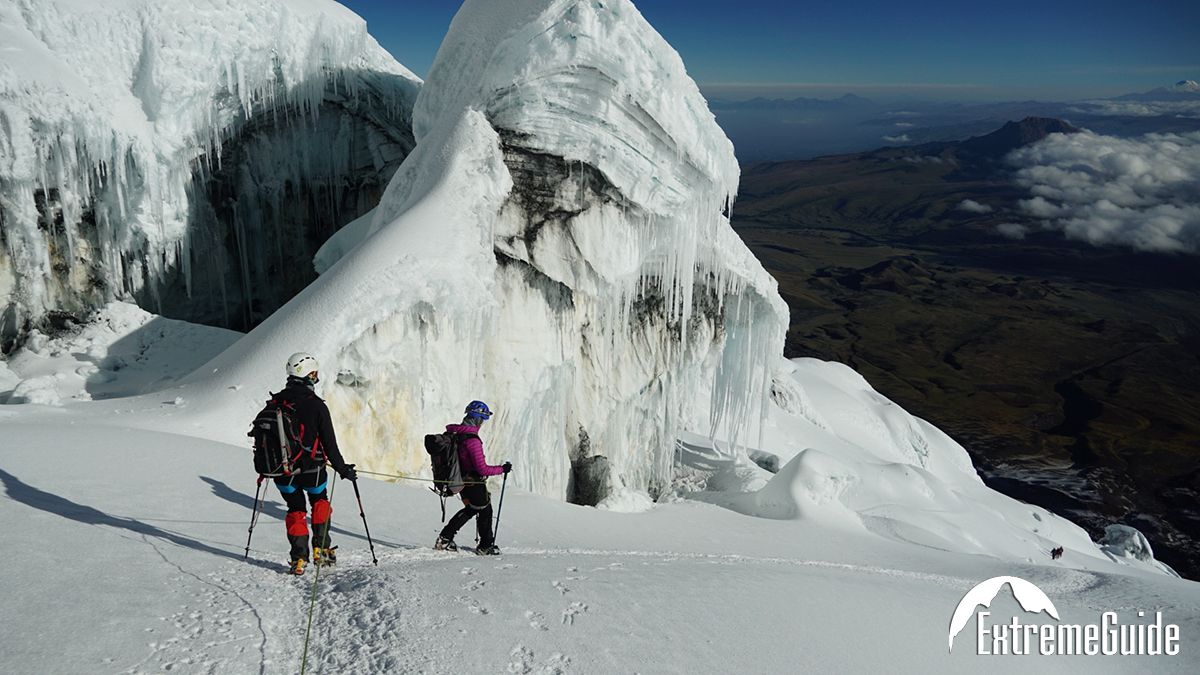
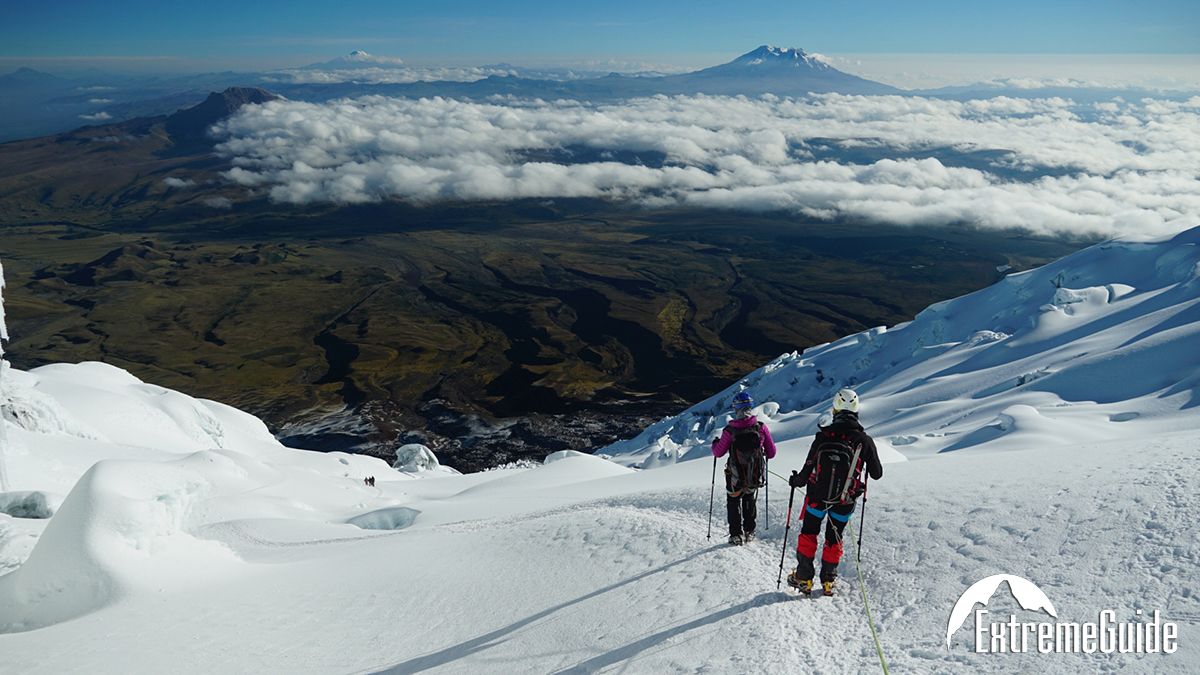
Wake up at 11 am and climb to the top of the Cotopaxi volcano (5897 m). Departure around 0:00. The ascent takes about 8 hours. In good weather, the Ecuadorian volcano range is visible from the top, and the top itself is a bright crater funnel. Technically, the climb is not difficult, except for the last 100 vertical meters, where part of the slope has a steepness of 35-45 °. We pass part of the climb in groups, simultaneously. There are cracks in places, we go around the icefall.
The descent takes about 2-3 hours.
Return to Machachi, lunch. Transfer to the town of Banyos (1800 m). In Banyos we live in a comfortable hotel with a SPA complex. Night at the hotel.

day
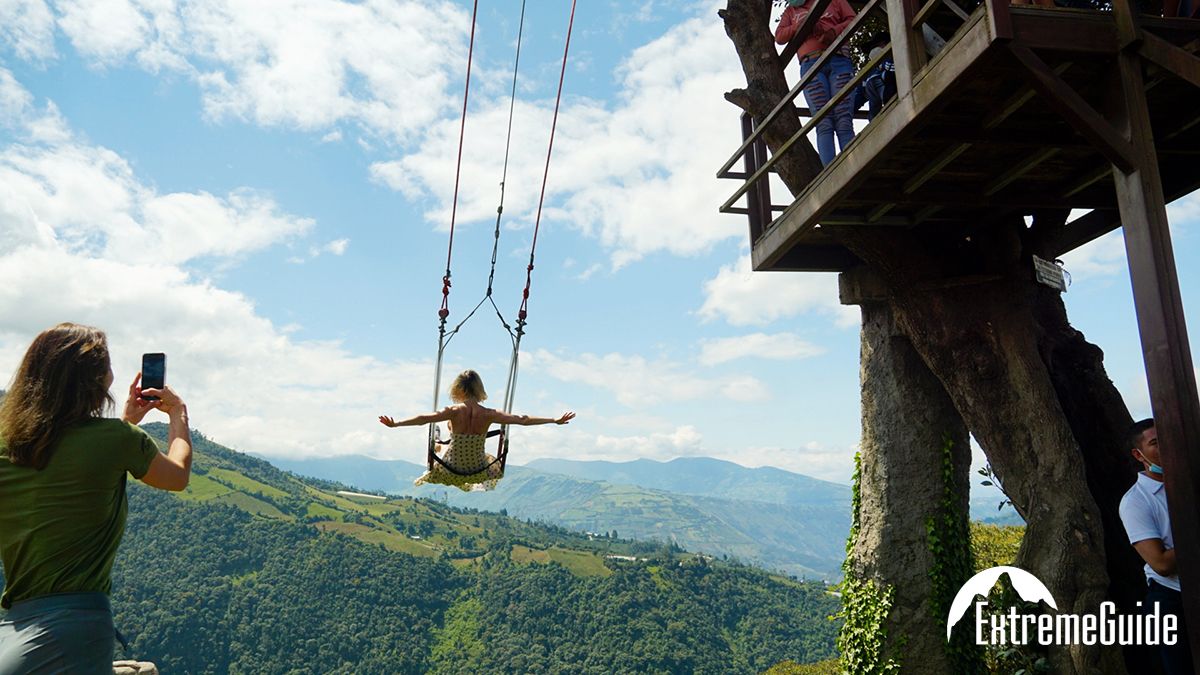
The first half is for a walk around the city and a trip to the “tree house”. We’ll take a ride on the famous swing over the cliff, and optionally go paragliding. The city of Baños is a small resort town where life goes slowly. It is pleasant to spend time here after the climb.
After lunch we go to Chimborazo National Park. The journey takes about 4 hours.
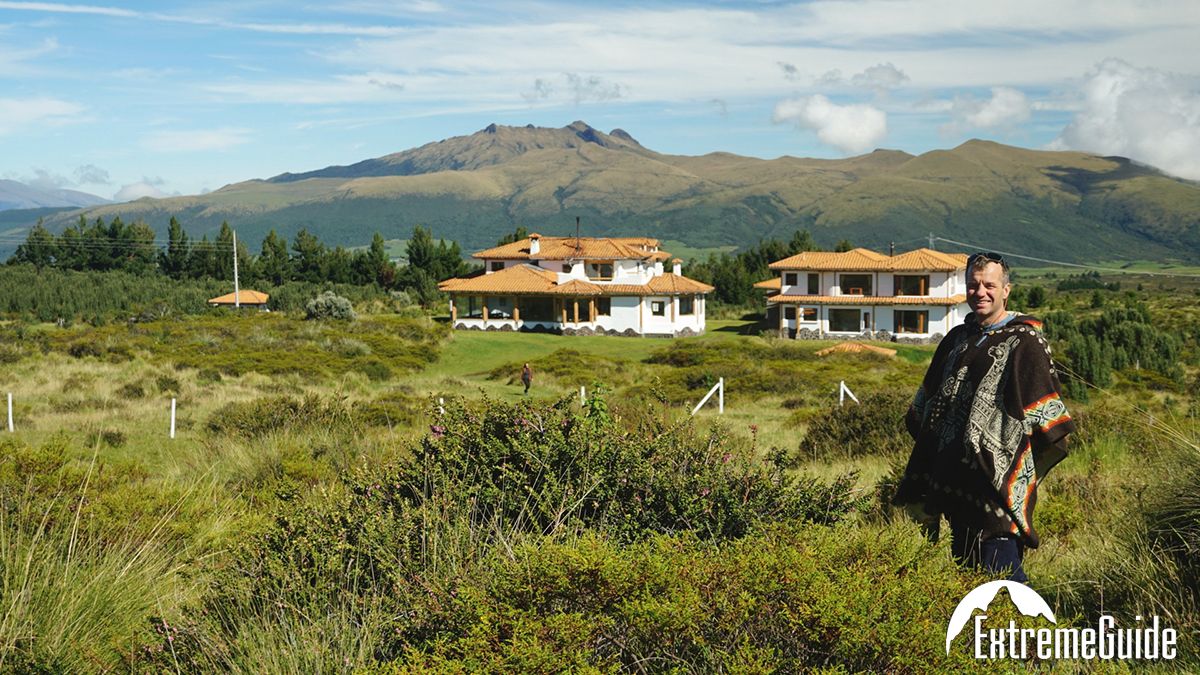
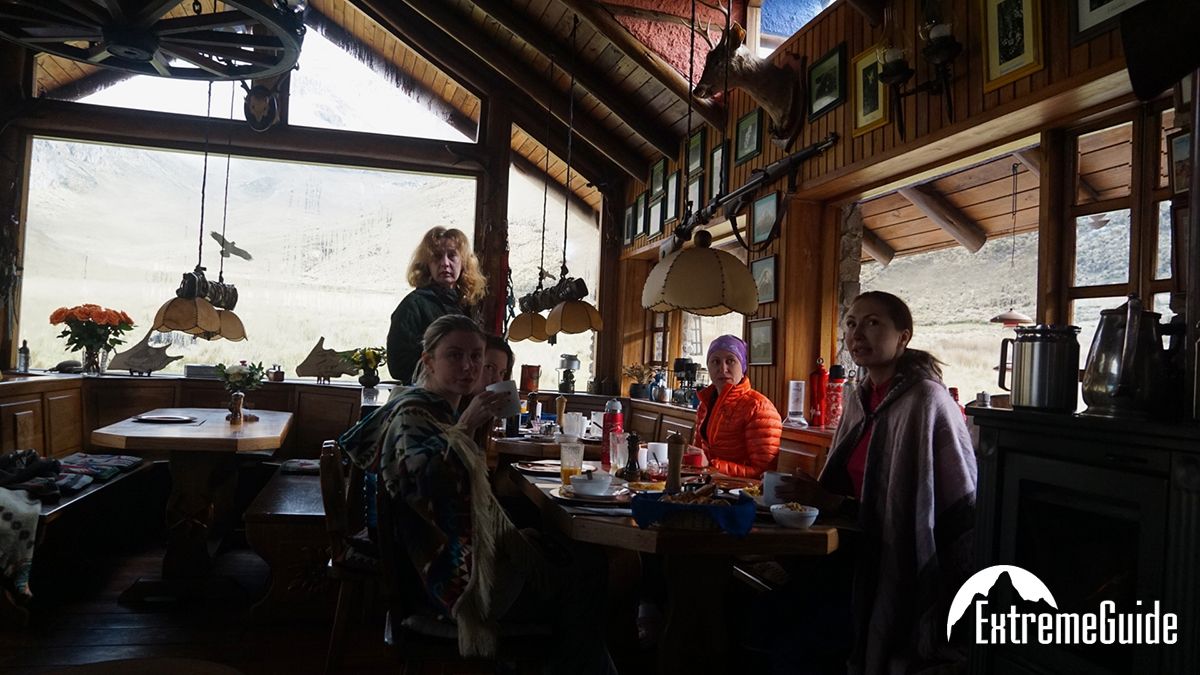
Today, we’ll spend the night at one of Chimborazo’s most iconic sites – a lodge built by one of Ecuador’s most famous climbers, mountain guide Marco Cruz. Chimborazo Lodge is a mountain refuge located in the Valle de Totorillas at an altitude of approximately 4,000 meters above sea level. The lodge is built on the site of an old “tambo” (an ancient mountain shelter/stop for travelers).
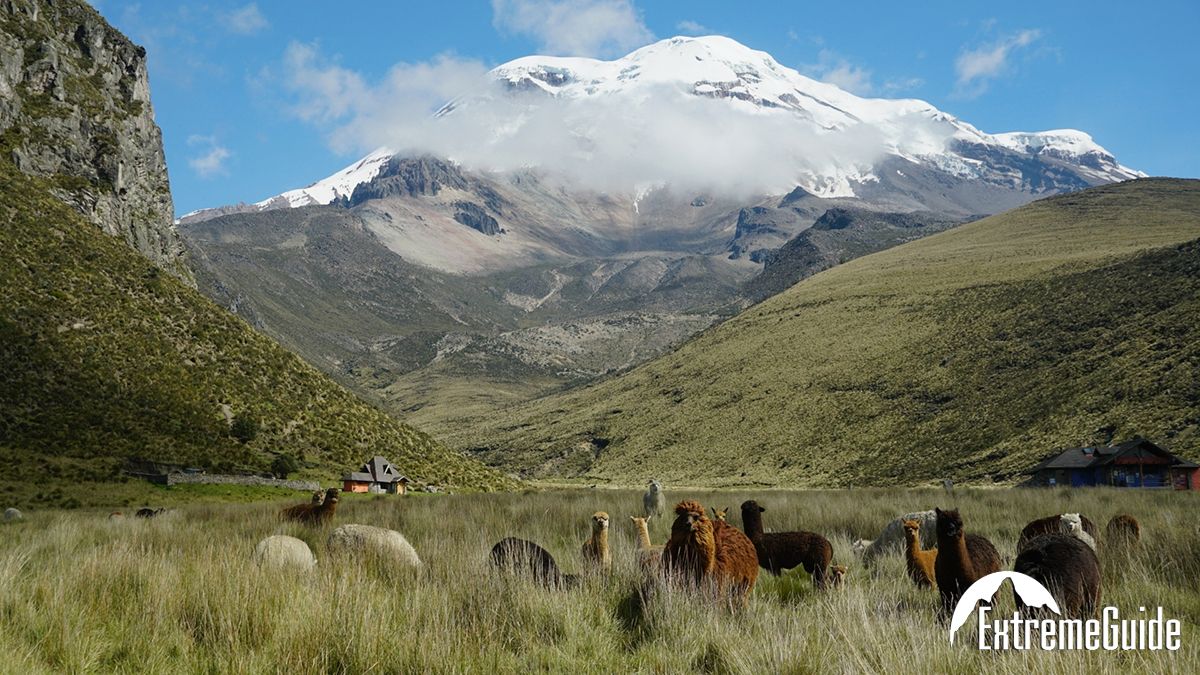
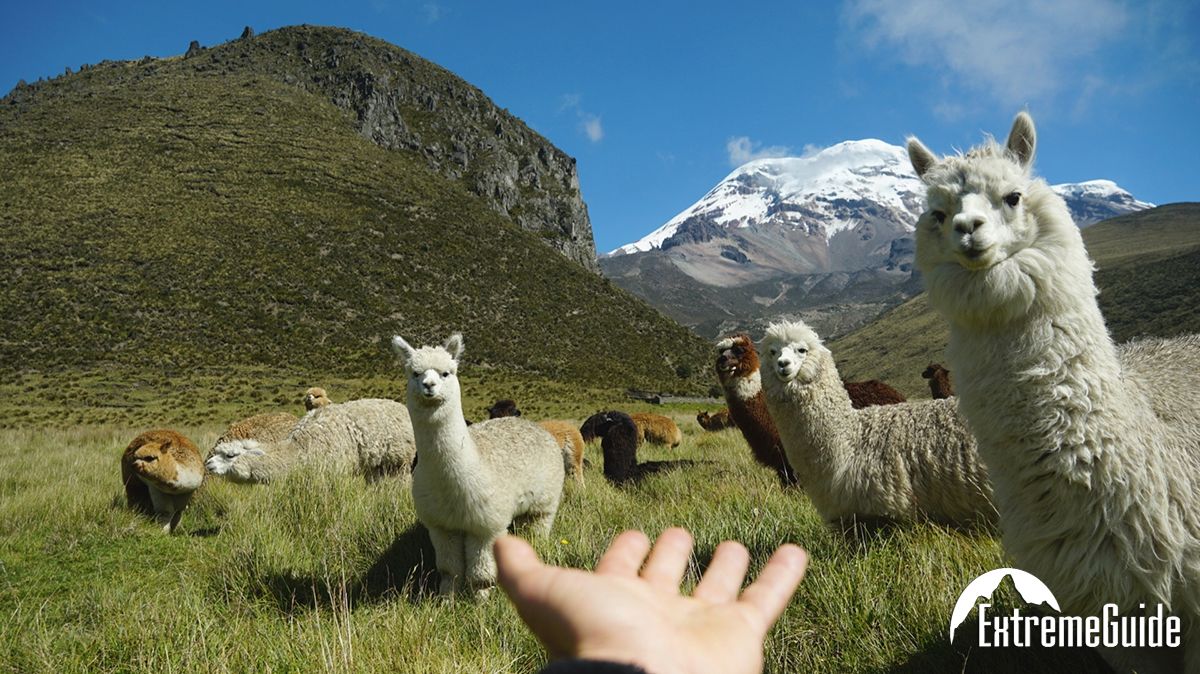
The lodge consists of several houses and a dining room-kitchen. The complex is a real mountaineering museum, with a rare collection of photographs, equipment and other utensils. In addition, the lodge windows face the Chimborazo volcano. Alpacas and llamas graze freely near the lodge.
Overnight at the lodge.


day
Not very early we leave by car to the mountains, to a height of 4800 m. Today we will move to a tent camp at a height of 5300 m.
The camp is stationary, we only carry our personal belongings and a sleeping bag. The transition from the parking lot to the camp will take about 2 hours. Dinner in the camp canteen. Preparation for the ascent. Overnight in tents or a large tent.

day
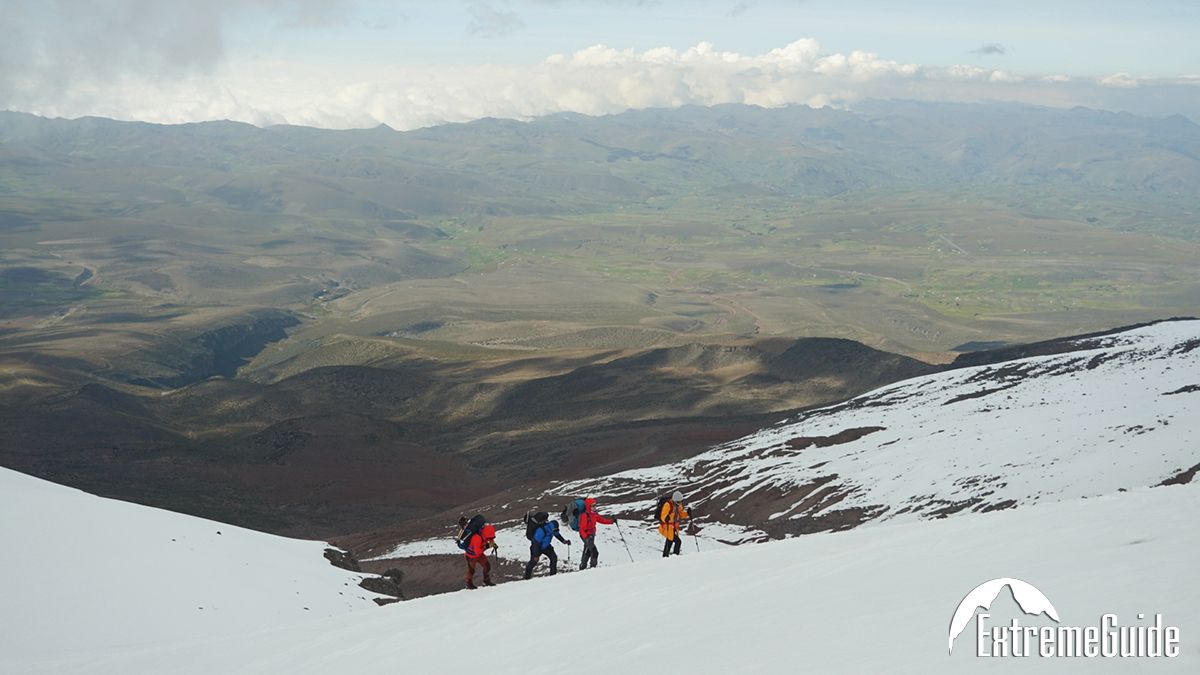
The ascent to the volcano (6310 m) begins at night, around midnight, and lasts 8-11 hours. The ascent is physically difficult, not accessible to all travelers. The ascent goes first along a scree rocky slope and goes to 5800 on a glacier with a steepness of 35-45 °, and above 6000 m – to a gentle plateau.
Chimborazo is an extinct volcano that erupted about two and a half thousand years ago. The name means “ice woman.” The mountain is considered the farthest point from the center of the Earth. The summit is always above the clouds.
A panorama of the volcanoes of Ecuador opens from above. Descent lasting 4-6 hours to the Hermanes Carel shelter (4800 m) to the car.
Further descent down and return to Baños. Night at the hotel. Celebrating the successful completion of the mountain part.


day
We will spend most of the day in Baños. In the morning, rafting on one of the rivers of Baños. You can devote your free time to buying souvenirs and just relaxing. In the afternoon transfer to Quito. The journey by bus will take 3-4 hours.
If desired, the trip can be continued by visiting the Pacific coast and staying for a couple of days in Montanita or Olón. Here you can just chill on the beach under the palm trees, or take surfing lessons.

day
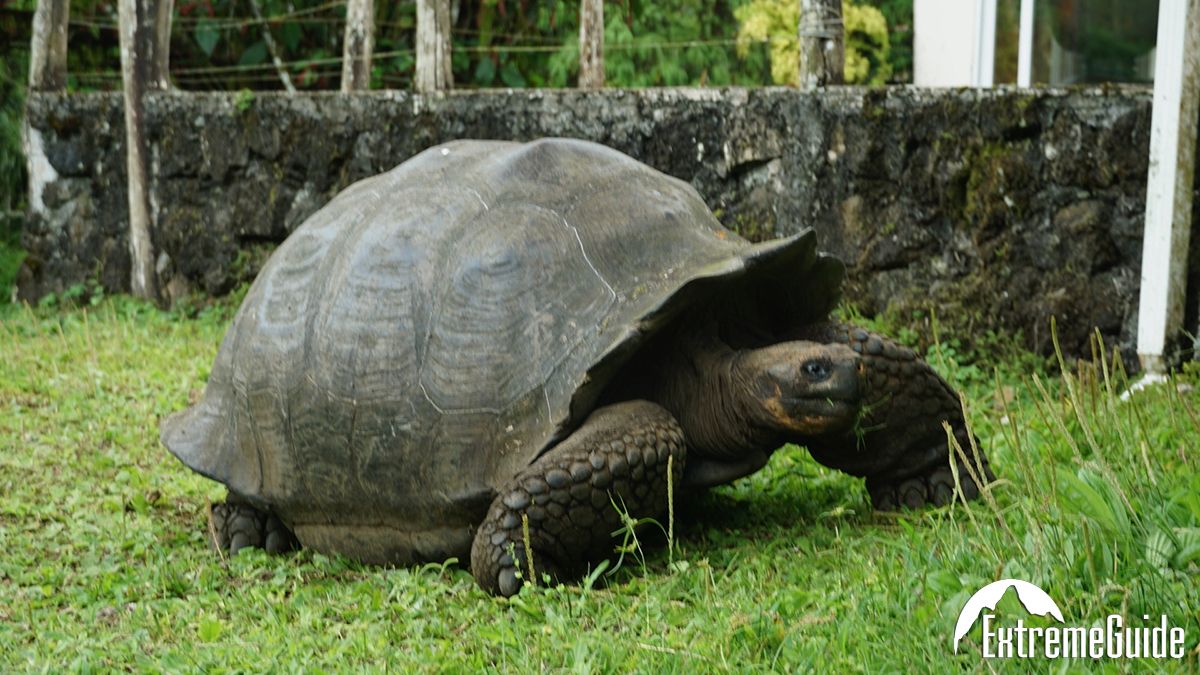
Early transfer to the airport. At 09:30 departure to the Galapagos. Arrival to Baltra Island at 12:20. Transfer by boat to the island of Santa Cruz (10 min), then by bus to the town of Puerto Ayora. Accommodation in a very unusual hotel, on the territory of which giant Galapagos tortoises live.
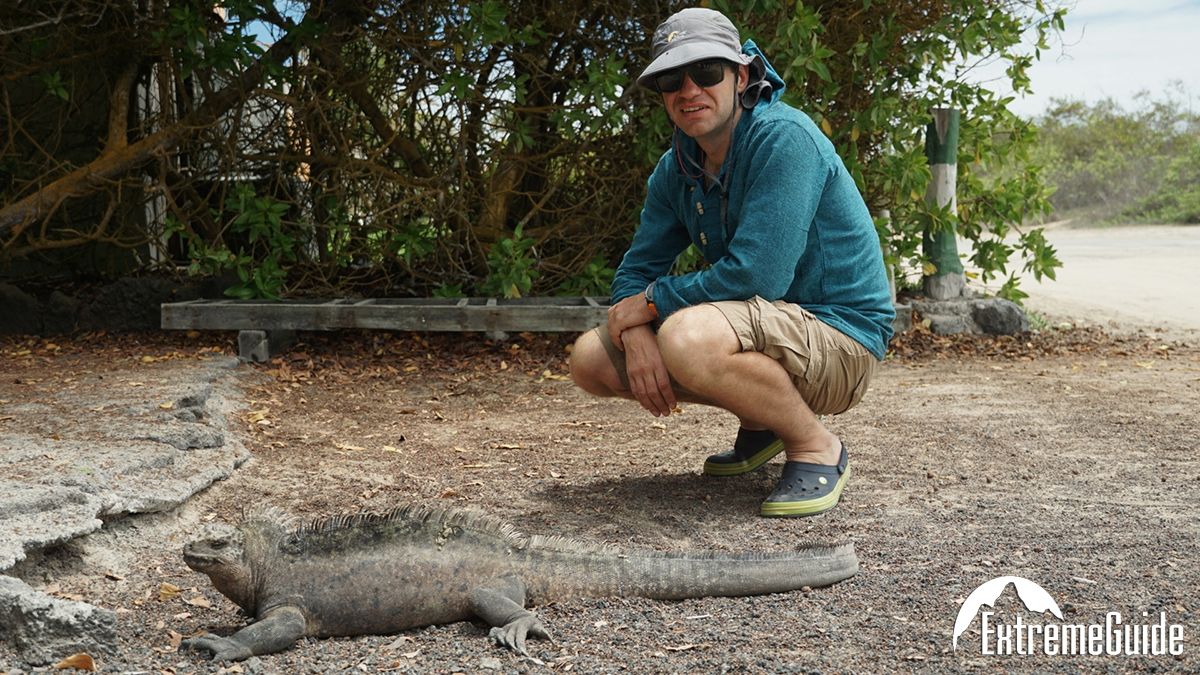
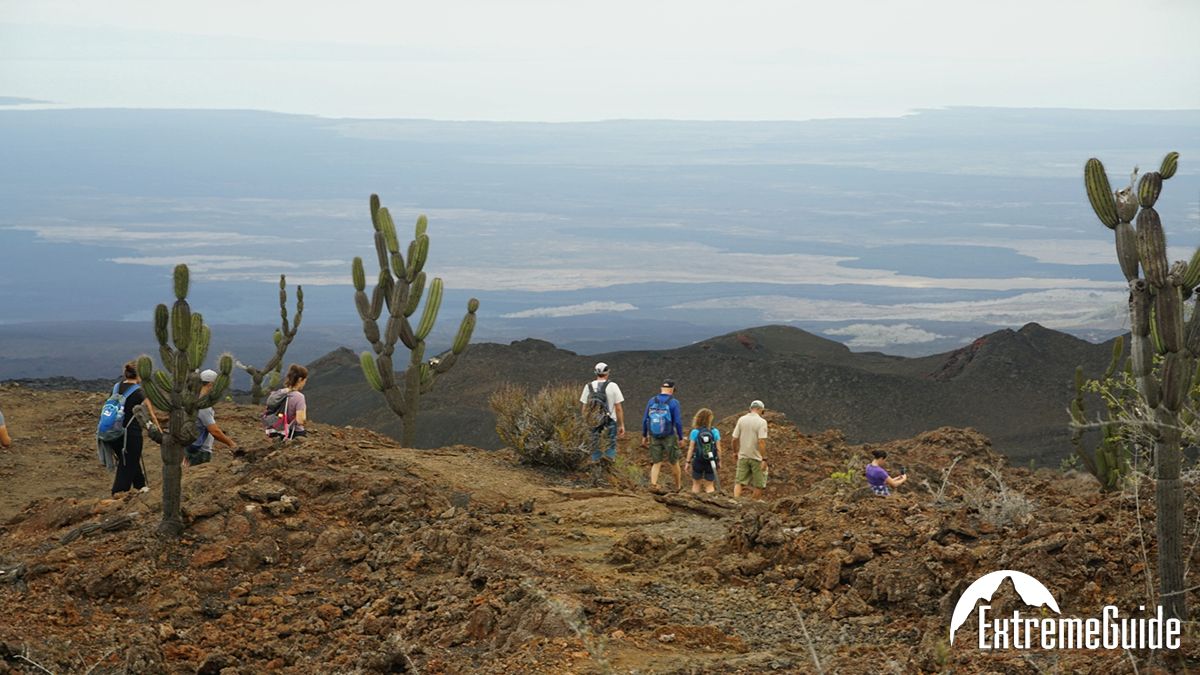
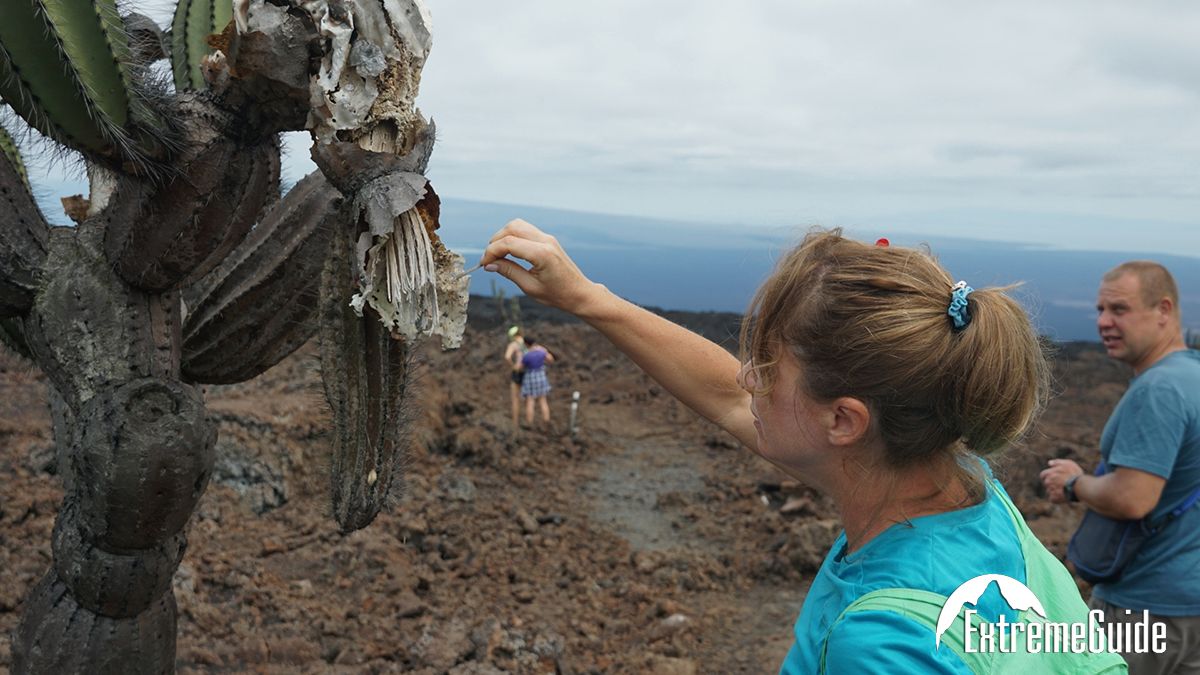
After a short rest, transfer to the ocean and trekking through the cactus forest to the beach of Tortuga Bay. Watching numerous sea animals and birds. Return to the hotel, dinner. Free time.

day
Early check-out, around 6:00. Sea trip on a speedboat (2 hours 30 minutes) to one of the most interesting islands of the archipelago – Isabela Island. Accommodation in a hotel in the small authentic Galapagos village of Puerto Villamil. We live right on the ocean. A 20-minute boat trip to Las Tintoreras Island, a large lava fissure with clear water. Watching white-tip reef sharks, stingrays, seals, penguins and blue-footed boobies.
With any luck we’ll see them all. Snorkeling through lava fissures, watching the marine life. The excursion takes 3 hours. Return to Isabela, free time to watch the sunset.

day
Breakfast at the hotel. Trekking to the Sierra Negra volcano, which has one of the largest craters in the world (11 km in diameter, 90 meters deep). Climbing to the edge of the crater and group photo. Then trek and viewing of the active volcano Chico. After returning and a short rest at the hotel, an evening free walk along the beach and the surrounding area. Free time, contemplating the sunset.
If you wish, you can also take a walk along the coast and snorkel in Concha perla (Pearl Shell Bay) to the east of the village, and Tunnel Estero to the west.
day
Early check-out, around 5:00 am return by boat (2.5-3 hours) to Baltra Island, transfer to the airport. Return to Quito in the afternoon. Night at the hotel.
day
Today, you can plan your flight home at any convenient time.
Map of the route for climbing Cotopaxi and Chimborazo volcanoes + Galapagos Islands:

Why is it profitable to go hiking with Extremeguide?


Cost and conditions for climbing the Cotopaxi and Chimborazo volcanoes
Is this trip right for you?
The climbing program is available to physically fit and prepared people with previous hiking and climbing experience. Mountaineering experience is desirable to participate in the program.
Included in the price:
- Services of a Russian-speaking guide ExtremeGuide;
- services of local guides (1 guide for 2 people during the ascent);
- transfers along the route;
- accommodation in 4* hotels according to the program (2-bed accommodation) up to 8 nights;
- accommodation in shelters and lodges during the ascent;
- rental of public equipment (ropes, kitchen, gas);
- permits for ascents, entrance tickets to national parks;
- breakfasts in hotels and lodges;
- dinners and breakfasts in shelters;
- rafting in Baños and a trip to the swing and tree house.
Climbing program price + Galapagos Islands includes:
- accommodation in 4* hotels according to the program (2-bed accommodation) up to 3 nights;
- airfare Quito – Galapagos – Quito;
- excursions to the islands according to the program;
- entrance tickets to national parks;
- transfers by bus and boat between the islands.
The price does not include:
- air tickets to Ecuador (from $1,200 round trip);
- meals in the cities ($30-40/day);
- transfer to/from the airport;
- insurance (mandatory, we will help with insurance (we will advise);
- rental of special equipment for climbing (crampons, ice axe, harness, helmet) – check the possibility of rental in advance;
- Single room supplement in hotels (Quito, Baños, Riobamba) – USD 500 for the entire 12-day program;
- Single room supplement (including the Galapagos Islands) – USD 900 for the entire 16-day program.
- additional excursions and changes in the program;
- all additional expenses in case of early termination of the program;
- souvenirs, other expenses not specified in the program;
- porters on Cotopaxi and Chimborazo (must be booked in advance).
Price depending on the number of participants
| Number of participants | Cost per 1 participant | Cost per 1 participant |
|---|---|---|
| 12 days | 16 days | |
| 8 | 2600 USD | 4500 USD |
| 7 | 2800 USD | 4800 USD |
| 6 | 2900 USD | 4900 USD |
| 5 | 3200 USD | 5200 USD |
| 4 | 3400 USD | 5400 USD |
| 3 | 4200 USD | 6200 USD |
| 2 | 5200 USD | 7500 USD |

Best price guarantee!
- We have included in the price all possible basic expenses for the program and guarantee that there are no hidden additional costs, while we have retained the best service at a low price: transfers, hotel accommodation, guides and staff!
We have a flexible discount system
Find out the details right now:
Necessary equipment
Basics:
- A transport bag/backpack 80-100 l or a large backpack. We won’t be carrying them, everything will be in the car;
- Assault backpack 30-40 l. (the transition from the car to the shelter is on average 1 hour: there should be space for a sleeping bag and warm clothes, the transition from the Carrel shelter to the upper camp 5300 on Chimborazo is 3-4 hours)(Read more about choosing a backpack);
- Sleeping bag, comfort -5…-10 С (Read more about choosing a sleeping bag);
- Sleeping pad for the upper camp of Chimborazo (it is advisable to have a thick and warm mat) (Read more about choosing a pad).
Shoes and clothing:
- Two-layer boots, mountaineering, with welts for crampons (a combination of single-layer boots + full shoe covers for the entire foot is possible) (Read more about choosing clothes and boots);
- Trekking shoes/boots (for acclimatization);
- Changeable shoes (sandals, crocs or flip-flops);
- Gaiters (shoe covers, flashlights) for boots;
- Down sweater or light warm jacket;
- Down jacket or warm jacket (minimum temperature -20 … -25 on the night of the ascent);
- Warm hat;
- Walking pants (Gore-tex, or softsell);
- Insulated pants (down, primaloft);
- Trekking pants;
- Running jacket, windproof (Gore-tex or other membrane);
- Rain cape (if your clothes get wet), in general, precipitation is very possible at this time;
- Thermal underwear set (in the absence of thermal underwear, long johns and a jacket);
- Warm jacket (polar, fleece) – 1-2 pcs.;
- Socks at least 3 pairs (“thermal socks” or other thick ones);
- Sleeping socks (preferably wool or down);
- Mittens (down or ski; the main thing is that they are windproof);
- Warm fleece gloves;
- T-shirt;
- Change of underwear;
- Swimming trunks/swimsuit;
- Sun hat;
- Balaclava;
- Clothes for the city: shorts, shirts, T-shirts (temperature range +10 C in the mountains, in the valleys… +25 C on the coast).
Rest:
- Dry packaging for things/ (large plastic bags for packing things);
- Mug, spoon;
- Headlamp + set of batteries;
- Hygiene products;
- Documents in dry packaging;
- Individual first aid kit (bandage, cold, stomach, head. Also, specific and chronic diseases, if any, should be taken into account. In addition to the individual first aid kit, the guide has a public one);
- Mountaineering glasses (protection category 3-4);
- Ski mask (in case of wind and precipitation on the mountain);
- Hygienic lipstick;
- Sunscreen ointment;
- Water container (1-2 l.);
- Thermos (0.75 – 1.0 liters);
- Thin gloves;
- Emergency blanket.
Special equipment:
- Trekking poles;
- Crampons;
- Climbing system;
- Carabiner – 2 pcs;
- Helmet;
- Ice axe.
Camera.
Additional Information
The program is not final and may be adjusted depending on the weather, the condition of the participants and other factors.
— residents of most countries do not need a visa to visit Ecuador;
— accident and medical insurance (insurance with coverage of at least $30,000 and insurance for risks associated with mountaineering).
Meeting of the group in Quito or at the airport, time and place are agreed upon. You can arrive at any convenient time on the 1st day or in advance.
Air France, KLM, Luftgansa, Latam fly from Europe to Ecuador.
To long 6-8 hour walks during the acclimatization period, to strong temperature changes (+30 during the day, -5…-15 at the tops of volcanoes) during the day, to moving along rocky paths and glaciers. To a certain malaise at altitudes above 4500 m.
In cities we stay in comfortable 4* hotels, in the mountains we live in shelters and lodges, in the Chimborazo assault camp we live in tents. The shelter has electricity and a toilet with a washbasin. In the Chimborazo lodge there is hot water and electricity. In the Chimborazo assault camp the conditions are like those of a hike without a shower and electricity.
- Single room supplement in hotels (Quito, Baños, Riobamba) – USD 500 for the entire 12-day program;
- Single room supplement (including the Galapagos Islands) – USD 900 for the entire 16-day program.
Meals are available almost everywhere in cafes or restaurants. In the shelter on Cotopaxi and Chimborazo, dinner and breakfast are included in the price. We recommend taking additional bars, gels and other energy snacks with you during the ascent.
It is convenient to take a suitcase on wheels or a duffel bag with handles, as well as a 30-40 l backpack, where you can put a sleeping bag, mat and mountaineering equipment. The weight of the backpack on the approaches to the hut is up to 10 kg.
The guides will have a first aid kit for emergency medicine. But you need to have personal medications for chronic and individual diseases, adhesive plaster, headache pills, anti-cold and painkillers + vitamin C and group B for better adaptation in the mountains. There is a doctor and medical oxygen in the base camp.
Mobile communications are available almost everywhere, except for those days when we are on the mountain.
In Quito the average temperature is +20, in the mountains during the day +10…15 C, on the coast +30.
This route passes at altitudes above 5000 m – 6000 m, where solar radiation is several times stronger than on the plain, the mountain climate and thin air affect the body’s condition for the first 5-7 days. If you do not acclimatize properly and gain altitude quickly, you may develop altitude sickness.
Therefore, we have developed a special acclimatization program and control of the condition of each participant on the route. The track is not technically difficult and goes along a mountain road, but requires good physical preparation and compliance with safety rules in the mountains. All instructions of the guide on the route are mandatory!
We recommend reading the article about acclimatization in the mountains
Peculiarities of acclimatization in high mountains
Also watch a video about altitude sickness
Also read the article about preparation:
Physical and mental preparation before climbing and hiking in the mountains
And watch a series of videos about the training process.
Absence of diseases incompatible with active tourism: List of diseases
This climbing program requires good physical fitness and is within the capabilities of any average person who has already been in the mountains at altitudes of 4000-5000 and more.
We recommend that you start training no later than three months before the start of the track: running, swimming, cycling. The total anaerobic load should be at least 1 hour 30 minutes (cross-country running at least 8-10 km), then you are guaranteed not to have health problems on the track.
For more information on training, see our Youtube video channel. In case of chronic diseases, we recommend consulting a doctor.
The country’s currency is the US dollar. You can carry money in cash or on a card. In any case, there are ATMs in populated areas. You can pay by card in cafes and restaurants.
The table shows the basic cost for a group and may change depending on the number of people in the group. For the calculation of the cost of the tour for a smaller number of people and individual groups, see the «Price» block for more details.
We guarantee that on the dates indicated in the table, even if there is a minimum number of people allowed in the group, the tour will take place 100% with a minimum change in cost.
Pleasant bonuses, which everyone receives when ordering a tour with us


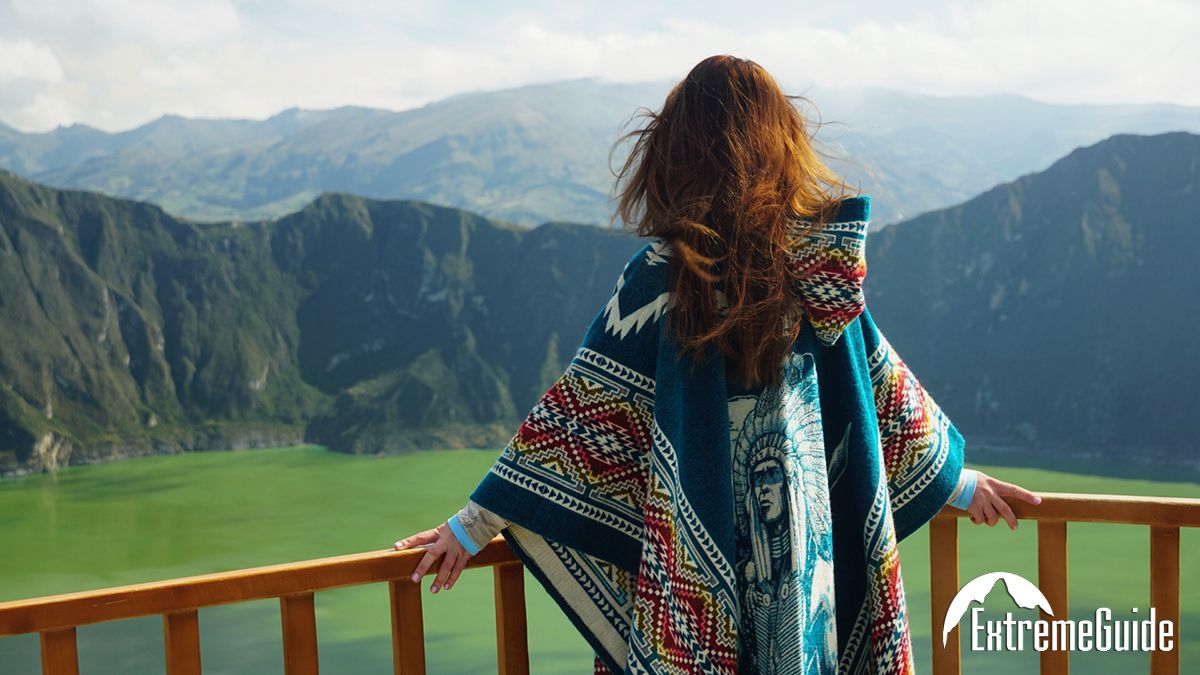
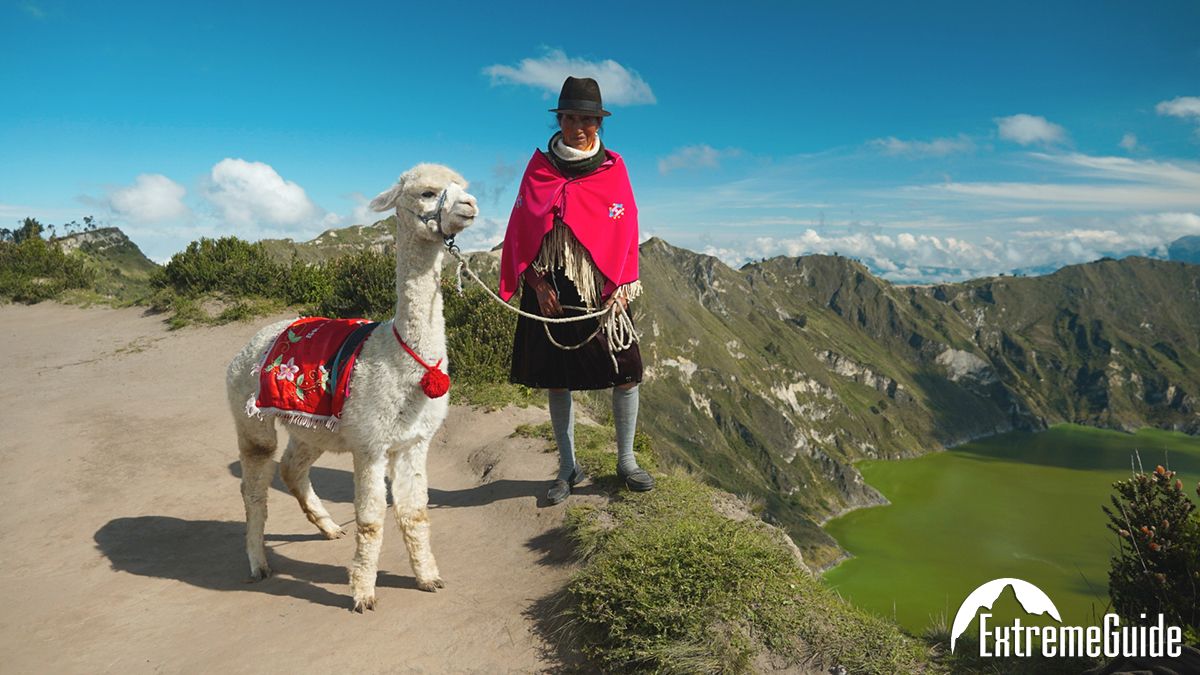
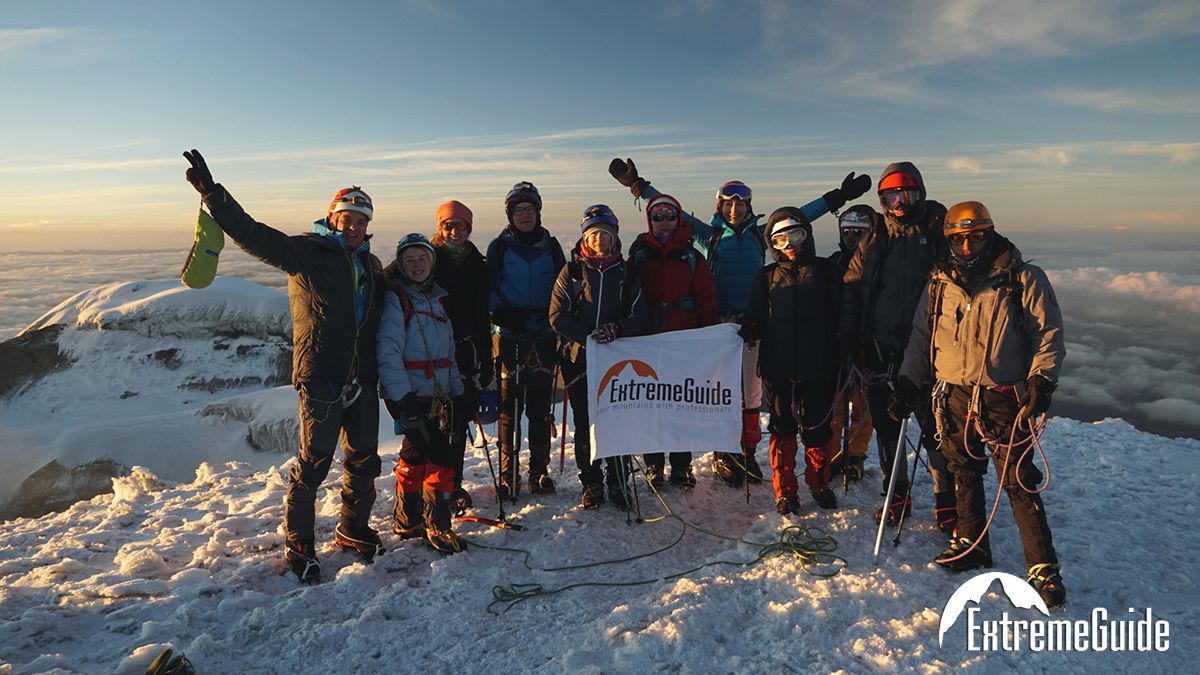
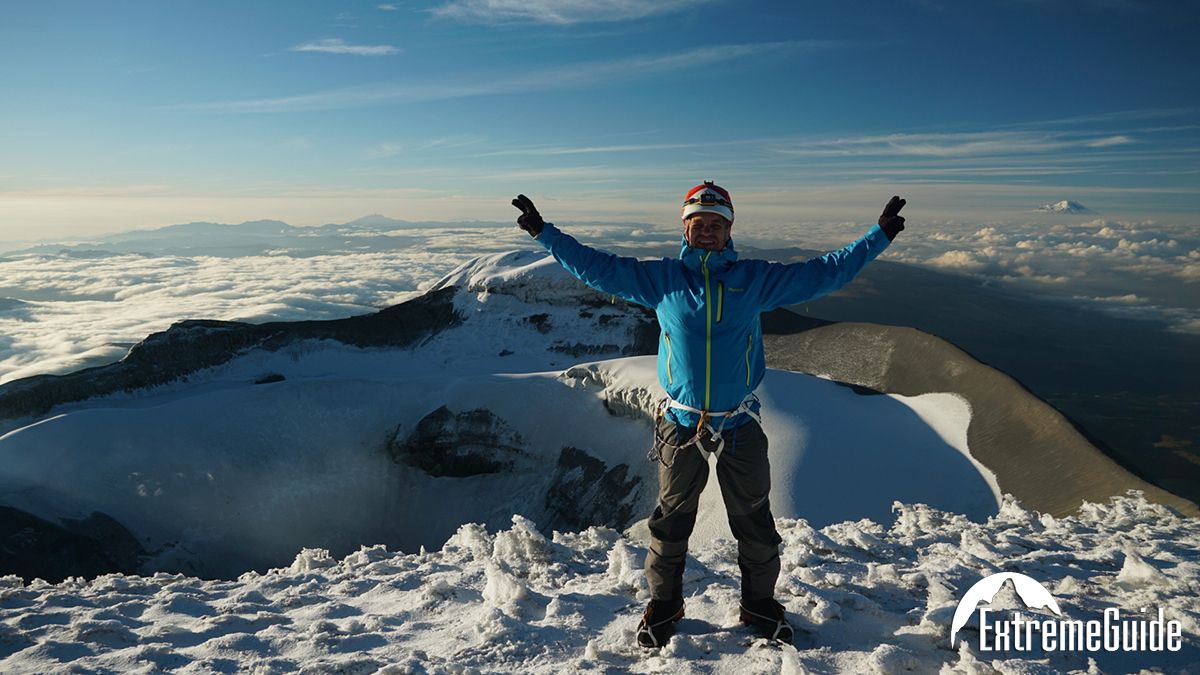
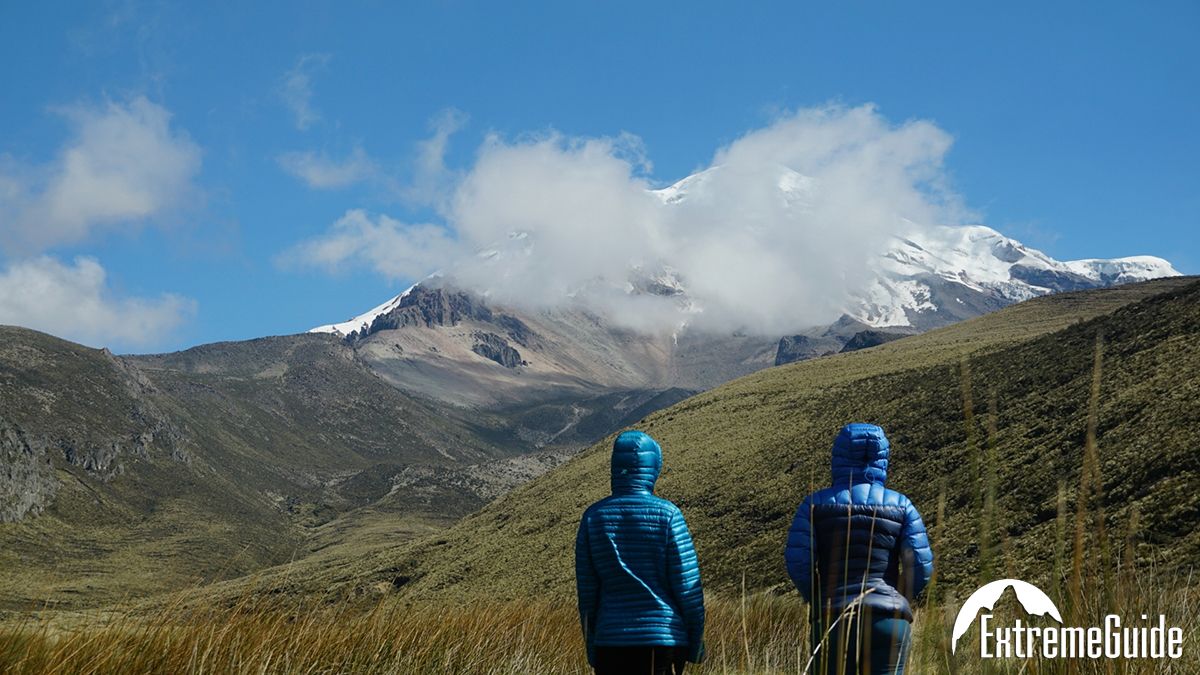
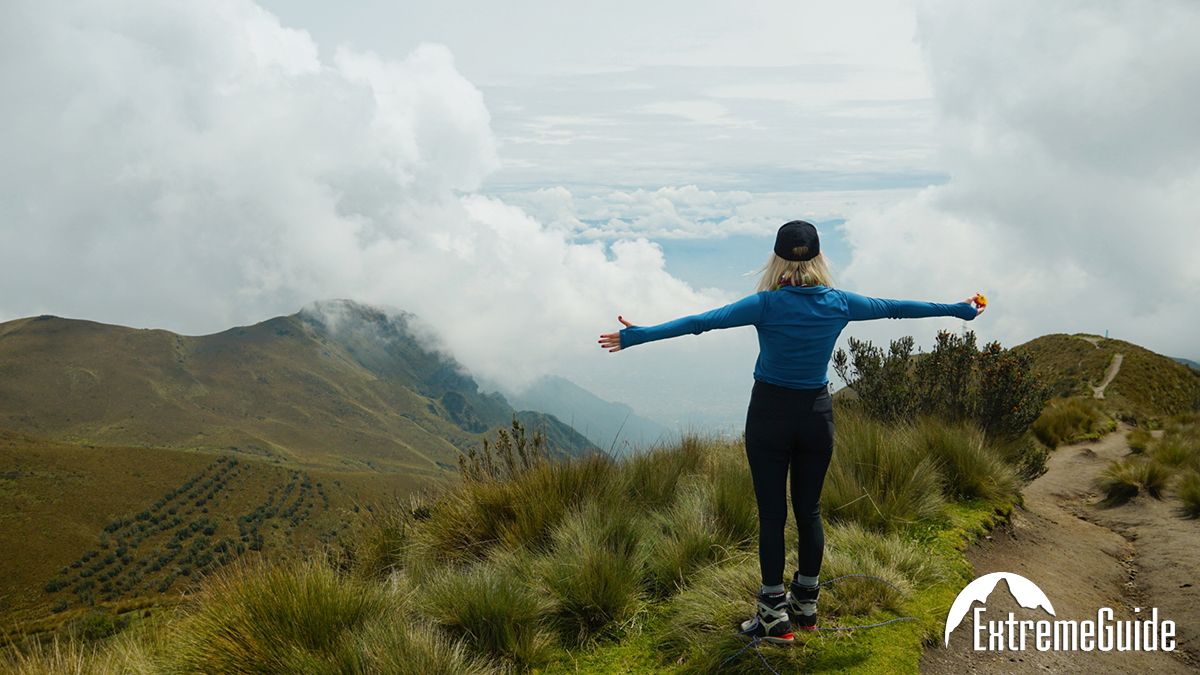
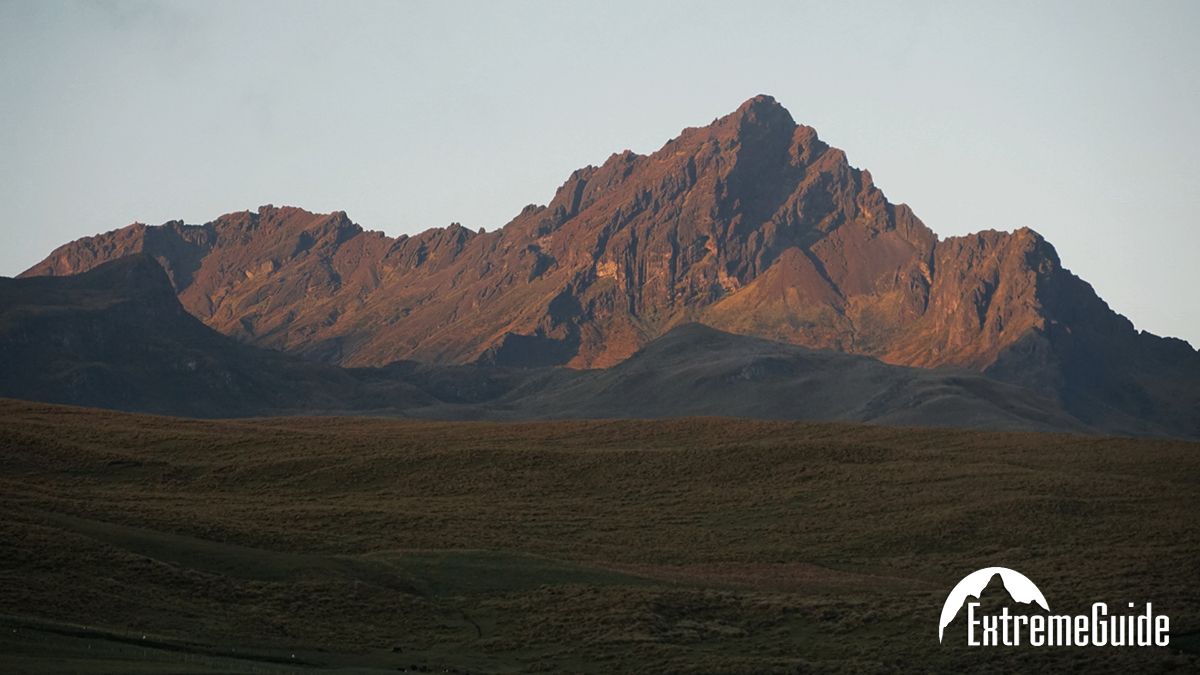
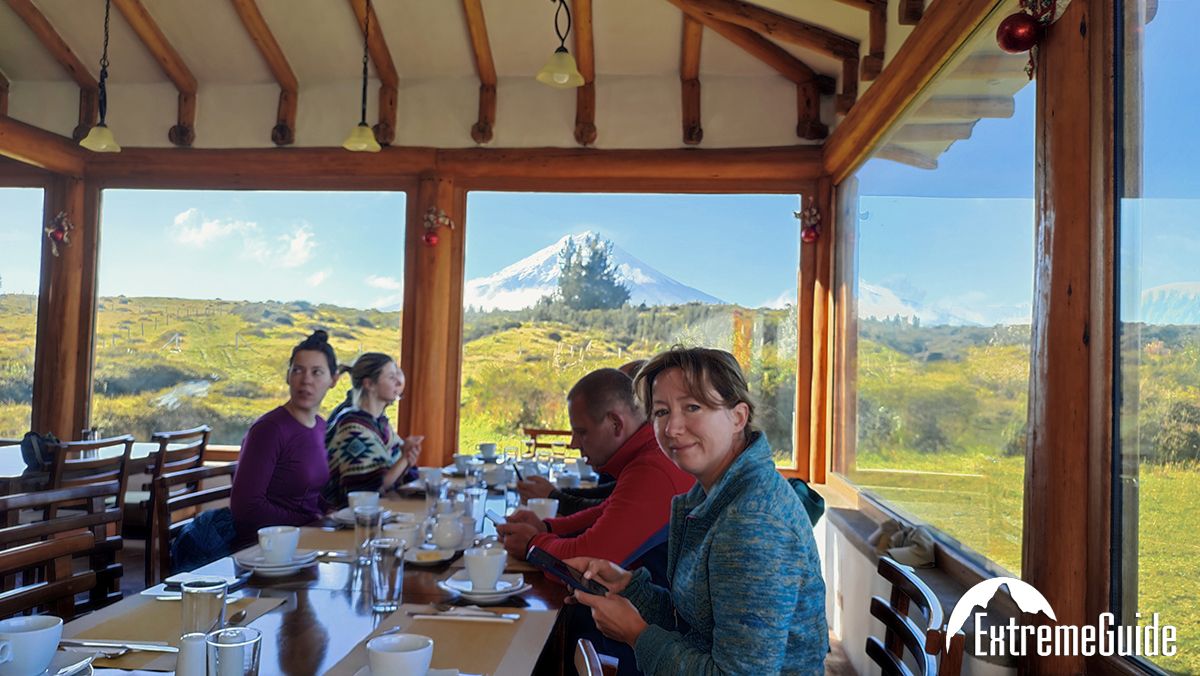
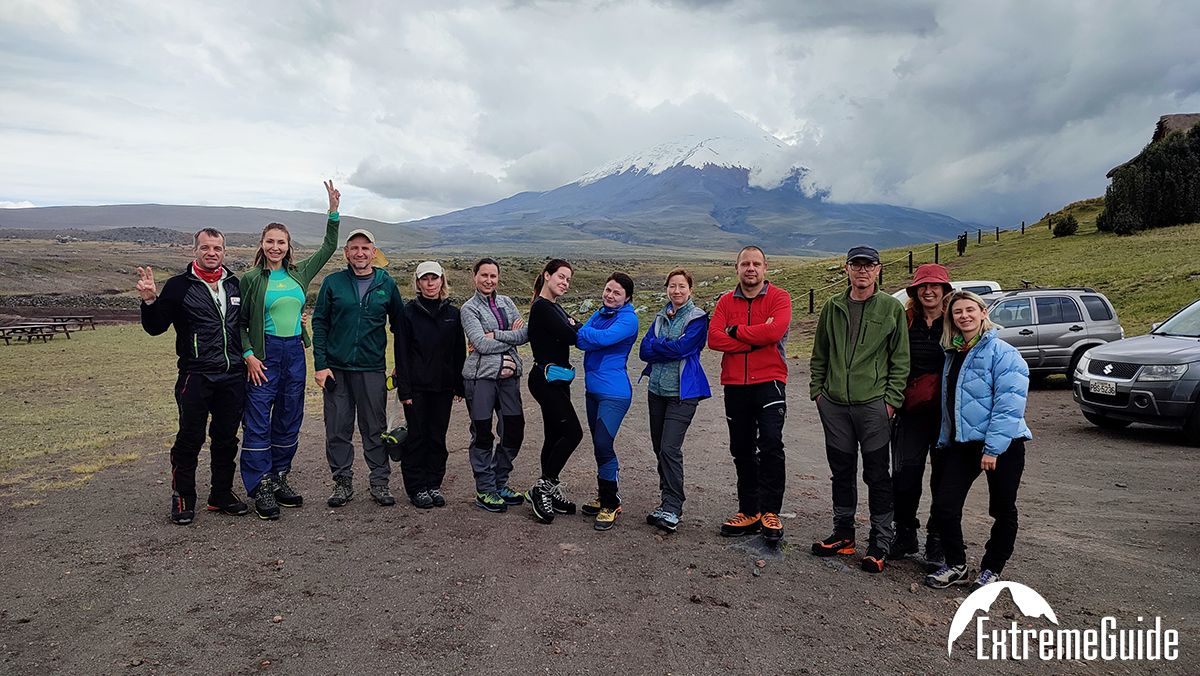
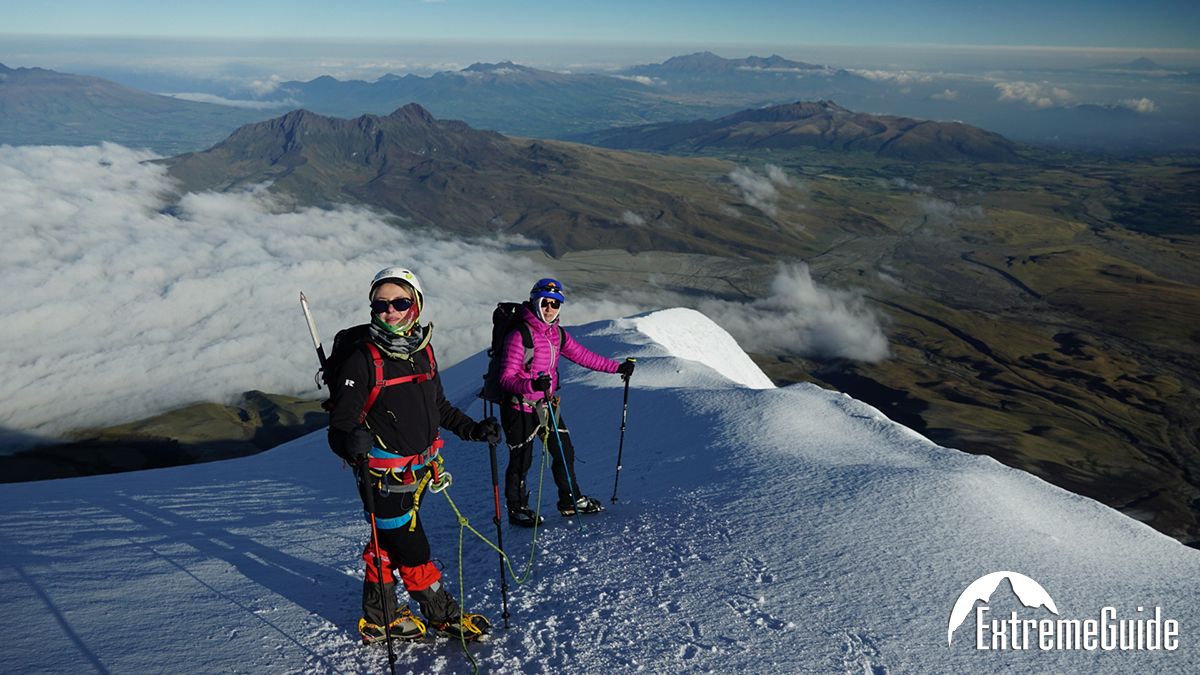
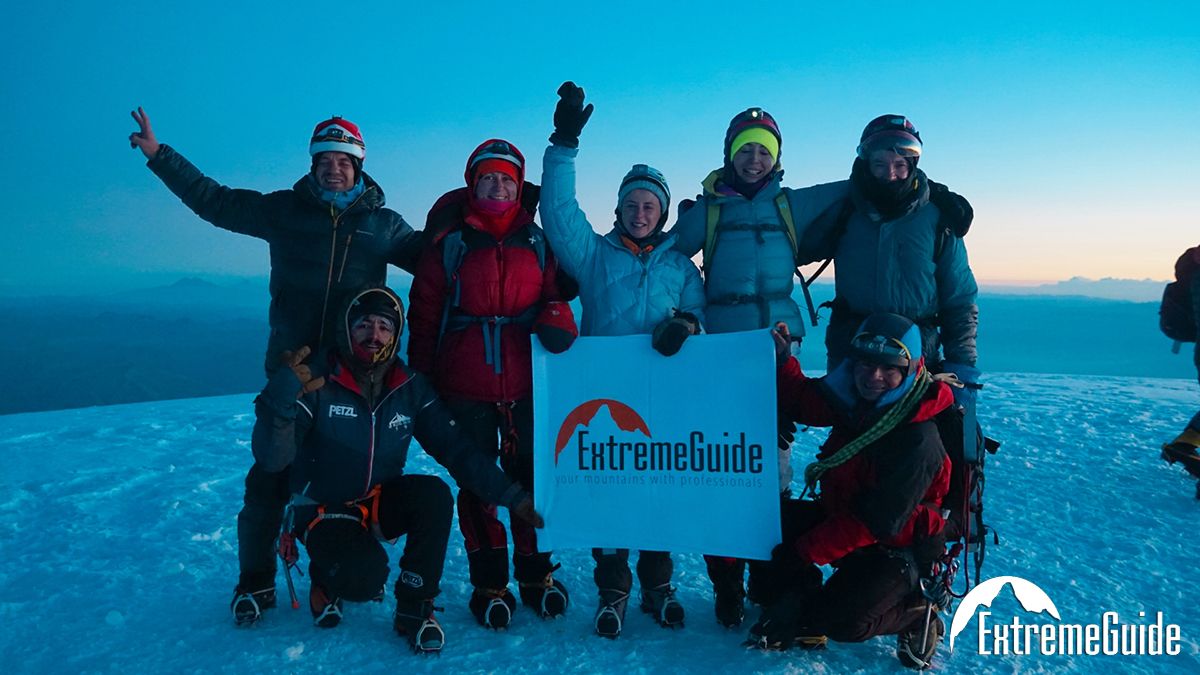
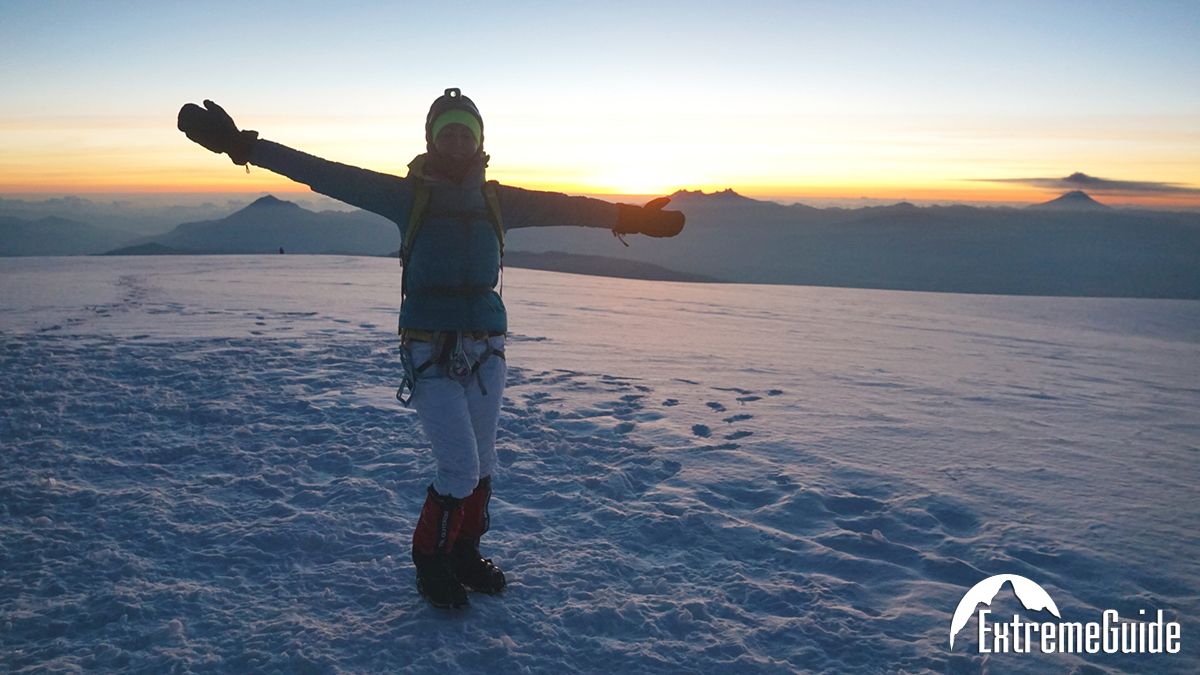
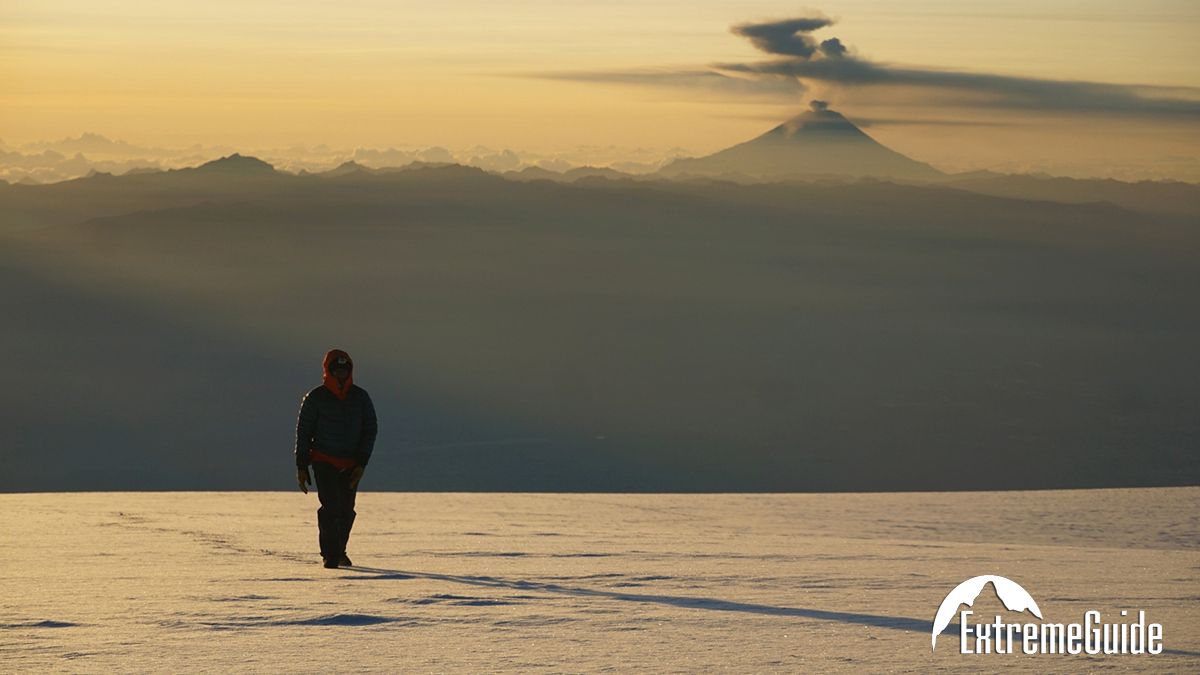
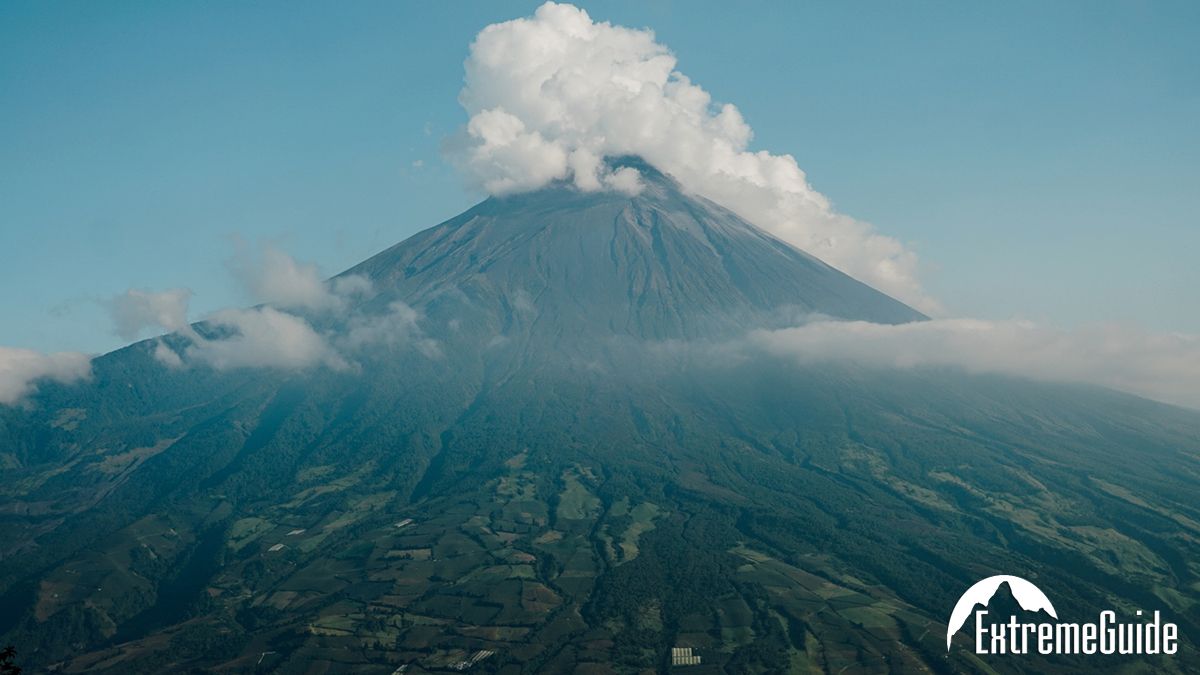
Photo of previous trips
Reviews of our travelers
Восхождение на| вулкан ЧИМБОРАСО (6310 М)| КОТОПАКСИ (5897 М)
 Tajikistan (Fan Mountains)
Dates:
July 12 - July 21
July 12 - July 24
July 25 - August 3
July 25 - August 6
August 8 - August 17
August 8 - August 20
Complexity:
Duration:
Height:

5.0 (15)
Left: 5 places
 Nepal (Himalayas)
 Dates:
October 25 - November 11
Complexity:
Duration:
Height:

Left: 6 places
 Peru
Peru
Dates:
May 2 - May 12
May 2 - May 17
May 2 - May 21
Complexity:
Duration:
Height:

5.0 (8)
Left: 12 places
 Kyrgyzstan
 Dates:
July 11 - July 23
Complexity:
Duration:
Height:
Left: 3 places
 Kyrgyzstan
 Dates:
July 18 - August 8
Complexity:
Duration:
Height:
5.0 (15)
Left: 6 places
 Turkey
Dates:
May 3 - May 12
October 25 - November 3
Complexity:
Duration:

4.9 (27)
Left: 12 places
 Nepal (Himalayas)
 Dates:
Complexity:
Duration:
Height:
 Slovakia (Tatras)
 Dates:
Complexity:
Duration:
Height:
 Bolivia
 Dates:
Complexity:
Duration:
Height:
 Argentina
 Dates:
Complexity:
Duration:
Height:
 Slovakia (Tatras)
 Dates:
Complexity:
Duration:
Height:
 Mexico
 Dates:
Complexity:
Duration:
Height: