
Climbing Everest – Tour to the highest mountain in the world
Mount Everest is the most exciting mountaineering adventure that almost everyone who has ever been to Nepal or simply climbed other mountain systems of the World has probably dreamed of. Standing on the highest point of the Earth is one of the most pleasant experiences in life. Your life will not be the same after Everest.
We invite you to climb Everest with an experienced guide, the leader of the ExtremeGuide company – Oleg Ivanchenko.
Oleh Ivanchenko is a guide with more than 17 years of mountain experience. He has successfully climbed 7,000-meter peaks in Central Asia, Nepal, and South America. In 2023 and 2025, he led expeditions to Everest (8,848 m), and in 2024 — to Lhotse (8,516 m) and Manaslu (8,163 m). He is an apprentice guide of the International Federation of Mountain Guides Associations (IFMGA/KMGA). Among his achievements is organizing the 2023 Everest expedition, which was successful for the entire team; two records were set: the first ascent of a Cypriot woman to the summit and the ascent of the first Ukrainian married couple. In 2021, he organized an oxygen-less attempt on Lhotse — the team reached 7,900 m, but deep snow over one meter prevented them from climbing higher.
Oleh (playing coach) is an example of “intellectual” mountaineering. He does not chase the glory of a daredevil but builds a business based on the safety and comfort of his clients.
You can also consider the trekking program to Everest Base Camp.
Climbing Everest: What You Need to Know Before the Expedition
An attempt to climb Everest is a responsible undertaking that, in addition to physical fitness and high-altitude experience, requires a certain amount of dedication and determination. Our experience and the support of a proven team of local Sherpas will help you realize your dream!
Oleg Ivanchenko is a guide with over 16 years of experience in the mountains. He has successful climbs of seven-thousanders in Central Asia, Nepal and South America. In 2023 and 2025, he led expeditions to Everest (8848 m), in 2024 – to Lhotse (8516 m) and Manaslu (8163 m). He is a graduate guide of the International Federation of Mountain Guides IFMGA (KMGA). Among his achievements is the organization of an expedition to Everest in 2023, which ended in success for the entire group; two records were set: the first ascent of a Cypriot woman to the summit and the ascent of the first Ukrainian married couple. In 2021, he organized an attempt to climb Lhotse without oxygen – the group reached 7900 m, but deep snow over 1 meter did not allow them to go higher.
Climbing Everest with ExtremeGuide – safety and comfort
To participate in the program, you need experience in climbing peaks of 6000-7000 m. For a successful climb to Everest we recommend the following climbing programs: Kazbek, Mont Blanc, Mera Peak, Aconcagua, Ojos Del Salado, Manaslu.
Before climbing Everest, you should have a minimum set of peaks, for example: Kazbek and Aconcagua.
We value your time and understand that psychologically 40-50 days in the mountains is a lot and morally difficult. Therefore, we tried to optimize the time in the mountains and made a program of climbing Chomolungma, which lasts 35 days. For this, we strengthened the team during the ascent with additional Sherpas and oxygen to guarantee you the result without reducing the safety of the event. For quality rest after acclimatization and recovery, we descend to an altitude of 3500 m (Namche Bazaar or Kathmandu).
An important difference from other companies on the market is that you will work with a Ukrainian guide (Russian/English speaking) and experienced Sherpa guides. There will be one high-altitude Sherpa for each climber during the acclimatization period and an additional Sherpa for every two tourists during the ascent (a total of 1.5 Sherpas per person) + 1 European guide for every 4 people. In addition, we provide additional oxygen, a total of 7 oxygen cylinders for each participant during the ascent. All this allows us to guarantee your safety and results during the acclimatization program and directly during the assault on the summit.
Our guides have a wide range of skills (including mountain first aid) that enable them to ensure the proper level of safety during the climb to Everest. In addition to ensuring a successful expedition, the guide’s job is to make decisions that will ensure your safety and health, and help avoid accidents.
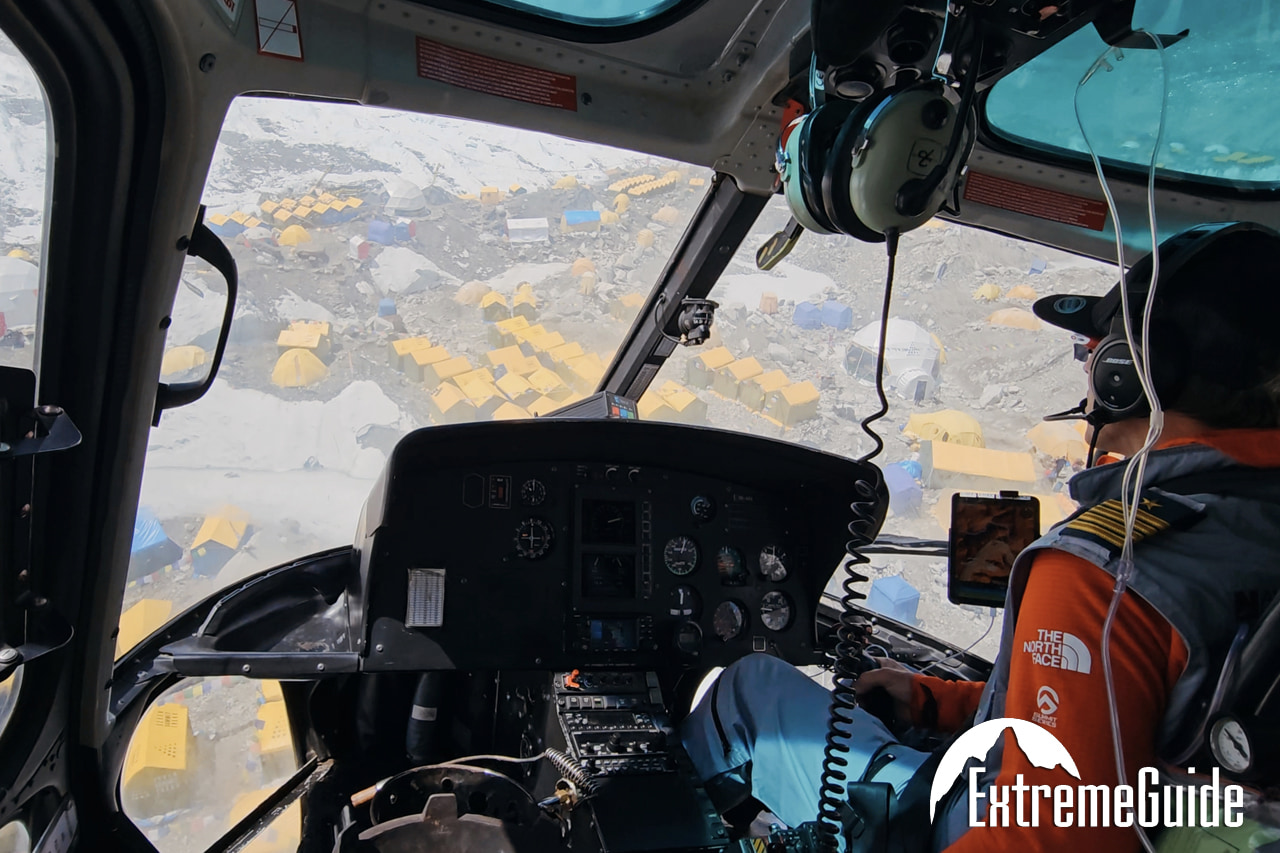
Our partners in Nepal, the host party, are one of the largest companies that has its own helicopter company, a comfortable base camp, and cozy high-altitude camps. And a large full-time team of Sherpas allows us to form a reserve of oxygen and Sherpas in case of unforeseen circumstances and quickly solve various tasks during the ascent, including rescue operations at altitudes above 8000+ m.
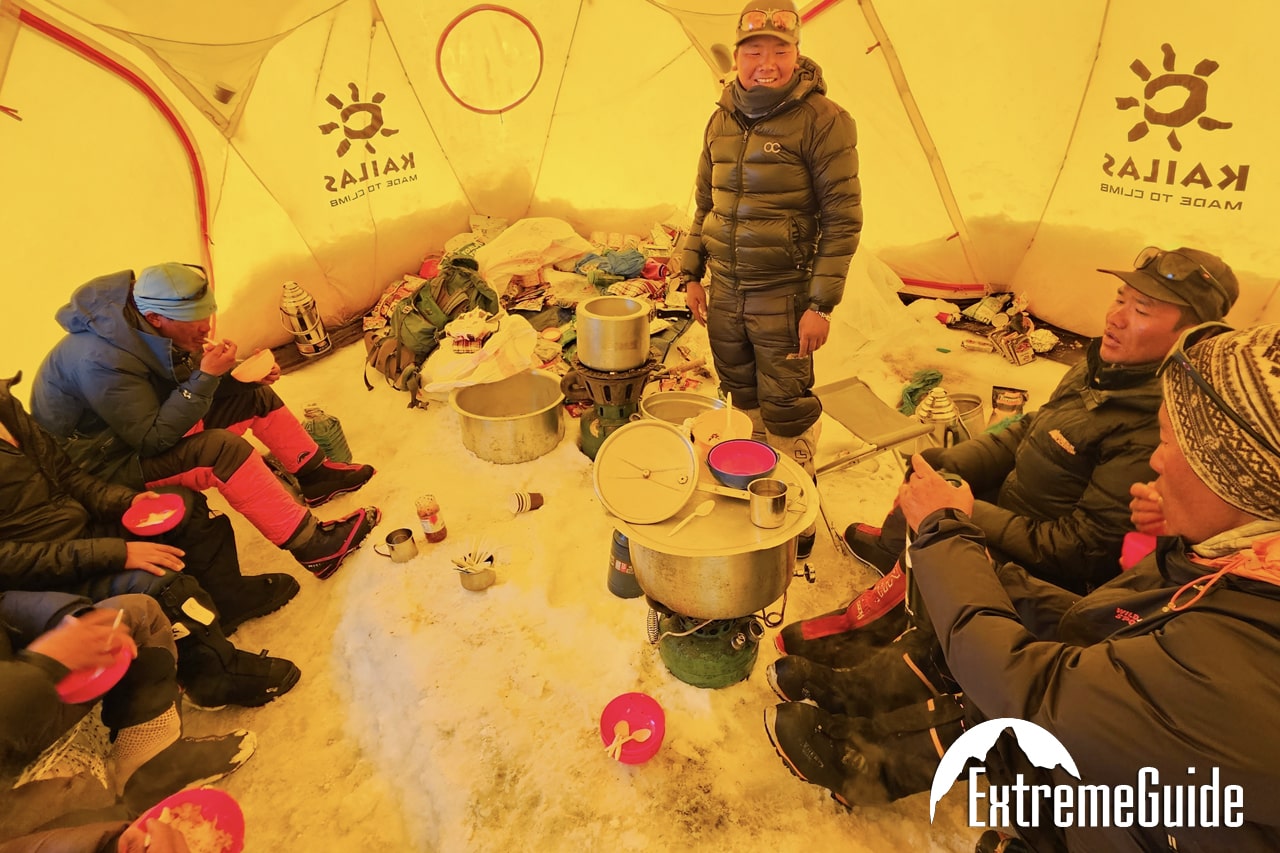
We will help you customise your climbing Everest and stay in the mountains with minimal disruption to the comforts of civilization and internet access. During the trek to the base camp and in the base camp itself, you will always have access to Wi-Fi and satellite communications. The chefs at the base are considered the best in their field, offering healthy and delicious dishes with a pleasant set of menus to satisfy all your nutritional needs. The meals you will be served in the mountains are also of the highest standard and are designed to support you in the harsh conditions of the climb. For those with special needs, we can accommodate special dietary requirements.
The base camp has showers, toilets, a coffee shop and a lounge area. There is also an experienced doctor at the base camp who monitors your health.
You can also upgrade your expedition by adding additional services: an additional Sherpa, oxygen, more comfortable accommodation at the base camp, a heated bed, additional helicopter flights from the upper camps, or simply order an individual tour.
If you are serious and want the result – a successful ascent of Everest, then in order to implement your plans you should seek help from ExtremeGuide.
Главные впечатления от похода по Фанским горам:
Main advantages of the program:








Climbing route to Everest:
Kathmandu – Lukla – Namche Bazaar – Dingboche – Lobuche – Everest Base Camp (5400 m) – Khumbu Glacier – Camp 1 (6100 m) – Camp 2 (6750 m) – Lhotse Slopes (7000 m) – Camp 2 (6750 m) or Kathmandu (5400 m) – Kathmandu or Base Camp (1350 m) – Everest Base Camp (5400 m) – Camp 2 (6750 m) – Camp 3 (7100 m) – Camp 4 (7900 m) – Mt. Everest (8848.86 m) – Camp 4 (7900 m) – Camp 2 (6750 m) – Kathmandu
Your Everest Climbing Guides
Everest Climbing Route by Days
day
Arrival in Kathmandu. Meeting at the airport by a company representative. Check-in at the hotel. General briefing, meeting the team. Welcome dinner.
day
Today we are buying the missing equipment, solving organizational issues. We are preparing part of the cargo for sending to the Everest base camp.
day
Morning flight to Lukla, 2800 m. Beginning of acclimatization trekking. Transfer to Phakding village, about 3 hours. Night in a comfortable mountain lodge.
day
We continue our hike along the picturesque canyon of the Khumuyu River. Crossing to the gates of the Sagarmathma National Park. Hilary Bridge. Arrival in the village of Namche Bazaar. In the afternoon, rest and walks around the village. Here is the last opportunity to buy missing things and equipment, if you suddenly forgot something. Night at the lodge.
day
A picturesque track away from the main crowds of tourists. Today we will finally see panoramas of the eight-thousanders Everest and Lhotse, Nuptse, as well as the 6000 m+ peaks Cholatse, Tabuche, Amadablam. Night in a mountain lodge in the middle of the forest.
day
Today before lunch we will go to one of the oldest villages in the Khubmu Valley – Pangboche village. In the evening we will visit an ancient Buddhist monastery where the Yeti rock and mandalas and frescoes that are more than 400 years old are kept. Night at the lodge.
day
Not difficult trekking to the village of Dingboche, 4350 m. The last village on our way, where people live all year round and grow even potatoes at this altitude. Signs of hypoxia can already be observed at this altitude. After rest, after lunch a short acclimatization walk around the village. Accommodation in a comfortable warm lodge with heating.
day
In the first half of the day, a leisurely walk to the View Point hill, depending on the condition, the climb to the mark of 4800-5000 m. From the top, beautiful panoramas of Lhotse, Amadablam, Thamserku, Tabuche and other peaks of the Himalayas.
day
Smooth climb to the village of Tukla, to the mark of 4600 m and then a steep climb to the pass to the mark of 4850 and then an exit to the lodges of the village of Lobuche. Accommodation in a comfortable, warm lodge with heating.
day
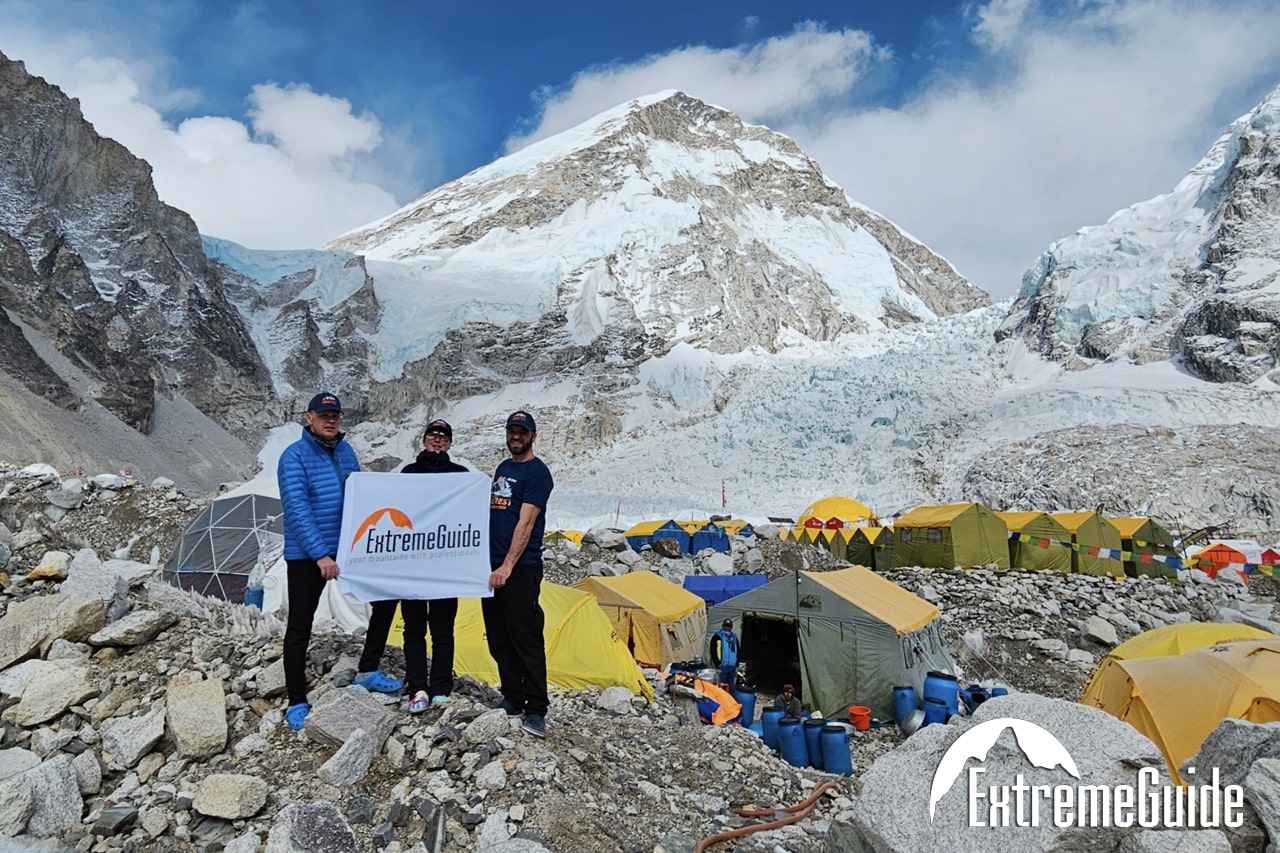
We will have an exhausting trek through the pass and further along the moraine to the Gorak Shep lodges, where we will have lunch and then along the side moraine we will go to the upper reaches of the Khubmu glacier and further to the base camp, which is located on the moraine and glacier. We will be accommodated in personal super tent-houses. In which we will spend quite a lot of time during acclimatization. Getting to know the life in the camp. Rest. The base camp is a whole tent city with its own life. Which has more than 10,000 personal tents, dining tents, kitchens, warehouses. Every spring, 500 tourists-climbers of Everest and Lhotse and another 1000 service personnel (camp workers and Sherpa guides, porters) can be here at the same time.
day
Today we are resting after a busy track, adapting to the altitude. Getting used to life in the camp, on the glacier. Preparing equipment for ice training.
day
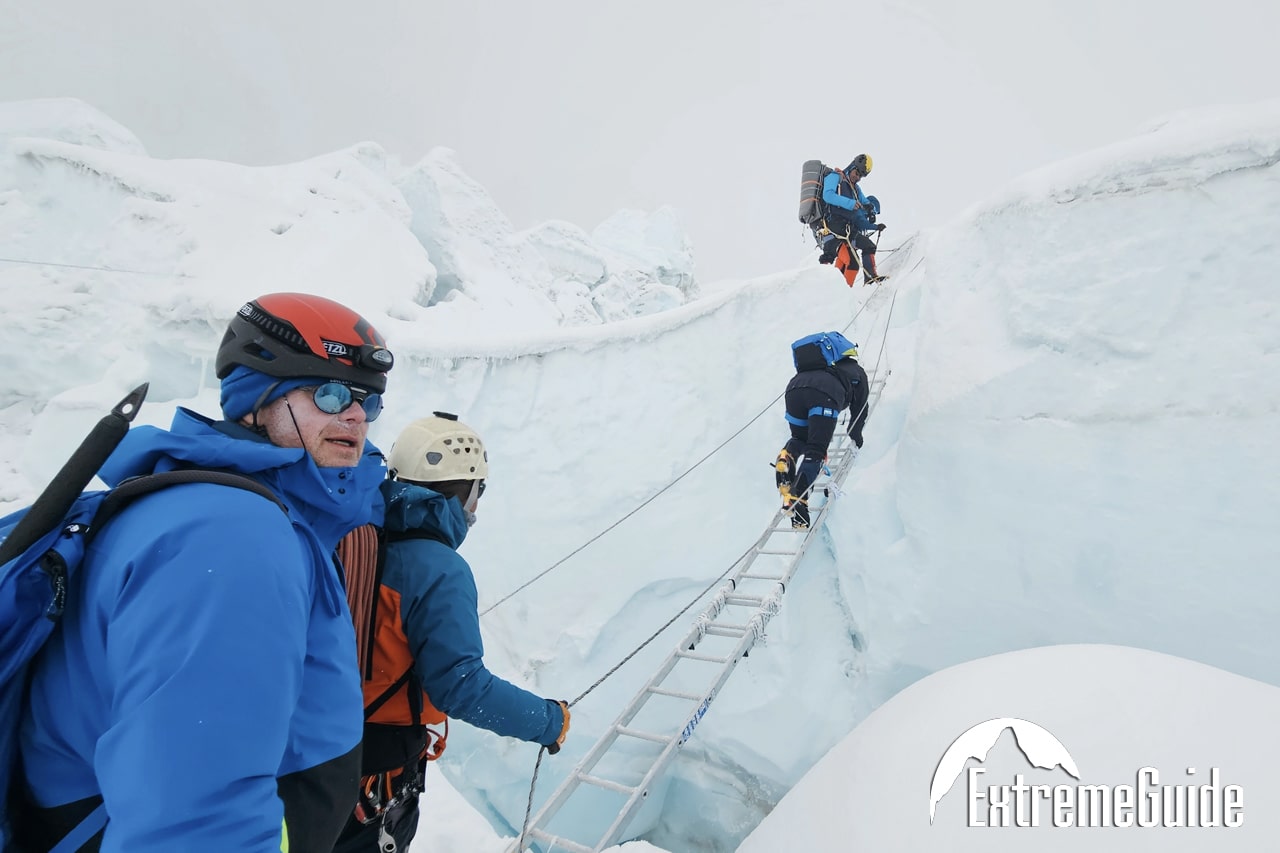
After breakfast, exit to the Khumubu glacier. In this part, which adjoins the BC, it is especially beautiful, the ice is of an unusual blue color. We will practice the elements we need: moving in crampons, climbing and descending on a fixed rope, passing ladders. Rest in the afternoon. Preparation for an acclimatization overnight stay in Pumori BC.
day
In the afternoon we move to the base camp of Pumori, altitude 5700 m. From here Everest, Lhotse and Nuptse are in full view. A very beautiful place from which we will observe columns of Sherpas and climbers moving out at night for acclimatization through the Khumbu icefall. Dinner from the camp kitchen, sublimates and tea. Night in expedition tents, accommodation for 2 people.
day
After breakfast we pack up the camp and make a short hike another 200 meters above the camp. Descent down to the Base. Rest.
day
Today is a day of rest and preparation for the exit to the upper camps. In the first half of the day, Puja – a Buddhist ceremony to appease the spirits of Everest and remove obstacles on the way to the summit. Gathering equipment. Early lights out.
day
Wake up no later than 2:00, leave at 3:00. We pass the Khumbu Icefall – the most dangerous and perhaps the most interesting, beautiful place on the route. The icefall is a heavily torn glacier with short ice steps. The path through the faults is laid along the most logical and safe trajectory. Every year the path changes, as the glacier moves at a speed of 200-300 m per year. Most of it is covered on foot with insurance on fixed ropes, but there are a couple of steep places from 2 to 10 m. Stairs of 2-6 m are laid through the characteristic wide stairs. In all difficult places, the safety of the passage is quite well organized. Nevertheless, there is a risk of falling ice, avalanches from the slopes of neighboring peaks, which over-prop up the glacier. On average, the track through the glacier faults, through numerous cracks, takes 7-9 hours. Exit to the upper plateaus to the camp 1 at an altitude of 6100 m. This is an intermediate camp, it is not large. Here we will spend only one night.
day
A relatively simple, monotonous transition to Camp C2, 6450 m. We try to cross the glacier in this part as early as possible, since there is practically no wind during the daytime and you can get heat stroke from the heat and sun, in addition, the altitude begins to overcome the body even more. Usually the transition from C1 to C2 takes 3-5 hours. Accommodation in Camp 2, 6450 m. Camp 2 is much larger than C1, it is located on a glacier and moraine formed by debris from the slopes of Everest. It is more comfortable, but during this period most of the camp is located on the snow, and snow often falls at this altitude. It is quite warm here during the day, up to +20 ° C, and at night up to – 10 ° .. – 15 ° C.
day
In the first half of the day we will make a training ascent, acclimatization at 7000 m. The ascent goes along the slopes of the Lhotse ice wall. The steepness of the slope in some places is 45°-50°. The ascent takes on average 3-5 hours, the descent down 2-2.5 hours. Return to the camp. Rest.
day
Going out onto the glacier with the first rays of the sun to have time to pass dangerous places before the sun turns to avalanche-prone slopes. On average, the way back from C2 to BC takes 5-7 hours. Returning to the base: a long-awaited shower, delicious food and rest in the warmth.
day
We recover at low altitude, wash our clothes, check all our gear. Enjoy unlimited oxygen, greenery and delicious food of Namche.
day
We recover at low altitude, wash our clothes, check all our gear. Enjoy unlimited oxygen, greenery and delicious food of Namche.
day
We recover at low altitude, wash our clothes, check all our gear. Enjoy unlimited oxygen, greenery and delicious food of Namche.
day
Rest and acclimatization at Everest Base Camp.
day
Getting ready for the climb, resting
day
We will successively ascend to Camp 1 (6100 m) and 2 (6500 m), where we have already been acclimatizing. Then we will move to Camp 3 and 4.
day
We will gradually ascend to Camp 2, where we have already been for acclimatization.
day
Possibility of leaving in the first half of the day to have a good rest and prepare for an early exit to Camp 4. The transition takes on average 6-7 hours. The third camp is more Spartan and is located on the slope of Mount Lhotse on a snow-ice slope. But fortunately we will spend here only one night.
day
Departure with the first rays of the sun to Camp 4, 7900. The exhausting transition takes 8-10 hours. The camp is located on the pass between Everest and Lhotse (South Col). The camp is large, on rocks, quite safe, but staying here for more than two nights is quite dangerous for our body. Our goal is to arrive as early as possible to our tents, so that there is time to properly rest.
day
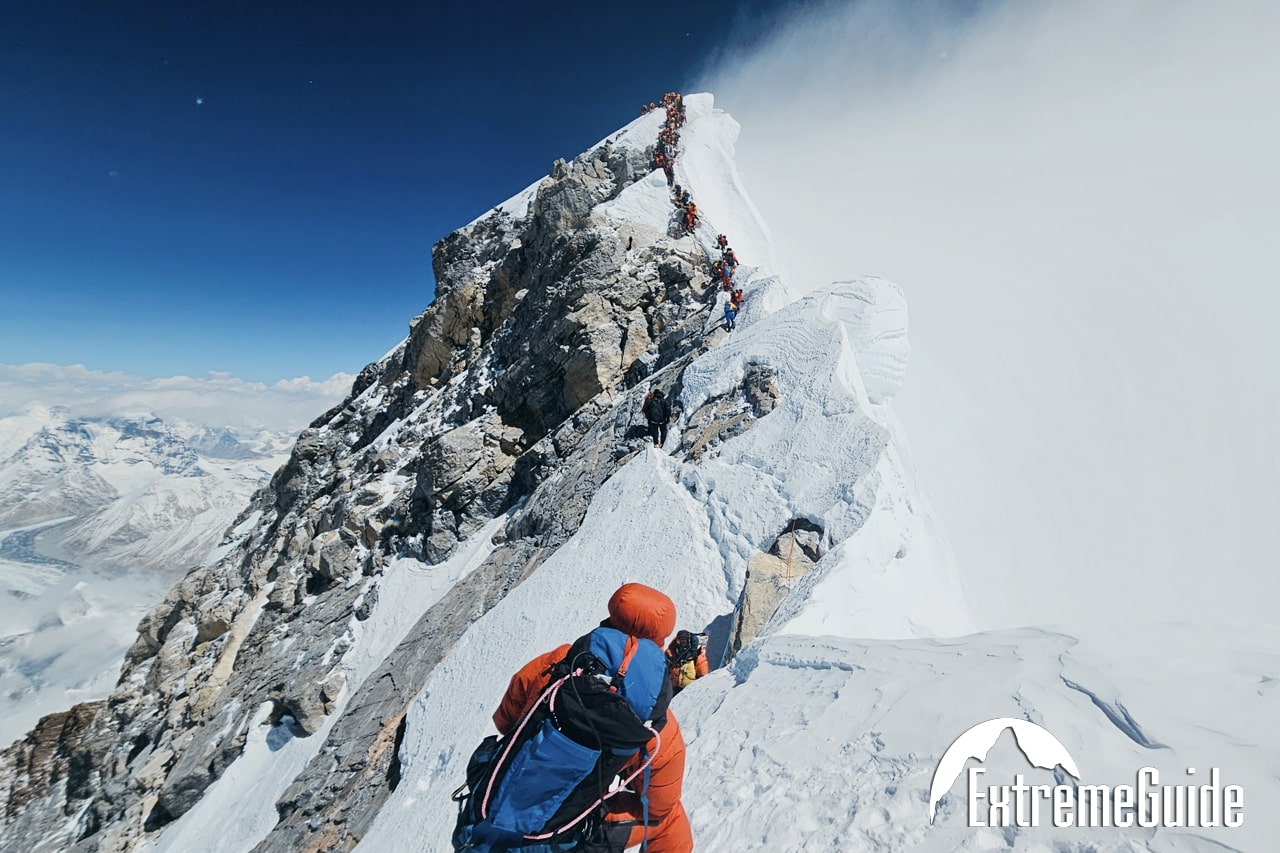
Start climbing no later than 21:00. The path to the summit takes on average 10-12 hours, the descent 5-6 hours. The route from Camp 4 goes along a snow-ice slope of 45° to the mark of ~8500 m (balcony). From here there is a long transition along the ridge directly to the summit. Often there is a strong wind blowing on the ridge and it becomes very difficult to breathe. The final and most difficult part of the ascent is the Hillary Step ~8800 m (a steep rocky part, where there are often traffic jams due to the oncoming flows of those who climb to the summit and those who descend). The long-awaited summit. You are happy and mute… Check time at the summit no later than 12:00. A long and grueling descent. It is optimal to descend to Camp 7100 m on the same day (4-5 hours).
day
Today we are descending to Camp 2 all day, 8-10 hours. Coca-Cola after climbing Everest is unusually tasty and nutritious. A long-awaited rest at low altitude.
day
Departure no later than 8:00 from the camp. In 2-3 hours we cover the distance from C2 to C1 and then another 3-4 hours to the base camp. Now we can really relax, order delicious food in the canteen and celebrate the ascent.
day
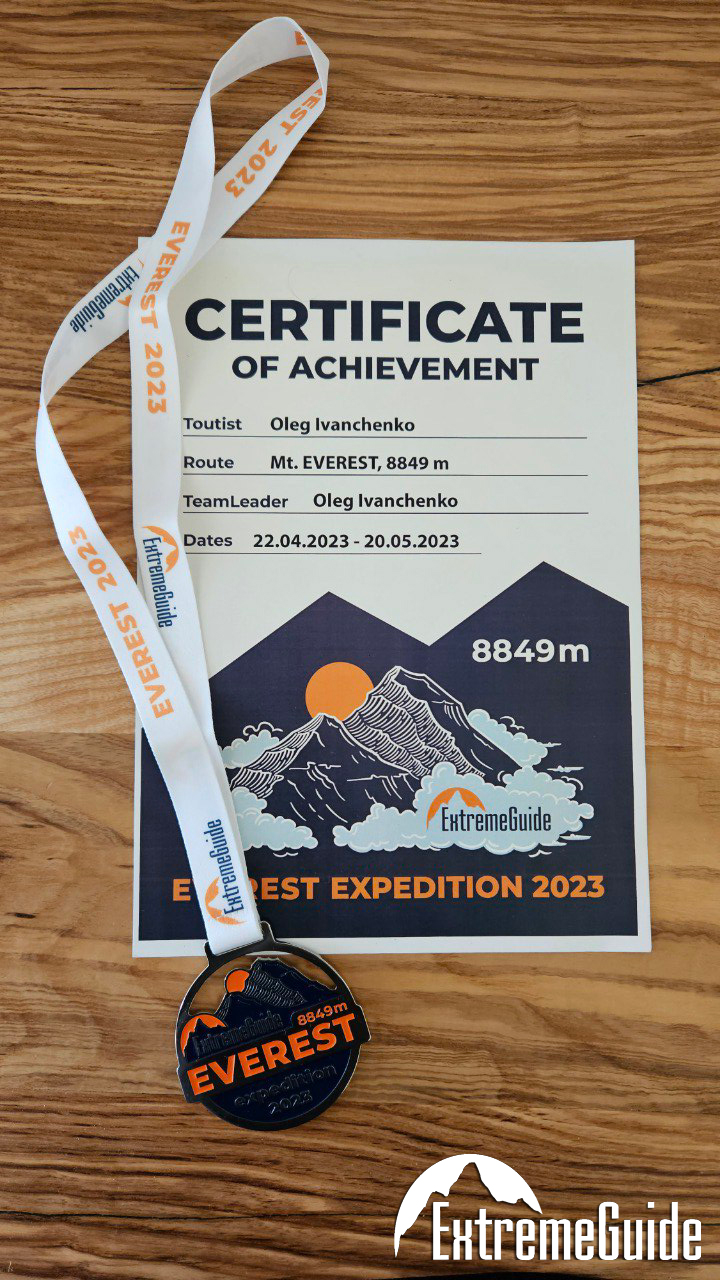
Flight to Kathmandu by helicopter from Everest Base Camp. In the afternoon check-in at the hotel. Accommodation. Festive party, presentation of certificates and medals to climbers.
day
day
day
day
day
In the morning, buying more souvenirs. Farewell to Nepal. Evening flight home.
Map of the route to climb Mount Everest:

Why is it profitable to go hiking with Extremeguide?


Cost and conditions of climbing Mount Everest
Is this trip right for you?
To participate in the program, you need experience in climbing peaks of 6000-7000 m. For a successful ascent, we recommend the following climbing programs: Kazbek, Mont Blanc, Mera Peak, Aconcagua, Ojos Del Salado, Manaslu.
Before climbing Everest, you should have a minimum ascents to peaks, for example: Kazbek and Aconcagua.
Included in the price:
- Accompaniment of a Ukrainian guide (ru/eng) of the group leader.
- One licensed high-altitude Sherpa with experience of climbing Everest per participant + an additional high-altitude Sherpa for every two participants during the ascent (1.5 Sherpas per participant).
- All transfers according to the program.
- Accommodation in Kathmandu 5* – up to 4 nights, single occupancy.
- Accommodation in Namche Bazaar up to 3 nights during rest after acclimatization.
- Welcome dinner.
- Insurance with accident and medical expenses coverage: $50,000 with helicopter evacuation coverage
- Permits and all necessary documents for the ascent: government fee and permit for climbing Everest, permit for entry to Sagarmatha National Park and TIMS.
- Fee for crossing the Khumbu Icefall to the Sagarmatha Pollution Control Committee.
- Liaison officer: a responsible person who monitors the safety of the expedition and compliance with Nepalese mountain climbing rules.
- Garbage deposit: collection and removal from camps.
- Insurance for all Nepalese expedition staff – medical and accident insurance.
- Internal flight Kathmandu – Lukla, Base Camp – Kathmandu by helicopter (one-time).
- Transportation of expedition cargo and personnel to Lukla by air and to the base camp by porters and yaks.
- Porters or for carrying 70 kg of personal luggage of the participant on the trekking part of the program.
- Comfortable lodges and three meals a day on the trekking part of the program.
- Shower and charger during trekking.
- Personal porter on the way from Lukla to the base camp and back.
- Base camp staff – experienced and skilled cook with assistants.
- All equipment, salaries, taxes for all Nepalese staff (including high-altitude Sherpas).
- Personal tent with mattress and pillow for sleeping in the base camp.
- Base camp facilities – large dining tent, toilet, shower, kitchen equipment, gas, tents for staff.
- Full three meals a day at base camp.
- Heaters in each dining tent.
- Solar panels, generator for lighting and charging mobile devices, laptops, etc.
- Fees for using the railings.
- Oxygen, 4L – 7 cylinders per participant and 3 cylinders per Sherpa.
- Summit Oxygen mask and regulator – one per participant and Sherpa.
- Reserve oxygen regulators and masks for the group.
- Base camp service.
- High-altitude service during the ascent: high-altitude tents, cooking gas, high-altitude food, dishes, in C1, C2, C3, C4.
- Internet up to 20 GB in the Base Camp (5300 m).
- Satellite Internet in C1 (6100 m) and in C2 (6450 m).
- Satellite phone for emergency calls (up to 10 minutes per participant).
- Walkie-talkies for communicating with the base camp during the period of acclimatization and assault
- Paid weather forecast for the entire expedition from Meteotest, Bern (Switzerland) and Meteoblue.
- Consultations from the guide on preparation and selection of equipment.
- Group first aid kit for emergency medical care.
- Expedition team uniform: jacket, fleece sweater and T-shirt.
- Certificate of ascent to Everest (after a successful ascent).
- Memorable souvenirs and a medal for ascent to Everest.
The price does not include:
- International flight to Kathmandu (from $1000).
- Visa to Nepal (100$).
- Lunches and dinners in Kathmandu ($50 per day).
- Additional nights in Kathmandu and Namche Bazaar.
- NZ for emergency evacuation and medical expenses.
- Personal equipment
- Water and drinks on the trek.
- Permit for filming – camera, drone.
- Additional oxygen
- Work of additional Sherpas/porters
- Summit bonus – $2000 bonus to Sherpa for reaching the top (minimum amount is paid even if you do not reach the top)
- Tips for base camp staff, porters, etc. – up to $600.
- Personal first aid kit, vitamins, dietary supplements and energy gels/guarana/bars – we will help you assemble the necessary kit.
- Any additional expenses related to early termination of the program or independent movement of group members outside the program stated in the ascent schedule
- Additional expenses not specified in the “Included” list.
Cost depending on the number of participants
| Number of participants | Cost per 1 participant |
|---|---|
| 4 | 64000 USD |
| 3 | 70000 USD |
| 2 | 80000 USD |
| 1 | 110000 USD |

Best price guarantee!
- We have included in the price all possible basic expenses for the program and guarantee that there are no hidden additional costs, while we have retained the best service at a low price: transfers, hotel accommodation, guides and staff!
We have a flexible discount system
Find out the details right now:
Necessary equipment
Documents:
- Valid passport;
- Credit/currency card;
- Insurance and contact address (family/company address).
Backpack and sleeping bag:
- Duffel Bag 120-150 l – 2 pcs;
- Assault Backpack Main 40-50 l (More about choosing a backpack);
- *Small backpack for trekking – 20l;
- Bag of things/mesh – 2 pcs;
- Waterproof bags -10-30l (different sizes) – 2-3 pcs;
- Sleeping bag comfort -5°С…-10°С (foor Base Camp) (More about choosing a sleeping bag);
- Down sleeping bag -20°С…-30°С;
- Regular pad Thermarest (Cell Foam) (More about choosing a pad);
- *Inflatable pad for upper camps;
- *Sleeping bag liner.
Shoes:
- High Altitude Climbing Boots 8000m+ (More about choosing clothes and boots);
- *High mountaineering boots 6000m+ for acclimation;
- Trekking shoes (boots) to Everest BC;
- Crocs for lodges and BC.
Clothes:
- High-altitude overalls (down) or a set of pants and a jacket for 8000m;
- Fleece jacket – 2 pcs;
- Assault jacket with ventilation (gore-tex);
- Light windproof jacket – 1 pc;
- Down sweater/light down jacket for trekking and BC;
- Down/Primaloft jacket for altitudes of 6000-7000 m;
- Cotton T-shirt – 2-3 pcs;
- Thermal underwear (base layer) – 2-3 sets;
- Thermal underwear – 1 set;
- Fleece pants – 1 pc;
- Gore-tex self-dumping pants – 1 pc;
- Softshell pants – 1 pc;
- Lightweight trekking pants, quick-drying – 2 pcs;
- Down pants, self-dumping – 1 pc;
- Underwear – 4-6 sets;
- Thin trekking gloves – 1 pc;
- Thin fleece gloves – 2 pairs;
- Thick gloves (GuideGloves);
- Mittens 8000 m+ (tops);
- Cap/Panama from the sun;
- Balaclava;
- Fleece, warm hat;
- *Light hat for trekking and BC;
- Light trekking socks – 3 pairs;
- Thick trekking socks – 3-5 pairs;
- Socks for climbing 6000m+ – 2 pairs;
- Down socks for bivouac and sleeping in upper camps;
- Fleece socks for sleeping.
Hygiene and sun care items:
- Toilet paper/wet paper;
- Wet wipes;
- Toothbrush and toothpaste;
- Soap and shampoo (do not take large volumes, ml);
- Towel;
- Garbage bags;
- Sunscreen (SPF 50+);
- Lip protection (-30…-50 with SPF);
- Sunglasses (UV Protection);
- Ski mask (UV Protection);
- Moisturizing cream / lotion.
First aid kit:
- Ibuprofen;
- Paracetamol;
- Spazmalgon;
- General antibiotic;
- Immodium;
- Diamox/Diacarb;
- Patch;
- Electrolytes/isotonic;
- Cough syrup/expectorants;
- Cough drops;
- Euphyllin;
- Azithromycin (for tonsillitis, fever, infection of the nose, throat – for 5 days);
- Vitamins and minerals – complex.
Equipment marked with “*” is not required, but we recommend taking it.
- Mountaineering helmet;
- Crampons, semi-automatic, 10-12 teeth steel (packed, to fit your boots);
- Ice axe for classic mountaineering;
- Descender (Figure of 8/ ATC Guide);
- Mountaineering system, high-altitude lightweight;
- Jumar;
- Large carabiner with a clutch – 3 pcs;
- Carabiner without a clutch – 2 pcs;
- anchoring belay – 2 pcs;
- Headlamp (300-500 lumens);
- Spare batteries for the torch;
- Trekking poles;
- *Pocket knife/multi-tool;
- Thermos 1 l;
- Flask in a protective case (cover) – 1 l;
- Altimeter watch;
- *Pee bottle;
- Power Bank – 2 pcs.
Equipment marked with “*” is not required, but we recommend taking it.
Additionally, you can take dried fruits, sports nutrition, supplements to the high-altitude diet (canned goods, meat, sausage, etc.), chocolate, etc.
Additional information
Additional options:
— Additional Sherpa
— Oxygen
— More comfortable accommodation at BC
— Heated bed
— Additional helicopter flights from upper camps
— Book a private expedition.
- visa is issued at the airport upon arrival and does not require additional documents;
- international passport;
- accident and medical insurance (insurance with coverage of at least 30,000 USD and insure
risks associated with active stay in the mountains, above 5000 m, helicopter evacuation). We will advise you on obtaining insurance.
Be sure to check out more details here!
The price of climbing Everest varies depending on the chosen service package. One of the most affordable options is the Basic Support Package, which only provides assistance up to Base Camp. The climber carries out the further ascent independently, without additional support. The cost of this option from different companies starts from $ 30,000.
An alternative option is a fully supported package, where you are accompanied all the way to the summit. This includes access to high altitude camps, use of oxygen, a personal Sherpa, accurate weather forecasts and other benefits. The cost of such an ascent for different companies starts from 50,000 and can exceed $200,000. Our tourists go to conquer Everest with this option. Current prices you can find on the tour page .
An advance payment of $10,000 must be made to the company’s bank account no later than January 1. The remaining $50,000 can be paid in installments no later than March 10.
Payment to a bank account, in cash, and by international transfer are possible.
Important! In case of cancellation of the program before March 1, the advance payment is returned in the amount of 50%
In case of cancellation after March 1, the deposit of $10,000 is retained by the company
In case of cancellation of the program less than a month before the start, the company retains the full cost of the program.
— Meeting the group at Kathmandu airport – the time will be specified once we know your exact arrival time.
Participants with experience of climbing above 6500 m (with a gap of no more than a year between ascents) are allowed to participate in this program. Experience in technical ascents is welcome.
To participate in the program, you need experience in climbing peaks of 6000-7000 m. For a successful ascent, we recommend the following climbing programs: Kazbek, Mont Blanc, Mera Peak, Aconcagua, Ojos Del Salado, Manaslu.
Before climbing Everest you should have a minimum set of summits, for example: Kazbek and Aconcagua.
We will send you the training program as separate recommendations by email. We recommend starting the preparation no later than 6 months before the start of the expedition, optimally increasing the number of various functional trainings to 5-6 per week (duration of training at least 1.5-2 hours), participation in long mountain runs, running, swimming. A month before the start, we recommend reducing the load and completely stopping it two weeks before. Optimally, as part of the preparation, plan training ascents of 5500 m -6000 m with overnight stays at 5000+ m.
For more information about training, see our Youtube video channel. In case of chronic diseases, it is necessary to consult a doctor and get permission.
In Kathmandu we live in a comfortable 5* hotel, where we can leave city and unnecessary things for storage. Therefore, for the trek/climb we take all the most necessary things: walking clothes. It is necessary to take into account that at the bottom the first 2-3 days will be very warm and the usual outfit – shorts, a T-shirt and a Panama hat, a scarf on the neck. It is cooler higher up, so you need trekking pants, a windbreaker jacket. It is better to leave the hair dryer, hair curler and portable toaster at home.
On the track we live in lodges. A lodge is a guest house where there is accommodation for 2 people in a room, and on the floor there is a shower and toilet, and a dining room downstairs. The conditions are an order of magnitude worse than in a regular hotel, but still better than in a tent. For a comfortable overnight stay, we recommend taking a sleeping bag (since it can be quite cool at night and the blanket in the room does not warm you much). In the upper villages there may also be no light or a stationary shower (you can only wash yourself from a bucket of hot water). The rooms in the huts are the simplest with two or three beds.
In the Base Camp we live in full-length personal tents. In Camps 1,2,3 we live in tents. Accommodation for 1 person.
Camp 4 (Assault) – we cannot guarantee 2-person accommodation, because sometimes due to the wind it is almost impossible to put up a large number of tents at an altitude of almost 8000m. Therefore, in some cases there may be 3 people in a tent. We ask you to treat this with understanding. The guides and the Sherpa company will in any case try to make the best conditions for you.
For high-altitude overnight stays, you need a set of high-altitude clothing and a warm sleeping bag (for more details, see the equipment list).
We will eat in the lodges, where you can order food from the menu. Meals are included in the cost of the program – breakfast, lunch and dinner. Be prepared for the fact that the cuisine is based on rice, noodles, potatoes and for breakfast – oatmeal and omelet. Bread only toast. In addition, it is better to forget about meat dishes in the upper lodges for a while. You can take with you some products that will not be on the trek: sausage, lard, canned goods, chocolate, dried fruits.
During the ascent: you can additionally take dried fruits, sports nutrition (gels and energy drinks), supplements to the high-altitude diet (canned goods, meat, sausage, etc.), chocolate, etc. We provide sublimates during the ascent.
Meals at Base Camp and C1, C2
In the Base Camp, there are full meals 3 times a day. Some dishes, such as pizza, borsch, fried potatoes can be ordered from the chef of the canteen. Also, in the BC, fresh vegetable salads and fruits are regularly served. On the territory of the base, there is a cafe with pastries, free coffee drinks from a coffee machine. In C1 and C2, the food is simpler: rice, traditional dal baht, pasta, potatoes, eggs.
On the ascent, we will eat freeze-dried food: hot breakfast and dinner (you can order a choice).
When trekking, you carry only what you need for the day. You can send up to 60 kg of personal belongings directly from Kathmandu to the BC (carried by porters or by helicopter). It is optimal to have a 35-40 l backpack for organizing drops and radial exits during acclimatization and during the ascent. On the days of ascent and acclimatization on Everest, the backpack weight will reach up to 10-15 kg, depending on whether you will resort to the help of high-altitude porters.
You can give your Sherpa up to 5 kg of personal belongings.
After BC, one high-altitude guide-Sherpa works with you. He carries some of your things (up to 5 kg), and he also carries your personal things and equipment. During the acclimatization period, he throws your personal and his oxygen into C4 for the ascent. On the day of the assault, he carries your oxygen. In addition, during the assault on the summit, for every 2 people there will be an additional Sherpa to back up the main Sherpa and in case of an emergency.
If you need a porter for things above BC, please let us know in advance
The guides will have a first aid kit for emergency medicine, but they must have personal medications for chronic and individual illnesses, adhesive plasters, headache tablets, anti-cold and painkillers are a must + vitamin C and group B for better adaptation in the mountains, dexamethasone in tablets and ampoules, euphyllin, diacarb, trental.
During the first days of the trek, mobile communications and the Internet will be available. Above 3500 m – only satellite Internet (additional payment separately). Satellite Internet is available in the base camp, the minimum traffic is included in the cost of the program, and in the upper camps there will be satellite Internet Thuraya and calls (up to 10 minutes).
The weather in Kathmandu is hot, the usual temperature is +25… +30°C. On the mountain trek the first couple of days are +20… +15°C, but then it will get colder. During the day -5°C, at night – up to -10… -15 °C. At the summit the temperature can drop to -50 °C. The average temperature above 7000 m is -25 …-30 °C.
This route passes at altitudes above 8000 m, where solar radiation is several times stronger than on the plain, the mountain climate and thin air affect the body’s condition. In the upper camps, manifestations of acute mountain sickness are possible.
Therefore, we have developed a special program for acclimatization and monitoring of the condition of each participant on the route. The ascent is not technically difficult and takes place along the classic route, on fixed ropes. All instructions of the guide on the route are mandatory! Extreme Guide is not responsible for participants who intentionally conceal chronic diseases, deviations and health problems!
The country’s currency is Nepalese rupees. The rate is about 130 rupees to $1. You can almost always pay in dollars, but the rate is not always favorable. The guide will tell you how much money is best to exchange before the trek. It is better to take cash with you, preferably $. You cannot exchange hryvnia anywhere in Nepal. Withdrawals from plastic cards start at 5%. Always bargain with the Nepalese, sometimes the price can be reduced several times.
Oxygen is available during the ascent (7 cylinders). Also, in Base Camp and Camp 2 there will be reserve oxygen in case of illness and other circumstances.
Absence of diseases incompatible with active tourism: List of diseases
Before climbing, you must undergo a full medical examination; you need a certificate from a doctor about your permission to engage in mountaineering above 7000 m.
Features of acclimatization in high mountains
Physical and mental preparation before climbing and hiking in the mountains
The table shows the basic cost for a group and may change depending on the number of people in the group. For the calculation of the cost of the tour for a smaller number of people and individual groups, see the «Price» block for more details.
We guarantee that on the dates indicated in the table, even if there is a minimum number of people allowed in the group, the tour will take place 100% with a minimum change in cost.
Pleasant bonuses, which everyone receives when ordering a tour with us


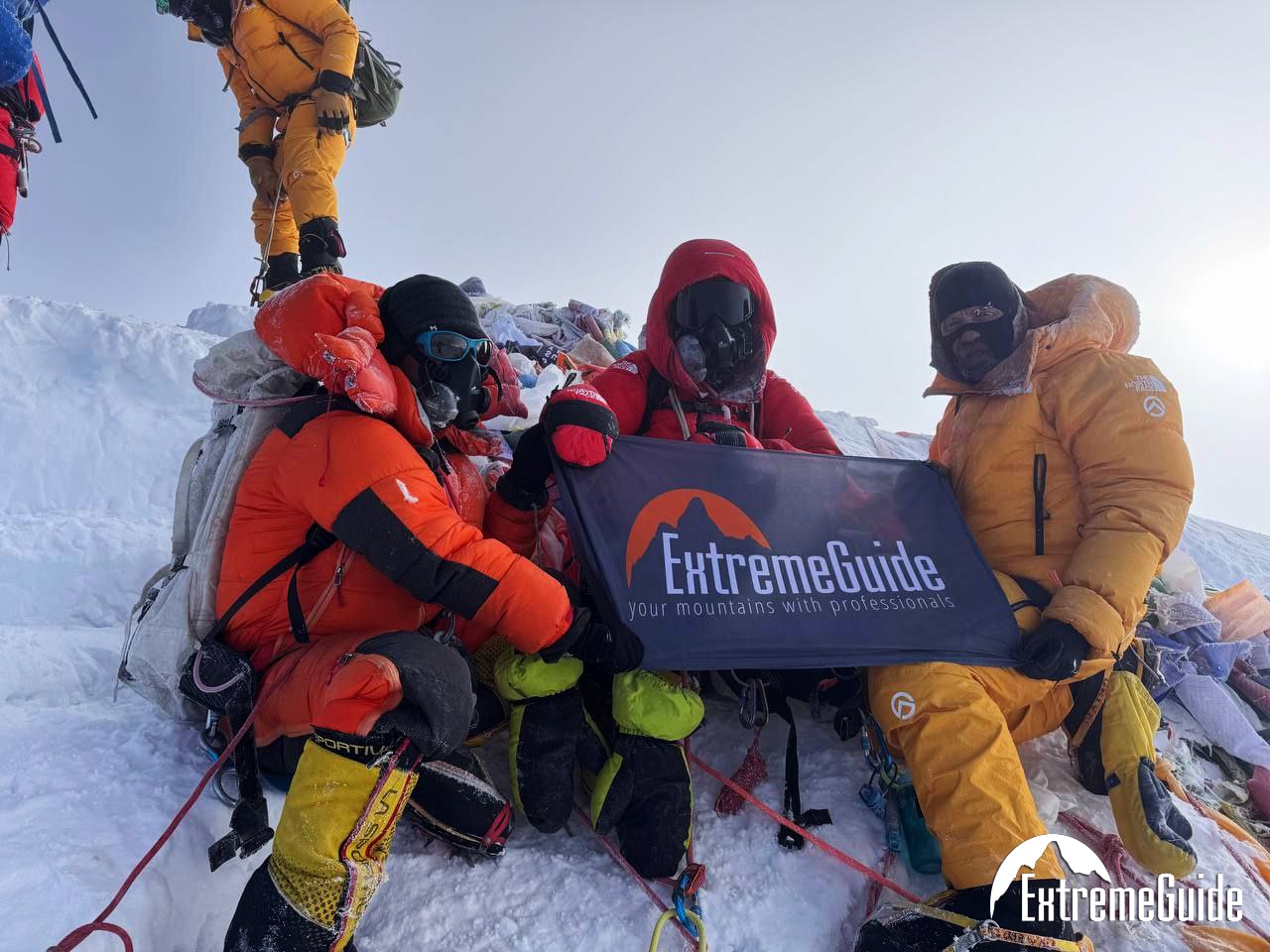
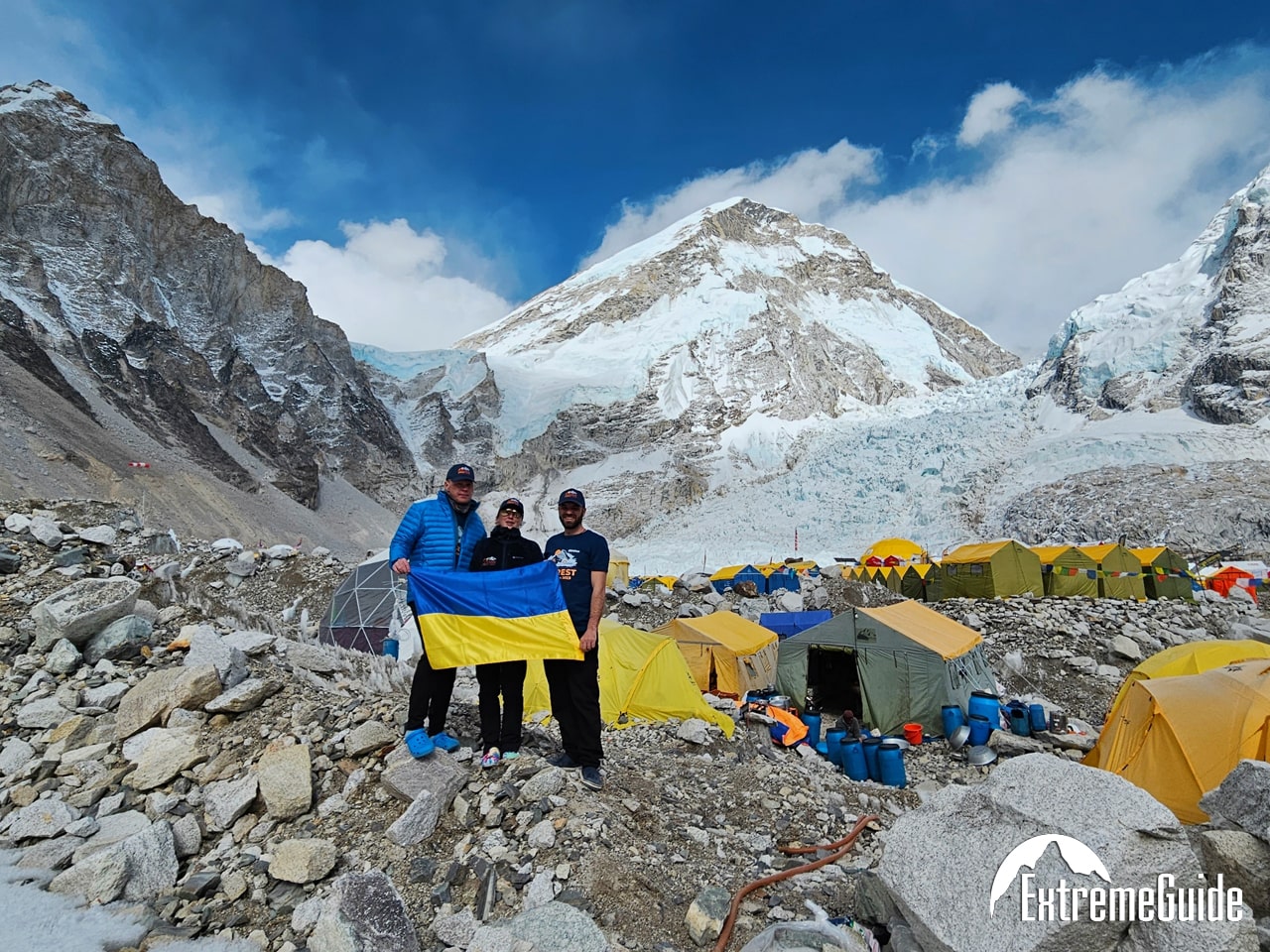
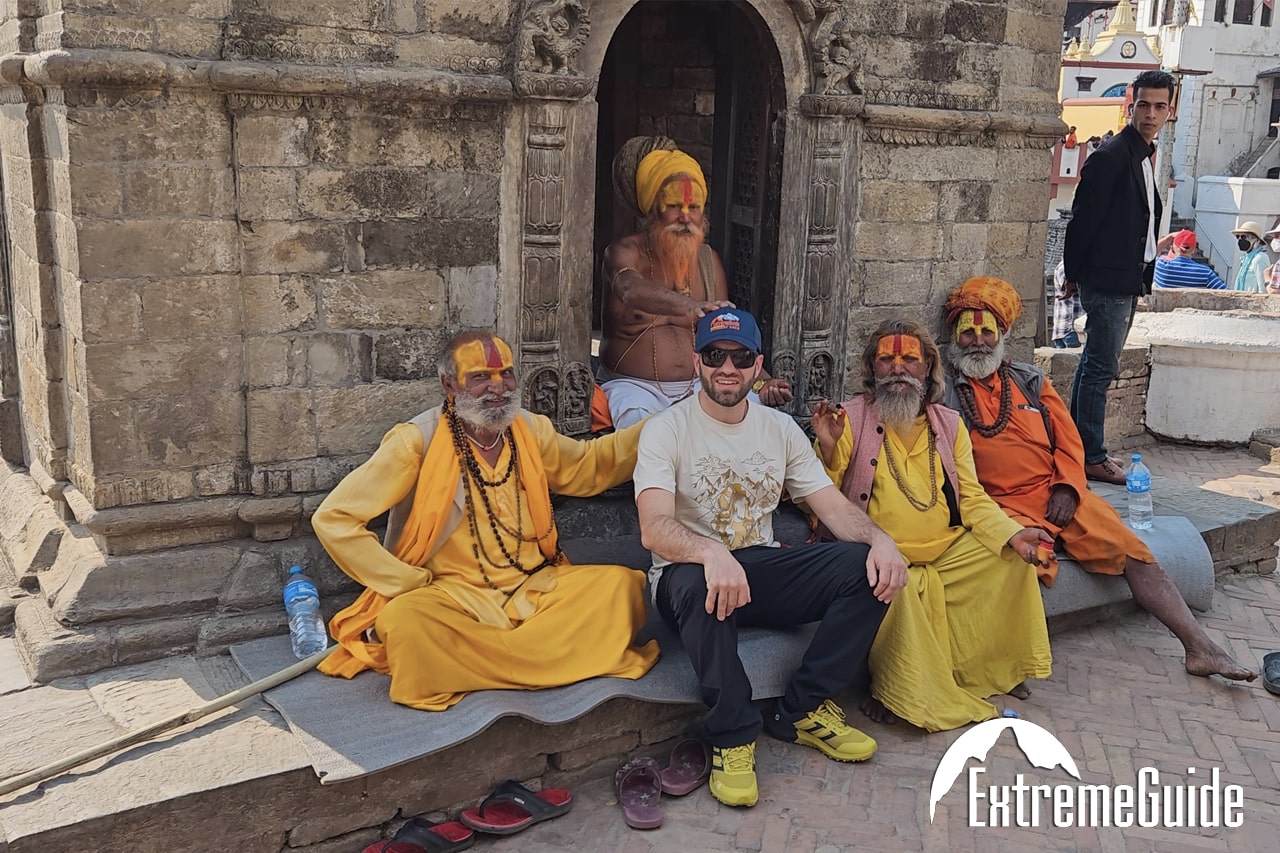
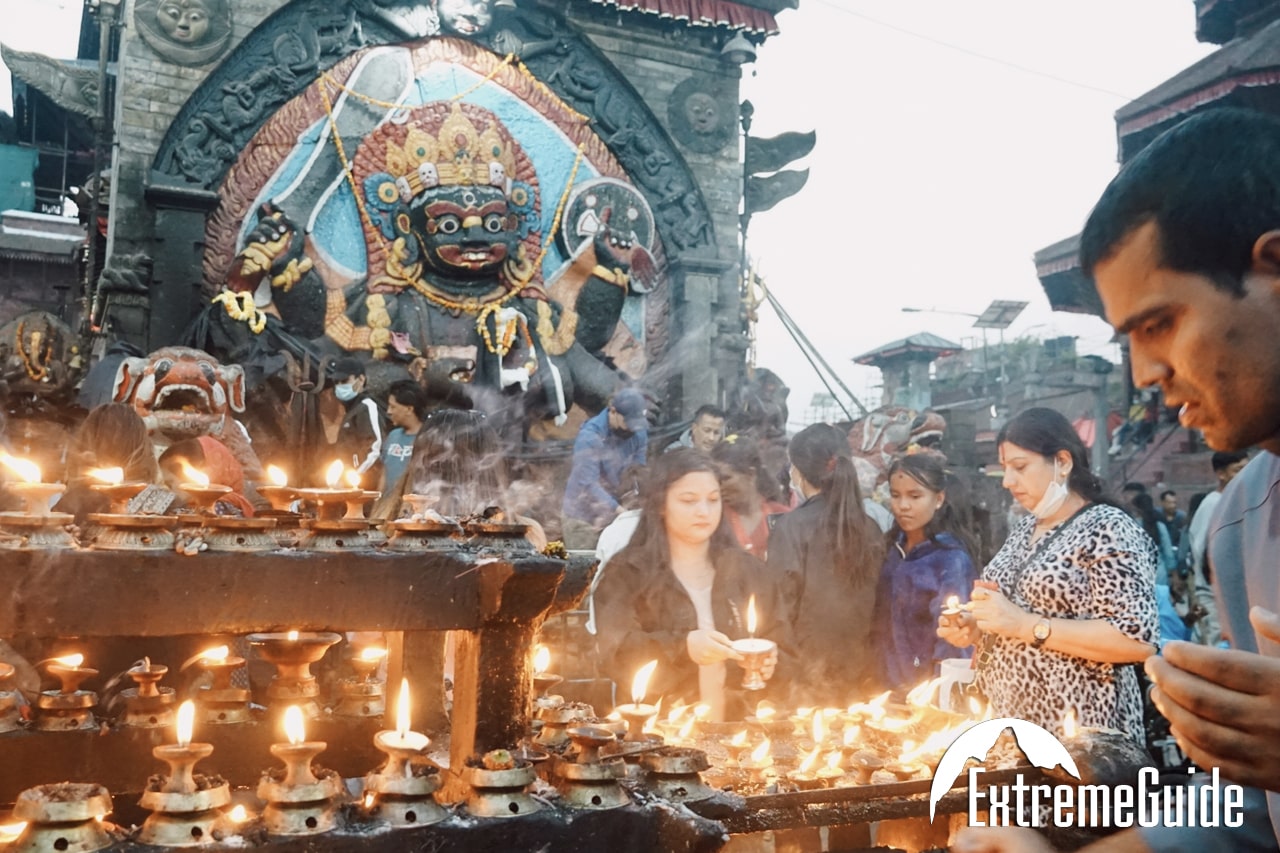
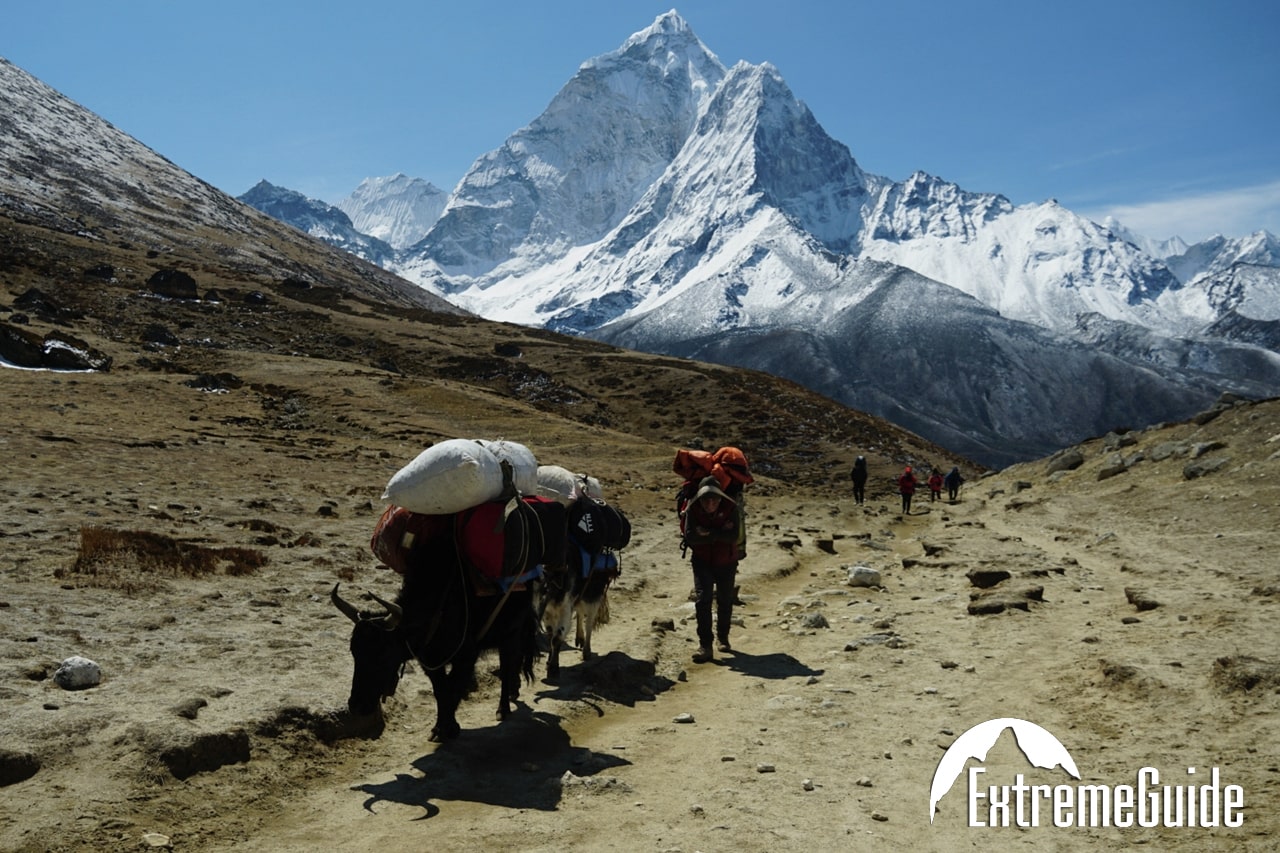
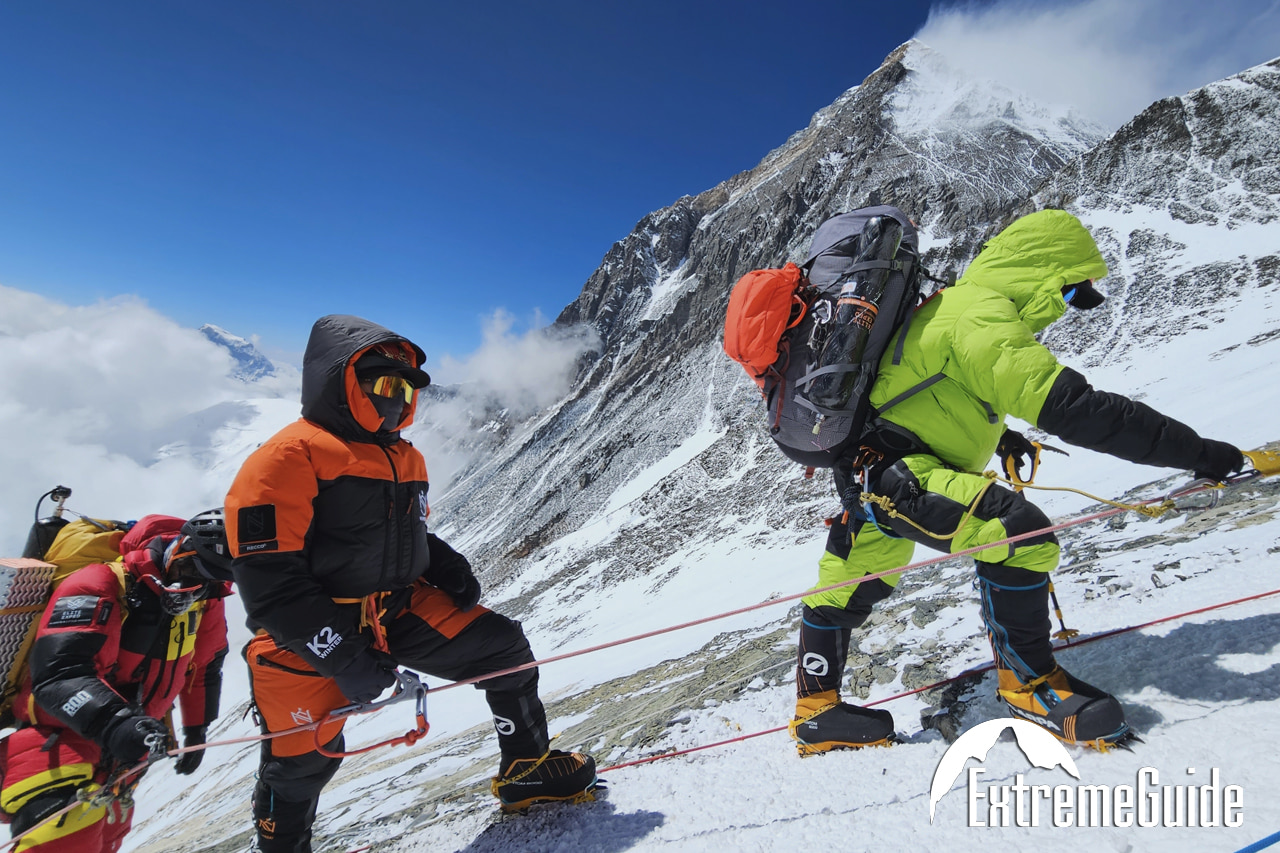
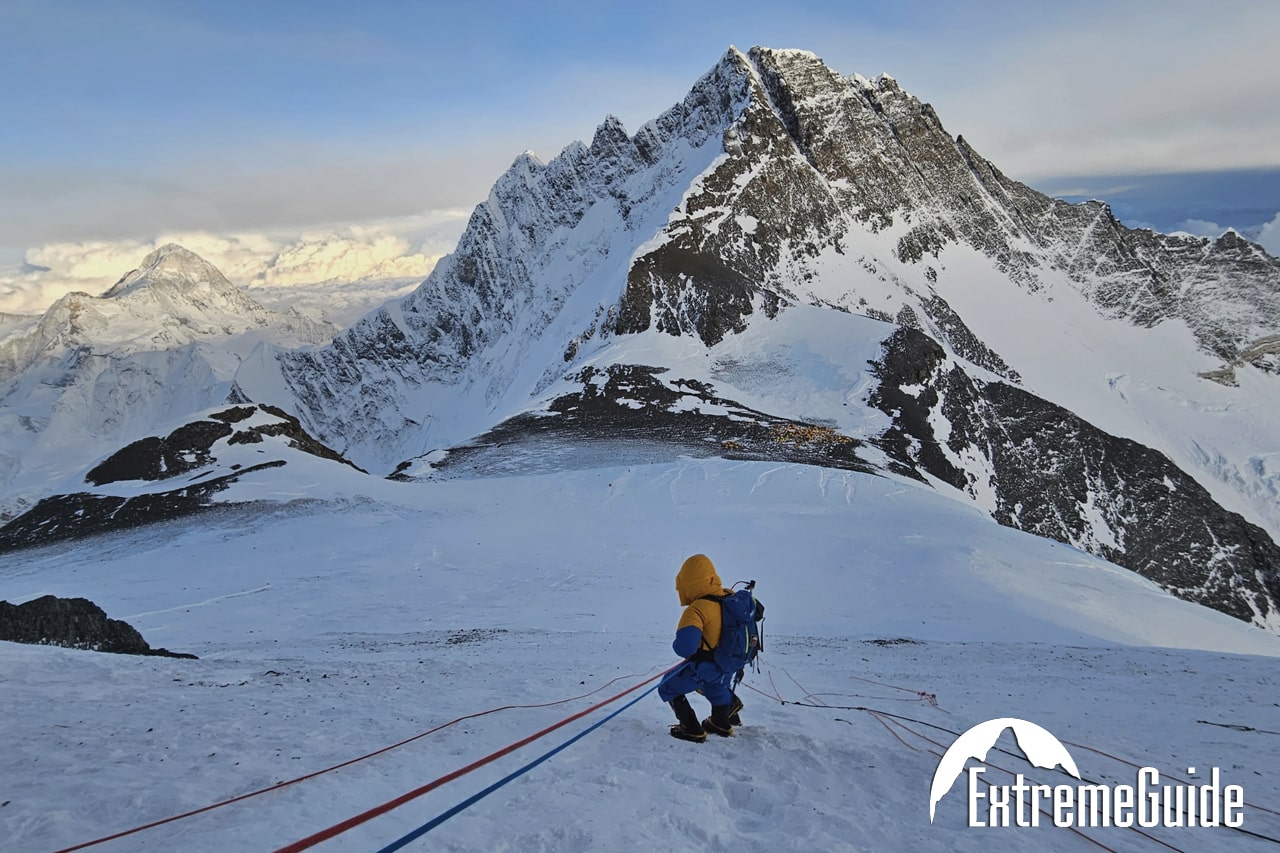
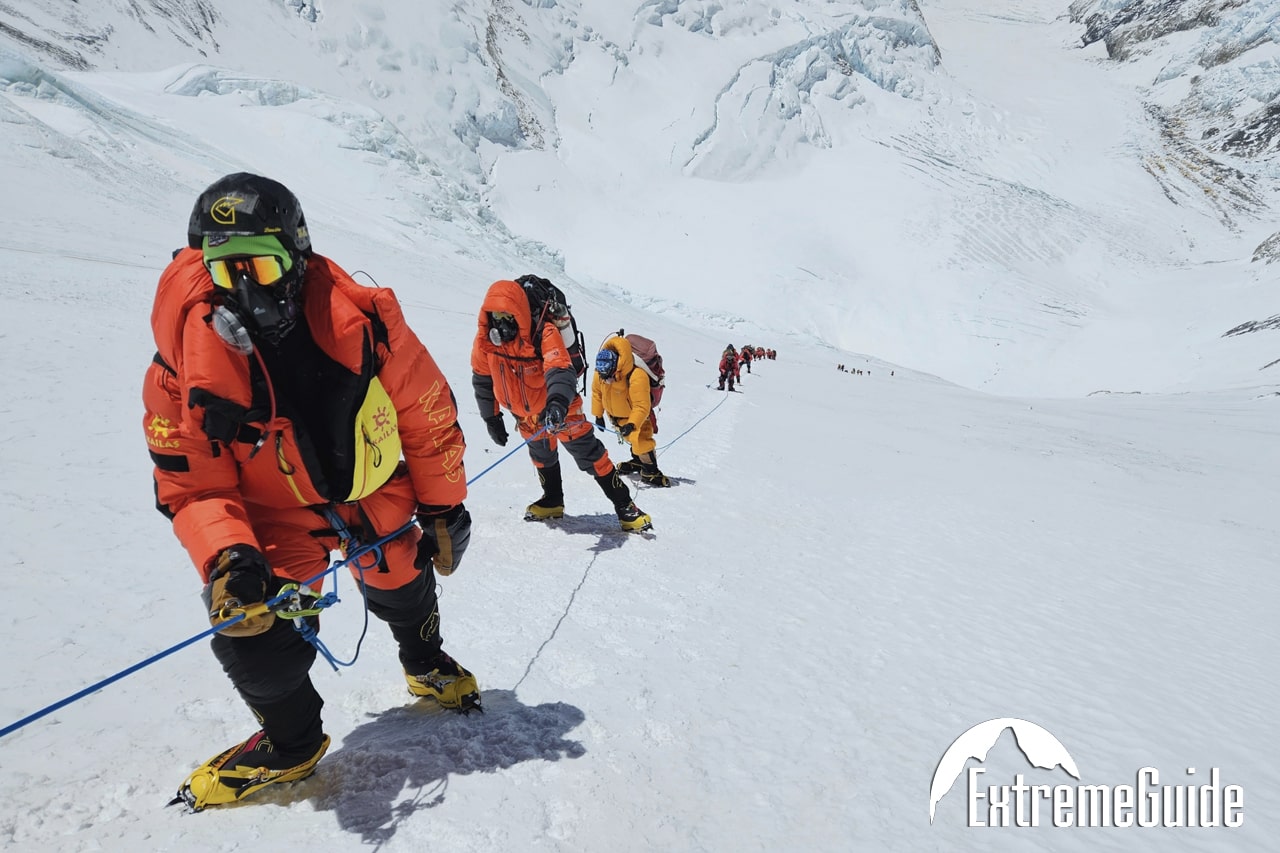
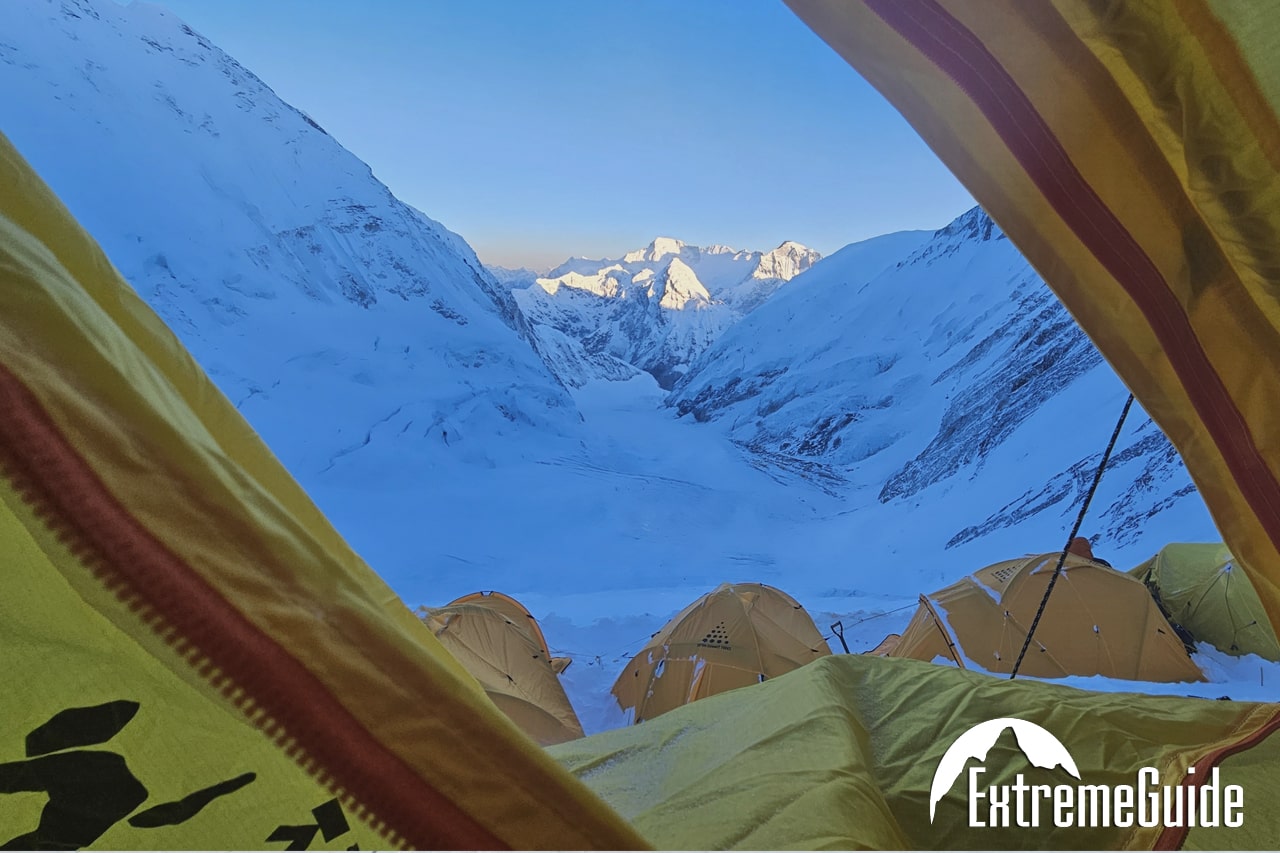
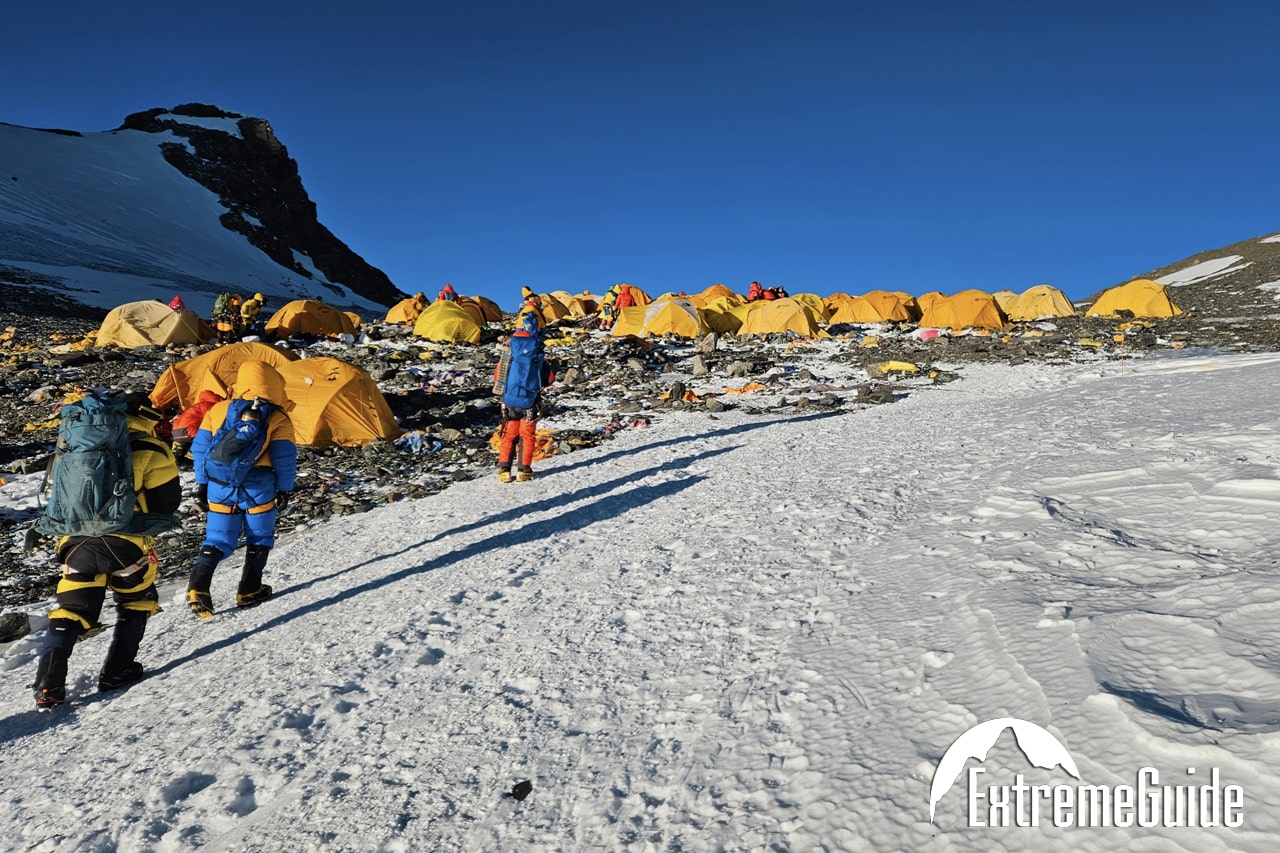
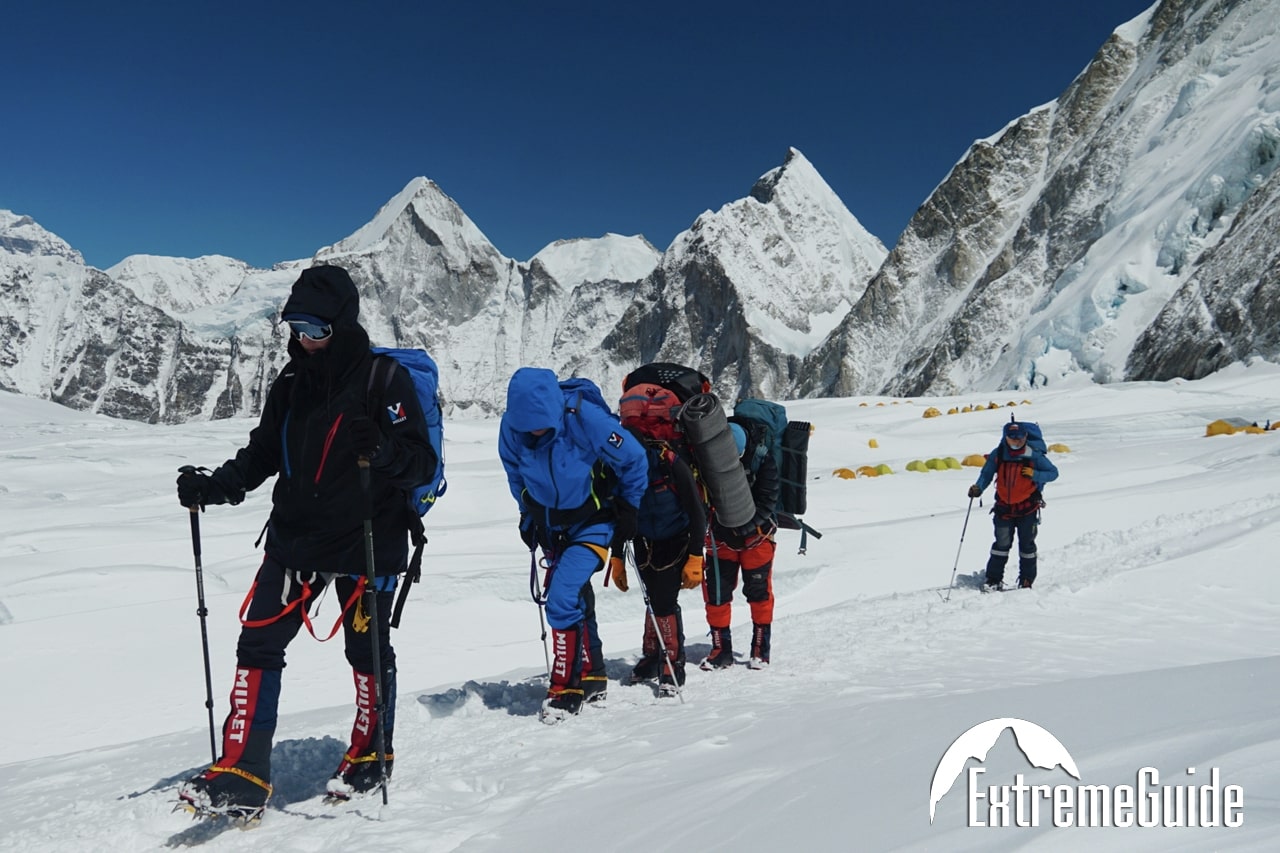
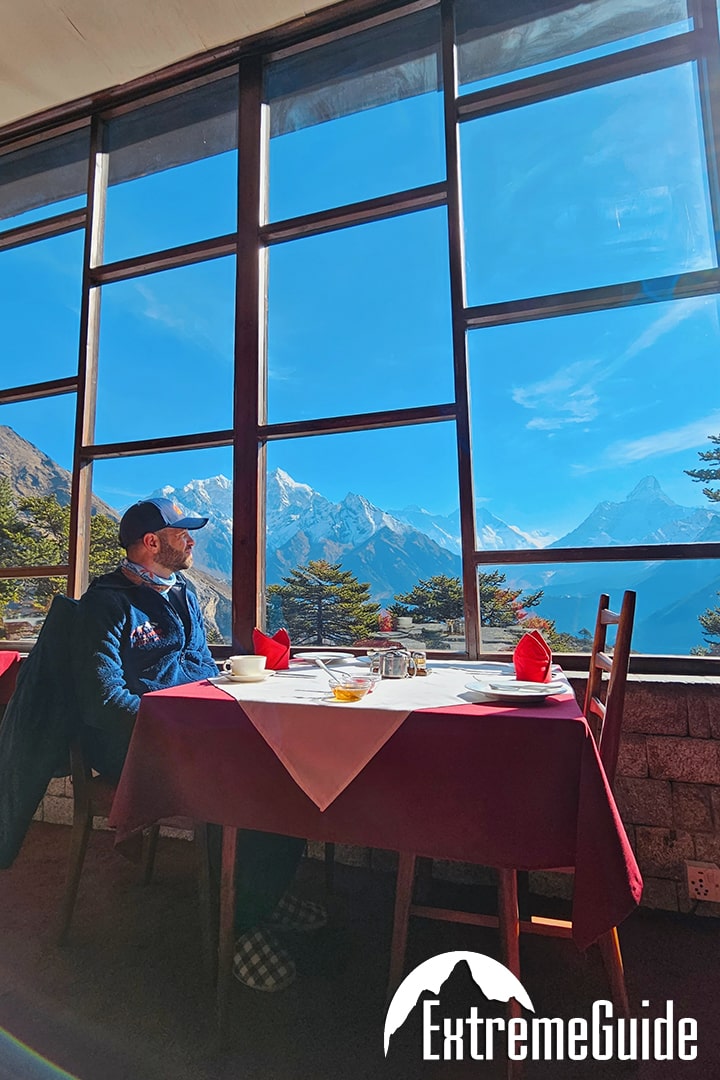
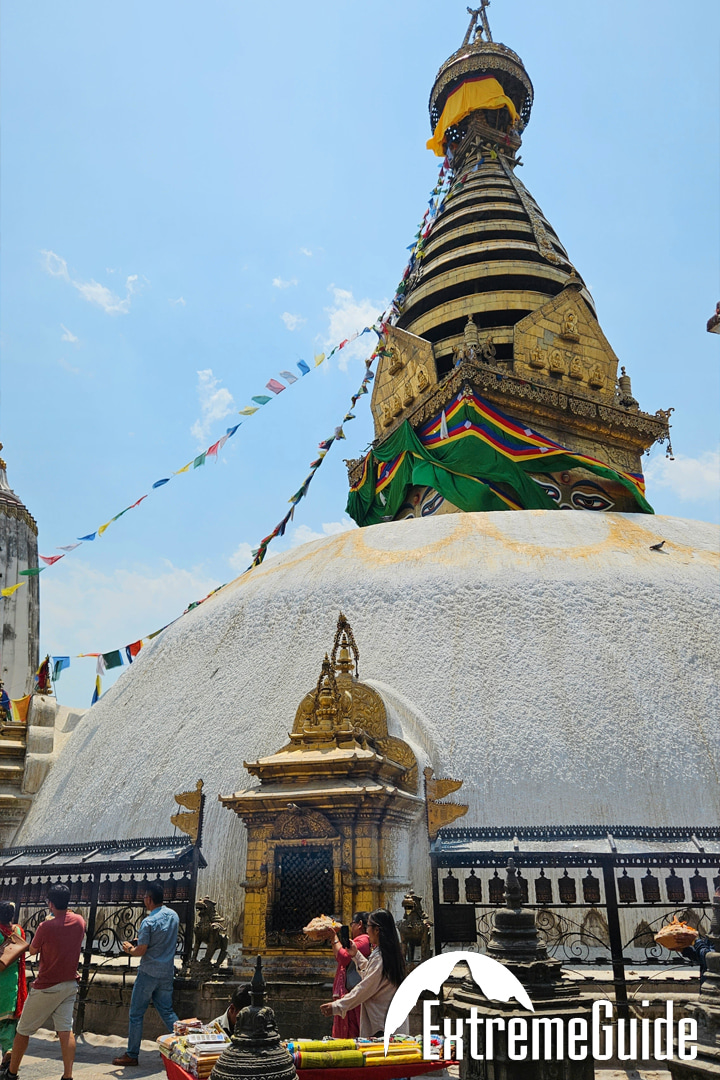
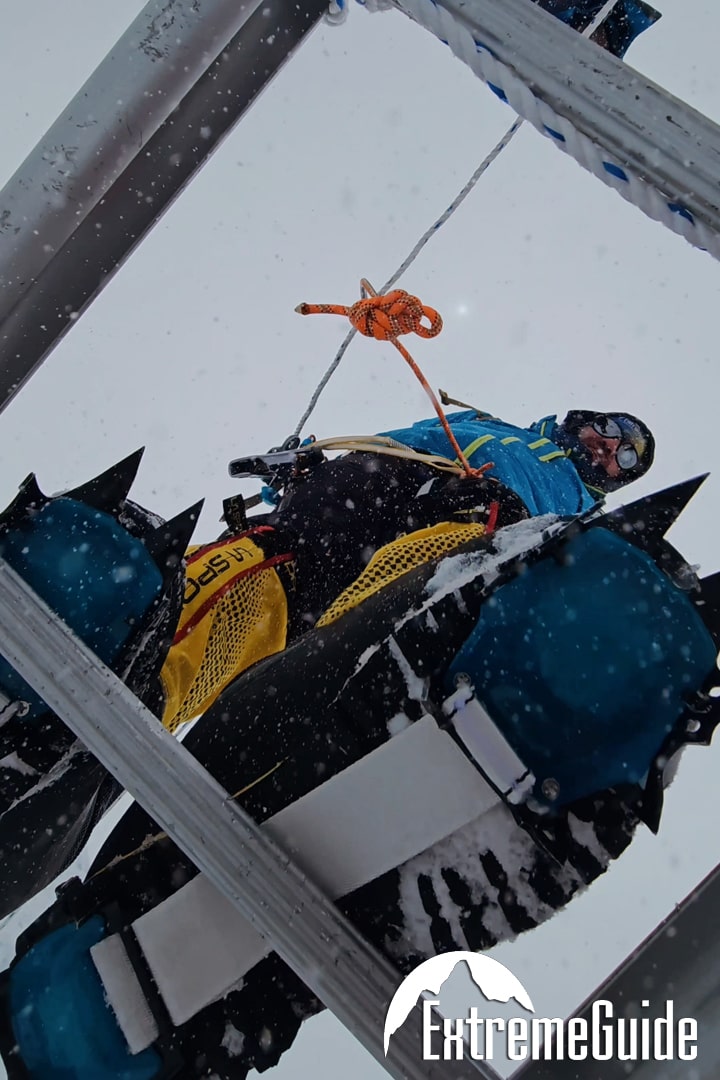
Photo of previous trips


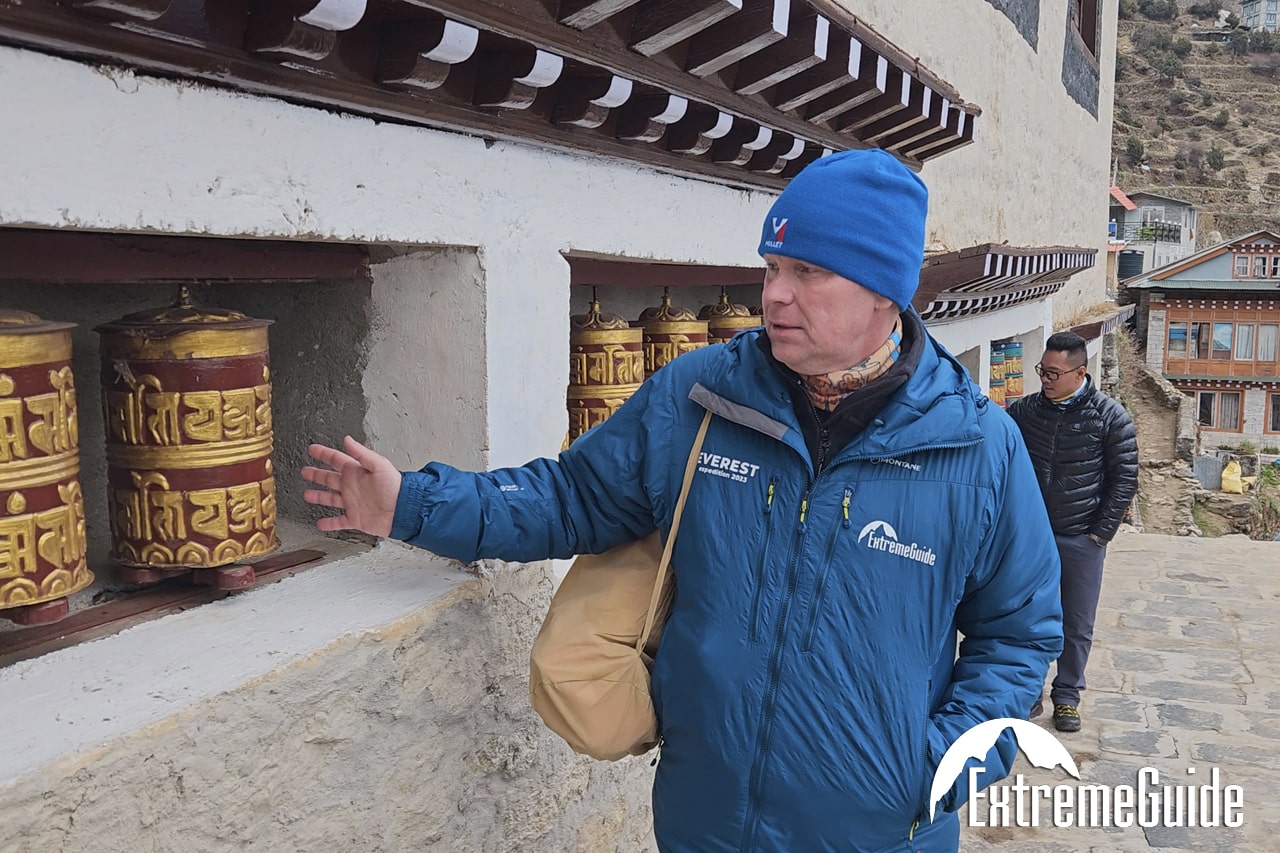
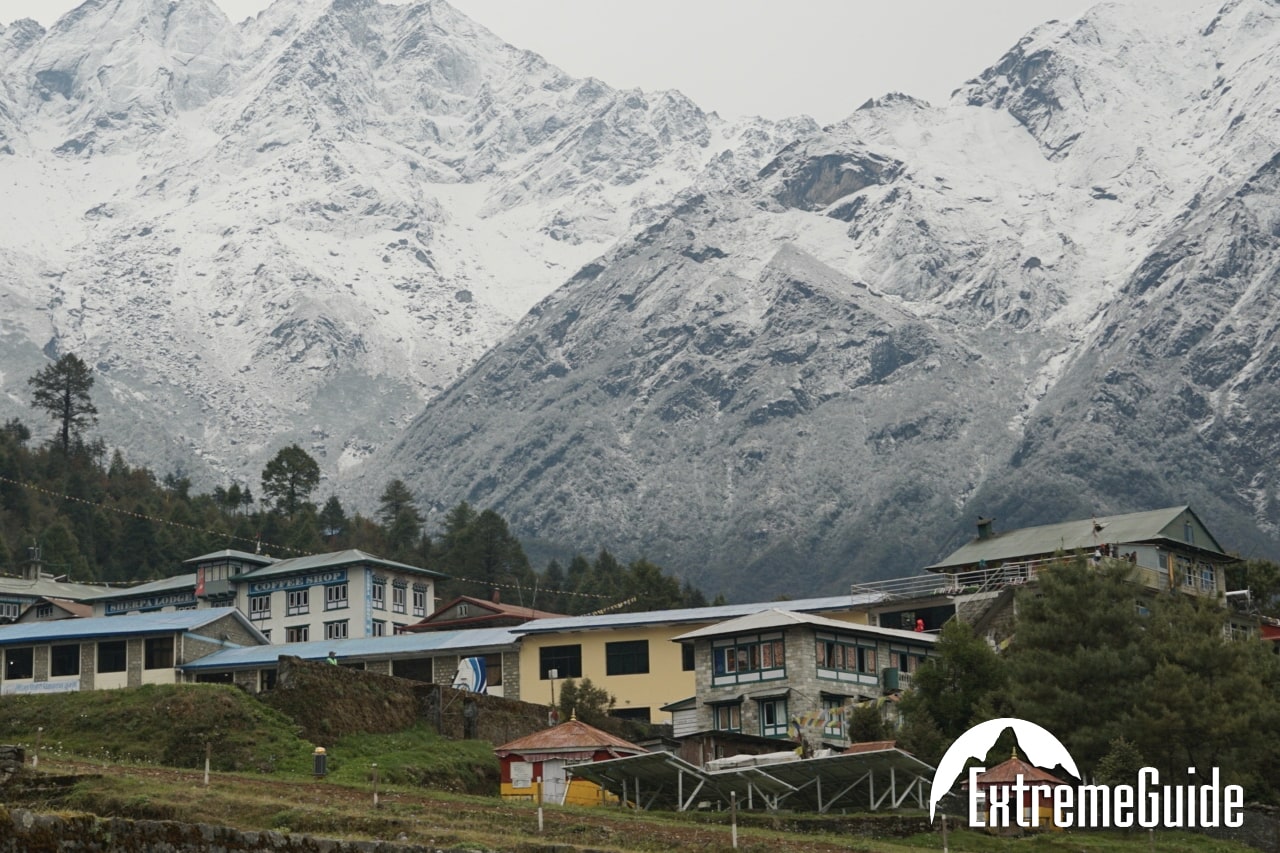
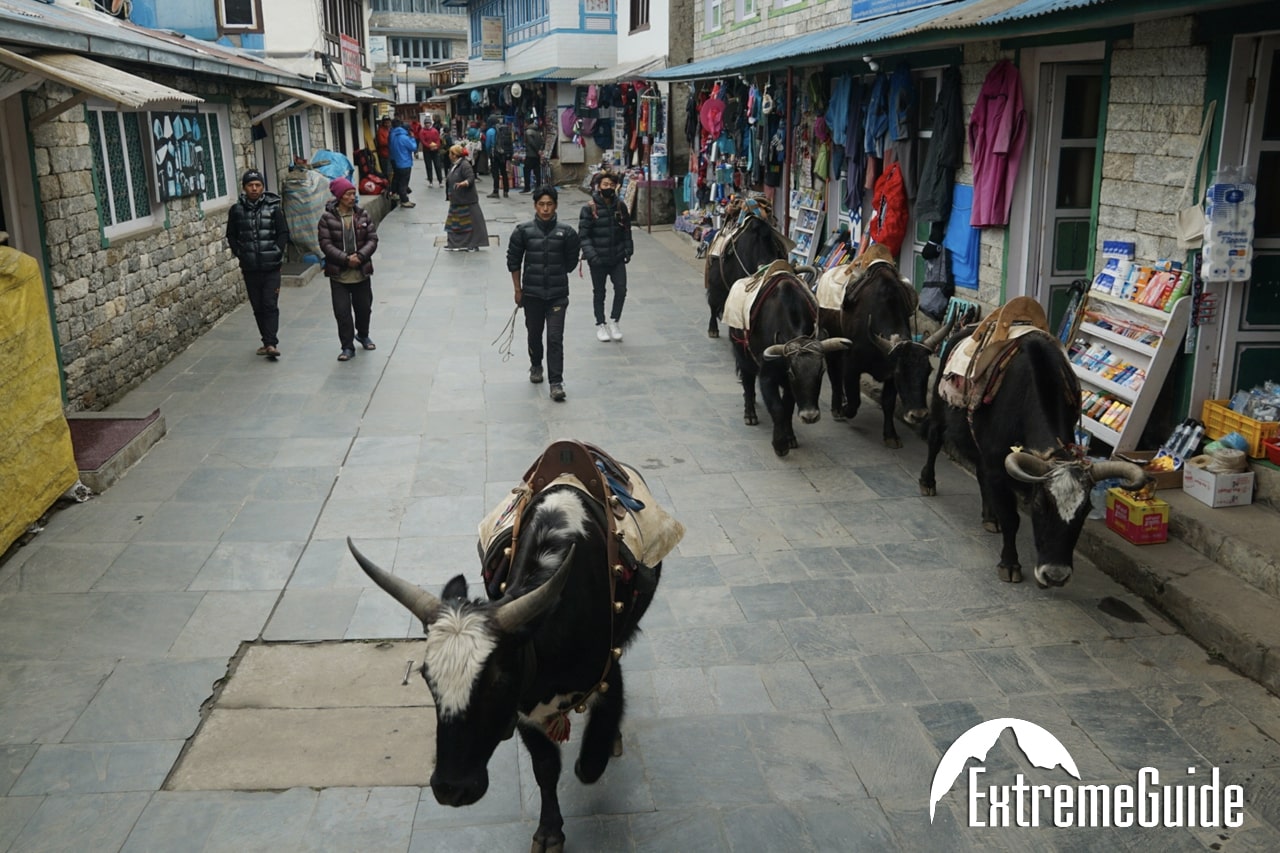
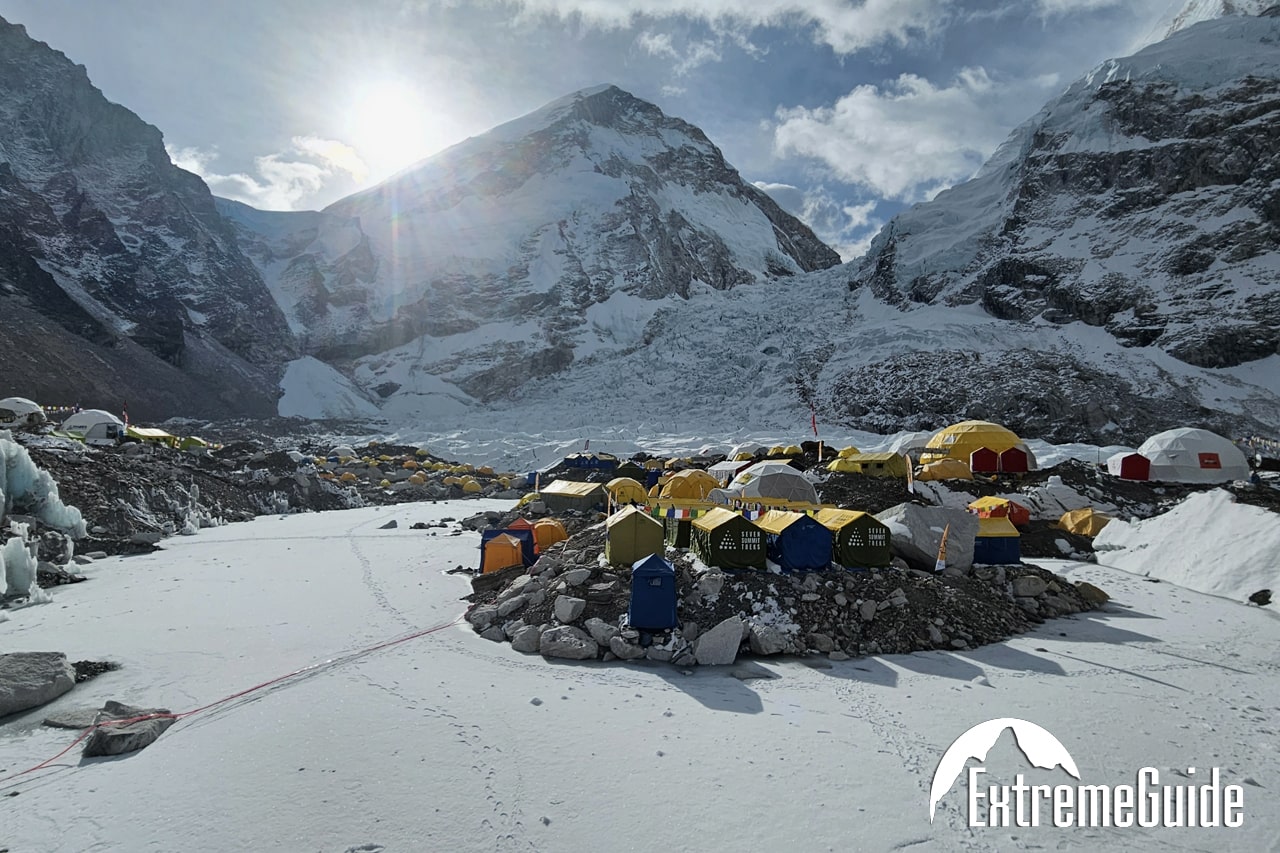






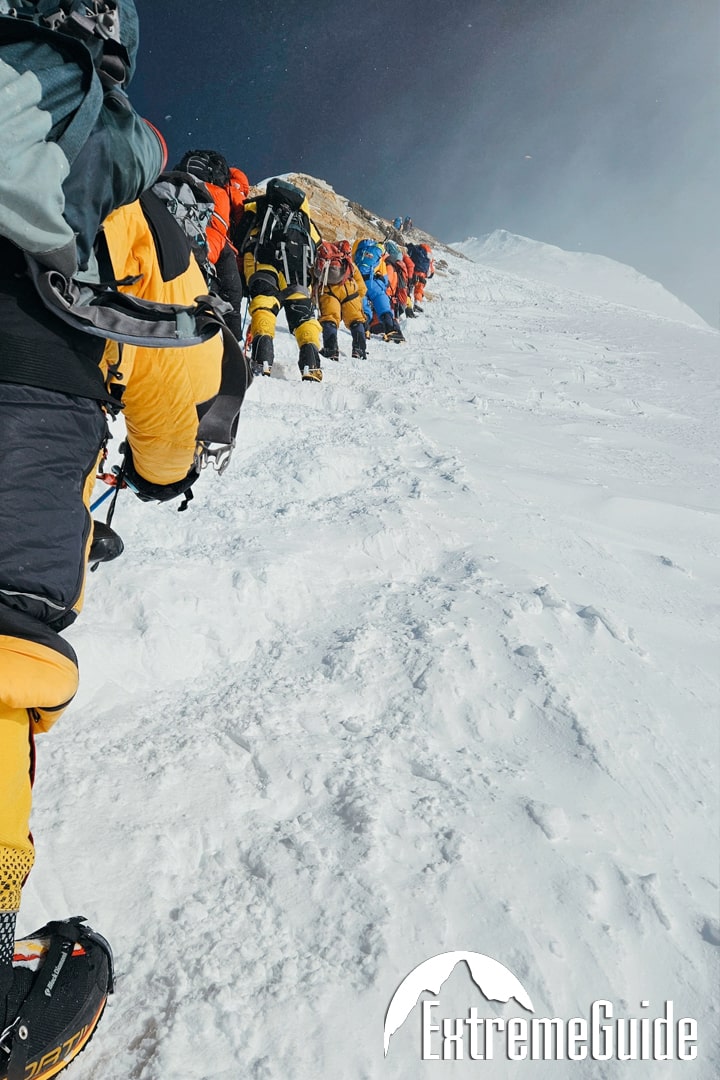
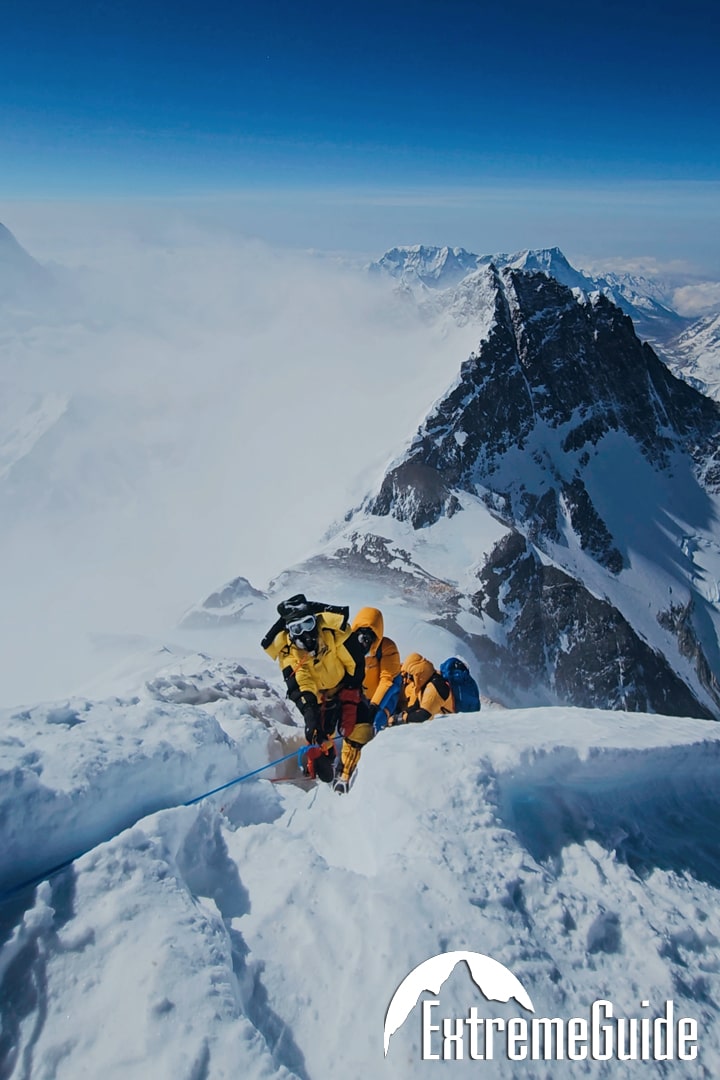
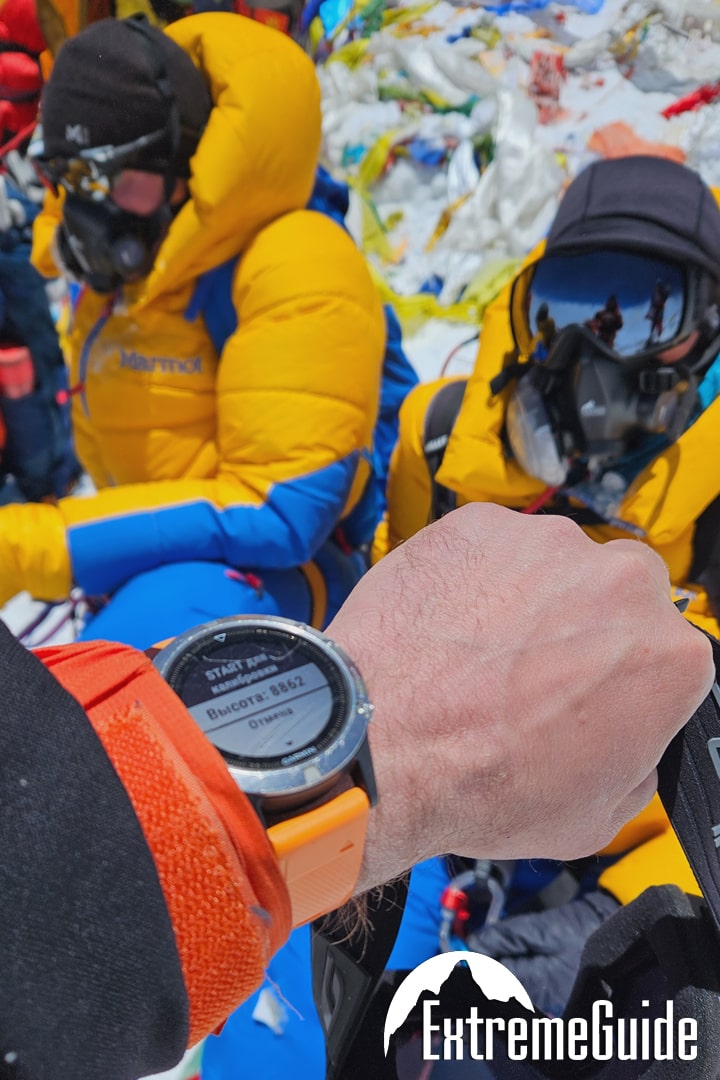
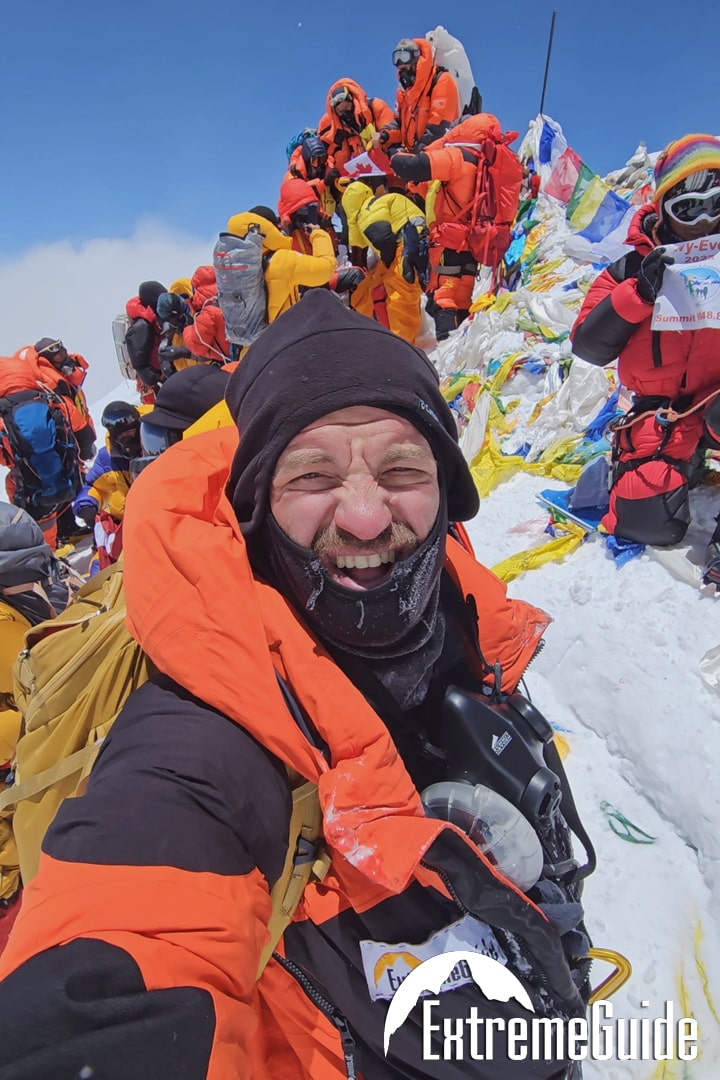
Reviews of our travelers
Отличная команда профессионалов! Ходила с ними на Эверест в мае 2025 года. Вершина -27.05.2025. На удивление все прошло легко, четко и слажено. Ни на секунду не сомневалась в правильности своего выбора. More
Recommended tours
 Tajikistan (Fan Mountains)
Dates:
July 12 - July 21
July 12 - July 24
July 25 - August 3
July 25 - August 6
August 8 - August 17
August 8 - August 20
Complexity:
Duration:
Height:

5.0 (15)
Left: 5 places
 Nepal (Himalayas)
 Dates:
October 25 - November 11
Complexity:
Duration:
Height:

Left: 6 places
 Kyrgyzstan
 Dates:
July 11 - July 23
Complexity:
Duration:
Height:
Left: 3 places
 Kyrgyzstan
 Dates:
July 18 - August 8
Complexity:
Duration:
Height:
5.0 (15)
Left: 6 places
 Turkey
 Dates:
May 2 - May 9
September 28 - October 5
Complexity:
Duration:
Height:
Left: 4 places
 Argentina
 Dates:
January 24 - February 16
Complexity:
Duration:
Height:
Left: 8 places
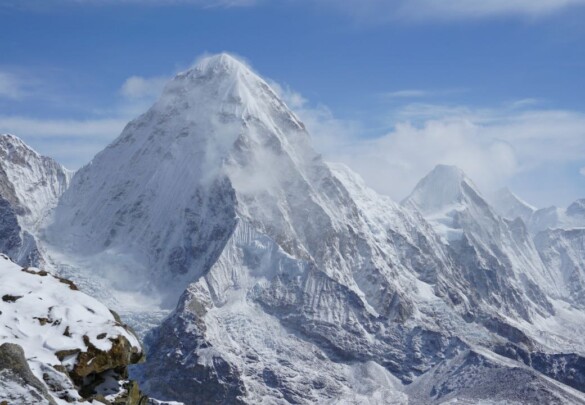 Nepal (Himalayas)
 Dates:
Complexity:
Duration:
Height:
 Slovakia (Tatras)
 Dates:
Complexity:
Duration:
Height:
 Bolivia
 Dates:
Complexity:
Duration:
Height:
 Argentina
 Dates:
Complexity:
Duration:
Height:
 Slovakia (Tatras)
 Dates:
Complexity:
Duration:
Height:
 Mexico
 Dates:
Complexity:
Duration:
Height: