
Mount Pumori, 7,161 m (23,500 ft) – Everest’s “Unmarried Daughter.” The mountain’s name, “Pumori,” comes from the Sherpa language and means “Unmarried Daughter” or “Daughter of the Mountain” (Pumo means young girl/daughter, and Ri means mountain). It is said that the name was given by the famous British mountaineer George Mallory (who disappeared on Everest in 1924). He named it after his own daughter, Clare (Clare Peak), and the locals eventually translated it into their language.
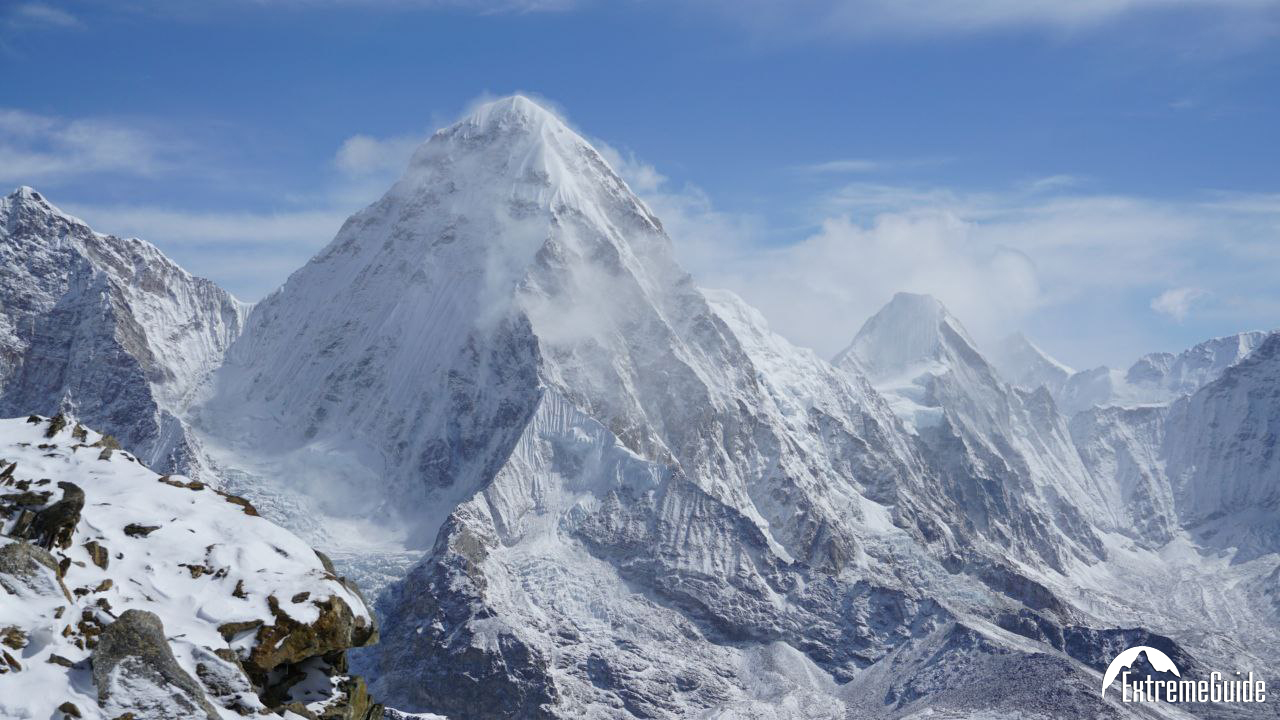
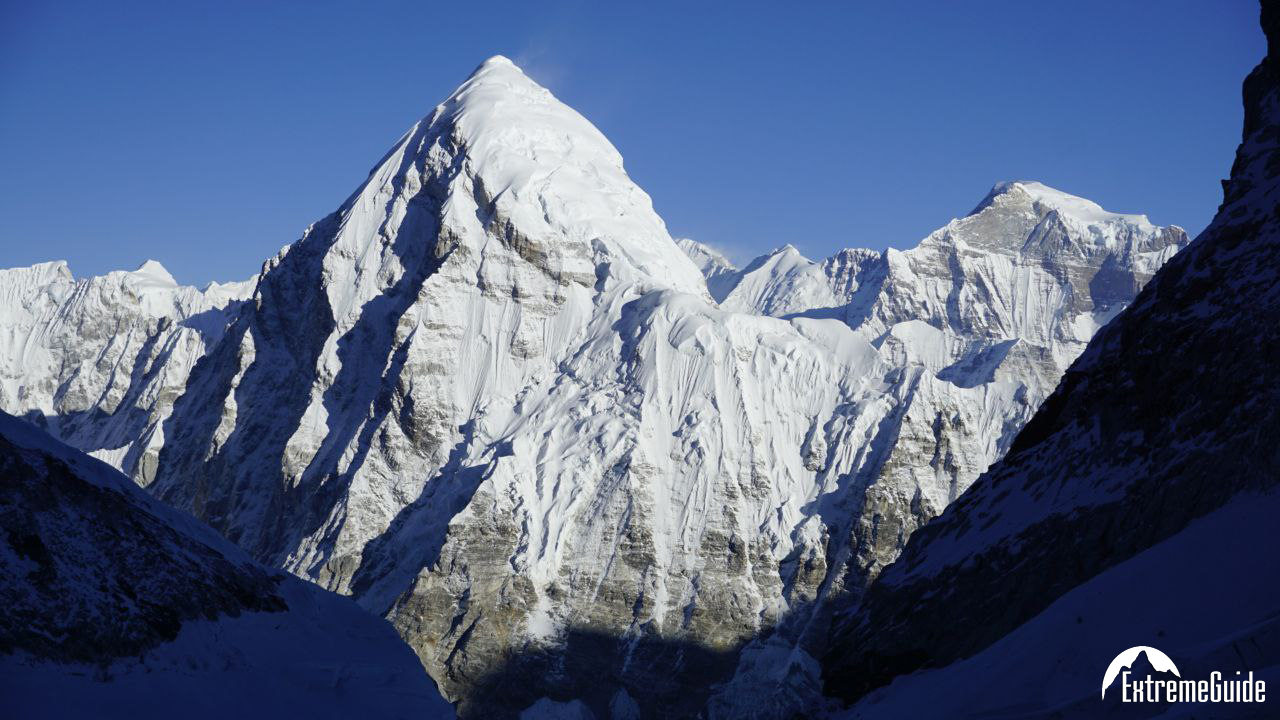
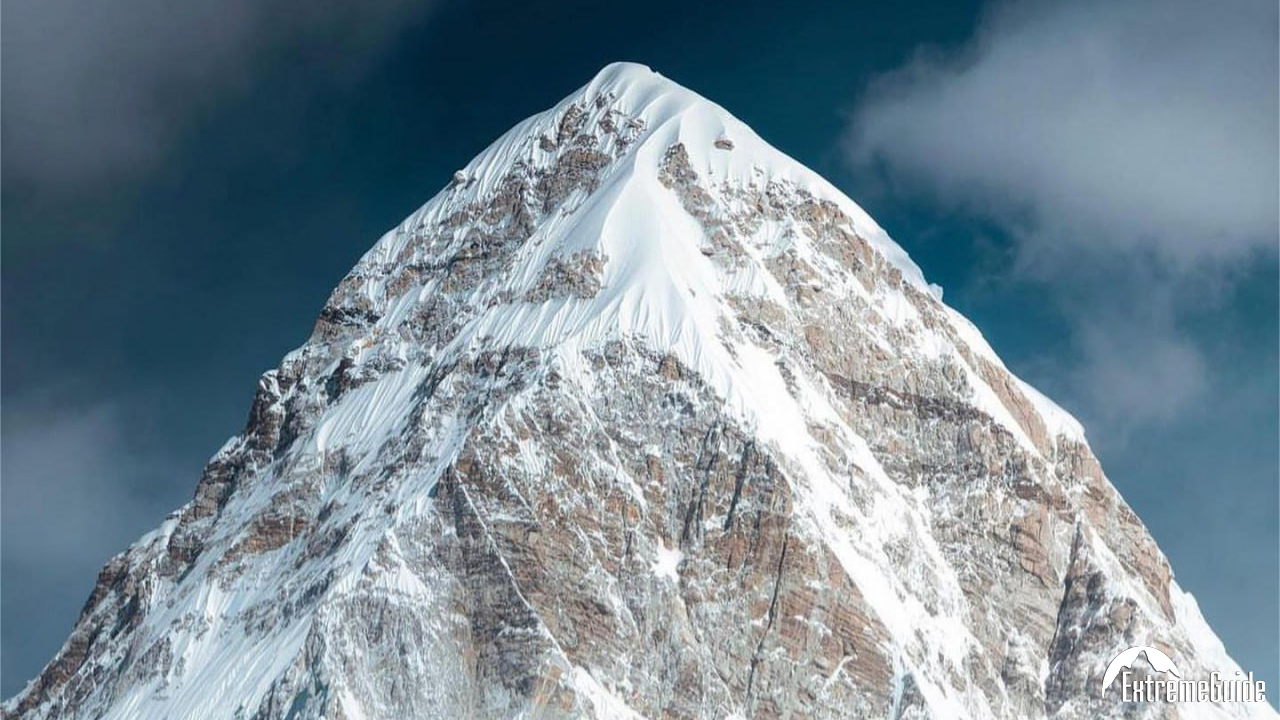
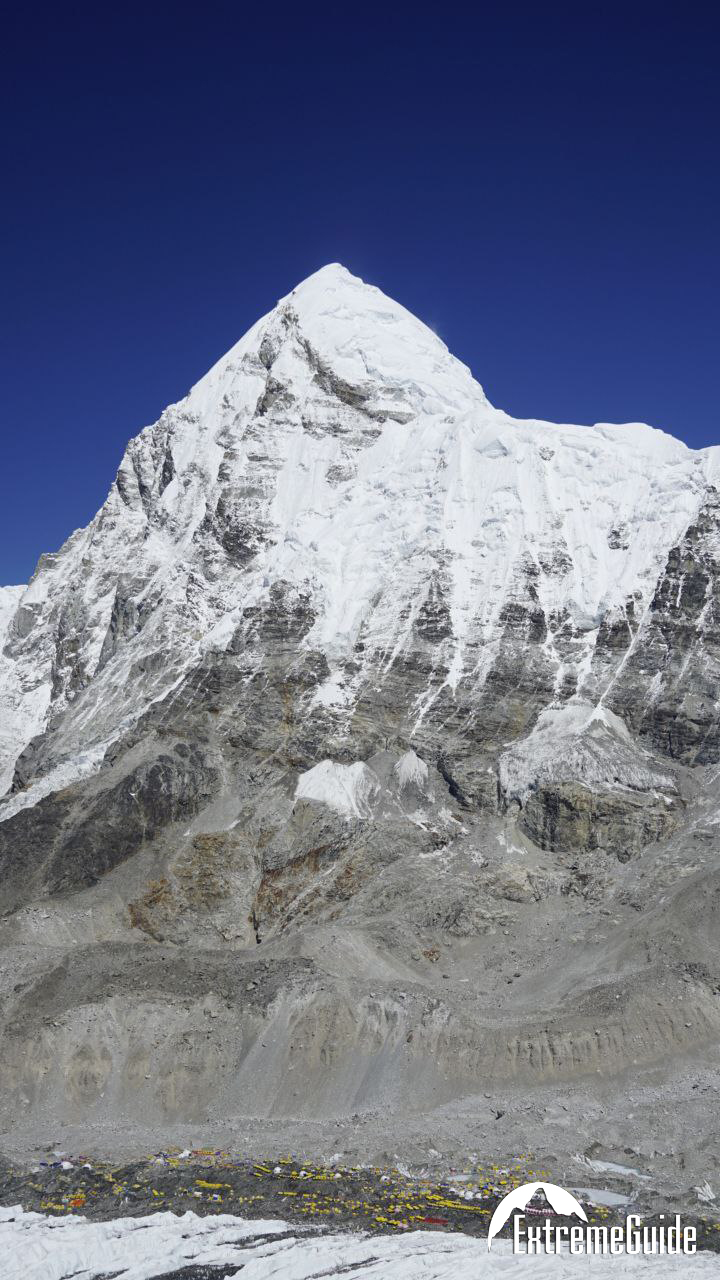
Pumori has a very distinctive, almost perfect pyramidal shape, making it one of the most photogenic peaks in the Khumbu region.
Its summit offers stunning panoramic views of four eight-thousanders: Everest, Lhotse, Makalu and Cho Oyu, as well as the Tibetan plateau.
Despite Pumori being 7161 meters high (which is less than 8000 m), it is considered a very difficult and technical climb.
The route includes significant sections of steep snow and ice walls (up to 50-70 degrees), dangerous icefalls and a high avalanche danger, requiring a high level of training from climbers.
The first successful ascent occurred quite late, on May 17, 1962, by Gerhard Lenser of a German-Swiss expedition. This underscores its technical difficulty, as many other seven-thousanders had been conquered earlier.
Climbing Mount Pumori (7,161 meters) in Nepal is a challenging mountaineering expedition. This technically challenging and high-altitude mountain requires participants to be highly experienced, in excellent physical condition, and thoroughly acclimatize. For acclimation we will climb to the top of Lobuche, 6119 m.
Главные впечатления от похода по Фанским горам:
Climbing route to Mount Pumori:
Kathmandu – Lukla (2860 m) – Phakding (2610 m) – Namche Bazaar (3440 m) – Tengboche (3870 m) – Dingboche (4410 m) – village. Lobuche (4910 m) – High Altitude Camp (5400 m) – East Lobuche peak (6090 m) – Pumori BC (5300 m) – Camp 1 (5700 m) – Camp 2 (6480 m) – Pumori town (7161 m) – Kathmandu
Route for climbing Mount Pumori by days
day
Upon arrival at Tribhuvan International Airport, our team will meet you and transfer you to your hotel in Kathmandu. In the evening, you will meet with the expedition leader and receive a detailed briefing on the climb, permits, and logistics. Overnight in Kathmandu.
day
A picturesque 30-minute flight awaits us to Lukla, the gateway to the Khumbu region. After meeting our porters and adjusting our gear, we begin our trek through Sherpa villages, mani walls, and suspension bridges to reach Phakding. Overnight in Phakding.
day
We follow the Dudh Kosi River, crossing several bridges and entering Sagarmatha National Park. After a steep climb, we reach Namche Bazaar, the bustling Sherpa capital and the main trading center of the Khumbu region. We spend the night in Namche.
day
A full day of rest and acclimatization. We’ll make a short trek to the Everest View Hotel (3,880 m), offering panoramic views of Everest, Lhotse, Ama Dablam, and Pumori. Optional visit to the Sherpa Museum or local monasteries. Overnight in Namche.
day
We walk through beautiful rhododendron forests, descend to the Dudh Kosi River, and then ascend to the famous Tengboche Monastery—one of the holiest sites in the Khumbu. Overnight in Tengboche.
day
Descending through the forests, we cross the Imja Khola River and gradually ascend into the wide Dingboche Valley. The mountain views become more dramatic: Ama Dablam, Lhotse, and Pumori are visible ahead. Overnight in Dingboche.
day
We rest and then make a radial trek to Nagarjun Hill (5,100 m) or to the Chukhung Valley to acclimate to the altitude. This helps prepare our bodies for the overnight stay at the higher camps. Overnight in Dingboche.
day
We ascend smoothly through alpine meadows, passing memorial imps dedicated to climbers who died on Everest. The route offers magnificent views of Nuptse and Pumori. We spend the night in Lobuche.
day
We climb a steep, rocky ridge to reach Lobuche Peak High Camp. The guide will give a briefing on the final ascent route and safety precautions. We’ll have an early dinner and rest before the summit push.
day
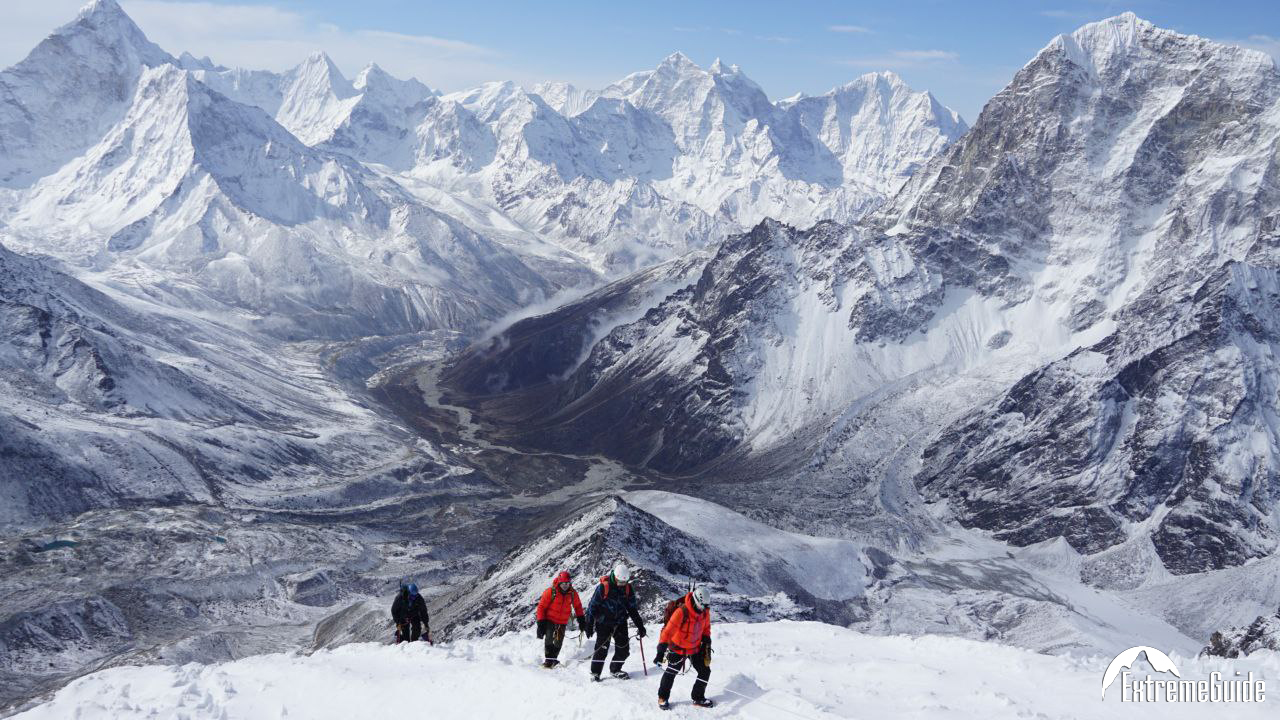
The summit push begins before dawn, around 2-3 a.m. The route includes rocky sections and rope fixing on ice and snow. The summit rewards climbers with breathtaking views of Everest, Nuptse, Lhotse, Makalu, Ama Dablam and Pumori. After taking photos and a short celebration, we descend to High Camp and continue our descent to the village of Lobuche for the night.
day
We walk along a glacial moraine to reach Pumori Base Camp, located near Gorak Shep, with stunning views of Everest, Nuptse, Lingtren, and the Khumbu Icefall. The team sets up camp and begins preparing for the climb.
day
We spend these days at Base Camp, organizing climbing equipment, setting up communications, and holding technical briefings. The climbers rest, stay hydrated, and mentally prepare for the ascent.
day
We spend these days at Base Camp, organizing climbing equipment, setting up communications, and holding technical briefings. The climbers rest, stay hydrated, and mentally prepare for the ascent.
day
We spend these days at Base Camp, organizing climbing equipment, setting up communications, and holding technical briefings. The climbers rest, stay hydrated, and mentally prepare for the ascent.
day
We spend these days at Base Camp, organizing climbing equipment, setting up communications, and holding technical briefings. The climbers rest, stay hydrated, and mentally prepare for the ascent.
day
The route runs along the South-Eastern ridge of Pumori.
day
Installed after a steep climb down a 40-45° slope on ice and snow.
day
Situated directly below the summit, it is set up for the final assault.
day
An early rise and ascent up steep snow and ice slopes to the summit of Pumori (7,161 m). The summit offers a breathtaking 360° view of Everest, Lhotse, Nuptse, Cho Oyu and the entire Khumbu Valley.
day
After the ascent, climbers carefully descend to Base Camp for a few days of rest and celebration.
day
Morning flight to Kathmandu. Upon arrival, transfer to the hotel for rest, a hot shower, and a gala dinner.
day
Reserve day
day
Reserve day
day
Reserve day
day
After breakfast, transfer to the airport for your onward journey. The expedition concludes.
Why is it profitable to go hiking with Extremeguide?


Cost and conditions of climbing Pumori Mount
Подходит ли вам это путешествие?
To participate in the program, you must have experience climbing peaks of 6,000-7,000 m. For a successful ascent, we recommend the following ascent programs: Kazbek, Mont Blanc, Mera Peak, Aconcagua, Ojos del Salado, and Manaslu.
The price includes:
- An ExtremeGuide team guide with experience climbing to 8,000 m will be available throughout the program;
- Private pick-up and drop-off at Kathmandu airport;
- Internal transport to the start of the route (flight/private jeep or local bus);
- 3 nights’ accommodation at a 5-star hotel in Kathmandu on a Bed and Breakfast basis;
- Congratulatory and farewell dinners in Kathmandu;
- Lodging in lodges (tea houses) and all meals during the trek and expedition;
- Alcoholic beverages, personal snacks, and bottled drinks only at Base Camp;
- Pumori Climbing Permit and Sagarmatha National Park fee;
- Khumbu Pasang Lhamu Local Municipality Meeting;
- Rope fixing fee and expedition waste deposit.
- A high-altitude Sherpa guide on a 1:2 basis during the ascent;
- Porter and guide services to/from the route start and Pumori Base Camp;
- Base Camp staff: cook, kitchen assistants, and expedition manager;
- Staff salaries, insurance, and liaison officer services;
- Spacious tent, accommodations at Base Camp and higher camps;
- High-quality dining tent and communications tent with tables and chairs;
- Hygienic shower and toilet tents provided at Base Camp;
- Emergency oxygen cylinder (one per climber) with mask and pressure regulator;
- Lighting and charger from solar panels and generator at Base Camp;
- First aid kit and medical oxygen at Base Camp;
- ExtremeGuide T-shirt, cap, and bag for the expedition.
Not included in the price:
- International airfare to/from Kathmandu;
- Final flight from Pumori base to Kathmandu approximately USD 1,500;
- Nepal visa fee USD 50;
- Additional Sherpas during the Pumori summit push;
- Medical insurance and medical coverage up to USD 50,000;
- Personal mountaineering and trekking equipment;
- Meals during your stay in Kathmandu (excluding the welcome and farewell dinners);
- Tips for guides, porters, and staff up to USD 400;
- Additional hotel nights for early return;
- Alcoholic beverages, personal snacks, and bottled drinks during the trek;
- Internet and shower during the trek;
- Internet, shower, and laundry services at Base Camp (additional fee);
- Special drone/filming permits (if required);
- The ascent bonus for the Sherpa guide is at least USD 1,000 per Sherpa.
Price depending on the number of participants
| Participants number | Price per 1 participant |
|---|---|
| 4 | 11900 USD |
| 3 | 13500 USD |
| 2 | 16000 USD |
| 1 | 20000 USD |

Best price guarantee!
- We have included in the price all possible basic expenses for the program and guarantee that there are no hidden additional costs, while we have retained the best service at a low price: transfers, hotel accommodation, guides and staff!
We have a flexible discount system
Find out more now:
Required equipment
Documents:
- Valid passport;
- Credit/currency card;
- Insurance and contact address (family/company address).
Backpack and sleeping bag:
- Duffel Bags (120-150L) – 2 pcs;
- Assault Backpack (40-50L) (Read more about choosing a backpack);
- *Small trekking backpack – 20L;
- Stuff sack/mesh bag – 2 pcs;
- Waterproof bags – 10-30L (various sizes) – 2-3 pcs;
- Comfort sleeping bag -5°C…-10°C (for base camp) (Read more about choosing a sleeping bag);
- Down sleeping bag, comfort -20°C…-30°C;
- Regular Thermarest (Cell Foam) sleeping mat (More information on choosing a pad).
- *Inflatable sleeping pad for upper camps
- *Sleeping bag liner.
Shoes:
- High-altitude climbing boots 8000m+ (Read more about choosing clothes and boots);
- *High mountaineering boots (6000m+) for acclimatization;
- Trekking shoes (boots) up to Everest Base Camp;
- Crocs for the lodge and base camp.
Cloth:
- High-altitude suit (down) or pants and jacket set for 8,000 m;
- Fleece jacket – 2 pcs;
- Assault jacket with ventilation (Gore-Tex);
- Lightweight windproof jacket – 1 pc;
- Down sweater/lightweight down jacket for trekking and base camp;
- Down/Primaloft jacket for altitudes of 6,000-7,000 m;
- Cotton T-shirt – 2-3 pcs;
- Thermal underwear (base layer) – 2-3 sets;
- Warm thermal underwear – 1 set;
- Fleece pants – 1 pc;
- Self-shedding Gore-Tex pants – 1 pc;
- Softshell pants – 1 pc;
- Lightweight quick-drying trekking pants – 2 pcs;
- Self-shedding down pants – 1 pc;
- Underwear – 4-6 sets;
- Thin trekking gloves – 1;
- Thin fleece gloves – 2 pairs;
- Thick gloves (GuideGloves);
- 8000m+ mittens (tops);
- Sun hat/cap;
- Balaclava;
- Warm fleece hat;
- *Lightweight hat for trekking and base camp;
- Lightweight trekking socks – 3 pairs;
- Thick trekking socks – 3-5 pairs;
- 6000m+ climbing socks – 2 pairs;
- Down socks for bivouacs and sleeping at higher camps;
- Fleece socks for sleeping.
Hygiene and sun protection products:
- Toilet paper/wet wipes;
- Wet wipes;
- Toothbrush and toothpaste;
- Soap and shampoo (don’t take large amounts, ml);
- Towel;
- Trash bags;
- Sunscreen (SPF 50+);
- Lip balm (-30…-50 with SPF);
- Sunglasses (UV protection);
- Ski mask (UV protection);
- Moisturizer/lotion.
First aid kit:
- Ibuprofen;
- Paracetamol;
- Spazmalgon;
- General antibiotic;
- Immodium;
- Diamox/Diacarb;
- Patch;
- Electrolytes/isotonic;
- Cough syrup/expectorants;
- Cough drops;
- Euphyllin;
- Azithromycin (for tonsillitis, fever, nasal and throat infections – for 5 days);
- Vitamin and mineral complex.
Equipment marked with “*” is not required, but is recommended.
- Mountaineering helmet;
- Semi-automatic crampons, 10-12 steel teeth (packaged, fits your boots);
- Ice axe for classic mountaineering;
- Descent device (Figure 8/ATC Guide);
- Lightweight high-altitude climbing harness;
- Ascenders;
- Large locking carabiners – 3 pcs;
- Non-locking carabiners – 2 pcs;
- Belay lanyards – 2 pcs;
- Headlamp (300-500 lumens);
- Spare batteries for the flashlight;
- Trekking poles;
- *Pocket knife/multi-tool;
- 1L thermos;
- 1L flask for protective case (cover);
- Altimeter watch;
- *Pee bottle;
- Power Bank – 2 pcs.
Equipment marked with “*” is not required, but is recommended.
Additionally, you can take dried fruits, sports nutrition, high-altitude diet supplements (canned goods, meat, sausage, etc.), chocolate, etc.
Additional information
- A visa is obtained at the airport upon arrival and does not require additional documents;
- international passport;
- accident and medical insurance (insurance with coverage of at least $30,000 and covering risks associated with active mountain activities above 5,000 m and helicopter evacuation). We will advise you on obtaining insurance.
Be sure to check out more details here!
— Meeting the group at Kathmandu airport — the time will be confirmed once we know your exact arrival time.
Participants with experience climbing above 6,500 m (with a gap of no more than one year between ascents) are eligible to participate in this program. Experience in technical climbing is encouraged.
To participate in the program, you must have experience climbing peaks of 6,000-7,000 m. For a successful ascent, we recommend the following ascent programs: Kazbek, Mont Blanc, Mera Peak, Aconcagua, Ojos del Salado, and Manaslu.
Before climbing Pumori, you should have a minimum ascent peaks, for example: Kazbek and Aconcagua.
We will send you a training program with separate recommendations via email. We recommend starting your preparation no later than six months before the expedition, ideally increasing the number of different functional workouts to 5-6 per week (at least 1.5-2 hours long), including long mountain runs, running, and swimming. We recommend reducing your training load a month before the start and stopping completely two weeks before. Ideally, your preparation should include training ascents of 5,500-6,000 meters with overnight stays at 5,000+ meters.
For more information about training, watch our YouTube video channel. If you have a chronic medical condition, please consult a doctor and obtain clearance.
In Kathmandu, we’re staying in a comfortable 5-star hotel, where we can store our city gear and unnecessary belongings. Therefore, we take everything we need for the trek/climb, including walking clothes. Keep in mind that it will be very warm below for the first 2-3 days, so we’ll need regular clothing—shorts, a T-shirt, a sunhat, and a scarf. Higher up, it’s cooler, so we’ll need trekking pants and a windbreaker. It’s best to leave the hairdryer, curling iron, and portable toaster at home.
During the trek, we stay in lodges. A lodge is a type of guesthouse with two people per room, a shower and toilet on the floor, and a dining room downstairs. The conditions are significantly worse than in a regular hotel, but still better than in a tent. For a comfortable overnight stay, we recommend bringing a sleeping bag (as it can get quite chilly at night, and the blanket provided in the room isn’t particularly warm). In the upper villages, there may be no electricity or a permanent shower (washing is only possible with a bucket of hot water). The rooms in the lodges are very simple, with two or three beds.
At Base Camp, we live in full-height personal tents. At Camps 1 and 2, we live in tents.
For overnight stays at high altitude, you will need a set of high-altitude gear and a warm sleeping bag (see the equipment list for more details).
In Kathmandu, breakfast is served at the hotel. Lodges offer full board throughout the trek and expedition.
When trekking, you carry only what you need for the day. Up to 40 kg of personal belongings can be transported directly from Kathmandu to the Base Camp (carried by porters or by helicopter). A 45-55 liter backpack is ideal for organizing treks and radial excursions for acclimatization and during the ascent. On the ascent and acclimatization days on Pumori, the backpack weight will reach up to 15 kg, depending on whether you use high-altitude porters.
Guides will have a first aid kit for emergency medical care, but they are required to have personal medications for chronic and specific illnesses, adhesive bandages, headache tablets, cold and pain relievers (a must), and vitamin C and B vitamins for better adaptation to the mountains, dexamethasone in tablets and ampoules, euphyllin, diacarb, and trental.
3G connection is available with a local SIM card. Internet above this is a paid service, at $3-5 per 100 MB.
The weather in Kathmandu is hot, with temperatures typically ranging from 25 to 30°C. Trekking in the mountains will average 20 to 15°C for the first couple of days, but it will cool down further. Daytime temperatures are -5°C, and at night, they drop to -10 to -15°C. At the summit, temperatures can drop to -50°C. The average temperature above 7,000 m is 25 to -30°C.
This route takes place at altitudes above 7,000 meters, where solar radiation is much stronger than on the plains, and the mountain climate and air affect the body. Acute mountain sickness is possible at the higher camps.
Therefore, we have developed a special acclimatization program and health monitoring for each participant along the route. The descent is technically straightforward and follows a classic route secured with ropes. All guide instructions are mandatory!
Extreme Guide is not responsible for participants who deliberately conceal chronic illnesses, conditions, or health issues.
The national currency is the Nepalese rupee. The exchange rate is approximately 100 rupees to $1. You can almost always pay in dollars, but the exchange rate isn’t always favorable. Your guide will advise you on the best exchange rate before the trek. It’s best to bring cash, preferably in US dollars. You can’t exchange hryvnias anywhere in Nepal. Withdrawals from credit cards start at 5%. Always bargain with Nepalese; sometimes you can get a price that’s several times lower.
No diseases incompatible with active tourism: List of diseases.
Before the ascent, you must check up your health; you will need a doctor’s certificate confirming your ability to engage in mountaineering above 7,000 m.
Also read the article about preparation: Physical and mental preparation before climbing and hiking in the mountains
The table shows the basic cost for a group and may change depending on the number of people in the group. For the calculation of the cost of the tour for a smaller number of people and individual groups, see the «Price» block for more details.
We guarantee that on the dates indicated in the table, even if there is a minimum number of people allowed in the group, the tour will take place 100% with a minimum change in cost.
Pleasant bonuses, which everyone receives when ordering a tour with us


Photo of previous trips
Reviews of our travelers
Recommended tours
 Slovakia (Tatras)
Dates:
March 21 - March 22
Complexity:
Duration:
Height:

5.0 (2)
Left: 3 places
 Tajikistan (Fan Mountains)
 Dates:
July 12 - July 21
July 12 - July 24
July 25 - August 3
July 25 - August 6
August 8 - August 17
August 8 - August 20
Complexity:
Duration:
Height:

5.0 (15)
Left: 5 places
 Nepal (Himalayas)
 Dates:
October 25 - November 11
Complexity:
Duration:
Height:

Left: 6 places
 Mexico
 Dates:
March 14 - March 23
March 14 - March 30
Complexity:
Duration:
Height:

4.9 (27)
Left: 8 places
 Kyrgyzstan
 Dates:
July 11 - July 23
Complexity:
Duration:
Height:
Left: 3 places
 Kyrgyzstan
 Dates:
July 18 - August 8
Complexity:
Duration:
Height:
5.0 (15)
Left: 6 places
 Turkey
 Dates:
May 2 - May 9
September 28 - October 5
Complexity:
Duration:
Height:
Left: 4 places
 Argentina
 Dates:
January 24 - February 16
Complexity:
Duration:
Height:
Left: 8 places
 Africa
 Dates:
March 25 - April 4
August 10 - August 20
September 19 - September 29
November 11 - November 21
December 24 - January 3
January 3 - January 13
January 31 - February 10
February 28 - March 10
Complexity:
Duration:
Height:

5.0 (1)
Left: 8 places
 Bolivia
 Dates:
Complexity:
Duration:
Height:
 Argentina
 Dates:
Complexity:
Duration:
Height:
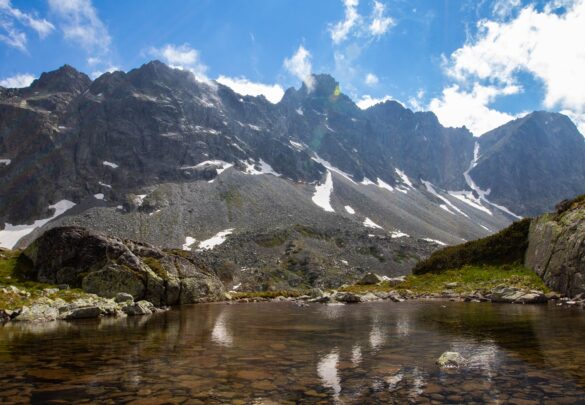 Slovakia (Tatras)
 Dates:
Complexity:
Duration:
Height: