
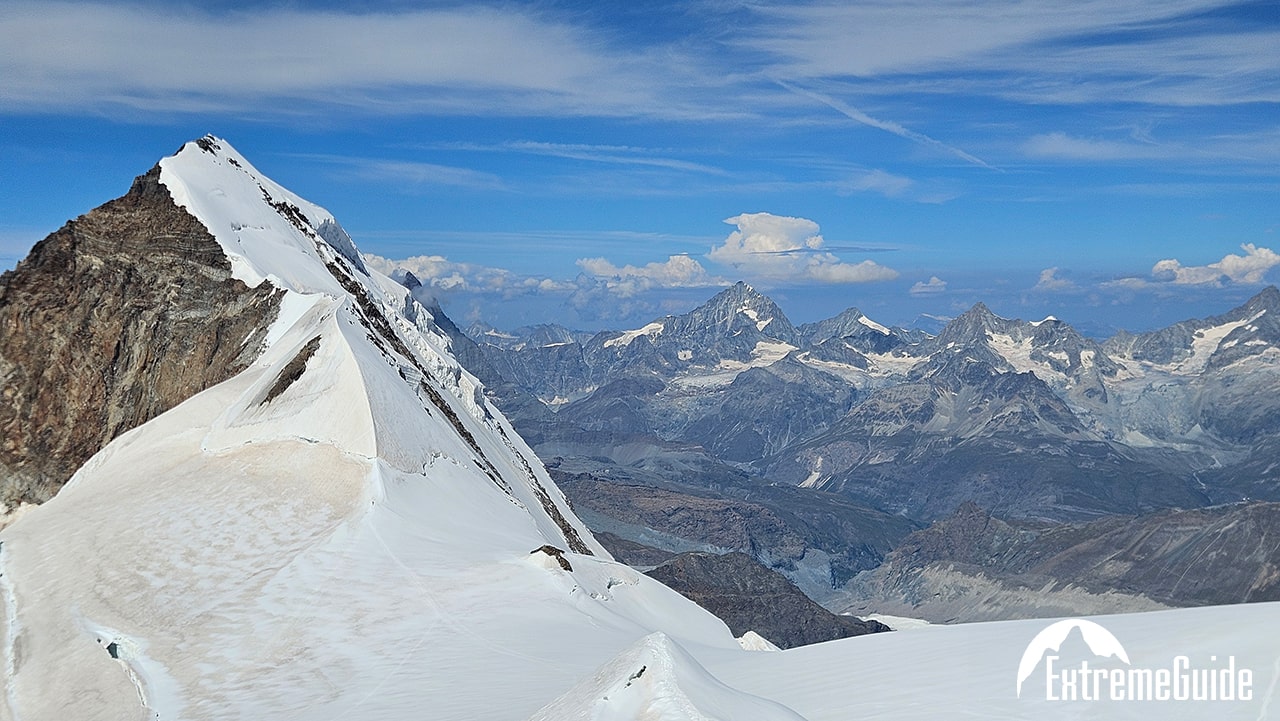
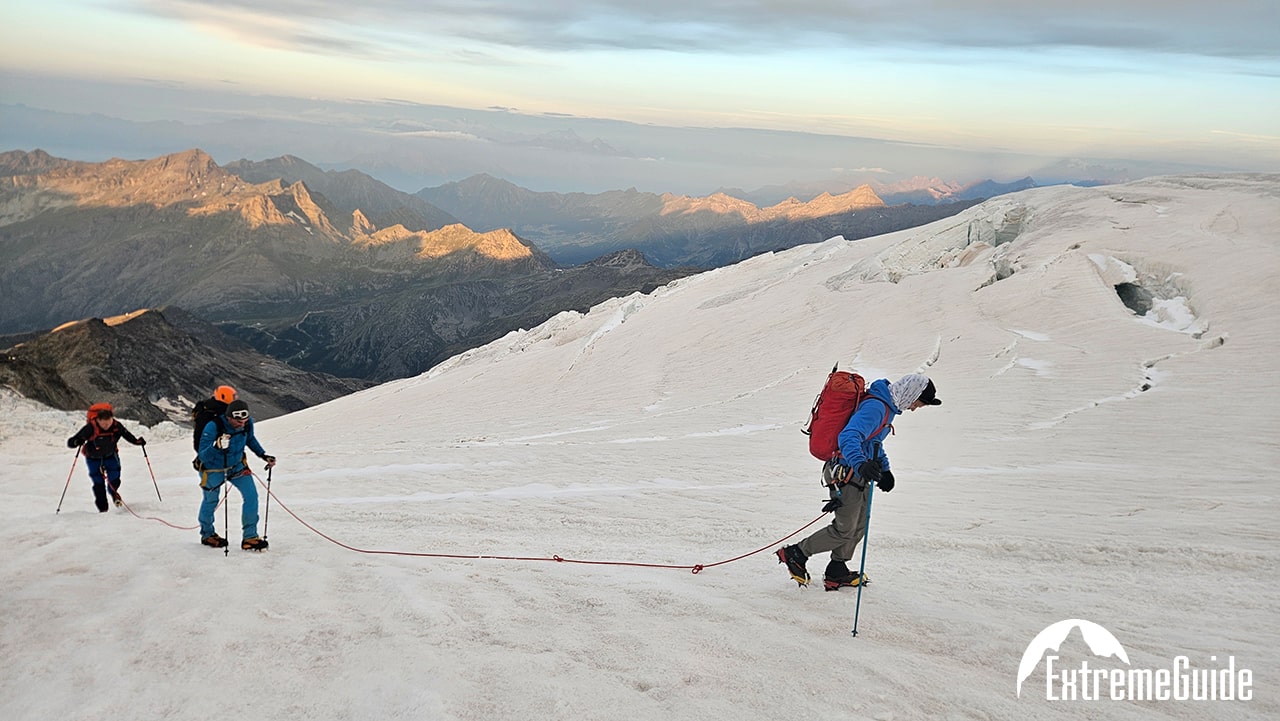
The Monte Rosa massif is located on the border of Switzerland and Italy, there are many 4,000-thousanders here. Despite the strong glacier cover, most of the peaks are of fairly moderate difficulty. In 7 active days you will hike in the Alps and climb 13 of the highest peaks of the Alps (above 4000 m).
Among the most difficult peaks of the massif and at the same time the highest are the 2-kilometer sharp Liskamm ridge (4527 m) and the mighty Dufourspitze (4634 m). But we will leave them for next time 😉.
We will start and end our journey in Zermatt, the capital of Swiss mountaineering. The next 5 days you will spend at an altitude of over 3500 meters, traveling through impressive glaciers and bare ridges. The charming huts are located on the Italian side of the ridge and offer us good coffee, wine and delicious food. A special feature of the local cuisine in the huts is the abundance of pasta and flour dishes! That is why the Monte Rosa traverse is also often called the “Spaghetti traverse”.
Since you will be climbing to an altitude well above 4,000 meters right from the Klein Matterhorn cable car, good pre-acclimatization and a level of physical fitness is essential!
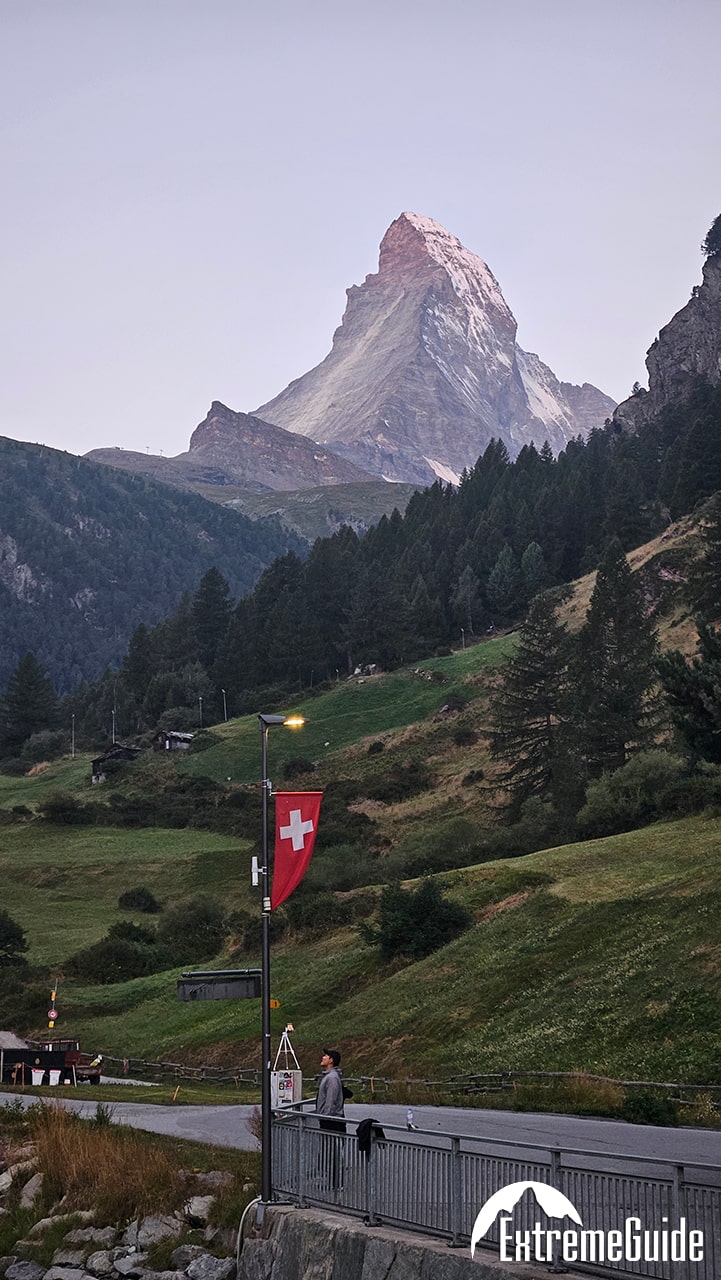
After the main program, we recommend considering a brief Climbing the Matterhorn via the Hörnli Ridge: (two additional days).
Главные впечатления от похода по Фанским горам:
Tour route “Traverse of the Monte Rosa massif”:
Zermatt — Mount Breithorn — shelter Guide de Ayas — m. Castor — Quintino Sella hut — Naso del Liskamm peak — Gnifetti hut — Lisioch peak — Parrotspitze — Margherita Refuge — Zumsteinspitze — Horner glacier — Rothenboden station — Zermatt
Your guides on the tour “Traverse of the Monte Rosa massif”
Route of the tour “Traverse of the Monte Rosa massif”
day
Meeting with the guide in Zermatt at 6:00 PM for a briefing on the trip, equipment check and dinner together. Accommodation at a hotel in Zermatt.
*We recommend arriving in Zermatt a day earlier to better acclimatize. Plan a walk to an altitude of 2500-3000 m.
day
We will start in Zermatt and check our equipment before taking the gondola to the Klein Matterhorn. From here we will climb our first 4000m mountain, the Breithorn West (4165m) and the Central (4169m) and descend to the Gied Ayas refuge (Italy, 3419m). Here we will have a sumptuous dinner and a comfortable shelter.
Elevation difference ↑ 400 ↓ 800 m
day
Early start, breakfast, smooth climb then up first the easy and then the steep western slope of Kastor (4252 m). We will pass the famous Kastor ridge. Descent to the Felikioch plateau allows us to see the massive Liskam ridge for the first time. We descend to the Quintino Sella hut (Italy, 3605 m). After a short rest and lunch we will have a short training on lifting a victim from an ice crack.
Elevation difference ↑ 1000 ↓ 1200 m
day
This is one of the most important days of the trip. From the hut we climb back to the Felikjoch plateau and continue our way to one of the most technical peaks on our route – Liskama Point 4277 m. Part of the route may be steep ice and movement on simple rocks. Descent towards the Gnifeti refuge. If the snow conditions and weather allow, then on this day we will climb the mountain of Pyramid Vincennes (4215 m).
Altitude difference ↑ 1000 ↓ 900 m
day
A few more peaks lie ahead, then we climb the Lisjoch and then the Parrottspitze (4457 m), along the way we will make short ascents to the Corno Nero 4322 m and the Balmenhorn, 4167 m. The finale of the day is a climb to the snow-ice plateau to the impressive Margherita Refuge, which is located on the top of Punta Gnifeti, 4580 m.
The Margherita Refuge is located at the highest altitude in Europe.
Elevation difference ↑ 1100 ↓ 300 m
day
From the Margherita Refuge, descent to a wide saddle and an easy climb to the Zumsteinspitze peak 4562 m. We meet the sunrise with views of the entire Monte Rosa massif and begin the descent towards the Monte Rosa refuge. The path is very picturesque in the middle of an icefall, with a view of the vertical walls of the Liskam peak.
After the Monte Rosa refuge, an easy trek along the moraine and glacier to Zermatt awaits us. Return to Zermatt by 15:00-16:00. Possibility to plan a late departure home.
day
Reserve for bad weather and other circumstances.
Note*:
– The program is not final and may be adjusted depending on the weather, the condition of the participants and other factors.
– The main principle in our work is customer safety! If the participant is technically or physically not ready for the climb, the guide has the right, based on the results of acclimatization and three training ascents, to offer an alternative end to the program without compensation or return of funds spent on participation in the program.
– The best time for climbing occurs from mid-July after the snow and glaciation melts from the rocky areas, and continues until the first cold weather – usually until mid-September.
– The route is not used if there is a risk of thunderstorms due to the impossibility of sheltering from lightning.
Why is it profitable to go hiking with Extremeguide?


Costand conditions of the tour “Traverse of the Monte Rosa Massif”
Is this trip right for you?
The classic Monte Rosa traverse for peak collectors: this is a classic high-altitude mountaineering traverse with moderately difficult ascents to glacial peaks – previous experience with crampons and ice axes (or an additional training day before starting this hike) and very good physical fitness are required. Endurance for up to 6-8 hours is required. As you will spend 5 days at an altitude of 3500 meters to 4550 meters, we recommend planning to arrive at the starting point one or two days in advance.
Level of physical and technical training:
- excellent physical fitness: endurance for 6-8 hours of daily hikes (vertically up to 1400 meters);
- experience in walking in crampons;
- experience in climbing peaks of 4000+ m.
Included in the price:
- Guide work: 1 guide per group of 3 people;
- navigation and communication equipment provided by the guide;
- 1 night in comfortable apartments/3* hotel in Zermatt (2 people per room);
- cost of accommodation in huts along the route for 5 nights;
cost of cable cars; - dinners and breakfasts in shelters;
- rental of public special equipment (ropes, ice screws, public carabiners);
- group first aid kit provided by the guide;
- ascent certificate and commemorative T-shirt.
The price does not include:
(excluding air travel 300 – 400 €):
- flight to Geneva – arrival before 18:00 (from 200 €);
- transfer from Geneva airport to Zermatt and back (200 €);
- rental of personal special equipment (ice axe, helmet, harness, crampons, carabiners);
- meals during the stay in the valley;
- sandwiches and snacks on the route;
- drinks in the shelters: tea, water, wine, etc.;
- emergency insurance and medical coverage from 30,000 €. Cost 3-10 € / day;
- additional nights in huts, when using reserve days;
- payment of guide expenses related to the use of reserve nights in shelters (cost of accommodation and meals in the shelter canteen);
- tips for the guide (optional);
- other expenses not specified in the program.
Cost depending on the number of participants
| Number of participants | Cost per 1 participant |
|---|---|
| 3 | 2200 EUR |
| 2 | 2600 EUR |
| 1 | 3900 EUR |

Best price guarantee!
- We have included in the price all possible basic expenses for the program and guarantee that there are no hidden additional costs, while we have retained the best service at a low price: transfers, hotel accommodation, guides and staff!
We have a flexible discount system
Find out the details right now:
Necessary equipment
Basics:
- Trunk/bag 60-70 l
- Backpack for mountaineering 35-45 l (More about choosing a backpack);
Shoes and clothing:
- Mountaineering boots (it is important that the shoes are comfortable and worn in. Usually shoes are chosen with a thick toe and 1.5-2 sizes larger than the foot size) (More about choosing clothes and boots);
- Trek gaiters / shoe covers for boots (protection from snow);
- Insulated jacket (down/primaloft);
- Membrane jacket (softshell);
- Membrane pants (softshell, windstopper);
- Fleece jacket;
- A set of thermal underwear (top and bottom);
- T-shirt;
- Light trekking pants/shorts (for trekking);
- A cap;
- Socks 2 pairs (thermal or other thick);
- Overnight socks (wool or down);
- Liner (sheet for overnight stay in a shelter);
- Warm mittens/ski mittens (down or synthetic insulation);
- Warm gloves (fleece);
- Work gloves (for working with rope);
- Change of underwear;
- Buff or balaclava;
- Sun hat;
- Rain cape (if your walking clothes get wet).
Additionally:
- A cape for a backpack (or large plastic bags for packing things);
- Headlamp + spare set of batteries;
- Hygiene items (a toothbrush and a small tube of toothpaste, a bar of soap and a little shampoo will be enough; do not take full bottles of shower gel and shampoo, heaps of creams and lotions with you);
- Documents;
- Individual first aid kit (plaster, cold, stomach, head. You also need to take into account specific and chronic diseases, if any. In addition to the individual first aid kit, the instructor has a general);
- Mountaineering goggles (protection category 3-4);
- lip balm chapstick ;
- Sunscreen ointment (with SPF 30-50);
- Water bottle ( 1-2 l.)
- Lighter;
- Mobile phone.
Special equipment
- Safety system;
- Self-belay system — 1 pc;
- Carabiners 3 pcs (2 medium);
- Mountaineering helmet (a ski helmet will not work!);
- Classic ice axe;
- Crampons (that match your boots).
The amount of special equipment depends on the specific event; here is the most extensive list. Also, depending on the specific event, this equipment is either included in the price or not included, in which case you do not need to buy it, but can rent it from us.
- Thermos (0.5 – 1.0 liters);
- Camera;
- Trekking poles.
Additional information
This program is individual – during the ascent, one guide works with one client. If clients have sufficient training, it is possible for one guide to work with two clients. This rule was introduced based on safety concerns and the requirements of local guide associations and the international guide association IFMGA (in which our guides are trained). Considering the complexity and length of the route, it is difficult for one guide to ensure the safe and comfortable movement of a large group.
Features of acclimatization in high mountains
Physical and mental preparation before climbing and hiking in the mountains
Absence of diseases incompatible with active tourism: List of diseases
The nearest airports are Geneva, Bern and Zurich. Next trains to Zermatt. Meeting with the guide in Zermatt at 18:00
Trip to Zermatt:
The three closest international airports with distances, train journey times and approximate fares:
Geneva: car 235 km, travel time 2:30 hours. Train time 3.45 hours and cost 90 CHF. CHF per person, dispatches almost every hour.
Zurich: Car 350 km, 3.30 hours. Train: 4.5 hours, CHF 120 CHF per person, dispatches almost every hour.
Milan: Car 230 km, 3 hours. Train 4 hours, 80 euros, departure almost every two hours.
Please note that if you are traveling by car, you will have to leave your car in a commercial car park (fee 8 to 12 francs every 24 hours) in the village of Tasch, located approximately 10 km from Zermatt. From there you will have to travel either by taxi or by train (10 shilling francs each way, usually departing every 20 minutes throughout the day).
You stay in typical alpine mountain huts. They have a large dining hall and dormitories, usually with 4-12 beds. Sometimes shelters have up to 20 beds.
Sanitary conditions are basic: shared toilets, washbasins and occasional showers. Very high shelters sometimes do not have running water.
Typically, shelters offer half board: a meatless breakfast of bread, jam, butter and, depending on the region, cereal served along with coffee or tea. Dinner consists of 3-4 courses: an appetizer (soup, pasta in Italy), sometimes a salad, a main course with a small amount of meat, and dessert. Vegetarian or other dietary requirements are accommodated.
You can order soft drinks, beer and wine. Snacks and lunch are also available for purchase. There is no drinking water in the huts and you will have to buy bottled water.
Please don’t hesitate to contact us if you have any questions.
At the exits, the first aid kit is with the guide. Contact with rescuers is possible from any point along the route. Individual medications must be taken with you.
The high season for mountaineering in the Western Alps is mid-July and August, mainly due to the stable weather at this time of year. During the day, temperatures can vary from 30°C in the valleys to -10°C on a clear morning when we start our day at the hut at altitude.
- excellent physical fitness: endurance for 5 hours of climbing (vertical up to 1400 meters); the total ascent time takes 8-10 hours;
- technical skills: confident walking with crampons; experience of climbing routes 4a (French classification).
This program is potentially dangerous to the health and life of any of the participants. Guides provide the necessary safety provided that participants comply with safety regulations.
The decision to stop climbing in conditions that threaten the safety of the participants is within the exclusive competence of the guide and is not subject to discussion.
The card holder has a 50% discount on Swiss Railways, valid for 1 month (or one year at the highest price) and costing approximately CHF 120, receives a 50% discount on almost all train and gondola rides in Switzerland, including the Klein Matterhorn Gondola ( Saving CHF 50 per person) and the Gornergrat train to Zermatt (saving CHF 21 on the return trip to Zermatt from Rothenboden).
The savings on gondola/train rides on this trip are typically over 60% of the purchase price, and especially if you plan to travel to and from Zermatt by train, the Half Fare Card gives you the opportunity to save.
You may be asked to show your passport as the 1 month card is not available to Swiss residents, which also explains why it is so difficult to find on the official Swiss Rail (SBB) website.
The table shows the basic cost for a group and may change depending on the number of people in the group. For the calculation of the cost of the tour for a smaller number of people and individual groups, see the «Price» block for more details.
We guarantee that on the dates indicated in the table, even if there is a minimum number of people allowed in the group, the tour will take place 100% with a minimum change in cost.
Pleasant bonuses, which everyone receives when ordering a tour with us


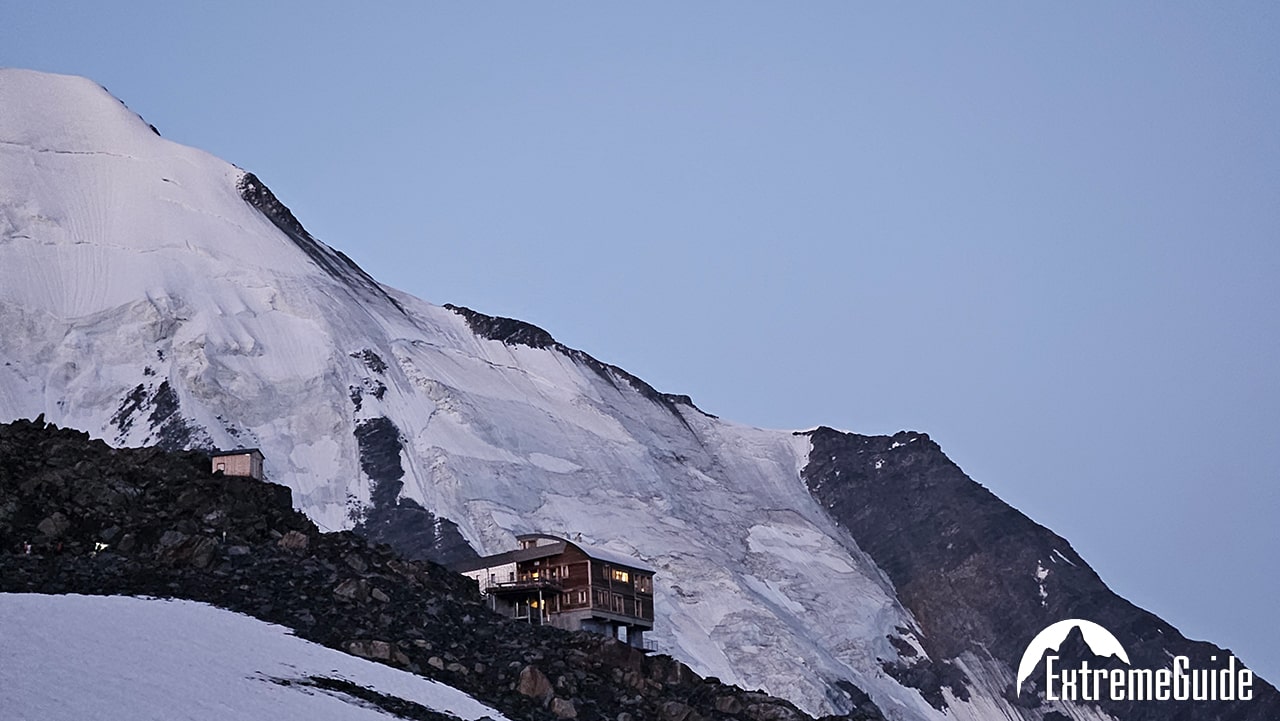
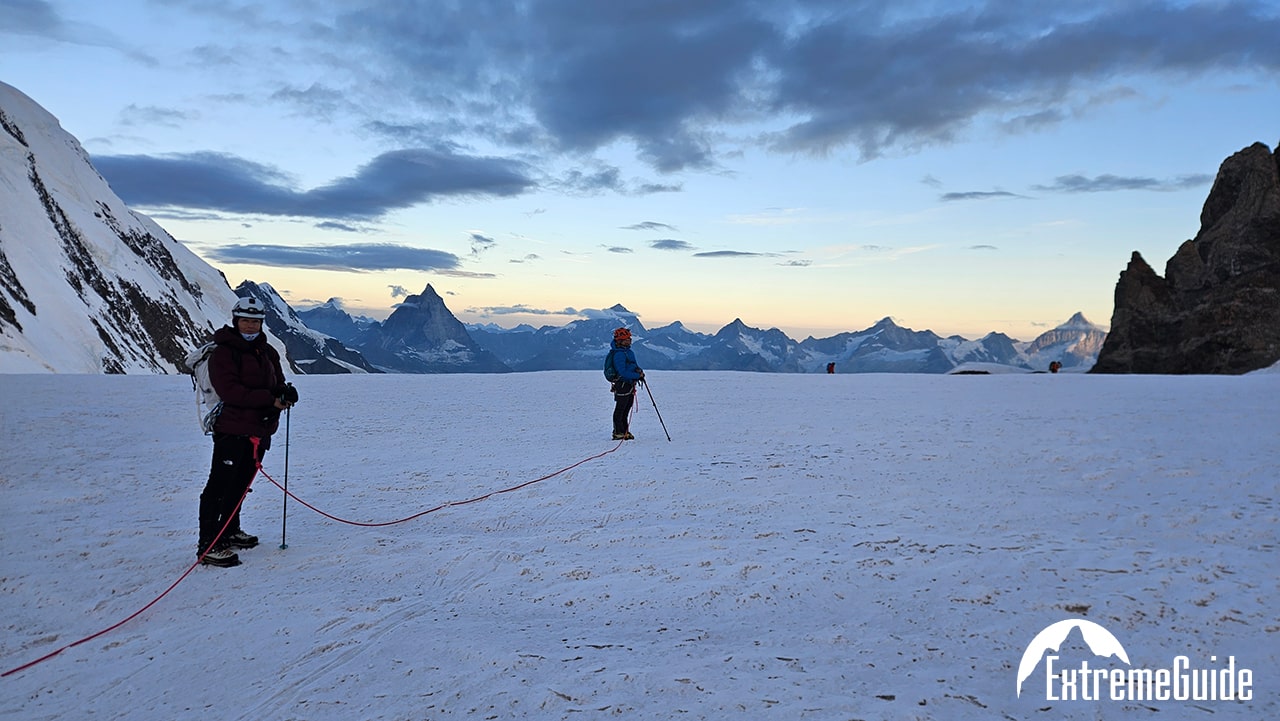
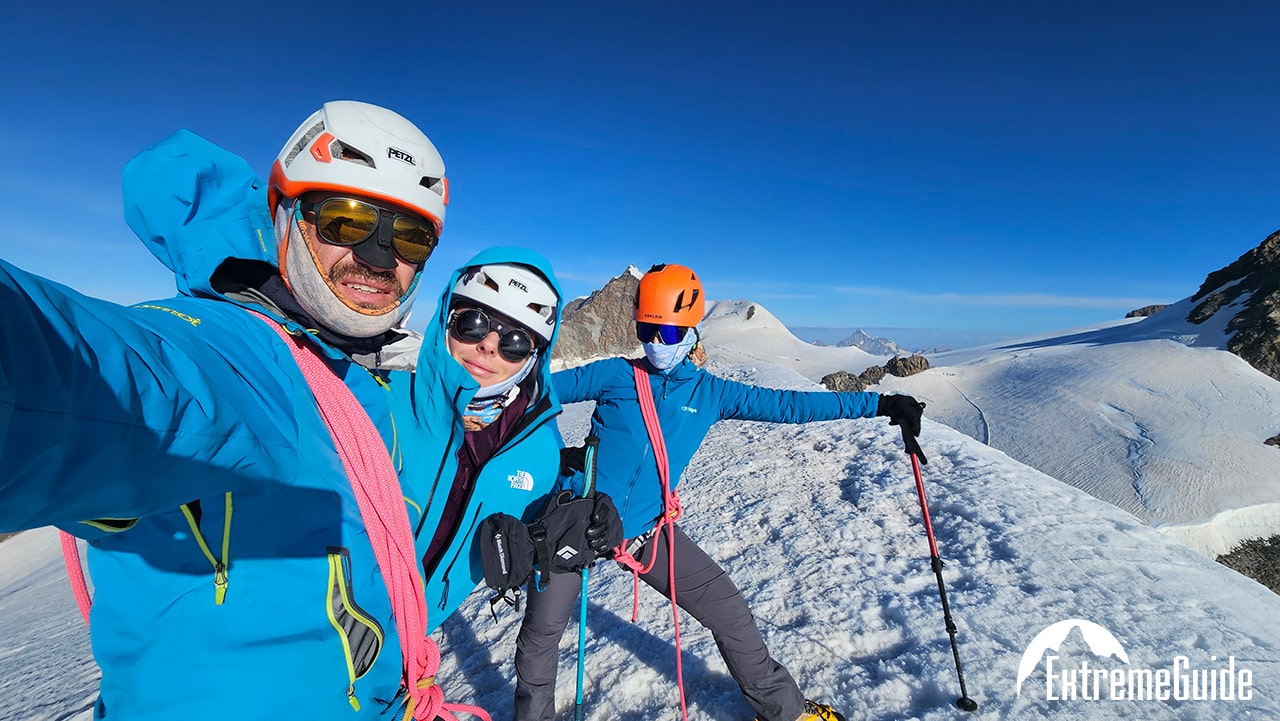
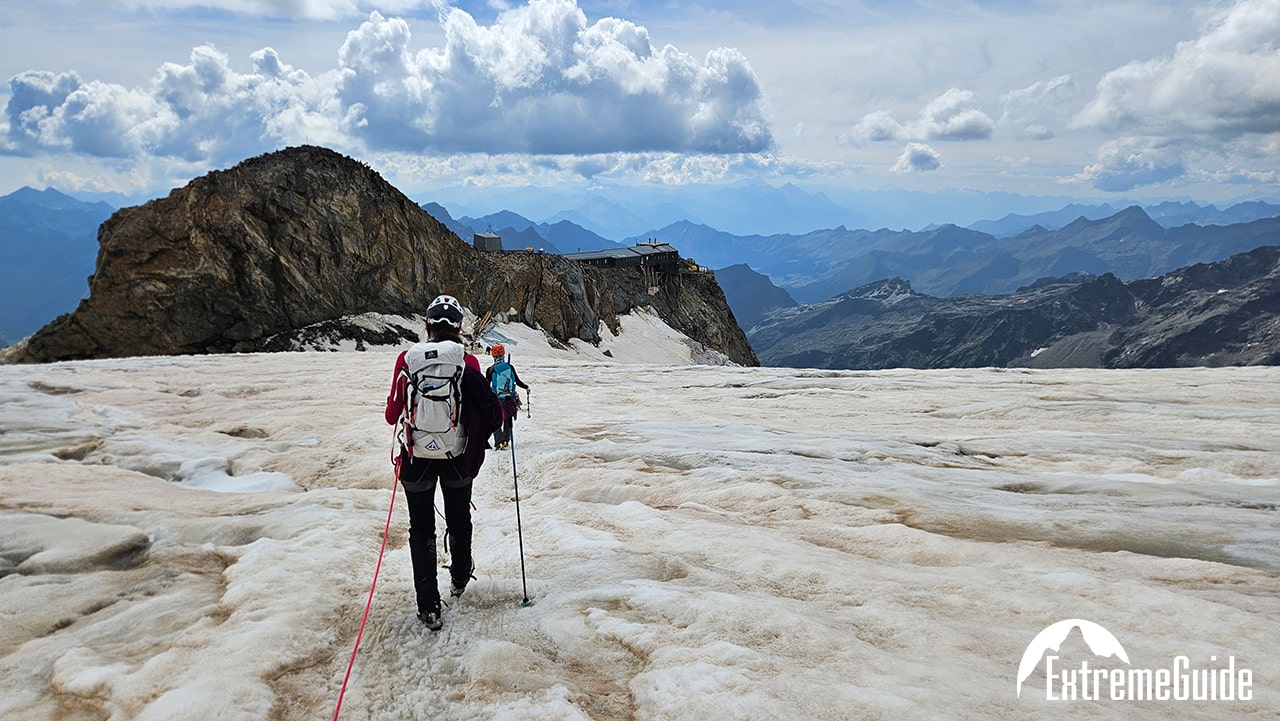
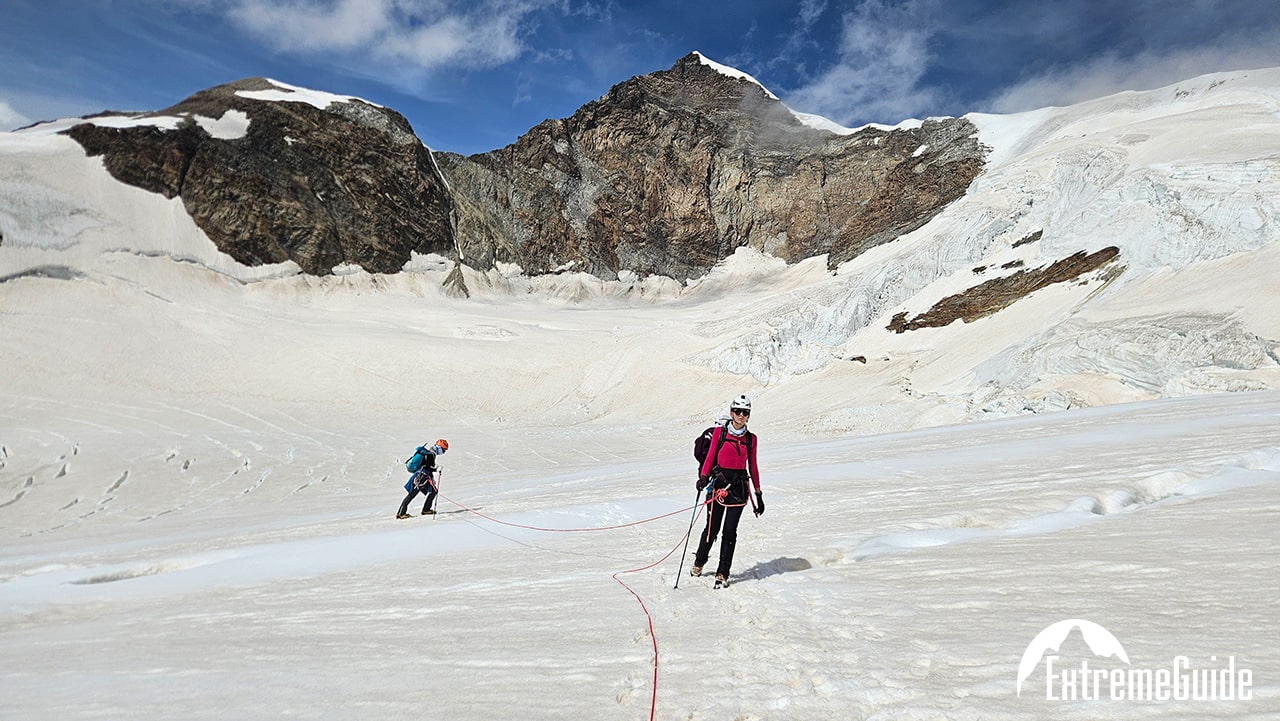
Photo of previous trips
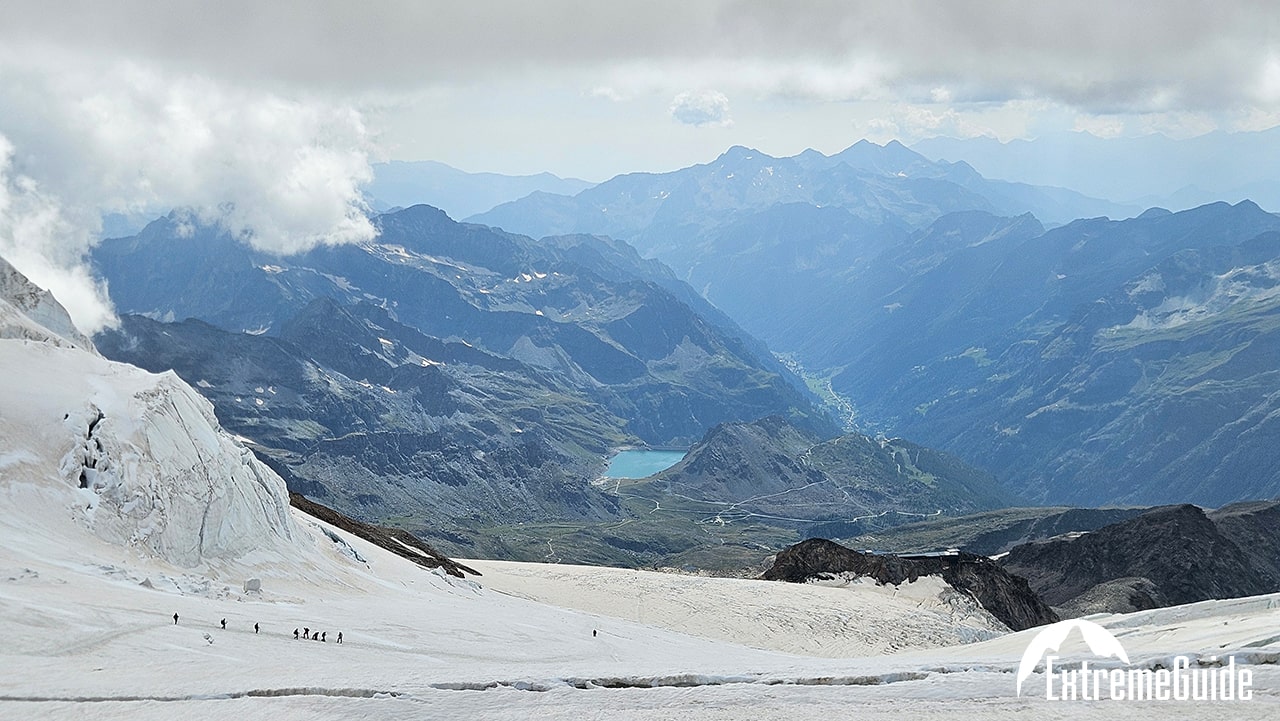
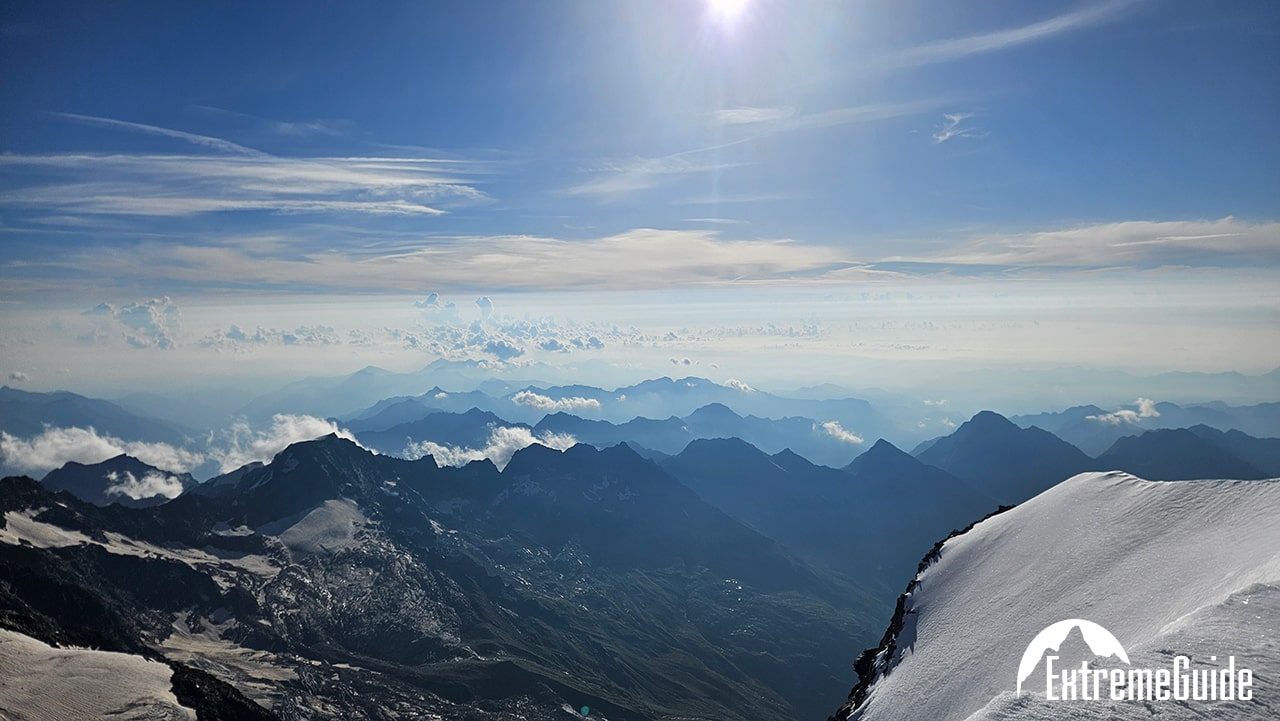
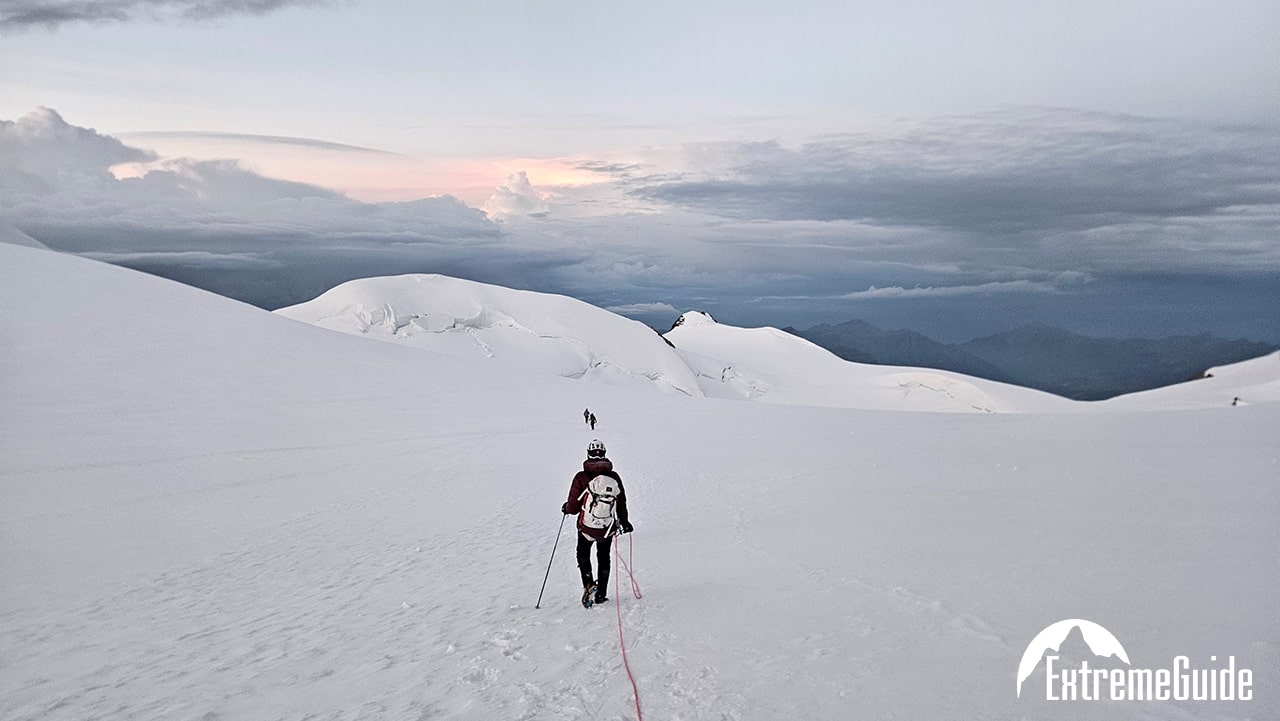
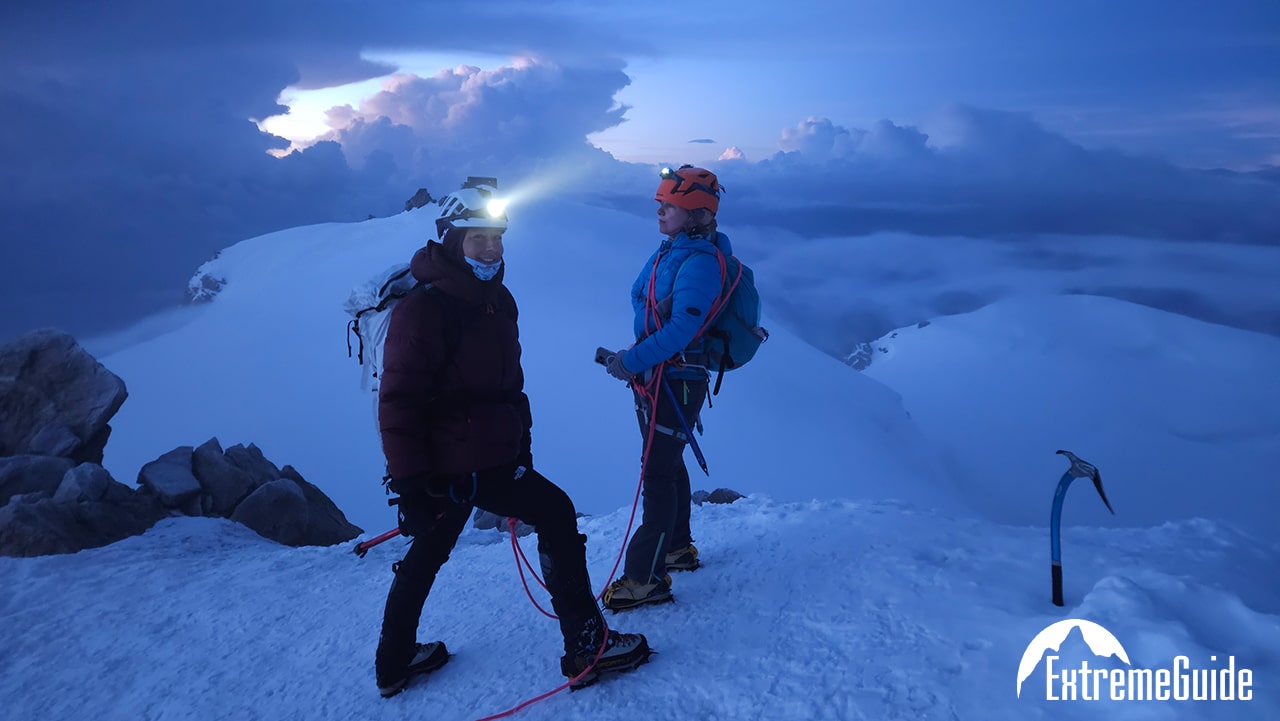
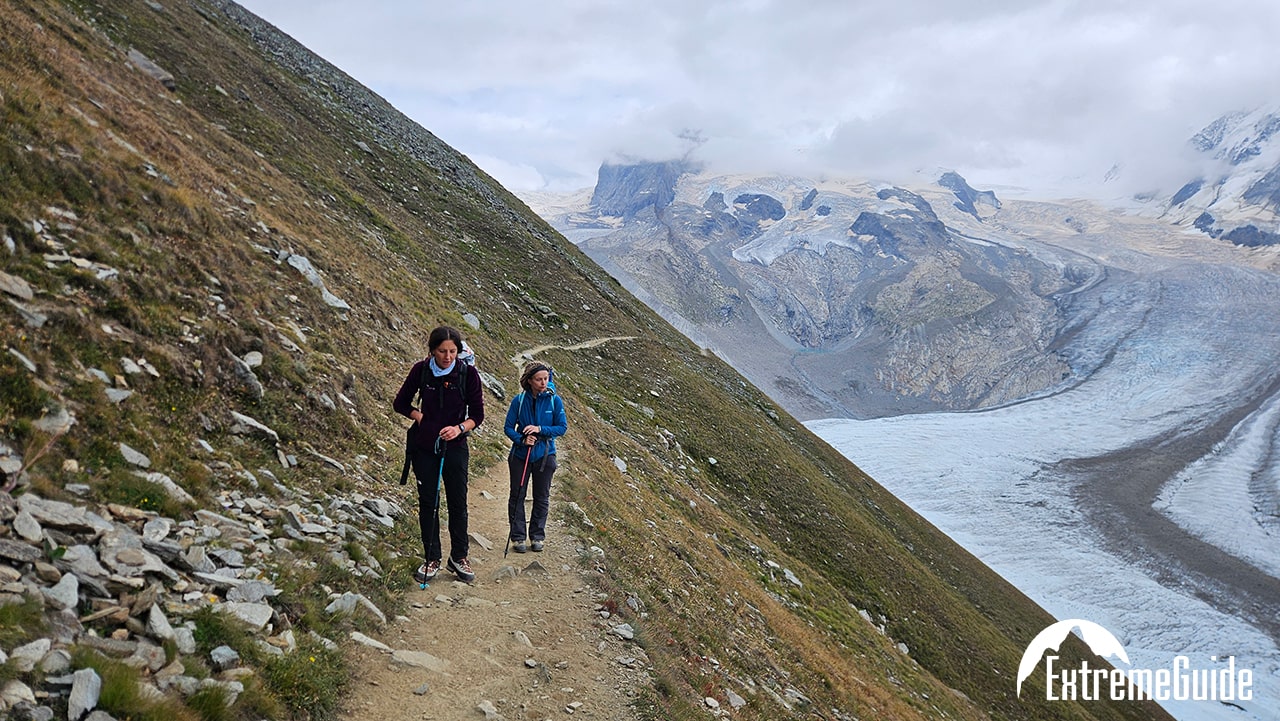
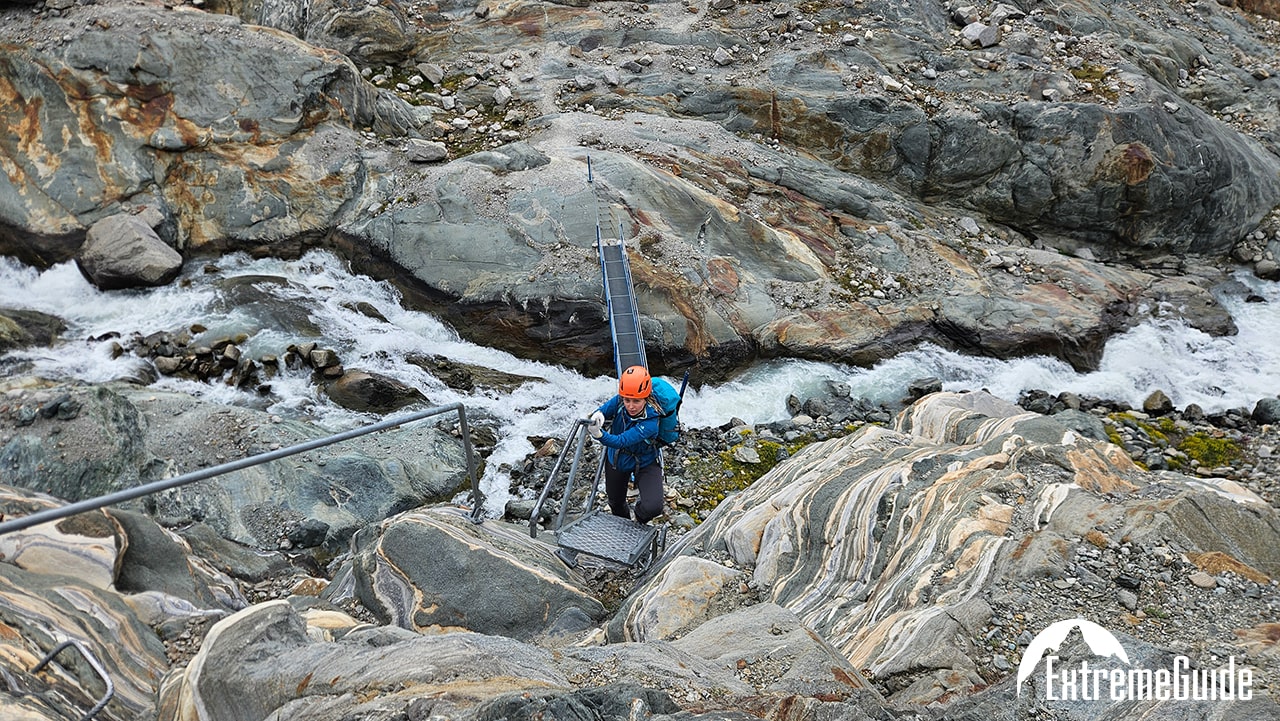
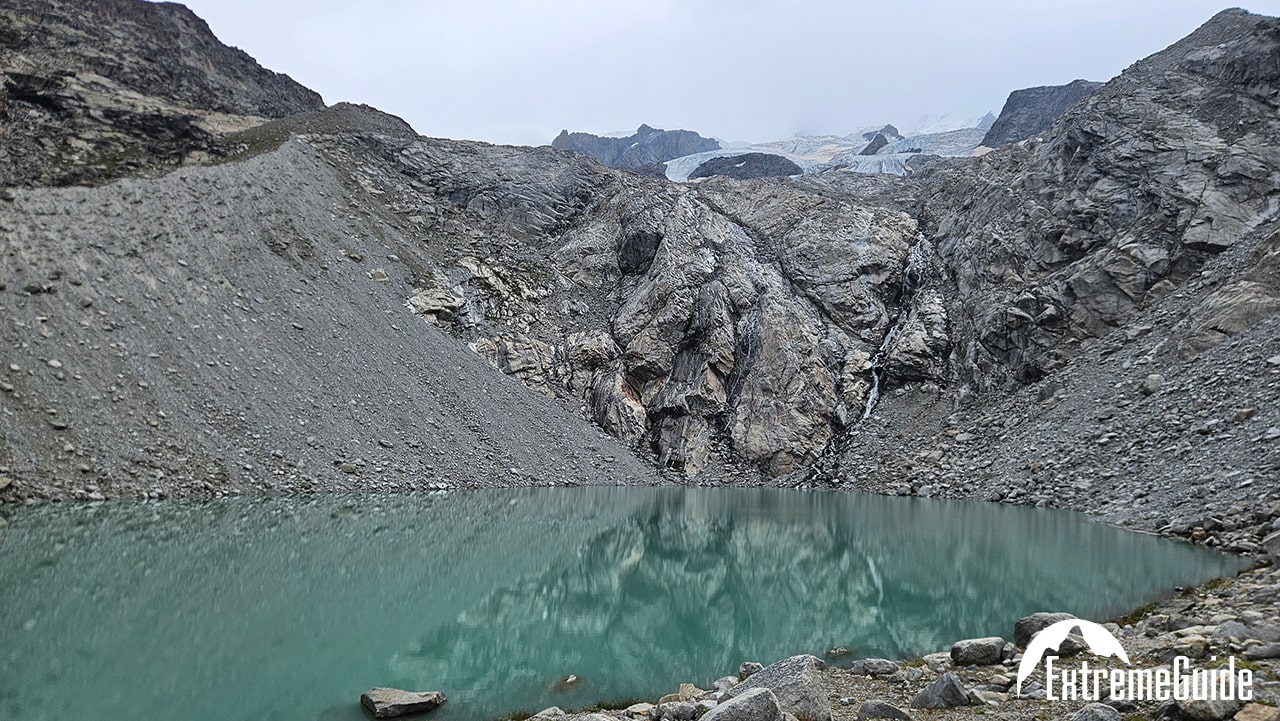
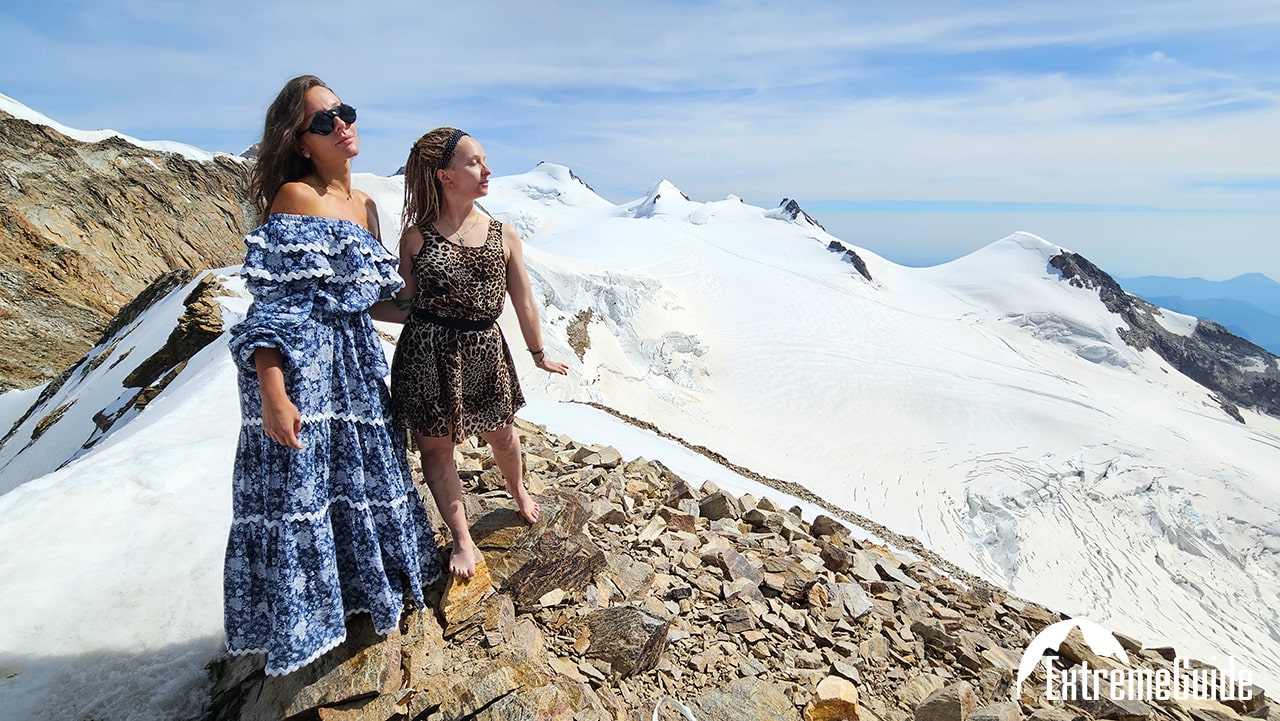

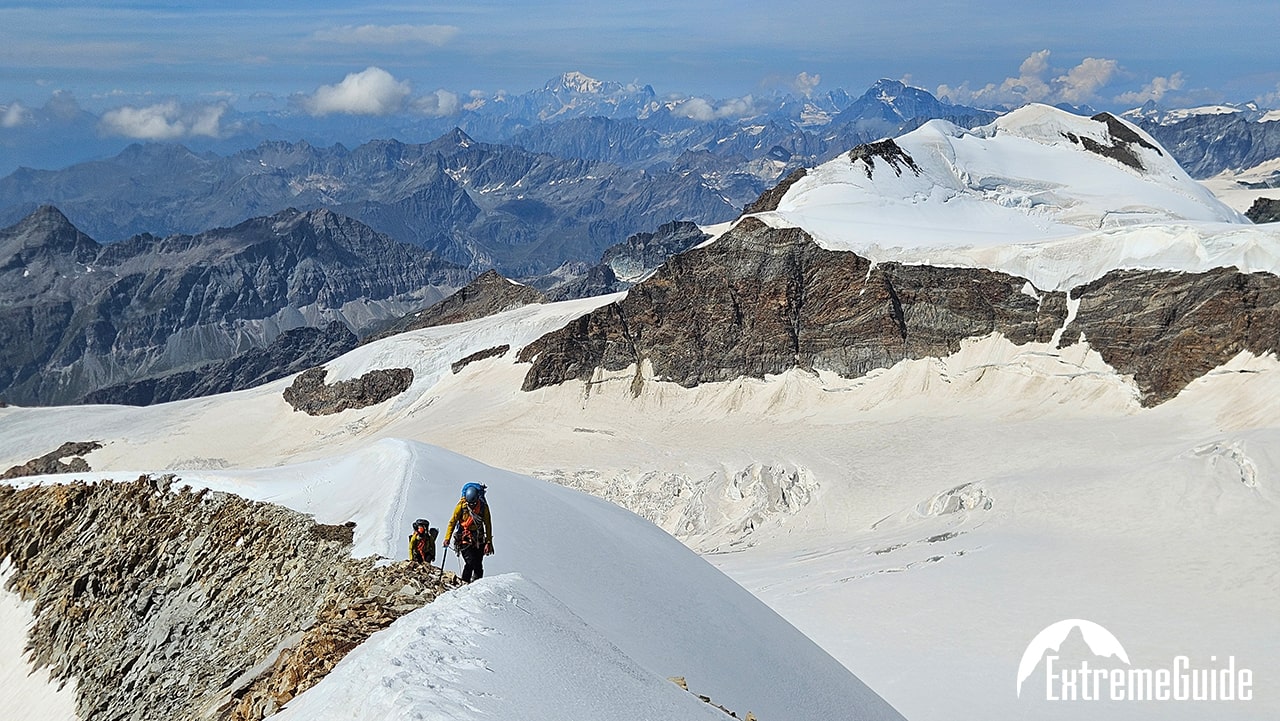
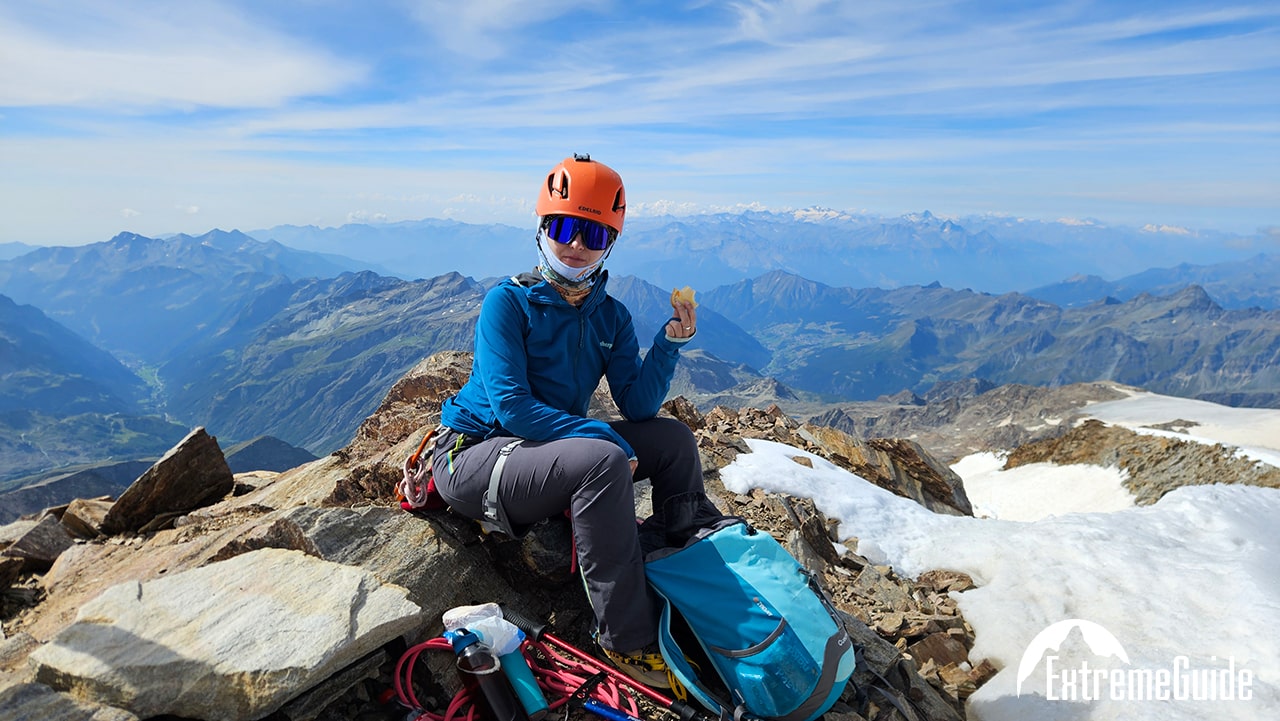
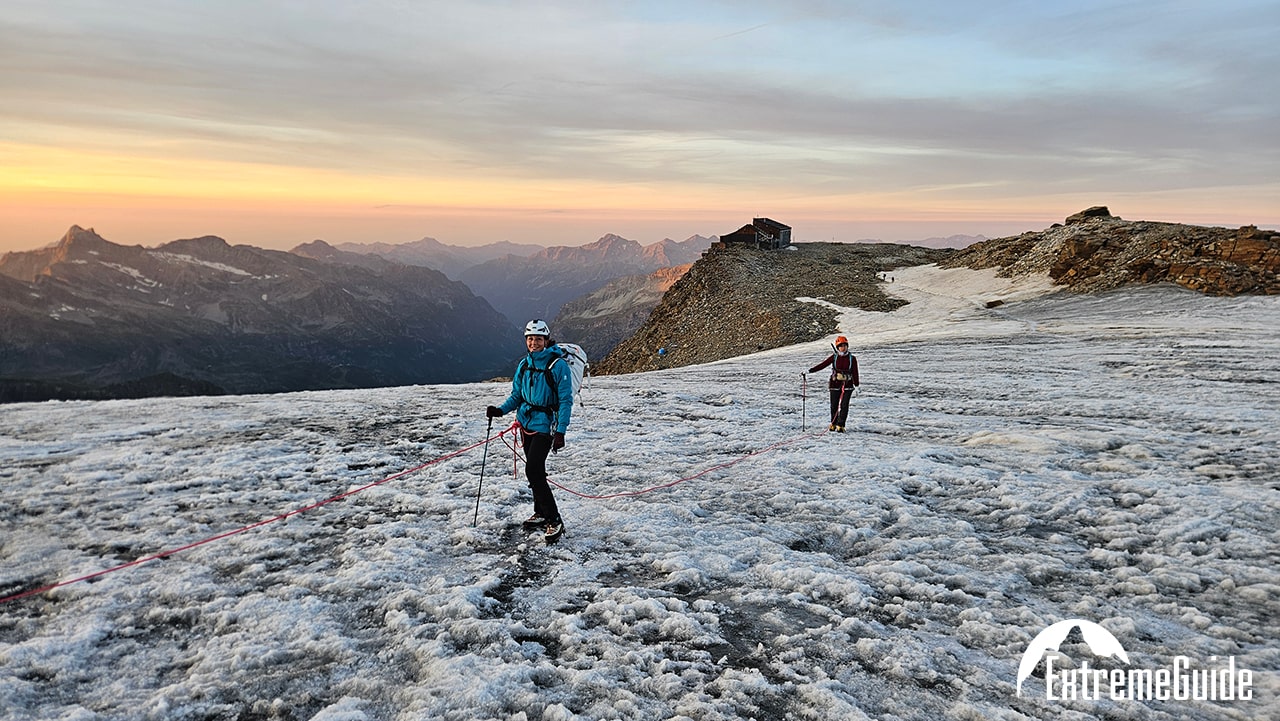
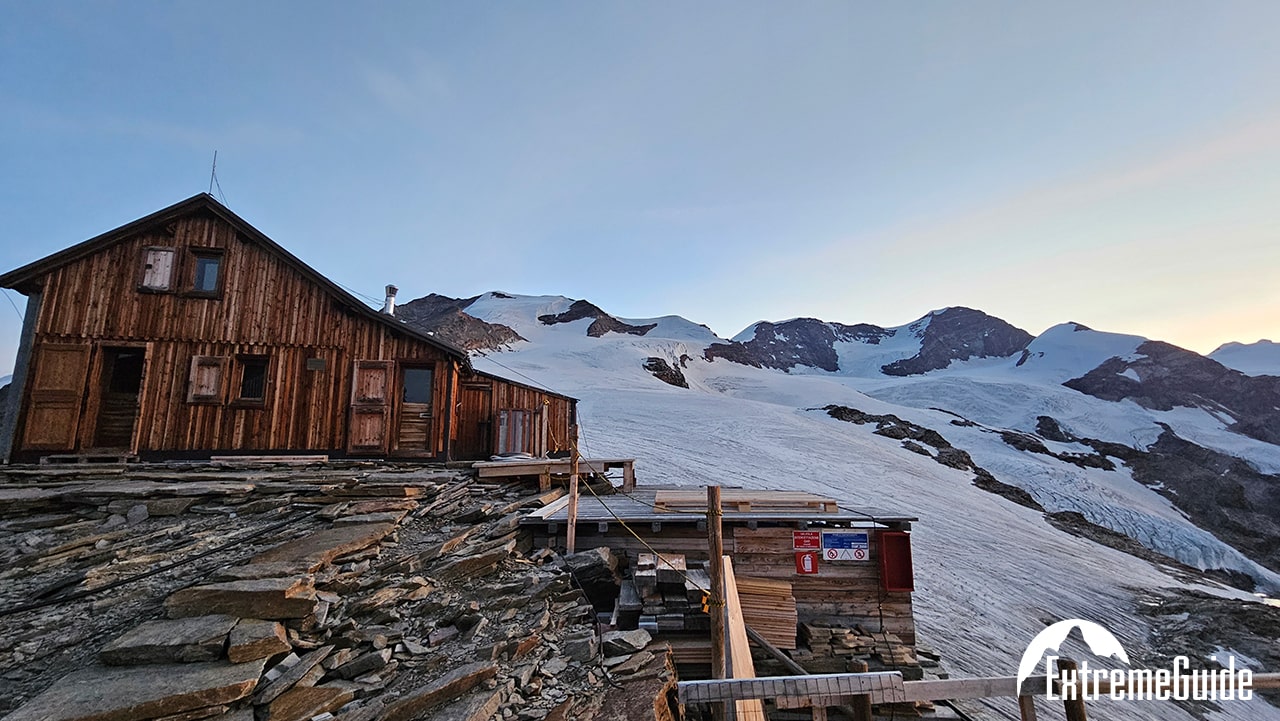
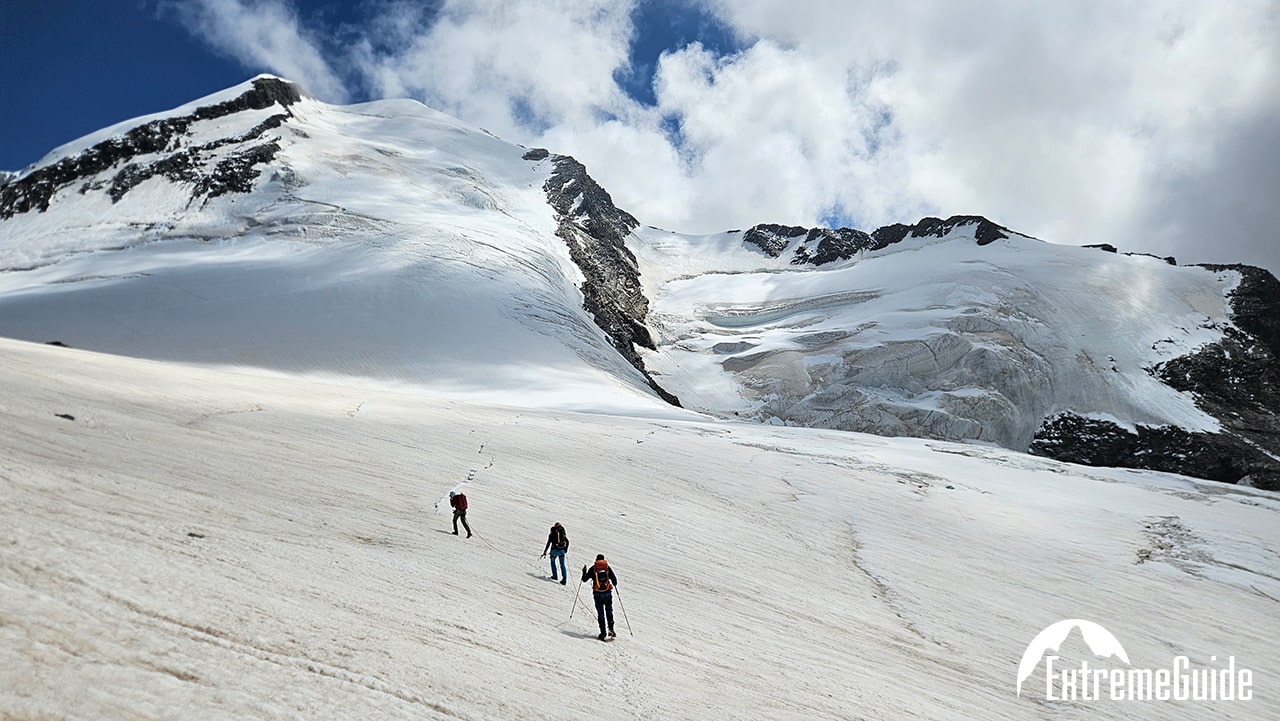
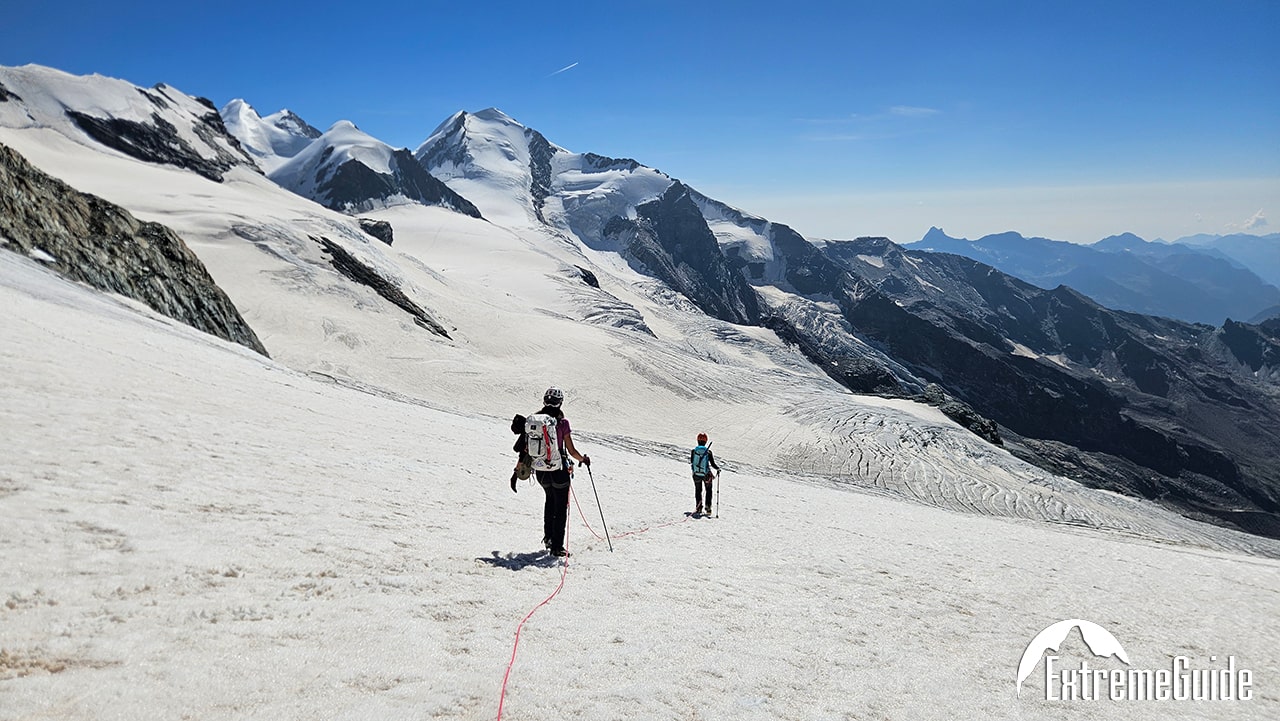
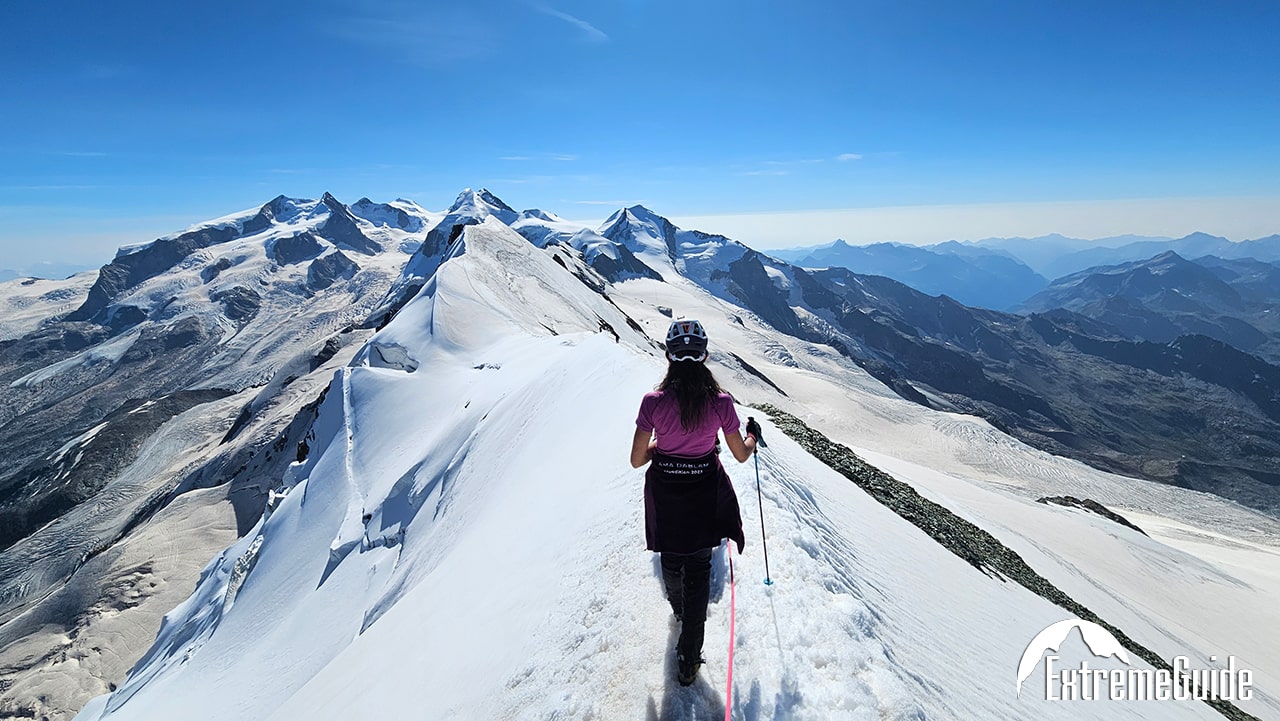
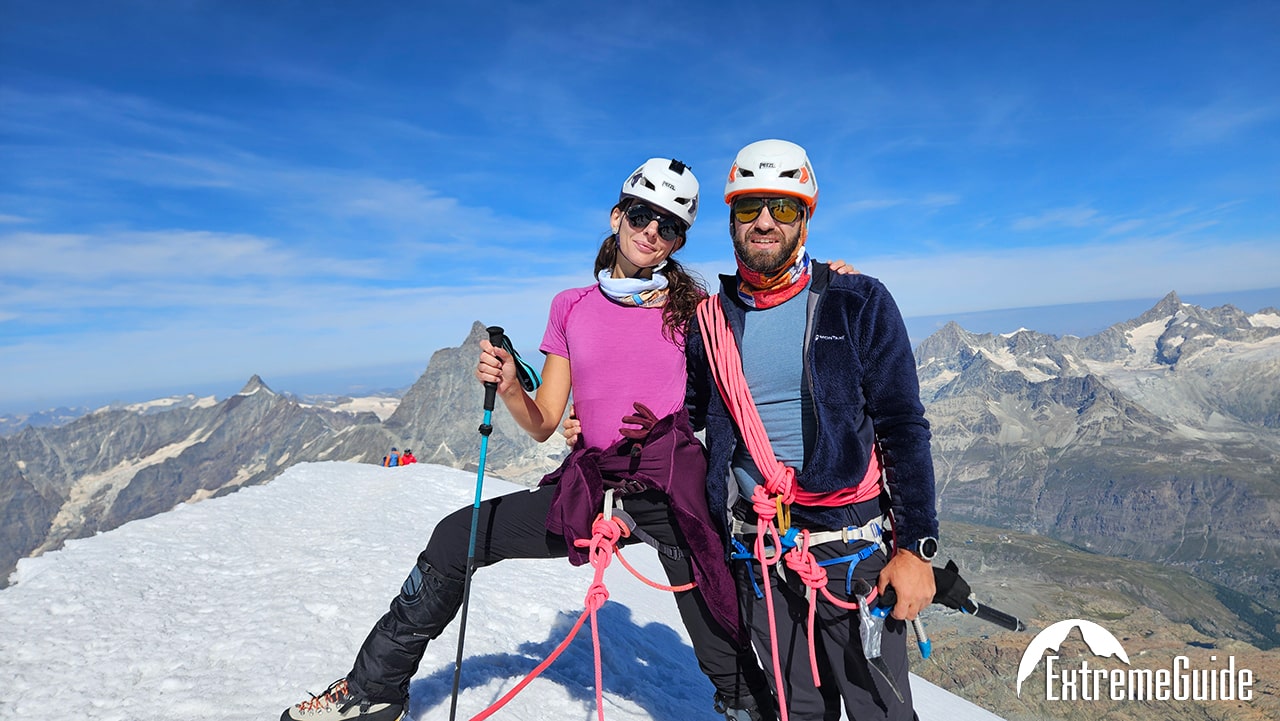
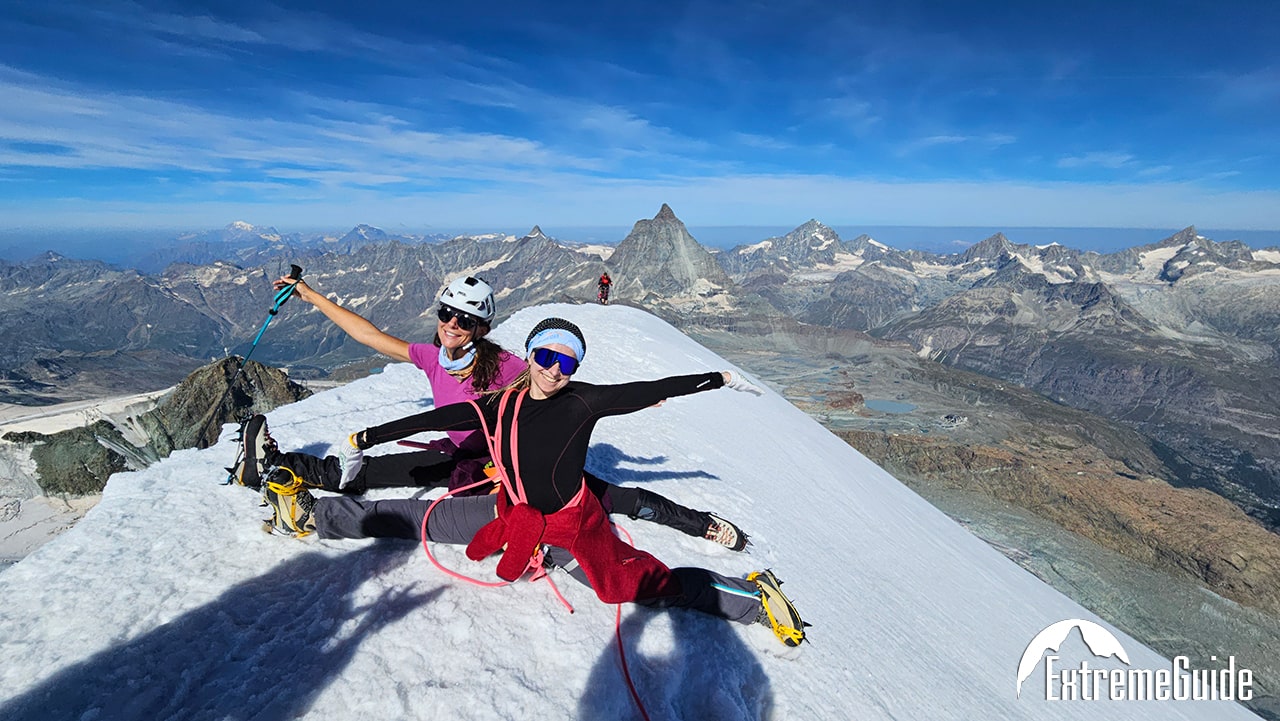
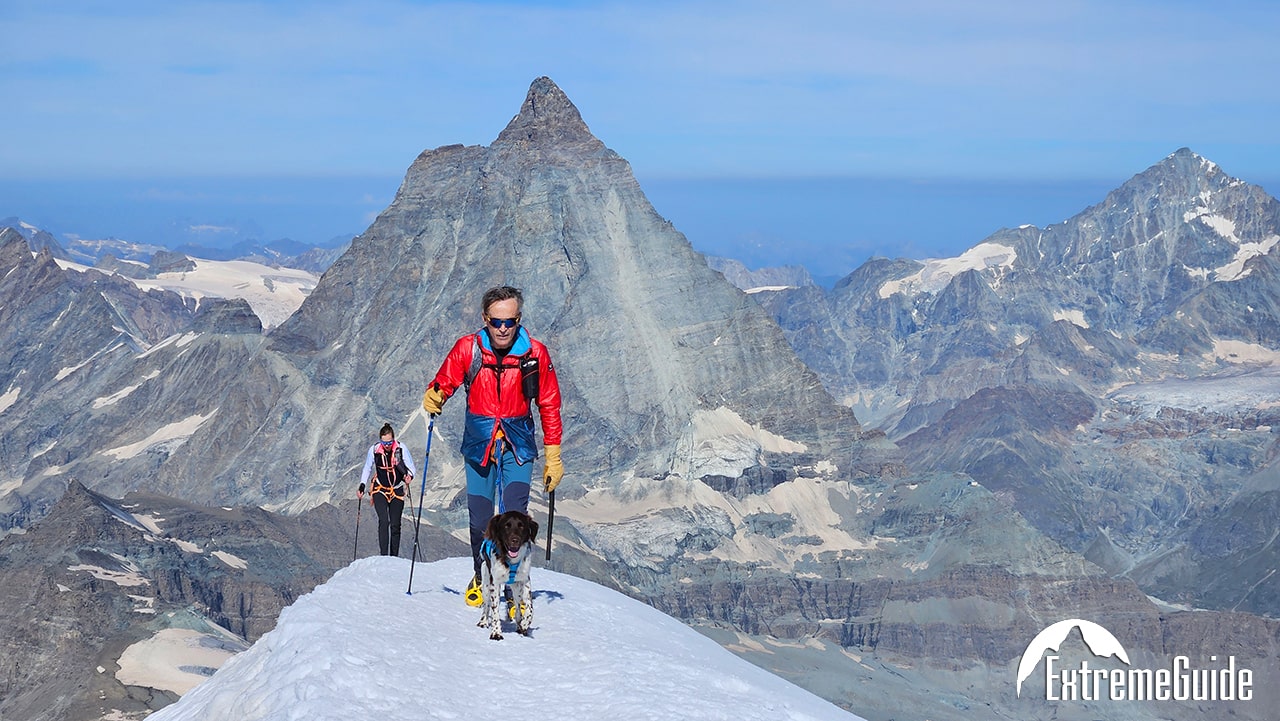
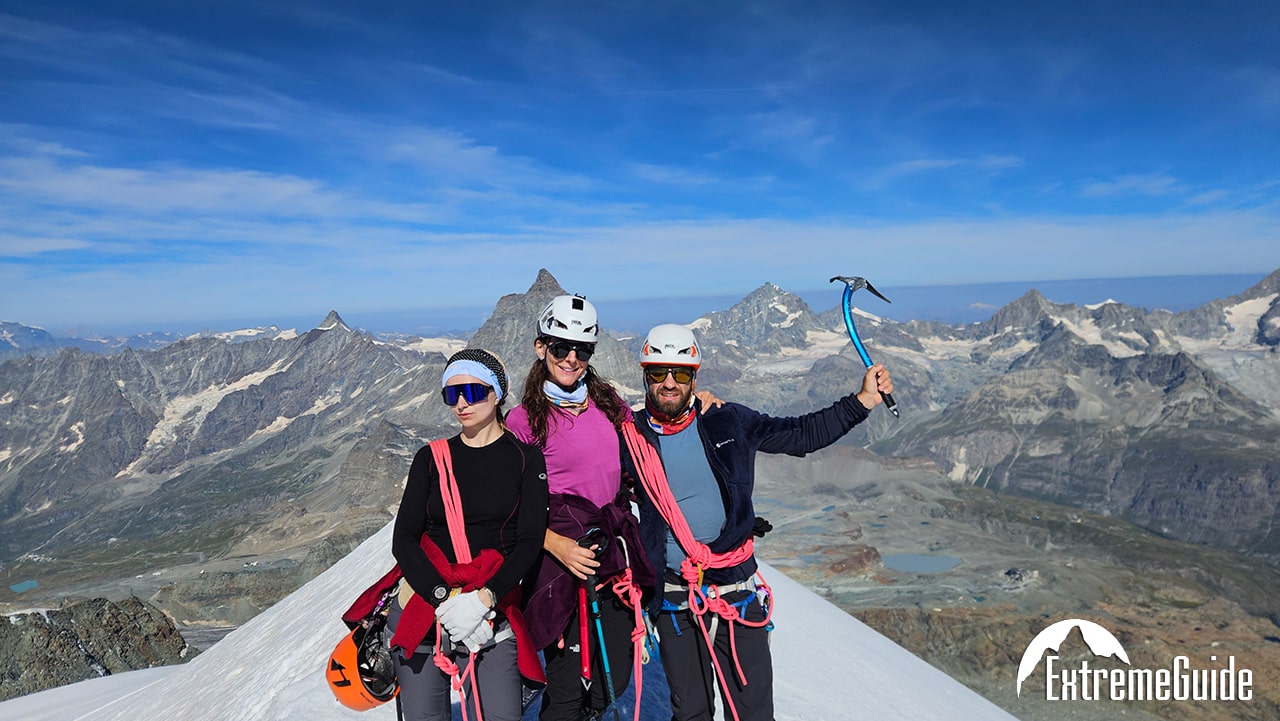
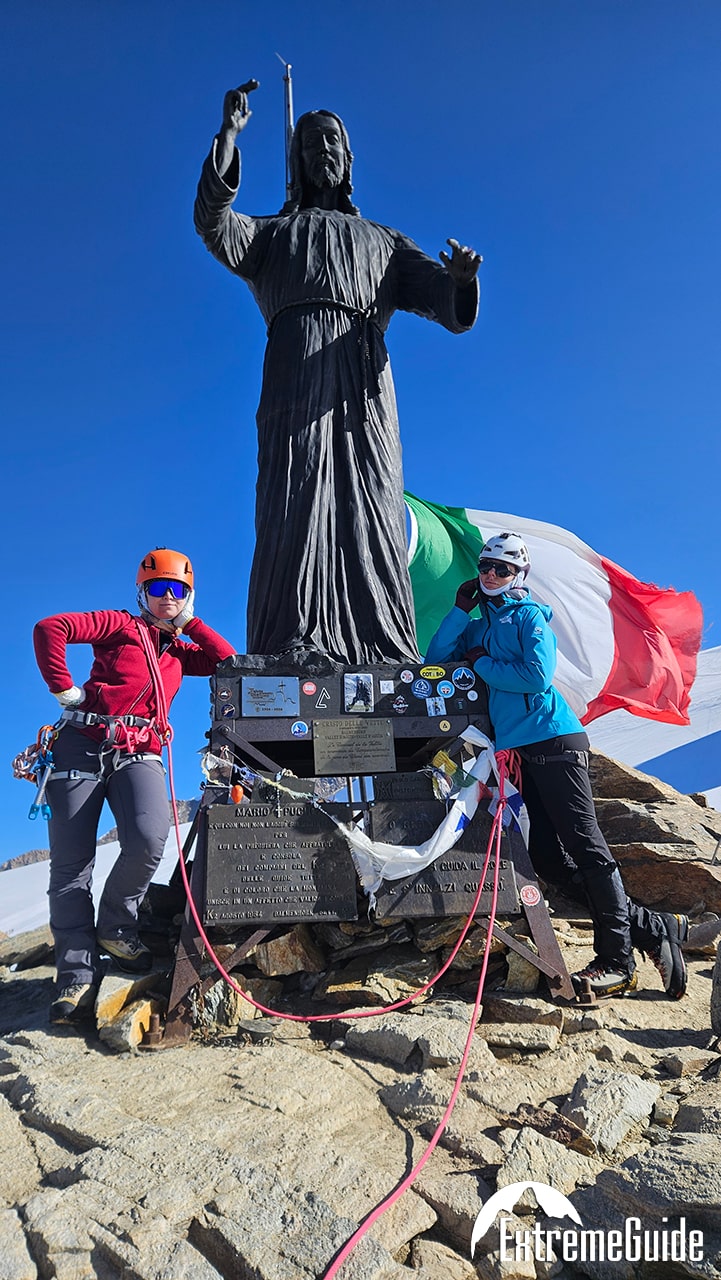


Reviews of our travelers
Рекомендованные туры
 Switzerland
Dates:
July 24 - July 26
August 17 - August 19
September 4 - September 6
Complexity:
Duration:
Height:

Left: 2 places
 Switzerland
 Dates:
June 27 - June 29
July 11 - July 13
July 25 - July 27
August 1 - August 3
August 8 - August 10
August 22 - August 24
September 5 - September 7
September 12 - September 14
Complexity:
Duration:
Height:

5.0 (13)
Left: 1 place
 Switzerland
 Dates:
July 4 - July 9
July 18 - July 23
July 25 - July 30
August 1 - August 6
August 15 - August 20
August 29 - September 3
Complexity:
Duration:
Height:
5.0 (13)
Left: 2 places
 Italy
Italy Dates:
Complexity:
Duration:
Height:
 France
 Dates:
June 21 - June 23
July 5 - July 7
July 19 - July 21
August 2 - August 4
August 16 - August 18
August 30 - September 1
September 13 - September 15
September 27 - September 29
Complexity:
Duration:
Height:
5.0 (13)
Left: 2 places
 France
 Dates:
June 13 - June 20
June 20 - June 27
June 27 - July 4
July 4 - July 11
July 11 - July 18
July 18 - July 25
July 25 - August 1
July 26 - August 2
August 1 - August 8
August 2 - August 9
August 8 - August 15
August 15 - August 22
August 22 - August 29
August 29 - September 5
September 5 - September 12
September 12 - September 19
September 19 - September 26
September 26 - October 3
Complexity:
Duration:
Height:
5.0 (13)
Left: 1 place
 France
 Dates:
June 20 - June 27
July 4 - July 11
July 18 - July 25
August 1 - August 8
August 15 - August 22
Complexity:
Duration:
Height:
Left: 4 places
 France
 Dates:
July 11 - July 22
August 15 - August 26
Complexity:
Duration:
Height:
Left: 2 places